
Part One: Zhuangzi, The Inner Chapters
Chapter 1: Free and Easy Wandering
In the dark ocean of the far north lives a fish called Kun. The Kun is vast: how many thousand li long it is, nobody knows, a li being about a quarter of a mile. It turns into a bird called Peng, whose back stretches nobody knows how many thousand li across. When it gathers itself and takes off, its wings hang like clouds from the sky. When the seas heave and turn, this bird sets out for the dark ocean of the far south, which is the Lake of Heaven.1
The Qi Xie, a record of marvels, says this: "When the Peng travels to the dark ocean of the south, it beats the water for three thousand li, spirals up on the whirlwind ninety thousand li into the sky, and flies for six months before it rests." There is the heat haze that people call wild horses, there are motes of dust, there are living things blowing their breath at one another. And the sky is so very blue: is that its true colour, or is it only that it goes so far and never comes to an end? When the Peng looks down from up there, it must see the same blue, and nothing more.
Besides, if water is not piled up deep enough, it has no strength to carry a big boat. Tip a cup of water into a hollow in the floor and a mustard seed will float on it like a boat; set the cup down there and it sticks fast, because the water is shallow and the boat is big. In the same way, if wind is not piled up deep enough, it has no strength to carry great wings. That is why the Peng must climb ninety thousand li, until the wind lies beneath it. Only then can it ride on the wind, carry the blue sky on its back with nothing to hinder or block it, and only then does it set its course for the south.
The cicada and the little dove laughed at it. "When we make a dash and fly up," they said, "we try for an elm or a sandalwood tree, and sometimes we don't make it and just flop back down on the ground. What's the point of going up ninety thousand li to head south?"
If you go out as far as the green fields at the edge of town, you take three meals with you and come back with your belly as full as when you left. If you go a hundred li, you spend the night before pounding grain for the journey. If you go a thousand li, you spend three months gathering food. What do these two little creatures know? Small understanding cannot keep up with great understanding, and a short life cannot keep up with a long one. How do we know it is so? The mushroom that springs up in the morning never sees the month turn; the summer cicada never knows a spring or an autumn. These are the short lives. South of Chu there is a tree called the Mingling, for which five hundred years are one spring and five hundred years are one autumn. In the distant past there was a great toon tree for which eight thousand years were a spring and eight thousand years an autumn. And yet today the one famous for living a long time is Pengzu, who is said to have reached eight hundred, and everyone wishes they could match him. Isn't that sad?
This is what Tang, the king who founded the Shang dynasty, heard from his counsellor Ji. In the bald north, where nothing grows, there is a dark sea, the Lake of Heaven. In it lives a fish several thousand li wide, and nobody knows how long, whose name is Kun. There is a bird there too, whose name is Peng, with a back like Mount Tai and wings like clouds hanging from the sky. It spirals up on the whirlwind, twisting like a ram's horn, ninety thousand li high, until it breaks clear of the clouds and the mist and carries the blue sky on its back; then it sets its course south, bound for the dark ocean of the south. The marsh quail laughed at it. "And where's that one off to? I spring up into the air, and before I've risen more than a few yards I'm down again, wheeling about among the weeds and the brambles, and that is the very height of flying. Where's that one off to, then?" This is the difference between the small and the great.
It is the same with a man whose knowledge is good enough for one office, whose conduct will win over one village, whose virtue pleases one ruler and earns the trust of one state: he looks at himself just the way the quail does. Song Rongzi, the philosopher who taught that it is no disgrace to be insulted, would only laugh at such a man. If the whole world praised Song Rongzi, it would not spur him on; if the whole world condemned him, it would not hold him back. He had fixed the line between what is inside a man and what is outside him, and he could tell the true boundary of honour and disgrace, and that was all. He never went anxiously chasing the world's approval. Even so, there was still something he had not established. Liezi rode the wind and travelled on it, light and cool and lovely, and came back after fifteen days. He never went anxiously chasing good fortune either. But though he was spared the trouble of walking, he still had something to depend on. Suppose instead a man rides on the true course of Heaven and earth, drives the changes of the six breaths of the weather, yin and yang, wind and rain, dark and light, and wanders in what has no end: what would he have to depend on? That is why it is said, "The perfect man has no self, the godlike man no achievements, the sage no name."
Yao, the sage emperor of the golden age, offered to hand the empire over to the hermit Xu You. "When the sun and moon have come out," he said, "and the torches are still burning, isn't it hard work for them to give light? When the seasonal rains have fallen and someone is still out watering the fields, isn't it wasted labour? If you, sir, were on the throne, the world would be in order, and here I am still sitting in the place like the stand-in who occupies the dead man's seat at a sacrifice. I can see how little I am worth. Please, let me hand the world to you."
Xu You said, "You govern the world, and the world is already in order. If I took your place, would I be doing it for the name? A name is only the guest of the real thing. Would I be doing it to be a guest? The wren that nests in the deep forest uses no more than one branch; the mole that drinks from the river drinks no more than a bellyful. Go home, my lord, and rest. I have no use for the world! Even if the cook is not running his kitchen, the priest at the altar does not step over the wine jars and the meat stands to take his place."
Jian Wu said to Lian Shu, "I heard Jie Yu talking, the madman of Chu who once sang a warning at Confucius as he passed. What he said was huge and had nothing to stand on; it went on and on and never came back. His words frightened me. They were like the Milky Way, without any end. They went wildly off the path and had nothing to do with how people really are."
"What did he say?" asked Lian Shu.
"He said, 'Far away on Guye Mountain there lives a godlike man, with skin like ice and snow, gentle and shy as a young girl. He doesn't eat the five grains; he breathes the wind and drinks the dew. He rides on the clouds and the mist, drives a team of flying dragons, and wanders beyond the four seas that bound the world. His spirit is so concentrated that it keeps living things free of sickness and plague and makes the harvest ripen every year.' I thought it was raving, and I didn't believe a word of it."
"I see," said Lian Shu. "Well, the blind have no share in the sight of patterns and colours, and the deaf have no share in the sound of bells and drums. But is it only bodies that can be blind and deaf? Understanding can be too, and what I have just said fits you exactly. That man, with the virtue that is in him, will take the ten thousand things, everything that exists, and blend them into one. The whole age is crying out to him to set its disorder right, but why would he wear himself out making the world his business? Nothing can harm that man. A flood that rises to the sky will not drown him; a drought that melts metal and stone and scorches the earth and the hills will not make him hot. Out of his dust and his leftover chaff you could mould and cast a Yao, or a Shun, the sage who came after Yao. Why would he be willing to make things his business?"
A man from Song, the state that the old stories make the home of fools, once laid in a stock of ceremonial caps and took them to sell in Yue; but the people of Yue cut their hair short and tattoo their bodies, and had no use for caps. Yao brought order to all the people of the world and peace to every land within the seas. Then he went to see the Four Masters on far-off Guye Mountain, and there, north of the Fen River, he lost his empire in a blank daze.
Huizi, the logician and statesman who was Zhuangzi's friend and his favourite opponent in argument, said to him, "The king of Wei gave me the seeds of a big gourd. I planted them, and they grew a gourd that would hold about twenty-five gallons. I filled it with water, but its rind wasn't strong enough to bear its own weight. I split it in half to make ladles, but they were so wide and flat that there was nothing they could hold. Big it certainly was, hollow and huge; but I decided it was no use and smashed it to pieces."
Zhuangzi said, "You really are clumsy at using big things, sir. There was a man of Song who had a fine salve for keeping hands from chapping, and for generations his family had made its living bleaching silk floss in the river. A stranger heard about it and offered to buy the recipe for a hundred pieces of gold. The man called his whole clan together to talk it over. 'All these generations of bleaching floss,' he said, 'and it's never paid us more than a few pieces of gold. Now we can sell the trick in one morning for a hundred. I say we let him have it.' The stranger got the recipe and took it to the king of Wu. When the state of Yue made war on Wu, the king put the stranger in command, and that winter he fought the men of Yue in a battle on the water and beat them badly. The king cut off a piece of territory and made him its lord. The salve kept hands from chapping either way. One man got a fief out of it and the other never got further than bleaching silk, and the difference was in what they used it for. Now you had a gourd that held twenty-five gallons. Why not lash it on as a great float and go bobbing over the rivers and lakes, rather than grieve that it was too wide and flat to hold anything? Your heart is still a tangle of weeds, sir!"
Huizi said to Zhuangzi, "I have a big tree, the kind people call a stinktree. Its main trunk is so knobbly and bloated that a carpenter's inked string won't run true on it, and its smaller branches curl and twist so that compass and square are no help with them. It stands by the roadside, and the carpenters go past without turning their heads. Your words are the same: big, and no use, and the whole crowd walks away from them."
Zhuangzi said, "Have you never seen a wildcat, or a weasel? It flattens itself low and lies hidden, watching for something to stray past; it springs this way and that, east and west, not caring how high or how low, until it lands in a snare and dies in a net. Now the yak is as huge as a cloud hanging from the sky. Being big is something it can certainly do; catching a mouse is not. You have a big tree, and you're worried that it's no use. Why not plant it in the village of Not Anything At All, in the wilds of Wide Nowhere, and wander about beside it doing nothing, and lie down under it, free and easy, and go to sleep? It will never die young under the axe, and nothing will harm it. No one can find a use for it, so what could ever trouble it?"
Chapter 2: All Things Are Equal
Ziqi of the South Wall sat slumped against his armrest. He turned his face up to the sky, the same word in Chinese as Heaven, and breathed out slowly, gone slack and absent, as if he had parted from his other half. His disciple Yancheng Ziyou, standing in attendance before him, said, "What's going on? Can the body truly be made like a withered tree, and the heart like dead ashes? The man slumped on the armrest now is not the man who sat there before."
"Ziyou," said Ziqi, "what a good question that is! Just now I had lost my own self. Do you understand? Perhaps you have heard the pipes of men without hearing the pipes of earth; or heard the pipes of earth without ever hearing the pipes of Heaven!"
"May I ask what that means?" said Ziyou.
"When the great clod of the earth breathes out," said Ziqi, "we call the breath wind. While it lies still, nothing happens; but let it rise, and ten thousand hollows start to bellow. Haven't you ever heard them, the long roar of them? Up in the mountain forests, among the high and craggy places, there are great trees a hundred arm-spans round, with holes and hollows in them: like noses, like mouths, like ears, like the sockets for a beam, like cups, like mortars, like deep pools and like shallow puddles. They gush like water and whirr like arrows; they scold, they draw in their breath, they shout, they wail, they boom, they moan. The ones in front strike up a cry and the ones behind take it up. A light breeze makes a small harmony, a whirlwind a great one, and when the fierce gale has passed, every hollow falls empty again. And haven't you ever seen how the branches go on swaying and quivering afterwards?"
Ziyou said, "The pipes of earth, then, are simply those many hollows, and the pipes of men are rows of bamboo tubes. May I ask about the pipes of Heaven?"
Ziqi said, "It blows through the ten thousand things, each in its own way, and lets each one be itself. Each sounds as it sounds, by its own doing. Then who is it that rouses them?"
Great understanding is broad and easy; small understanding picks and pries. Great words are clear as a flame; small words chatter on and on. Asleep, men's souls go tangling together; awake, their bodies open out. Everything they meet gets them entangled, and day after day their hearts go to battle: some sluggish, some deep and hidden, some close and secretive. Small fears leave them anxious; great fears leave them numb. They shoot off like the trigger of a crossbow: that is what they are like when they set themselves up as judges of right and wrong. They hold fast as if they had sworn an oath: that is what they are like when they guard their victories. They decline like autumn and winter: that is how they wither, a little more each day. They are drowned in what they do, and nobody can bring them back. They shut themselves up as if sealed with cord: that is how they dry out in old age. And a heart that is close to death cannot be turned back to the light.
Joy and anger, grief and delight, worry and regret, fickleness and fear, levity and abandon, candour and posing: like music rising out of empty holes, or mushrooms springing up out of steam, day and night they take turns in front of us, and nobody knows where they sprout from. Enough! Enough! We have them morning and evening: is this what our lives come from? Without them there would be no me, and without me there would be nothing for them to take hold of. That is close to the truth, but we don't know what makes it so. It seems there must be a true master, and yet we cannot find the least trace of him. That he can act is plain enough, yet we never see his form: he is real, but he has no form. The hundred bones, the nine openings and the six organs are all here, all in their places; which of them should I feel closest to? Do you love them all alike? Or do you have a favourite? If so, are all the rest his servants and maids? And can servants and maids not keep one another in order? Or do they take turns being lord and servant? There must be a true lord among them. Whether or not we ever find out what he is really like, it neither adds to his truth nor takes anything from it.
Once we have received this body in its finished shape, we cling to it and never let go, waiting for the end. We cut against things and grind against them, and go racing on to the end like a galloping horse, and nothing can stop us: isn't it sad! All our lives we slave away and never see anything come of it; worn out with toil, we don't know where we are going home to: how can we not grieve? People say we don't die; what good is that? The body transforms, and the heart goes along with it: can we not call that the greatest grief of all? Is a human life really as muddled as this? Or am I the only one who is muddled, and there are others who are not?
If you follow the heart you have already made up, the heart that in Chinese does the thinking as well as the feeling, and take it as your teacher, who would ever be without a teacher? Why should only the people who understand how things alternate, and whose hearts choose for themselves, have such a teacher? The fool has one just as well. To have right and wrong before they have formed in the heart is like setting off for Yue today and arriving there yesterday. That is to treat what does not exist as existing. Treating what does not exist as existing: even Yu, the godlike king who tamed the great flood, could not have understood it, and what am I supposed to do with it?
Speaking is not just blowing breath. Those who speak have something to say, but what they say is never settled. Have they really said something? Or have they never said anything at all? They think it is different from the chirping of fledglings; is there any difference, or is there none? How has the Way, a word that in Chinese means a road and also to tell, and names the way the whole world goes of itself, been so hidden that there should be true and false? How have words been hidden, that there should be right and wrong? Where can the Way go and not be there? Where can words be and not be acceptable? The Way is hidden by small achievements, and words are hidden by flowery display. And that is how we get the rights and wrongs of the two great schools of the day, the Confucians and the Mohists, who follow Mozi and his doctrine of impartial care: each calls right what the other calls wrong, and calls wrong what the other calls right. If you want to call right what they call wrong and wrong what they call right, the best thing is to see clearly.
There is nothing that is not a "that", and nothing that is not a "this". From the side of "that" you cannot see it; only through knowing it yourself do you know it. Hence the saying, "'That' comes out of 'this', and 'this' depends on 'that'." This is the theory, which Huizi taught, that "this" and "that" are born at the same moment. Even so, at the moment of being born they are dying, and at the moment of dying they are being born; at the moment of being acceptable they are unacceptable, and at the moment of being unacceptable they are acceptable. Whoever goes by right goes by wrong, and whoever goes by wrong goes by right. That is why the sage does not take that road, but lets everything show in the light of Heaven; he too goes by a "this", but the "this" that goes along with things. "This" is also "that", and "that" is also "this". "That" has its own right and wrong, and "this" has its own right and wrong. Is there really a "that" and a "this"? Or is there really no "that" and no "this"? Where "this" and "that" no longer find their opposites: that is called the pivot of the Way. Once the pivot is set in the centre of the ring, it can answer to everything without end. Right is one endless series, and wrong is another. That is why I say the best thing is to see clearly.2
To use a finger to show that a finger is not a finger is not as good as using what is not a finger to show that a finger is not a finger. To use a horse to show that a horse is not a horse is not as good as using what is not a horse to show that a horse is not a horse. Heaven and earth are one finger; the ten thousand things are one horse.3
It is acceptable because someone accepts it; it is unacceptable because someone does not. A way is made by people walking it; a thing is so because people call it so. What makes it so? Being so makes it so. What makes it not so? Not being so makes it not so. Every thing has something about it that is so, and something about it that is acceptable. There is nothing that is not so, and nothing that is not acceptable. That is why a blade of grass and a roof beam, a leper and the beautiful Xi Shi, everything odd and outlandish, shifty and strange: the Way runs through them all and makes them one. Their dividing is their forming, and their forming is their ruin. No thing is either formed or ruined; they all run through again and become one. Only the one who sees all the way through knows how they run through and become one, and for that reason he makes no use of his own views, but lodges them in the ordinary. The ordinary is the useful; the useful is what gets you through; getting through is getting it; and once you have got it, you are nearly there. Just going along with the "this", that is all. To do that and not know that it is so is called the Way. To wear out your spirit trying to make things one, without knowing that they are all the same anyway, is called "three in the morning".
What is "three in the morning"? A keeper of monkeys was doling out chestnuts. "Three in the morning and four in the evening," he told them. Every monkey flew into a rage. "Very well," he said, "four in the morning and three in the evening." Every monkey was overjoyed. Neither the name nor the substance had lost anything, and yet their joy and their anger were put to work; he too was going along with the "this". And so the sage brings right and wrong into harmony and takes his rest at the potter's wheel of Heaven, which turns all things evenly. This is called letting both proceed.
The ancients had understanding that went all the way. How far did it go? There were some who thought that there had never yet begun to be things. That is the furthest, the utmost: nothing can be added to it. Next came those who thought there were things, but that there had never yet begun to be boundaries between them. Next came those who thought there were boundaries, but that there had never yet begun to be right and wrong. When right and wrong blazed out, the Way was damaged, and what damaged the Way was what brought love into being, the love of one thing over another. Is there really such a thing as completion and damage? Or is there really no such thing? That there is completion and damage is why Zhao Wen, the great zither player, plays the zither; that there is no completion and damage is why Zhao Wen does not play it. Zhao Wen with his zither, Music Master Kuang, the blind musician of Jin, leaning on his stick, Huizi leaning on his desk: the understanding of these three was very nearly used up. Each was a master at the height of his art, and that carried them on into their last years. But because they loved what they did, they wanted to make it different from everyone else's, and because they loved it, they wanted to make it clear to others. They tried to make clear what cannot be made clear, and Huizi ended his days in the darkness of "the hard and the white", the logicians' puzzle about whether the hardness and the whiteness of a stone are one thing or two; and Zhao Wen's son ended with nothing but his father's zither strings, and in all his life achieved nothing. If this can be called achievement, then even I have achieved something. If this cannot be called achievement, then neither I nor anything else has achieved anything. That is why the sage steers by the glimmer that comes out of chaos and doubt. For that reason he makes no use of his own views, but lodges them in the ordinary. This is what I mean by seeing clearly.
Now suppose I say something here. I don't know whether it belongs in the same class as "this" or not. Whether it belongs or not, if belonging and not belonging are themselves put in one class, then it is no different from "that". Even so, let me try to say it. There is a beginning. There is a not yet beginning to be a beginning. There is a not yet beginning to be a not yet beginning to be a beginning. There is something. There is nothing. There is a not yet beginning to be nothing. There is a not yet beginning to be a not yet beginning to be nothing. Suddenly there is something and there is nothing, and yet I do not know, between something and nothing, which is really something and which is really nothing. Now I have already said something, but I don't know whether what I have said has really said something, or has really said nothing. There is nothing in the world bigger than the tip of a hair in autumn, when the animals grow their finest down, and Mount Tai is small. There is no one longer lived than a child who dies in infancy, and Pengzu died young. Heaven and earth were born together with me, and the ten thousand things and I are one. Since we are already one, can I say anything? But since I have already called us one, can I have said nothing? The one and my saying it make two; two and one make three. Go on from there, and even a clever reckoner cannot keep count, let alone an ordinary man. If going from nothing to something already brings us to three, how much further would we get going from something to something! Don't go anywhere: just go along with the "this", that is all.
The Way has never had boundaries, and words have never had anything constant about them; it is because of a "this" that there are borders. Let me tell you about the borders. There is left and there is right; there is order and there is fitness; there is dividing and there is debating; there is competing and there is contending. These are called the Eight Virtues. What lies beyond the six directions of the universe, the sage leaves there and does not discuss. What lies within the six directions he discusses, but does not assess. As for the Spring and Autumn, the chronicles of how the former kings ran their age, the sage assesses them, but does not argue. When there is dividing, there is something left undivided; when there is arguing, there is something left unargued. What do I mean? The sage holds things in his embrace; ordinary men argue about them to show them off to one another. That is why I say that wherever there is arguing, there is something unseen. The great Way is not named; the great argument is not spoken; great benevolence is not benevolent; great integrity makes no show of modesty; great courage does no harm. A way that shines out is no Way; words that argue fall short; benevolence that never changes cannot get anywhere; integrity too pure is not trusted; courage that does harm accomplishes nothing. These five start out round, and are well on their way to being square. That is why understanding that knows enough to stop at what it does not know has gone all the way. Who knows the argument that needs no words, the Way that is not told? If anyone could know it, that would be what is called the Storehouse of Heaven: pour into it and it never fills, ladle out of it and it never runs dry, and no one knows where it comes from. This is called the Shaded Light.
Long ago, Yao asked Shun, "I want to attack Zong, Kuai and Xu'ao. Sitting on my throne, I can't put my mind at ease about it. Why is that?"
Shun said, "The rulers of those three little states are still living out among the weeds and the brushwood. Why shouldn't you be at ease? Long ago ten suns came out all at once, and the ten thousand things were all lit up by them; and how much more a virtue that outshines the sun!"
Gaptooth asked Wang Ni, "Do you know what all things agree in calling right?"4
"How would I know that?" said Wang Ni.
"Do you know what it is that you don't know?"
"How would I know that?"
"Then does nothing know anything?"
"How would I know that? Even so, let me try to say something about it. How do I know that what I call knowing isn't really not knowing? How do I know that what I call not knowing isn't really knowing? And let me try asking you a few things. If a man sleeps in the damp, his back aches and he ends up half paralysed; but is that so for a loach? If he lives up a tree, he shakes with fright; but is that so for a monkey? Of these three, which knows the right place to live? People eat the flesh of grass-fed and grain-fed beasts, deer eat grass, centipedes relish little snakes, and owls and crows love mice. Of these four, which knows the right taste? Monkeys take apes for their mates, elk couple with deer, and loaches swim about with fish. Mao Qiang and Lady Li, the most famous beauties of their day, are what men call beautiful; but when fish see them they dive deep, when birds see them they fly high, and when deer see them they bolt. Of these four, which knows what is truly beautiful in the world? As I see it, the beginnings of benevolence and righteousness and the paths of right and wrong are all hopelessly snarled up together. How could I know how to tell them apart?"
Gaptooth said, "If you don't know what is good for you and what is bad for you, does that mean the perfect man doesn't know it either?"
Wang Ni said, "The perfect man is godlike! The great marshes may burn, but they cannot make him hot; the Yellow River and the Han may freeze, but they cannot make him cold; thunder may split the mountains and gales shake the sea, but they cannot startle him. A man like that rides on the clouds and the mist, mounts the sun and the moon, and wanders beyond the four seas. Death and life make no change in him, let alone the beginnings of good and bad fortune!"
Master Qu Que asked Master Chang Wu, "I heard Confucius say, 'The sage does not busy himself with affairs. He does not chase after profit or run away from harm; he takes no joy in seeking, and does not cling to the Way. He says something by saying nothing, and says nothing by saying something, and he wanders beyond the dust and grime of the world.' Confucius thought these were wild and reckless words, but to me they describe the practice of the subtlest Way. What do you think of them, sir?"
Master Chang Wu said, "Words like these would have puzzled the Yellow Emperor, the first of the sage rulers, so how could Confucius be expected to understand them? Besides, you're counting your chickens much too soon. You see an egg and expect a rooster crowing the dawn; you see a crossbow pellet and expect roast owl. Let me say some wild words to you, and you listen wildly, how about that? He leans on the sun and moon and tucks the universe under his arm; he makes everything fit together, leaves the muddle as it is, and treats the lowliest servant as an equal of the highest. The crowd toil and toil; the sage is dull and simple, and blends ten thousand years into a single purity. All the ten thousand things are so, and he wraps them all up in this. How do I know that loving life isn't a delusion? How do I know that hating death isn't like being a child who was lost when young and doesn't know the way home? Lady Li was the daughter of the border warden at Ai. When the state of Jin first took her, she wept until the front of her robe was soaked; but when she came to live in the king's palace and shared his fine square bed and ate grass-fed and grain-fed meat, she was sorry she had ever cried. How do I know that the dead don't regret that they ever begged to live? Someone who dreams of drinking wine weeps when morning comes; someone who dreams of weeping goes out hunting in the morning. While he is dreaming he doesn't know it is a dream, and in his dream he may even try to interpret a dream. Only after he wakes does he know it was a dream. And someday there will be a great waking, and then we shall know that this is a great dream. Yet fools think they are awake, and busily and brightly assume they understand it all. 'This one is a lord! That one is a herdsman!' How dense they are! Confucius and you are both dreaming, and when I say you are dreaming, I am dreaming too. Words like these have a name: the Supreme Swindle. If after ten thousand generations we meet a single great sage who knows how to untangle them, it will be as if we had met him in the space of a single day.
"Suppose you and I have an argument. If you beat me and I don't beat you, are you really right and am I really wrong? If I beat you and you don't beat me, am I really right and are you really wrong? Is one of us right and the other wrong? Are we both right, or both wrong? Since you and I can't know which, other people will be in the dark as well. Whom shall I get to settle it? Shall I get someone who agrees with you? But since he already agrees with you, how can he settle it? Shall I get someone who agrees with me? But since he already agrees with me, how can he settle it? Shall I get someone who disagrees with both of us? But since he already disagrees with both of us, how can he settle it? Shall I get someone who agrees with both of us? But since he already agrees with both of us, how can he settle it? Then if you and I and everyone else can't know, are we to wait for someone else?"
"What is meant by harmonising things within the bounds that Heaven sets?"
"Say 'right' to what is not right, and 'so' to what is not so. If right were really right, then the difference between right and not right would need no argument. If so were really so, then the difference between so and not so would need no argument. Waiting on the changing voices of argument is the same as not waiting on them. Harmonise them within the bounds that Heaven sets, leave them to their endless spreading, and that is how to live out your years. Forget the years, forget what is fitting, leap into the boundless, and make your home in the boundless."
The Penumbra, the faint fringe of shade around a shadow, said to the Shadow, "A moment ago you were walking, and now you've stopped; a moment ago you were sitting, and now you've stood up. Why can't you make up your own mind?"
The Shadow said, "Is it that I depend on something to be the way I am? And does the thing I depend on depend on something else to be the way it is? Do I depend on it the way a snake depends on its scales, or a cicada on its wings? How would I know why I do what I do? How would I know why I don't do what I don't?"
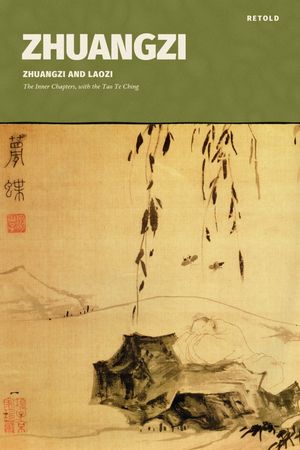
Zhuang Zhou, who is Zhuangzi, dreamed one night that he was a butterfly, a butterfly flitting here and there, every inch a butterfly, glad in itself and doing whatever it liked. It had no idea that it was Zhou. All at once he woke, and with a start he was Zhou again, Zhou in the flesh. He could not tell: had Zhou dreamed he was a butterfly, or was a butterfly now dreaming that it was Zhou? Zhou and a butterfly: there has to be a line between them. This is what is called the transformation of things.
Chapter 3: The Key to Nourishing Life
My life has a limit, but knowing has no limit. To use what has a limit to chase after what has none is dangerous; and if, knowing that, you still go on trying to know, then you are in danger, and that is all there is to it. If you do good, stay well away from fame; if you do bad, stay well away from punishment. Keep to the middle channel and make it your constant rule, and you can keep your body safe, keep your life whole, look after your parents, and live out all your years.
Cook Ding was butchering an ox for Lord Wenhui. Wherever his hand pressed, wherever his shoulder leaned, wherever his foot came down, wherever his knee pushed in, the hide and flesh parted with a hiss, the blade sang as he drove it home, and not one sound fell off the beat: it was the Mulberry Grove, the dance of the founder of the Shang, and it landed square on the measures of the Jingshou, the music of Yao.
"Ha! Superb!" said Lord Wenhui. "Can skill really reach this far?"
Cook Ding laid down his knife and answered, "What I love is the Way, and the Way takes me further than any skill. When I started out butchering oxen, wherever I looked there was nothing but ox. Three years on, I had stopped ever seeing an ox in one piece. These days my spirit meets it, and my eyes don't bother looking. The senses halt, and the spirit goes where it likes. I rely on Heaven's own pattern in the beast, slice into the great clefts, steer the blade along the great cavities, and follow the way the ox is already put together. Never yet has my knife touched the places where vessel and sinew knot onto the bone, let alone a great bone itself. A good cook needs a new knife every year: he slices. An everyday cook needs a new one every month: he chops. This knife of mine has been going nineteen years. It has taken apart several thousand oxen, and its edge is still as if it were fresh from the whetstone. The joints have gaps in them, and the edge of a knife has no thickness. Put what has no thickness where there is a gap, and the room is wide, wide open, with space to spare for the blade to wander in. That's why after nineteen years its edge is still as if it were fresh from the whetstone. All the same, whenever I reach a cluster, where things knot together, I see that it will be hard going. I grow wary and on my guard; my gaze holds still; my hand goes slow; I move the blade the barest amount; and with a rip it has come apart, slumping like a heap of earth tipped onto the ground. I stand there, knife in hand, and look about me in every direction, and I linger over it, filled to the brim with contentment; then I clean the blade and put it away."
"Splendid!" said Lord Wenhui. "From what Cook Ding has told me, I have found out how life is nourished."
When Gongwen Xuan saw the Commander of the Right, he started in surprise. "What kind of man is this? How does he come to have only one foot? Was it Heaven's doing, or man's?"
"It was Heaven's doing, not man's. When Heaven gave this man life, it made him one-footed. Human looks are given as a pair, two feet walking together, and that is how I know his single foot is Heaven's doing, and not man's."
The pheasant of the marshes takes ten steps for a single peck and a hundred steps for a single drink, but it has no wish to be kept in a cage. In there, though it might be in the best of spirits, it would not be happy.
Lao Dan, the Old Master to whom the book called the Laozi is ascribed, died, and Qin Shi went to mourn him. He gave three wails, and left.
One of the disciples said, "Weren't you the Master's friend?"
"I was."
"Then is it all right to mourn him like that?"
"It is. At first I took the people in there for his true followers, but now I see they are not. When I went in to mourn just now, there were old people weeping for him as if they were weeping for a son, and young people weeping for him as if for a mother. To have gathered them here like this, there must have been something that set them talking without being asked to talk, and weeping without being asked to weep. That is running away from Heaven and turning your back on how things really are, forgetting what you were given. The ancients called it the punishment for running away from Heaven. When the Master came, it was because his time had come; when the Master left, he was only following along. Be content with your time and settle into following along, and neither grief nor joy can get in. The ancients called this being cut down by the Lord on High from where you hang."
The hand that feeds the fire comes to the end of its sticks, but the fire is passed on, and no one knows where it ends.
Chapter 4: In the Human World
Yan Hui, Confucius's favourite disciple, went to see his master and asked leave to set out on a journey.
"Where are you going?" said Confucius.
"To Wei."
"And what will you do there?"
"I have heard," said Yan Hui, "that the ruler of Wei is young and headstrong. He handles his state carelessly and never sees his own faults. He spends his people's lives carelessly too, so that the dead lie all over the country, as thick as brushwood in a swamp, and the people have nowhere left to turn. I once heard you say, Master, 'Leave the state that is well governed and go to the one in disorder; there are plenty of sick people at the doctor's door.' I want to take what I have learned from you and think out how to act on it, in the hope that the state may yet be cured."
"Ah!" said Confucius. "You'll go there and get yourself punished, that's all! The Way doesn't want to be mixed with anything. Mixed, it becomes many; many, it gets confused; confused, it brings worry; and once there's worry, there's no saving anyone. The perfect men of old made sure of it in themselves first, and only then looked to make sure of it in others. If what you have in yourself isn't settled yet, what business have you meddling with what a tyrant does? Besides, do you know what it is that wears virtue away, and where knowledge comes from? Virtue is worn away by the pursuit of a name, and knowledge comes out of rivalry. A name is something men crush one another with; knowledge is a weapon for fighting. Both are deadly instruments, and neither is the way to live a life through to its end.
"And suppose your virtue is solid and your good faith firm: you still haven't got through to the man's temper. Suppose you have a name for never quarrelling: you still haven't reached his heart. If you then push your speeches about benevolence and righteousness, all those carpenter's lines and rules of yours, in front of a tyrant, you'll be using his ugliness to show off your own beauty. He'll call you a man who brings disaster on others, and a man who brings disaster on others is sure to have disaster brought back on him. You'll very likely end up as the one it falls on!
"Then again, if he really did love the worthy and hate the worthless, what would he need you for, to make a difference? Better say nothing at all. Kings and dukes always seize on a man's words and fight to win the point. Your eyes will be dazzled, your face will try to look calm, your mouth will scramble for excuses, your manner will bend itself to fit him, and in the end your heart will come round to his side. That is putting out fire with fire and stopping water with water, and its name is 'adding more'. Once you start giving way like that, there will be no end to it. If you pour out earnest words to a man who doesn't trust you, you'll certainly die at the tyrant's feet!
"Long ago Jie, the last king of the Xia, killed his minister Guan Longfeng, and Zhou, the last king of the Shang, killed Prince Bigan. Both of those men cultivated their own persons and stooped to care for another man's people, and so, from below, they crossed their superiors. Their lords used that very goodness of theirs as the reason to get rid of them. That is what comes of loving a good name. And long ago Yao attacked Congzhi and Xu'ao, and Yu attacked Youhu. Those states were turned into wastelands haunted by ghosts, and their rulers were put to death, because they had never stopped making war and never stopped grasping for gain. Every one of them was after a name, or after gain. Haven't you heard? Name and gain are more than even a sage can overcome, let alone you! Still, you must have something in mind. Try telling me."
"If I am grave and humble," said Yan Hui, "and work hard and keep single-minded, will that do?"
"Hah! How could that do? That man is swollen with a blustering spirit and makes a great show of it. His moods are never steady from one moment to the next. Ordinary people don't dare oppose him, and he tramples on whatever they feel, to give his own heart room to have its way. Even what they call 'the virtue that grows by daily degrees' would get nowhere with him, let alone great virtue! He'll cling to his ways and never change; he may agree with you on the outside, but inside he won't give it a second thought. How could that do?"
"Then I'll be straight inside and bend on the outside, and I'll make my points by appeal to the ancients. By being straight inside, I'll be a companion of Heaven. A companion of Heaven knows that the Son of Heaven and he himself are equally the children of Heaven. Why would such a man care whether people call his words good, or call them not good? People would call a man like that a child, and that is what I mean by being a companion of Heaven. By bending on the outside, I'll be a companion of men. Raising the tablet, kneeling, bowing and bending low: these are the courtesies a subject owes, and everyone performs them, so how would I dare not to? If you do what everyone does, no one finds fault with you, and that is what I mean by being a companion of men. By making my points by appeal to the ancients, I'll be a companion of antiquity. My words may be lessons and rebukes, but in fact they belong to the ancients and not to me. That way I can be blunt and still come to no harm, and that is what I mean by being a companion of antiquity. If I go about it like this, will that do?"
"Hah! How could that do?" said Confucius. "Far too many methods, and you haven't sounded the man out. Rigid as they are, they would keep you out of trouble; but that's as far as they'd go. How could they ever bring about a change in him? You're still taking your own heart for your teacher."
"I have nothing more to offer," said Yan Hui. "May I ask the right way to go about it?"
"Fast," said Confucius, "and then I'll tell you. To have something in your heart and act on it: do you think that's easy? Whoever thinks it easy, bright Heaven will not approve of him."
"My family is poor," said Yan Hui, "and for several months now I've had no wine to drink and no strong-smelling vegetables to eat. Does that count as fasting?"
"That's the fasting you do before a sacrifice. It isn't the fasting of the heart."
"May I ask what the fasting of the heart is?"
"Bring your will to a single point. Instead of hearing with your ears, hear with your heart; instead of hearing with your heart, hear with your breath, the vital stuff that fills the body and the sky alike. Hearing goes no further than the ears, and the heart goes no further than matching things up. Breath, though, is empty, and lies open to receive whatever comes. Only where it is empty does the Way settle, and that emptiness is the fasting of the heart."
"Before I was able to put this to use," said Yan Hui, "I really was myself, Hui. Now that I have put it to use, there has never been any Hui at all. Can that be called being empty?"
"That's all there is to it," said the Master. "Let me tell you. You can go in and wander about inside his cage without being stirred by his name. If he takes you in, sing; if he won't, stop. Have no gate and offer no remedy. Make oneness your home and lodge in what cannot be helped, and you'll be close. To stop leaving footprints is easy; to walk without touching the ground is hard. When you're sent by men, it's easy to fake; when you're sent by Heaven, it's hard to fake. You've heard of flying with wings, but never of flying without them. You've heard of knowing by what you know, but never of knowing by what you don't know. Look at that empty space over there: the empty room fills with light, and good fortune comes to rest on what is still. If you aren't still, that is what they call galloping while you sit. Let your ears and eyes open inward, and put the knowing of your heart outside, and even ghosts and spirits will come to lodge with you, let alone men! This is how the ten thousand things are transformed. It is what Yu and Shun held fast to, and what Fu Xi, the first of the ancient kings, and Ji Qu, a king from before writing, practised to the end of their days; how much more should the rest of us, scattered as we are!"
Zigao, the Duke of She, a high minister of Chu, was about to go on a mission to Qi, and he asked Confucius about it. "The king is sending me on a very weighty mission. Qi will treat the envoy with every respect, I expect, and take its time. Even a common man can't be hurried, let alone a feudal lord. I'm terrified. You once told me, 'In every affair, small or great, few come to a happy end except by the Way. If the thing fails, you're sure to have trouble from men; if it succeeds, you're sure to have trouble from yin and yang, the balance of your own body. To come through without trouble whether it succeeds or not, only a man of virtue can do that.' I eat plain, coarse food that's nothing special, and nobody in my kitchen ever wants to cool off. Yet this morning I received my orders, and by this evening I'm drinking ice water. I must be burning up inside! I haven't even reached the business itself, and already I have the trouble of yin and yang; and if the thing fails I'm sure to have trouble from men as well. That's both at once, and a subject can't bear it. Is there anything you can tell me?"
"In the world there are two great commandments," said Confucius. "One is destiny; the other is righteousness, what duty demands. A child's love for his parents is destiny: you can't untie it from your heart. A subject's service to his lord is righteousness: wherever you go there is a lord, and there's no escaping it anywhere between Heaven and earth. These are what I call the great commandments. That is why to serve your parents and be at ease wherever it takes you is the height of filial piety; to serve your lord and be at ease whatever the task is the fullness of loyalty; and to serve your own heart, so that grief and joy don't shift it this way and that, knowing what can't be helped and being at ease with it as with destiny, is the height of virtue. A subject or a son is bound to meet things that can't be helped. Do what the business needs and forget yourself, and what time will you have for loving life and hating death? Go, sir, and you'll be all right!
"Let me tell you something else I've heard. In all dealings between states, the near ones bind each other by keeping faith, and the far ones must show their loyalty in words, and those words have to be carried by someone. To carry words that please both sides, or anger both, is the hardest thing in the world. When both are pleased there are bound to be words of overflowing praise, and when both are angry, words of overflowing abuse. Anything overflowing is close to a lie; where there's a lie, nobody believes it; and when nobody believes it, the man who carried the words suffers. That is why the Model Sayings tell us: 'Pass on the plain facts and not the overflowing words, and you'll come through whole, or nearly.'
"Then think of men who pit their skill against each other in a trial of strength: they begin in the open light and usually end in the dark, and when it goes too far they get up to all sorts of tricks. Men who drink by the rules of ritual begin in good order and usually end in chaos, and when it goes too far they get up to all sorts of strange pleasures. It's the same with everything: it begins in good faith and usually ends in meanness, and what starts out simple is bound to end up huge. Words are wind and waves; acting on them means gain or loss. Wind and waves are easily stirred, and gain and loss easily turn to danger. That is why anger flares up from nothing more than clever words and one-sided speeches. A dying beast doesn't choose its noise; its breath comes in snorts, and a savage heart rises up on both sides. Press a man too hard, and he's sure to answer you with a vicious heart without knowing why; and if he doesn't know why, who knows where it will end? That is why the Model Sayings tell us: 'Don't change your orders; don't push for a result.' To go past the measure is to overdo it, and changing orders and pushing for results put the business in danger. A good outcome takes a long time to make; a bad one is done before you can mend it. Can you afford not to be careful? Ride along with things and let your heart wander; trust to what cannot be helped, and nourish what is within you: that is the best of all. Why contrive anything for the sake of the report you bring back? Nothing is better than simply giving yourself up to your destiny, and that is the hard part."
Yan He, who had been appointed tutor to the crown prince of Duke Ling of Wei, went to ask advice of Qu Boyu, the wise minister of Wei. "Here is a man," he said, "whose nature Heaven has made murderous. If I let him go on without any rules, he'll endanger our state; if I hold him to rules, he'll endanger me. He knows just enough to see other people's faults, but not enough to see why they commit them. What am I to do with a man like that?"
"A good question!" said Qu Boyu. "Be on your guard! Be careful! Make sure you yourself are upright! In your outward manner, there's nothing better than to draw close to him; in your heart, there's nothing better than to be in harmony with him. Even so, both of these have their dangers. Draw close, but don't be drawn in; be in harmony, but don't let it show. If your outward manner draws close and you're drawn in, you'll fall and be ruined, you'll collapse and come down. If your heart is in harmony and it shows, you'll get a reputation and a name, and they'll turn into curses and calamities. If he wants to be a baby, be a baby with him; if he wants to keep no boundaries, keep no boundaries with him; if he wants to run wild with no limits, run wild with no limits with him. Get through to him that way, and lead him into where there is nothing to find fault with.
"Haven't you heard of the praying mantis? It waves its arms in a fury at an oncoming cartwheel, not knowing the job is beyond it, because it thinks so highly of its own talents. Be on your guard! Be careful! If you keep parading your fine qualities and rubbing him up the wrong way with them, you're in danger! Haven't you heard of the tiger keeper? He never dares give his tigers a live animal, for fear of the fury they'll fall into killing it; he never dares give them a whole carcass, for fear of the fury they'll fall into tearing it apart. He times their hunger and their fullness and works with the grain of their temper. Tigers are a different kind from men, and yet they fawn on the man who feeds them, because he goes along with them; the ones that kill have been crossed. A man who loves his horse will catch its dung in a basket and its urine in a clamshell. But let a mosquito or a horsefly land on it, and if he slaps at it at the wrong moment, the horse will break its bit, smash his head and stave in his chest. He meant it all for the best, and his love was lost all the same. Can you afford not to be careful?"
Carpenter Shi was on his way to Qi. When he came to Quyuan, he saw an oak that stood beside the shrine of the local god. It was big enough to hide an ox behind it, and measured a hundred arm-spans round. It was so tall that it looked down on the hills, and its trunk ran up sixty feet before it put out a single branch, and there were more than a dozen branches each big enough to be hollowed into a boat. Sightseers crowded round it like a market, but the master carpenter never gave it a glance and walked straight on without stopping. His apprentice took a good long look at it, then ran to catch up with him. "Ever since I took up my axe and adze to follow you, Master, I've never seen timber as fine as this. And you won't even look at it, you just keep walking. Why is that?"
"Stop! Not another word about it! It's worthless wood! Build a boat from it and the boat goes to the bottom; build a coffin and the coffin soon rots; make a pot or a bowl and it soon falls to bits; hang a door and the door weeps sap; set up a pillar and the grubs bore into it. This is a tree with no timber in it. Nothing can be done with it, and that is why it has been able to grow so old."
After Carpenter Shi had gone home, the oak of the shrine came to him in a dream. "What were you measuring me against?" it said. "Against the trees with a fine grain to them? The hawthorn, the pear, the orange, the pomelo, all the kinds that bear fruit on a branch or on a vine: as soon as their fruit is ripe they're stripped, and roughly handled, the big branches snapped and the little ones wrenched about. What they are good at is what makes their lives bitter. That's why they never live out the years Heaven gave them, but die young, halfway through. They pull the beating of the vulgar world down on their own heads, and all things go the same way. For my part, I set out a long time ago to be of no possible use. It almost killed me, but now at last I've got there, and that is my great use. Had I been useful, could I have come to be this big? Besides, you and I are both of us things. How can it be that one thing sets about sizing up another? And you, a worthless man half dead already: what do you know about worthless trees?"
When Carpenter Shi woke, he puzzled over his dream. "If it's so set on being useless," said his apprentice, "why has it become the shrine tree?"
"Hush! Not a word! It is only putting up there, and leaving those who don't understand it to mock it and curse it. If it weren't the shrine tree, wouldn't someone have trimmed it down long ago? Besides, what it is keeping safe is not what the crowd keeps safe, and if you praise it in the language of righteousness, aren't you a long way off?"
Nanbo Ziqi was wandering by the Hill of Shang when he saw a huge tree, quite out of the ordinary: a thousand teams of four horses could have been tethered there and all of them hidden in its shade. "What tree is this?" said Ziqi. "It must have some extraordinary timber in it!" He looked up at its smaller branches, and they were too twisted and crooked to make rafters or beams. He looked down at its great trunk, and it was split open at the core and no use for a coffin. He licked a leaf, and it blistered his mouth; he sniffed it, and it made him as wild as a drunk for three days on end. "This really is a tree with no timber in it," said Ziqi, "and that's how it has grown so big. Ah! This is how the godlike man makes himself no timber."
In Song there is a place called Jingshi where catalpas, cypresses and mulberries grow well. Those as thick as a hand's grip or two get cut down by people looking for posts to tie monkeys to. Those three or four arm-spans round get cut down by people looking for ridgepoles for grand houses. Those seven or eight arm-spans round get cut down by noble families and rich merchants looking for planks for the sides of a coffin. They never live out the years Heaven gave them, but die young, halfway through, under the axe. That is the trouble with being good timber. In the same way, when sacrifices are made to the River, an ox with a white forehead, a pig with a turned-up snout and a man with piles may not be offered to it. The shamans and priests all know this; to them it is what makes such creatures unlucky. And this is exactly what the godlike man counts as the greatest luck of all.
Shu the Disjointed has his chin hidden down in his navel, his shoulders higher than the top of his head, and his topknot pointing at the sky. The pipes of his five organs are up on top, and his two thighbones stand in for his ribs. By sewing and washing clothes he makes enough to keep himself fed, and by winnowing and sifting grain he makes enough to feed ten people. When the authorities are conscripting soldiers, Disjointed strolls about among them swinging his arms; when they call up men for a great labour, Disjointed is let off because he's a chronic invalid; and when they hand out grain to the sick, he gets about ten bushels, and ten bundles of firewood too. If a man who is disjointed in his body can still keep himself alive and live out the years Heaven gave him, how much more a man who is disjointed in his virtue!5
When Confucius went to Chu, Jie Yu, the madman of Chu, wandered past his gate singing:
	Phoenix, O phoenix,
	how your virtue has declined!
	The age to come you cannot wait for,
	the age gone by you cannot chase.
	When the world has the Way,
	the sage completes his work;
	when the world has lost the Way,
	the sage just stays alive.
	In times like ours
	it's enough to escape punishment.
	Good fortune is lighter than a feather,
	and no one knows how to pick it up;
	disaster is heavier than the earth,
	and no one knows how to get out of its way.
	Give it up, give it up,
	standing over men with your virtue!
	Danger, danger,
	drawing a line on the earth and scurrying along it!
	Dim the light, dim the light,
	and nothing will hurt me as I go;
	I go backwards, I go round about,
	and nothing will hurt my feet.
The tree on the mountain is its own plunderer; the grease in the lamp boils itself away. Cinnamon is good to eat, so they chop the tree down; lacquer is good to use, so they gash the tree open. Everyone knows how useful it is to be useful; no one knows how useful it is to be useless.
Chapter 5: The Signs of Virtue in Full
In Lu there was a man called Wang Tai who had had a foot cut off as a punishment, and he had as many followers as Confucius. Chang Ji asked Confucius about him. "Wang Tai is a man with one foot," he said, "and yet he and you, Master, divide the followers of Lu between you. When he stands, he doesn't teach; when he sits, he doesn't discuss; yet people go to him empty and come back full. Is there really such a thing as a teaching without words, a heart brought to completion with nothing outward to show for it? What kind of man is he?"
"That master is a sage," said Confucius. "It's only that I've been slow, and haven't gone to him yet. I mean to take him as my teacher myself, so how much more should those who are not even my equals! And why only Lu? I'm going to bring the whole world to follow him."
"He's a man with one foot," said Chang Ji, "and yet he's a greater master than you, sir. He must be far above ordinary men. In that case, how does he use his heart, in his own particular way?"
"Death and life are great matters," said Confucius, "but they make no change in him. Even if Heaven and earth were to topple and fall, he would not be lost along with them. He sees clearly into what has no falseness in it, and does not shift along with things. He takes the transformation of things as their destiny, and holds fast to the root of it all."
"What do you mean?" said Chang Ji.
"Look at things from where they differ, and liver and gall are as far apart as Chu and Yue. Look at them from where they are the same, and the ten thousand things are all one. A man who sees like that no longer even knows what suits his ears and eyes. He lets his heart wander in the harmony of virtue, virtue in the old sense of the power a thing has from being fully what it is. He looks at what things share and does not see what they lose, and he looks on the loss of his foot as if he had dropped a clod of earth."
"He works only on himself," said Chang Ji. "With his knowing he has found his heart, and with his heart he has found the heart that is constant. Why should people flock to him?"
"Nobody looks for his reflection in running water," said Confucius. "They look in still water. Only what is still can bring to stillness all those who come looking for it. Of all that receive their life from the earth, only the pine and the cypress stay green winter and summer alike; of all that receive their life from Heaven, only Shun was upright, and he was fortunate enough to set his own life upright and so set the lives of everyone else upright too. Hold fast to the proof that you are true to your beginning, the substance of fearlessness, and a single brave warrior will charge in among the nine armies. If a man who is only out to win a name, and can drive himself that far, is like that, how much more one who makes Heaven and earth his office and keeps the ten thousand things in his storehouse, who merely lodges in his body and its six parts and takes his ears and eyes for images, who makes all he knows one, and whose heart has never died! He will pick his day and rise far beyond us, and people simply follow him. Why would he be willing to make things his business?"
Shentu Jia was another man who had had a foot cut off, and he studied under Elder Dusk-Nobody together with Zichan, the famous chief minister of Zheng. Zichan said to Shentu Jia, "If I go out first, you stay behind; if you go out first, I'll stay behind." The next day they were together again in the hall, sitting on the same mat. Zichan said to Shentu Jia, "If I go out first, you stay behind; if you go out first, I'll stay behind. Now I'm about to go out. Will you stay behind or won't you? Besides, when you see a minister of state you don't get out of his way. Do you think you're the equal of a minister of state?"6
"In our teacher's school," said Shentu Jia, "is there really any such thing as a minister of state? You take such pleasure in being a minister that you want to put everyone else behind you. I have heard it said, 'When the mirror is bright, no dust settles on it; if dust settles, it isn't bright. Stay long with a worthy man and you'll be free of faults.' The great thing you came here to find is our teacher, and still you talk like this. Isn't that a fault?"
"Look at the state of you," said Zichan, "and you still want to compete with Yao in goodness! Weigh up your virtue: isn't it enough to make you take a hard look at yourself?"
"Plenty of men explain away their faults and think they didn't deserve to lose their foot," said Shentu Jia; "few will leave their faults unexcused and think they didn't deserve to keep it. To know what cannot be helped and be at ease with it as with destiny: only a man of virtue can do that. Walk about in front of Yi, the legendary archer, within the range of his bow, and the middle is where you get hit; if you don't get hit, that's destiny. Plenty of people with both their feet have laughed at me for having only one. I used to flare up in a rage, but when I came to our teacher's house it would all drain away, and I'd go home my old self again. I don't know whether he washed me clean with his goodness. I've studied with the Master for nineteen years, and he has never once noticed that I'm a man with one foot. Now you and I are studying what is inside the body, and you go looking for me outside it. Isn't that a fault?"
Zichan was taken aback. His face changed, and he said, "Please, say no more!"
In Lu there was another man who had had a foot cut off, Toeless Shushan, and he came stumping along on his heels to see Confucius. "You weren't careful," said Confucius, "and you've already got yourself into trouble like this. Even though you've come to me now, how can you ever make up for it?"7
"It was only because I didn't know what mattered," said Toeless, "and was careless with my body, that I lost my foot. I've come now because I still have something worth more than a foot, and that is what I'm trying to keep whole. There is nothing Heaven does not cover and nothing earth does not hold up. I took you, sir, for Heaven and earth. How was I to know you'd be like this!"
"How stupid of me!" said Confucius. "Won't you come in, sir? Let me tell you what I have learned."
Toeless went away. "Work hard, my disciples!" said Confucius. "Toeless is a man with one foot, and he still wants to study so as to make up for the wrong he did before; how much more those whose virtue is whole!"
Toeless said to Lao Dan, "Confucius hasn't got as far as the perfect man yet, has he? Why does he keep coming to you so humbly, asking to be taught? He hopes to be famous for strange and marvellous things, and doesn't know that the perfect man sees all that as so many fetters on himself."
"Why not just make him see that life and death are a single strand," said Lao Dan, "and acceptable and unacceptable a single thread, and so free him from his fetters? Wouldn't that do?"
"Heaven has punished him," said Toeless. "How could he be freed?"
Duke Ai of Lu said to Confucius, "In Wei there is an ugly man called Tuo the Hideous. Men who spend time with him think so much of him that they can't bear to leave. Women who see him beg their parents, 'I'd rather be his concubine than any other man's wife', and there have been more than a dozen of them, and still more to come. No one has ever heard him take the lead in anything; he just chimes in with other people. He has no ruler's throne from which to save men from death, and no stores of wealth to fill their bellies. On top of that he's ugly enough to frighten the whole world. He chimes in and never leads, and what he knows goes no further than his own four borders, and yet men and women alike come flocking to him. He must be different from other people. I summoned him to have a look at him, and sure enough he was ugly enough to frighten the whole world. But before he had been with me a month I had begun to warm to him as a man, and before a year was out I trusted him completely. The state had no chief minister, and I handed the state over to him. He answered slowly and dully, vaguely, as if he were turning it down. I felt ashamed of myself, but in the end I gave him the state. Not long afterwards he left me and went away. I was grief-stricken, as if I had lost something, as if there were no one left to enjoy the state with me. What kind of man is he?"8
"I was once sent on a mission to Chu," said Confucius, "and while I was there I happened to see some piglets suckling at their dead mother. After a little while they gave a start, and all of them left her and ran away. She no longer saw them; she was no longer one of their kind. What they loved in their mother was not her body, but what made her body move. When a man dies in battle, he isn't buried with plumes of honour; a man whose feet have been cut off has no reason to care about shoes. In both cases the root of the thing is gone. The women who serve the Son of Heaven don't trim their nails or pierce their ears; a man who has just taken a wife stays outside the palace and is given no duties. If the body is kept whole to that degree, how much more a man whose virtue is whole! Now this Tuo the Hideous is trusted before he speaks and loved without having done anything, and makes a man hand over his state and fear only that he won't accept it. He must be a man whose powers are whole, and whose virtue takes no outward form."
"What do you mean, his powers are whole?" said Duke Ai.
"Life and death, survival and ruin, failure and success, poverty and wealth, worth and worthlessness, blame and praise, hunger and thirst, cold and heat," said Confucius, "these are the changes of events, the workings of destiny. Day and night they take turns in front of us, and knowing cannot see back to where they begin. They are not enough to disturb your harmony, and they must not be let into the Storehouse of the Spirit. Keep it in harmony and at ease, open to everything and never losing its gladness; keep it going day and night without a break, and be springtime with every thing. That is to meet things and make the seasons arise in your own heart. That is what I mean by having your powers whole."
"And what do you mean by virtue that takes no outward form?"
"Water at rest is level, the stillest it can be. That is why it can serve as a standard: it keeps what is inside it, and nothing outside stirs it. Virtue is the cultivation of perfect harmony. When virtue takes no outward form, things cannot bear to leave it."
Another day, Duke Ai told Minzi, one of Confucius's disciples, about it. "At first I sat on the throne facing south as a ruler does, and ruled the world, holding the reins of the people and worrying that they might die, and I thought I understood everything there was to understand. Now I have heard the words of a perfect man, and I'm afraid I had none of the substance, and was careless with myself, and would have ruined my state. Confucius and I are not lord and subject. We are friends in virtue, and that is all."
Lame-Hunchback-Lipless talked with Duke Ling of Wei, and the duke was so delighted with him that when he looked at men with whole bodies their necks seemed scrawny. Jar-Sized-Goitre talked with Duke Huan of Qi, and the duke was so delighted with him that when he looked at men with whole bodies their necks seemed scrawny. Where virtue stands out, the body is forgotten. When people don't forget what can be forgotten, but forget what cannot be forgotten, that is what is called really forgetting. The sage has somewhere to wander, and so he treats knowledge as a curse, promises as glue, virtue as patchwork, and skill as peddling. The sage makes no plans, so what use has he for knowledge? He doesn't carve, so what use has he for glue? He has lost nothing, so what use has he for virtue? He has nothing to sell, so what use has he for peddling? These four are Heaven's rearing. Heaven's rearing means being fed by Heaven. When he has been fed by Heaven, what use has he for men? He has the shape of a man but not the feelings of a man. Because he has the shape of a man, he herds together with men; because he hasn't the feelings of a man, right and wrong cannot get at him. Tiny, how small he is, in what ties him to other men! Vast, how great he is, alone completing the Heaven in him!9
Huizi said to Zhuangzi, "Is a man, then, by nature without feelings?"
"He is," said Zhuangzi.
"A man with no feelings: what makes him a man at all?"
"The Way gave him his looks and Heaven gave him his shape. What could stop him being a man?"
"Once he is a man, how can he lack feelings?"
"That isn't what I call feelings," said Zhuangzi. "When I speak of having no feelings, I mean that a man does not let liking and disliking wound him from within. He always goes along with what is so of itself, the way things go when nobody interferes, and he does not try to add anything to life."
"If he adds nothing to life," said Huizi, "how does he come to have a body at all?"
"The Way gave him his looks and Heaven gave him his shape, and he does not let liking and disliking wound him from within. You, now: you send your spirit out of doors and wear your vital essence thin. You lean against a tree and drone, you prop yourself on your dried-up desk and nod off. Heaven chose a shape for you, and you use it to chirp about the hard and the white!"
Chapter 6: The Great Ancestral Teacher
To know what Heaven does, and to know what man does: that is as far as knowing goes. Whoever knows what Heaven does lives as Heaven gave him life. Whoever knows what man does uses what his knowing knows to nourish what his knowing does not know, and lives out the years Heaven gave him without dying young, halfway through: that is knowing at its fullest. Even so, there is a difficulty. Knowing has to wait on something before it can be right, and what it waits on is never settled. How can I know that what I call Heaven is not really man, or that what I call man is not really Heaven? First there has to be a True Man, a man who is genuine all the way through, and only then can there be true knowing.
What do I mean by a True Man? The True Men of old did not push away the few who disagreed, did not play the hero over what they had achieved, and did not lay schemes for their affairs. Men like that could make a mistake without regretting it, and get something right without being pleased with themselves. Men like that could climb the heights without trembling, go into water without getting wet, and go into fire without feeling the heat. That is how far knowing can go when it climbs all the way up to the Way.
The True Men of old had no dreams when they slept and no cares when they woke. Food held no special relish for them, and their breathing went deep, very deep. A True Man draws his breath all the way up from his heels; most people draw theirs from no lower than the throat. Get the better of a man in an argument and his words stick in his gullet like something he is about to bring up. Where appetite and desire run deep, the spring that Heaven set in a man lies shallow.
The True Men of old did not know how to love being alive, or how to hate dying. Coming out into the world gave them no thrill; going back in, they did not resist. Unhurried they went, unhurried they came, and nothing more. They kept in mind where they had started from and did not seek out where they would finish. Whatever they were given they took and enjoyed; then they forgot it, and returned it. This is what is called not using the heart to throw away the Way, and not using man to help Heaven. This is what is called the True Man.
A man like that has a heart that is settled, a face that is calm and a forehead broad and plain. He is cool like autumn and warm like spring; his joy and his anger move as the four seasons do. He is in keeping with every thing, and no one knows where he ends. That is why, when the sage goes to war, he can destroy a state without losing the hearts of its people, and his benefits can reach ten thousand generations without his loving anyone in particular. A man who takes delight in getting through to things is therefore no sage; a man with favourites is not benevolent; a man who waits on the season for his chance is not worthy; a man for whom gain and harm are two separate things is no gentleman; a man who chases a name and loses himself is no man of standing; and a man who throws his life away and is not true to himself can never be a master of men. Hu Buxie and Wu Guang, who drowned themselves rather than take the throne they were offered; Bo Yi and Shu Qi, the brothers who starved to death on a mountain rather than eat the grain of a dynasty they despised; Jizi, who played the madman under the last king of the Shang; Xu Yu; Ji Tuo and Shentu Di, who also ended in the river: all of them did the work that others set them and were suited by what suited others, and never once suited themselves with what suited them.
The True Men of old looked like this. They did what was fitting with everyone and joined no faction. They seemed to lack something and yet accepted nothing. They stood easily apart from others without being stiff about it; they were vast and empty without any show. They beamed, as if they were pleased; they moved, it seemed, only because they had to. Their brimming warmth drew you in; their generosity held you in their virtue. They were stern, as though they were men of their time, and so lofty that no one could ever tie them down. They kept to themselves, as if they liked to stay shut away, and they were so absent that they forgot what they had been going to say.
They took punishment as the body of government, the rites as its wings, knowing as a matter of timing, and virtue as going along with others. Because they took punishment as the body, they were lenient even when they put men to death. Because they took the rites as wings, they had the means to make their way in the world. Because they took knowing as a matter of timing, they did only what they could not help doing in their affairs. Because they took virtue as going along, it was like saying that they came to the top of the hill together with everyone else who had feet, while people really believed they had toiled their way up.
And so what they liked was one with them, and what they did not like was one with them too. Where they were one, they were one; where they were not one, they were also one. Being one, they were companions of Heaven; not being one, they were companions of man. When neither Heaven nor man is out to defeat the other, that is what is called the True Man.
Death and life are destiny; that they follow one another as steadily as night and day is Heaven. There are things that man can have no hand in, and that is simply how all things are. People look on Heaven as their father and love it with their whole bodies, so how much more should they love what stands out even beyond it? People think a lord is better than they are and will die for him with their whole bodies, so how much more for what is truly lord? When the springs dry up, the fish are left lying together on the dry land, and they spit on one another to keep damp and wet one another with their slime. They would be better off if they could forget each other in the rivers and lakes. Rather than praise Yao and condemn Jie, it would be better to forget them both and be transformed in the Way.
The great clod of the earth gives me a body to carry, a life to toil through, old age to take my ease in and death to lie at rest in. What makes a good thing of my life, then, makes a good thing of my death. You hide a boat in a gully, or hide a mountain in a marsh, and call it safe. But in the middle of the night a strong man comes, shoulders it and walks off, and in your stupor you never know. Hide small things inside big things, as is proper, and they can still get away. But if you hide the world in the world, there is nowhere for anything to get away to, and that is the great truth of things that endure. People are delighted just to have stumbled into a human shape. But the human shape goes through ten thousand transformations and never comes to an end, and could its joys ever be counted? That is why the sage wanders where nothing can get away from him, and where everything survives. He makes the best of dying young and of growing old, of beginning and of ending, and even so people take him as their model. How much more should they take as their model what the ten thousand things are tied to, and what every single transformation waits on?
The Way has reality and keeps faith, yet it does nothing, which is to say it acts without forcing anything, and it has no form. It can be handed on but not taken into the hand; it can be got but not seen. It is its own trunk and its own root. Before there was Heaven or earth, it was there, firm from the ancient days. It gave the ghosts their spirit and the Lord on High his; it gave birth to Heaven and gave birth to earth. It lies above the highest point of all and is not high; it lies below the six directions and is not deep. It was born before Heaven and earth and has not been there long; it is older than the remotest antiquity and is not old.
Xiwei, a sovereign of the most distant past, got it, and held up Heaven and earth by it. Fu Xi got it, and joined himself to the mother of the breath. The Dipper got it, and from the beginning of time has never strayed. The sun and the moon got it, and from the beginning of time have never rested. Kanpi got it, and made Mount Kunlun, the great mountain of the far west, his home. Feng Yi, the god of the Yellow River, got it, and wanders the great river. Jian Wu got it, and lives on Mount Tai. The Yellow Emperor got it, and climbed up into the cloudy sky. Zhuanxu, his grandson, got it, and lives in the Dark Palace. Yuqiang got it, and stands at the far end of the north. The Queen Mother of the West got it, and sits on Shaoguang Mountain, and no one knows her beginning and no one knows her end. Pengzu got it, and lived from the time of Shun all the way down to the time of the Five Lords Protector. Fu Yue got it, and served as chief minister to Wu Ding, king of the Shang, who came to possess the whole world; and now Fu Yue rides the Eastern Corner of the sky, astride the stars of the Winnowing Basket and the Tail, and takes his place among the constellations.
Nanbo Zikui asked Nü Yu, "You are old, and yet you have the complexion of a child. How is that?"
"I have heard the Way."
"Can the Way be learned?" asked Nanbo Zikui.
"No! How could it be? You're not the man for it. Now Buliang Yi had the gifts of a sage but not the Way of a sage, and I had the Way of a sage but not the gifts. I wanted to teach him, in the hope that he might really become a sage. Even if he didn't, it ought to be easy to tell the Way of a sage to a man with the gifts of a sage. Still, I kept hold of it and told it to him slowly. After three days he could put the world outside himself. When he had put the world outside himself, I kept hold of it again, and after seven days he could put things outside himself. When he had put things outside himself, I kept hold of it again, and after nine days he could put life outside himself. When he had put life outside himself, he could break through into the clear light of dawn. When he had broken through into the dawn, he could see the Alone. When he had seen the Alone, he could do away with past and present. When he had done away with past and present, he could enter where there is no dying and no being born. What kills life does not die; what gives birth to life is not born. As a thing, it sees off everything and welcomes everything, it destroys everything and completes everything. Its name is Peace in Turmoil. Peace in Turmoil means that it comes to completion only by way of the turmoil."
"And where did you hear all this?" said Nanbo Zikui.
"I heard it from the Son of Aided Ink, and the Son of Aided Ink heard it from the Grandson of Recitation, and the Grandson of Recitation heard it from Seeing Brightly, and Seeing Brightly heard it from Whispered Assent, and Whispered Assent heard it from Needful Practice, and Needful Practice heard it from Singing Out, and Singing Out heard it from Dark Obscurity, and Dark Obscurity heard it from Joining the Void, and Joining the Void heard it from Seeming Beginning."10
Zisi, Ziyu, Zili and Zilai, the four of them, were talking together. "Who can take Nothing for his head, life for his backbone and death for his tailbone? Who knows that dying and living, lasting and perishing, are all one body? That's a man we'd be friends with!" The four of them looked at one another and laughed. Nothing in any of their hearts went against the grain, and so from then on they were friends.
Before long Ziyu fell ill, and Zisi went to see how he was. "Magnificent!" said Ziyu. "The Maker of Things is bundling me up into this knot!" He was bent over, his back hunched high; the pipes of his five organs were up on top; his chin was tucked down into his navel, his shoulders rose above his crown, and his topknot pointed at the sky. The breaths of yin and yang in him had gone awry. Yet his heart was at leisure and untroubled by anything. He tottered over to the well, looked down at himself in the water and said, "Well, well! The Maker of Things is bundling me up into this knot again!"
"Do you hate it?" said Zisi.
"Not at all. Why would I hate it? If it goes on, little by little, and turns my left arm into a rooster, I'll use it to crow the hours before dawn. If it goes on and turns my right arm into a crossbow pellet, I'll use it to bring down an owl for roasting. If it goes on and turns my tailbone into wheels and my spirit into a horse, I'll mount up and ride; what would I want with another carriage? Besides, what we get, we get when its time comes, and what we lose, we lose by following along. Be content with your time and settle into following along, and neither grief nor joy can get in. This is what the ancients called being cut down from where you hang. Those who cannot cut themselves down are held in knots that things have tied. And things have never got the better of Heaven; it has always been so. What would I hate about it?"
Before long Zilai fell ill. He lay panting, close to death, with his wife and children in a ring round him, weeping. Zili went to see how he was. "Off with you! Shoo!" he told them. "Don't jolt the change that's under way!" Then he leaned against the door frame and talked to Zilai. "Magnificent, the Great Transformer! What will it make of you next? Where will it send you? Will you be a rat's liver? Will you be an insect's foreleg?"
"Between a child and its parents," said Zilai, "whether it's east or west, south or north, the child simply does as it is told. Yin and yang are no less to a man than his father and mother. They have brought me near to death, and if I refused to listen I would only be defiant; how would that be their fault? The great clod of the earth gives me a body to carry, a life to toil through, old age to take my ease in and death to lie at rest in. What makes a good thing of my life, then, makes a good thing of my death. Suppose a great smith were casting metal, and the metal jumped up and said, 'I must be made into a Moye, the famous sword, and nothing else!' The smith would be sure to reckon it an ill-omened metal. If I, having just once happened into a human form, were to cry out, 'A man! Only a man!', the Great Transformer would be sure to reckon me an ill-omened person. Once I take Heaven and earth for a great furnace and the Great Transformer for the great smith, where could I be sent that would not do?" And he dropped into a contented sleep, and woke with a start.
Zisang Hu, Meng Zifan and Ziqin Zhang, three men, were friends. "Who can be with others without being with them," they said, "and do for others without doing for them? Who can climb up into the sky and wander in the mists, go whirling about in the limitless, forget each other in living, and never come to an end?" The three looked at one another and laughed. Nothing in their hearts went against the grain, and so they were friends together.
A quiet while went by, and then Zisang Hu died. Before he was buried, Confucius heard about it and sent Zigong, one of his disciples, to help with the funeral. One of the friends was making up a song and the other was playing the zither, and together they sang:
	Hey there, Sang Hu, come back!
	Hey there, Sang Hu, come back!
	You've gone back home to what is true,
	and we're still men, ah me!
Zigong hurried forward. "May I ask," he said, "is it proper to sing with the corpse right in front of you?"
The two men looked at each other and laughed. "What does he know about what the rites are for?"
Zigong went back and told Confucius. "What sort of men are they? They don't cultivate their conduct at all, and they treat their own bodies as something outside them. They sing with the corpse right in front of them, and their faces don't change. I don't know what to call them. What sort of men are they?"
"They are men who wander beyond the bounds," said Confucius, "and I am a man who wanders within them. Beyond and within never meet, and I sent you to offer condolences. That was stupid of me. Those men are keeping company with the Maker of Things, and wandering in the single breath of Heaven and earth. To them life is a dangling wart or a hanging tumour, and death is the bursting of a boil or the draining of an abscess. Men like that: how would they know which comes first, death or life, and which comes after? They borrow their bodies from different things and lodge them in one shared form; they forget their livers and their gall, they leave their ears and eyes behind; they turn over and over, ending and beginning, and never know where it starts or stops. Vaguely they drift about beyond the dust and grime of the world, free and easy in the work of doing nothing. How could they bother to fuss over the rites of the vulgar world, putting on a show for the eyes and ears of the crowd?"
"Then which bounds do you keep to, Master?" said Zigong.
"I am one of those whom Heaven has punished. Even so, I will share with you what I have."
"May I ask how it is done?"
"Fish thrive together in water," said Confucius, "and men thrive together in the Way. Those that thrive in water: dig them a pond, and they have all the nourishment they need. Those who thrive in the Way: have nothing to do, and their lives are settled. That is why it is said, 'Fish forget each other in the rivers and lakes, and men forget each other in the arts of the Way.'"
"May I ask about the odd man out?" said Zigong.
"The odd man out is odd to men, and a match for Heaven. That is why it is said, 'The small man in Heaven's eyes is the gentleman among men; the gentleman among men is the small man in Heaven's eyes.'"
Yan Hui asked Confucius, "When Mengsun Cai's mother died, he wailed but shed no tears, he felt no pain in the depths of his heart, and he went through the mourning without sorrow. He hasn't one of the three, and yet he's famous all over Lu for mourning well. Can a man really get the name without the reality? I find it very strange."
"Mengsun has gone all the way," said Confucius. "He has gone further than knowing. He tried to choose between life and death and could find no difference between them, and so for him the choosing is already done. Mengsun doesn't know what he lived by and doesn't know what he'll die by; he doesn't know about going first and doesn't know about going last. If he has been transformed into one thing, he is simply waiting for the next transformation, the one he doesn't know about yet! Besides, when a man is about to be transformed, how does he know he isn't staying as he is? When he is staying as he is, how does he know he hasn't already been transformed? Perhaps you and I are the ones who are dreaming, and haven't yet begun to wake!
"Besides, Mengsun has a body that takes fright but a heart that comes to no harm; he has a lodging that changes with every morning but nothing in him that really dies. Mengsun alone is awake. When other people wail, he wails too, and that is simply how it comes to him. We all go round saying 'I' to each other, but how do we know that what we call 'I' is really I? You dream you are a bird and go soaring into the sky; you dream you are a fish and go diving into the deep. I can't tell whether the one who is talking now is awake or dreaming. Hitting on what suits you comes before you have time to laugh, and the laugh bursts out before you have time to arrange it. Rest in the arrangement, go off along with the transformation, and you will enter the oneness of the empty sky."
Yierzi went to see Xu You. "What has Yao given you?" said Xu You.
"Yao told me, 'You must devote yourself to benevolence and righteousness, and speak out clearly about right and wrong.'"
"Then what have you come here for? Yao has already tattooed your face with benevolence and righteousness and cut off your nose with right and wrong. How are you going to wander now along the road of roaming at large, doing as you please, turning and shifting as you go?"
"Even so," said Yierzi, "I'd like to wander along its edges."
"No," said Xu You. "The blind have no share in the beauty of brows and eyes and faces, and the sightless no share in the sight of blue and yellow and the embroidery of ceremonial robes."
"Wuzhuang the beauty lost her looks, Juliang the strongman lost his strength, and the Yellow Emperor lost his wisdom," said Yierzi, "and all of it happened in the furnace, under the hammer. How do you know that the Maker of Things won't rub out my tattoo and patch my nose, and let me ride on a body made whole again and follow you, sir?"
"Ah! That can't be known," said Xu You. "But let me tell you the gist of it. My teacher! My teacher! He grinds the ten thousand things to pieces and doesn't call it righteousness; his blessings reach ten thousand generations and he doesn't call it benevolence; he is older than the remotest antiquity and is not old; he covers Heaven and holds up the earth, and carves and fashions every shape there is, and doesn't call it skill. This is where I wander."
Yan Hui said, "I'm getting somewhere."
"What do you mean?" said Confucius.
"I've forgotten benevolence and righteousness."
"Good. But that's not it yet."
Another day he came to see Confucius again. "I'm getting somewhere."
"What do you mean?"
"I've forgotten the rites and music."
"Good. But that's not it yet."
Another day he came to see Confucius again. "I'm getting somewhere."
"What do you mean?"
"I sit and forget."
Confucius looked startled. "What do you mean, sit and forget?"
"I let my limbs and body drop away," said Yan Hui, "I dismiss my sharp ears and clear eyes, I leave my form behind and get rid of knowing, and I become one with what runs through everything. That is what I mean by sit and forget."
"One with it, you have no more preferences," said Confucius; "transformed, you have no more fixed habits. Are you the worthy one after all, then? I ask leave to come along behind you."
Ziyu and Zisang were friends. Once it rained for ten days on end, and Ziyu said, "I'm afraid Zisang may be ill." He wrapped up some rice and took it to feed him. When he got to Zisang's gate he heard something that was half singing and half weeping, to the sound of a zither:
	Father, was it you?
	Mother, was it you?
	Was it Heaven?
	Was it man?
The voice was failing him, and he hurried through the words.
Ziyu went in. "Why are you singing your song like that?"
"I was trying to think what has brought me to this extremity, and I couldn't find it. Would my father and mother want me to be poor? Heaven covers everything without favour, and earth holds everything up without favour, so would Heaven and earth single me out to be poor? I look for whoever did it and I can't find him. And yet here I am, at the very extremity. It must be destiny!"
Chapter 7: Answering to Emperors and Kings
Gaptooth put four questions to Wang Ni, and four times Wang Ni said he didn't know. Gaptooth was so delighted that he jumped for joy, and went off to tell Puyizi about it.
"You've only just found that out, have you?" said Puyizi. "Shun, the Lord of Yu, was no match for Lord Tai, a ruler of the remotest past. Shun still held on to benevolence to win people over. He did win them over, but he never got beyond sorting people into those who are men and those who are not. Lord Tai slept peacefully and woke up content. One moment he took himself for a horse, the next for an ox. His knowing was genuinely to be trusted and his virtue was utterly true, and he never once got caught up in deciding who is not a man."
Jian Wu went to see Jie Yu the madman. "What did Rizhong Shi tell you?" said Jie Yu.
"He told me that a ruler of men should lay down the rules out of his own person and measure people by the standards of righteousness, and then who would dare not to listen and be transformed by him?"
"That's a fraud on virtue," said Jie Yu. "Trying to govern the world that way is like wading through the sea to dig a channel for a river, or making a mosquito carry a mountain on its back. When the sage governs, does he govern what is on the outside? He sets himself right and then acts, making sure that each thing can do what it is able to do, and that is all. Besides, the bird flies high to keep clear of the arrow on its string, and the field mouse burrows deep under the sacred hill to keep clear of being smoked out or dug up. And you know even less than these two little creatures!"
Heaven's Root was wandering on the south side of Mount Yin, and when he came to the banks of the Liao River he happened to meet the Nameless Man. "May I ask how to govern the world?" he said.11
"Go away!" said the Nameless Man. "You're a dull fellow! What a disagreeable question! I'm just about to go off and keep company with the Maker of Things, and when I'm tired of that I'll ride on the bird of the Far and Faint, out beyond the six directions, to wander in the village of Not Anything At All and live in the wilds of Endless Open. What business have you got troubling my heart with the governing of the world?"
Heaven's Root asked again, and the Nameless Man said, "Let your heart wander in the plain and tasteless, blend your breath with the vast stillness, follow along with what is so of itself in things, and leave no room for yourself in it, and the world will be governed."
Yang Ziju went to see Lao Dan. "Here is a man," he said, "quick as an echo and strong as a beam, who sees right through things, clear and bright, and never tires of studying the Way. Could a man like that be compared with the enlightened kings?"
"Next to a sage," said Lao Dan, "a man like that is a clerk at his post, a craftsman tied to his skill, wearing out his body and fretting his heart. Besides, it's the markings of the tiger and the leopard that bring out the hunters, and it's the nimbleness of the monkey and the yak-catching skill of the dog that get them put on a leash. Could a man like that be compared with the enlightened kings?"
Yang Ziju looked startled. "May I ask how the enlightened kings governed?"
"When the enlightened kings governed," said Lao Dan, "their achievements covered the whole world, yet seemed not to come from themselves. Their transforming gifts reached the ten thousand things, yet the people did not lean on them. There was no one to raise up their name; they let each thing take its own delight. They stood on what cannot be fathomed, and wandered in what is not."
In Zheng there was a shaman with uncanny powers called Ji Xian, who could tell whether a man would live or die, survive or perish, meet with luck or with disaster, live long or die young, and could name the year, the month, the ten-day week and the day, as if he were a spirit. When the people of Zheng saw him coming, they all dropped what they were doing and ran. Liezi went to see him, and came away with his heart quite drunk on him. He went back and told Huzi, his teacher. "I used to think, Master, that your Way was as far as anyone could go, but now there is something that goes further still."
"I've given you all the outside of it," said Huzi, "but not yet the substance. And do you really think you've got the Way? You can have a whole flock of hens, but with no rooster, what eggs are you going to get? You go out to pit the Way against the world, and you're bound to want to be believed, and that is why you let a man see enough to read your face. Try bringing him along, and let me show myself to him."
The next day Liezi brought the shaman to see Huzi. When they came out, the shaman said to Liezi, "Oh dear! Your master is dying! He won't live! He won't last another ten days! I saw something strange: I saw wet ashes."
Liezi went in and told Huzi, weeping till the front of his robe was wet with tears.
"Just now," said Huzi, "I showed him the pattern of earth, something sprouting but neither stirring nor upright. He probably saw me with the spring of my virtue shut off. Try bringing him again."
The next day Liezi brought him to see Huzi again. When they came out, the shaman said to Liezi, "How lucky that your master met me! He's getting better! He's full of life! I saw something shift in what was shut off!"
Liezi went in and told Huzi.
"Just now," said Huzi, "I showed him Heaven over the soil, with no name and no substance getting in, and the spring going off from the heels. He probably saw the spring of all that is good in me. Try bringing him again."
The next day Liezi brought him to see Huzi again. When they came out, the shaman said to Liezi, "Your master is never the same. I can't read anything in his face. Let him settle down, and then I'll read him again."
Liezi went in and told Huzi.
"Just now," said Huzi, "I showed him the great emptiness in which nothing wins out. He probably saw the spring of my breath in perfect balance. Where a great fish circles, the swirling water makes a deep pool; still water makes a deep pool; flowing water makes a deep pool. There are nine kinds of deep pool, and I have shown him three. Try bringing him again."
The next day Liezi brought him to see Huzi again. Before he had even come to a standstill, the shaman lost his nerve and fled.
"After him!" said Huzi.
Liezi ran after him but couldn't catch him. He came back and reported to Huzi, "He's vanished, he's gone, I couldn't catch him."
"Just now," said Huzi, "I showed him myself as I was before I ever came out of my source. I was empty with him and went wherever he went, winding along, so that he never knew who or what I was. I was grass that bends as the wind bends it; I was a wave that runs with the current. That is why he ran away."
After that, Liezi decided that he had never really begun to learn anything. He went home, and for three years he did not go out. He cooked for his wife, and fed the pigs as if he were feeding people. He had no favourites in anything he did. From carving and polishing he went back to the uncarved block, and stood like a clod of earth, alone, in nothing but his body. In the middle of all the tangle he stayed sealed up within himself, and he kept to that until the end.
Do not be the stand-in for a name. Do not be a treasury of plans. Do not take on the running of affairs. Do not be the master of knowing. Make yourself one with what has no end, and wander where nothing leaves a sign. Use to the full what you have received from Heaven, and never look to gain anything; simply be empty. The perfect man uses his heart like a mirror. It sees nothing off and welcomes nothing; it answers to what comes and keeps nothing back. That is why he can win out over things without being hurt.
The emperor of the Southern Sea was Flicker, the emperor of the Northern Sea was Flash, and the emperor of the centre was Hundun.12
Now and then Flicker and Flash would meet in Hundun's country, and Hundun was a very good host to them. Flicker and Flash put their heads together over how to repay his goodness. "People all have seven openings, to see and hear and eat and breathe with," they said, "and this one has not a single one. Let's try drilling him some." Each day they drilled one more opening, and on the seventh day Hundun died.
Part Two: Laozi, The Classic of the Way and Virtue
The Book of the Way
One
	The Way that can be put into words is not the constant Way.
	The name that can be named is not the constant name.
	Nameless, it is the beginning of Heaven and earth;
	named, it is the mother of the ten thousand things.
	Always without desire, you see its mystery;
	always with desire, you see where it ends.
	These two come out from one place
	and go by different names.
	Together they are called the dark:
	dark, and darker still,
	the gateway of every mystery.13
Two
	When everyone in the world knows beauty as beauty,
	there is ugliness already.
	When everyone knows good as good,
	there is the not-good already.
	What is and what is not give birth to each other;
	hard and easy complete each other;
	long and short measure each other;
	high and low lean on each other;
	note and voice make harmony with each other;
	before and after follow each other.
	That is why the sage keeps to the business of doing nothing
	and practises the teaching that uses no words.
	The ten thousand things rise up, and he turns none of them away.
	He gives life and does not own,
	acts and does not lean on what he does,
	finishes the work and does not dwell in it.
	And just because he does not dwell in it,
	it never leaves him.
Three
	Do not honour the worthy,
	and the people will not contend.
	Do not prize goods that are hard to come by,
	and the people will not turn thieves.
	Do not show them what could be wanted,
	and the people's hearts will not be thrown into disorder.
	That is why the sage, when he governs,
	empties their hearts and fills their bellies,
	weakens their wills and strengthens their bones.
	He keeps the people always without knowledge and without desire,
	and sees that the clever never dare to act.
	Do the doing of nothing,
	and nothing will go ungoverned.
Four
	The Way is empty:
	use it, and it seems it is never filled.
	Deep, it seems the ancestor of the ten thousand things.
	It blunts its edge,
	unties its tangles,
	dims its light,
	is one with its dust.
	Deep and still, it seems as if perhaps it is there.
	I do not know whose child it is.
	It seems to come before the Lord on High.
Five
		Heaven and earth are not benevolent:
	they treat the ten thousand things as straw dogs.
		The sage is not benevolent:
	he treats the people as straw dogs.
	The space between Heaven and earth,
	isn't it like a bellows?
	Empty, and it never gives out;
	the more it moves, the more comes out.
	Many words are soon used up.
	Better to hold to the centre.14
Six
	The valley spirit never dies.
	Call it the dark female.
	The gateway of the dark female:
	call it the root of Heaven and earth.
	On and on, as if barely there,
	use it, and it never wears out.
Seven
	Heaven lasts long, and earth endures.
	Heaven and earth can last long and endure
	because they do not live for themselves;
	that is why they can live so long.
	That is why the sage puts himself last
	and finds himself in front,
	leaves himself out of account
	and survives.
	Isn't it because he has no aims of his own
	that his own aims are achieved?
Eight
	The highest good is like water.
	Water is good at benefiting the ten thousand things
	and does not contend.
	It settles in the low places everyone hates,
	and so it comes near to the Way.
	In a dwelling, what is good is the ground.
	In a heart, what is good is depth.
		In giving, what is good is benevolence.
	In words, what is good is trust.
	In ruling, what is good is order.
	In work, what is good is ability.
	In action, what is good is timing.
	Just because it does not contend,
	no one finds fault with it.
Nine
	Keep hold of it and fill it to the brim,
	and you would have done better to stop.
	Hammer an edge and then sharpen it,
	and it will not keep for long.
	A hall crammed with gold and jade
	is a hall no one can guard.
	Rich, high in rank, and proud,
	you leave yourself your own ruin.
	The work done, step back:
	that is the Way of Heaven.
Ten
	Living in the soul's house and holding fast to the One,
	can you never leave it?
	Gathering your breath until it is utterly soft,
	can you be a newborn child?
	Washing your dark vision clean,
	can you leave no flaw in it?
	Loving the people and ruling the state,
	can you do it without cleverness?
	As the gates of Heaven open and close,
	can you be the female?
	Bright and clear and reaching to the four quarters,
	can you do nothing?
	Give them life and rear them:
	give life and do not own,
	act and do not lean on what you do,
	raise and do not master.
	This is the dark virtue.
Eleven
	Thirty spokes meet at one hub.
	Where there is nothing
	lies the use of the cart.
	Shape clay into a pot.
	Where there is nothing
	lies the use of the pot.
	Hollow out doors and windows for a room.
	Where there is nothing
	lies the use of the room.
	What is there is turned to profit,
	and what is not there is put to use.
Twelve
	The five colours blind the eye.
	The five notes deafen the ear.
	The five flavours spoil the palate.
	Racing and hunting drive the heart mad.
	Goods hard to come by trip a man on his road.
	That is why the sage is for the belly and not the eye.
	He lets go of that and takes this.
Thirteen
	Favour and disgrace alike are alarming.
	We prize great trouble as we prize our bodies.
	What does it mean, that favour and disgrace alike are alarming?
	Favour is a low thing:
	you are alarmed when you get it,
	alarmed when you lose it.
	That is what it means, that favour and disgrace alike are alarming.
	What does it mean, that we prize great trouble as we prize our bodies?
	The reason I have great trouble
	is that I have a body.
	If I had no body,
	what trouble could I have?
	Whoever prizes his body as he would the world
	can be left the world to keep;
	whoever loves his body as he would the world
	can be trusted with the world.
Fourteen
	Look for it and it is not seen:
	its name is the Featureless.
	Listen for it and it is not heard:
	its name is the Hushed.
	Grasp at it and it is not caught:
	its name is the Minute.
	These three cannot be questioned to the bottom,
	and so they blend and become one.
	Above, it is not bright;
	below, it is not dim.
	Unbroken, unending, it cannot be named,
	and it goes back again to being no thing.
	This is the shape of the shapeless,
	the image of no thing:
	call it the blurred, the elusive.
	Meet it, and you do not see its head;
	follow it, and you do not see its back.
	Hold to the Way of old
	to manage what is here now.
	To be able to know the ancient beginning
	is to hold the main thread of the Way.
Fifteen
	The good men of ancient times
	were fine and subtle, dark and all-pervading,
	too deep to be known.
	Just because they cannot be known,
	I can only force myself to describe them.
	Hesitant, as if fording a river in winter;
	wary, as if afraid of the neighbours on every side;
	grave, as if on ceremony;
	loosening, like ice about to melt;
	solid, like the uncarved block;
	open, like a valley;
	murky, like muddy water.
	Who can take what is muddy and, by stilling it, slowly make it clear?
	Who can take what is at rest and, by long stirring it,
	slowly bring it to life?
	Those who keep this Way do not want to be full.
	Just because they are never full,
	they can stay out of sight
	and never be made new.
Sixteen
	Reach the limit of emptiness;
	keep to stillness, steadfast.
	The ten thousand things rise up together,
	and I watch them go back.
	Things flourish in their multitudes,
	and each goes back again to its root.
	Going back to the root is stillness;
	this is called returning to one's destiny.
	Returning to one's destiny is the constant;
	knowing the constant is clear sight.
	Not to know the constant
	is to act wildly and come to harm.
	Knowing the constant, you take everything in.
	Taking everything in, you are fair to all;
	fair to all, then whole;
	whole, then Heaven;
	Heaven, then the Way;
	the Way, then lasting:
	to the end of your life, no danger.
Seventeen
	The best of rulers: those below simply know he is there.
	Next, the one they love and praise.
	Next, the one they fear.
	Next, the one they despise.
	Where good faith falls short,
	no faith comes back.
	Unhurried, he treats his words as precious.
	The work is done, the business finished,
	and the people all say, "We are so of ourselves."
Eighteen
	When the great Way is abandoned,
		there is benevolence and righteousness.
	When cleverness and wisdom appear,
	there is great hypocrisy.
	When father and son, brother and brother, husband and wife fall out,
	there are devoted sons and loving parents.
	When the state is lost in confusion and chaos,
	there are loyal ministers.
Nineteen
	Cut off sagehood, throw away cleverness,
	and the people will gain a hundredfold.
	Cut off benevolence, throw away righteousness,
	and the people will go back to being devoted sons and loving parents.
	Cut off cunning, throw away profit,
	and there will be no thieves or robbers.
	These three, as ornament, are not enough,
	and so let the people have something to hold to:
	show them the plain silk, hold to the uncarved block,
	have little of self and few desires.
Twenty
	Cut off learning, and there is no more worry.
	Between "Yes, sir" and "Yeah,"
	how far apart is that?
	Between good and bad,
	how different is that?
	What others fear
	I cannot help but fear.
	How wide it is, and no end in sight!
	Everyone else is merry,
	as if feasting on the ox at the great sacrifice,
	as if climbing a terrace in spring.
	I alone lie still and give no sign,
	like a baby that has not yet learned to smile,
	listless, as if I had nowhere to go home to.
	Everyone else has more than enough,
	and I alone seem to have been left out.
	Mine is the heart of a fool!
	Muddled, so muddled.
	Ordinary people are bright and clear;
	I alone am dull and dim.
	Ordinary people are sharp and exact;
	I alone am close and murky.
	Calm, like the sea;
	blown about, as if I would never stop.
	Everyone else has some use,
	and I alone am stubborn, like a yokel.
	I alone am different from other men,
	and I prize the mother who feeds me.
Twenty-One
	The bearing of empty virtue
	is to follow the Way and the Way alone.
	The Way, as a thing,
	is elusive and blurred.
	Blurred and elusive,
	and in it there is an image;
	elusive and blurred,
	and in it there is a thing.
	Deep and dark,
	and in it there is an essence;
	that essence is utterly real,
	and in it there is something sure.
	From ancient times until now
	its name has never left it,
	and by it we look upon the beginning of all things.
	How do I know what the beginning of all things is like?
	By this.
Twenty-Two
	Bent, and so whole;
	crooked, and so straight;
	hollow, and so full;
	worn out, and so new;
	having little, and so gaining;
	having much, and so confused.
	That is why the sage holds to the One
	and is a model for the world.
	He does not put himself on show, and so he is seen clearly;
	does not think himself right, and so he stands out;
	does not boast, and so he has his achievement;
	does not brag, and so he lasts.
	Just because he does not contend,
	no one in the world can contend with him.
	The ancients said, "Bent, and so whole":
	were those empty words?
	Be truly whole, and go back to it.
Twenty-Three
	Hushed words are so of themselves.
	A whirlwind does not last the morning;
	a downpour does not last the day.
	Who makes them?
	Heaven and earth.
	If even Heaven and earth cannot keep a thing up for long,
	how much less can man?
	And so whoever goes about his business by the Way
	is one with the Way where there is the Way,
	one with virtue where there is virtue,
	one with loss where there is loss.
	Be one with the Way, and the Way is glad to have you;
	be one with virtue, and virtue is glad to have you;
	be one with loss, and loss is glad to have you.
	Where good faith falls short,
	no faith comes back.
Twenty-Four
	On tiptoe, you cannot stand;
	in great strides, you cannot walk.
	Whoever puts himself on show is not seen clearly;
	whoever thinks himself right does not stand out;
	whoever boasts has no achievement;
	whoever brags does not last.
	By the measure of the Way, these are called
	leftovers from the meal, and warts on what one does.
	Everything, it seems, loathes them,
	and so the one who has the Way keeps clear of them.
Twenty-Five
	There is a thing, blended and complete,
	born before Heaven and earth.
	Silent! Empty!
	It stands alone and does not change;
	it goes round everywhere and is never in danger.
	It could be the mother of the world.
	I do not know its name.
	The by-name I give it is the Way;
	forced to give it a name, I call it great.
	Great means going on;
	going on means far away;
	far away means turning back.
	And so the Way is great,
	Heaven is great,
	earth is great,
	and the king is great too.
	Within the bounds of things there are four greats,
	and the king is one of them.
	Man follows earth,
	earth follows Heaven,
	Heaven follows the Way,
	and the Way follows what is so of itself.
Twenty-Six
	The heavy is the root of the light;
	the still is lord of the restless.
	That is why the sage travels all day
	and never leaves his baggage wagons.
	He may have splendid sights to see,
	and he stays at his ease, above them all.
	How can the lord of ten thousand chariots
	carry himself lightly before the world?
	Light, and you lose the root;
	restless, and you lose your lordship.
Twenty-Seven
	A good traveller leaves no wheel tracks;
	a good speaker leaves no flaw to blame;
	a good counter needs no tally sticks;
	a good closer uses no bolt or bar,
	and what he shuts cannot be opened;
	a good binder uses no cord or knot,
	and what he ties cannot be undone.
	That is why the sage is always good at saving people,
	and so no one is cast off;
	always good at saving things,
	and so nothing is cast off.
	This is called putting on clear sight.
	And so the good man
	is the teacher of the man who is not good;
	the man who is not good
	is the good man's raw material.
	Not to prize your teacher,
	not to love your material:
	clever as you may be, you are badly lost.
	This is called the essential mystery.
Twenty-Eight
	Know the male,
	keep to the female,
	and be the ravine of the world.
	Be the ravine of the world,
	and constant virtue never leaves you:
	you go back to being a newborn child.
	Know the white,
	keep to the black,
	and be the model for the world.
	Be the model for the world,
	and constant virtue never goes astray:
	you go back to the limitless.
	Know glory,
	keep to disgrace,
	and be the valley of the world:
	then constant virtue is enough,
	and you go back to the uncarved block.
	The uncarved block, broken up, becomes vessels;
	the sage uses them,
	and they become officials and heads of office.
	That is why the greatest carving makes no cuts.
Twenty-Nine
	Whoever means to take the world and do something with it,
	I see that he will not get there.
	The world is a sacred vessel:
	nothing can be done with it.
	Whoever does something with it ruins it;
	whoever holds on to it loses it.
	And so things now lead, now follow;
	now breathe out warm, now blow cold;
	now are strong, now feeble;
	now break down, now tumble.
	That is why the sage gets rid of the extreme,
	gets rid of the extravagant,
	gets rid of the excessive.
Thirty
	Whoever helps a ruler of men by the Way
	does not force the world with arms.
	That kind of business likes to come back round.
	Where an army has camped,
	thorns and brambles grow.
	After a great army
	there are sure to be bad years.
	The good commander gets the thing done, and that is all;
	he does not dare to use it to take by force.
	Get it done, and do not brag;
	get it done, and do not boast;
	get it done, and do not be proud;
	get it done because you had no choice;
	get it done, and do not force.
	When things reach their prime they grow old:
	this is called going against the Way,
	and what goes against the Way soon comes to an end.
Thirty-One
	Fine weapons are instruments of ill omen.
	Everything, it seems, loathes them,
	and so the one who has the Way keeps clear of them.
	At home, a gentleman gives the left the place of honour;
	at war, he gives it to the right.
	Weapons are instruments of ill omen,
	not the instruments of a gentleman.
	When he has no choice but to use them,
	calm and detachment are best.
	He wins, and does not find it fine;
	to find it fine is to delight in killing men,
	and whoever delights in killing men
	will never have his way in the world.
	On happy occasions the left is honoured;
	on occasions of ill omen, the right.
	The lieutenant general stands on the left,
	the commanding general on the right,
	which is to say that war is treated as a funeral.
	When multitudes have been killed,
	weep for them in grief and sorrow;
	victory in battle
	is to be treated as a funeral.
Thirty-Two
	The Way is constant and nameless.
	The uncarved block, small as it is,
	no one in the world can make his servant.
	If lords and kings could keep to it,
	the ten thousand things would come to them as guests of their own accord.
	Heaven and earth would join
	and send down the sweet dew,
	and the people, with no one ordering them,
	would share it evenly of themselves.
	When carving begins, there are names.
	Once there are names,
	you must also know when to stop;
	knowing when to stop
	is how you stay out of danger.
	The Way in the world
	is as the streams and valleys are to the rivers and the sea.
Thirty-Three
	Knowing others is cleverness;
	knowing yourself is clear sight.
	Overcoming others takes force;
	overcoming yourself is strength.
	Knowing you have enough is wealth.
	Pressing on is having a will.
	Not losing your place is lasting.
	To die and not be gone is long life.
Thirty-Four
	The great Way is a flood:
	it can go to the left or to the right.
	The ten thousand things rely on it for life,
	and it turns none of them away.
	It finishes its work and does not call it its own.
	It clothes and feeds the ten thousand things
	and does not act as their master.
	Always without desire,
	it can be named among the small.
	The ten thousand things go back to it,
	and it does not act as their master:
	it can be named great.
	Because to the end it never makes itself great,
	it can make its greatness complete.
Thirty-Five
	Hold to the great image,
	and the world comes to you.
	It comes, and comes to no harm:
	safe, settled, at peace.
	Music and good things to eat
	make the passing traveller stop.
	The Way, when it comes out of the mouth,
	is bland, it has no flavour.
	Look at it: there is not enough to see.
	Listen to it: there is not enough to hear.
	Use it: there is no end of it.
Thirty-Six
	What you would shrink,
	you must first stretch;
	what you would weaken,
	you must first strengthen;
	what you would cast down,
	you must first raise up;
	what you would take,
	you must first give.
	This is called subtle clear sight.
	The soft and weak overcome the hard and strong.
	A fish must not leave the deep water;
	the sharpest tools of the state
	must not be shown to anyone.
Thirty-Seven
	The Way is constant: it does nothing,
	and nothing is left undone.
	If lords and kings could keep to it,
	the ten thousand things would be transformed of themselves.
	Transformed, if desire stirs in them,
	I shall hold it down with the nameless uncarved block.
	The nameless uncarved block:
	with it, too, there will be no desire.
	Without desire, and so still,
	the world will settle of itself.
The Book of Virtue
Thirty-Eight
	The highest virtue is not virtuous,
	and that is why it has virtue.
	Low virtue never lets go of virtue,
	and that is why it has no virtue.
	The highest virtue does nothing
	and has no purpose in it;
	low virtue does things
	and has a purpose in them.
	The highest benevolence does things
	and has no purpose in them;
	the highest righteousness does things
	and has a purpose in them.
	The highest ritual does things, and when no one answers,
	it rolls up its sleeves and drags them to it.
	And so when the Way is lost, there is virtue;
	when virtue is lost, there is benevolence;
	when benevolence is lost, there is righteousness;
	when righteousness is lost, there is ritual.
	Ritual is loyalty and good faith worn thin,
	and the first of disorder.
	Knowing ahead of others is the flower of the Way
	and the beginning of folly.
	That is why the man of full stature
	keeps to the thick and does not stay in the thin,
	keeps to the fruit and does not stay in the flower.
	He lets go of that and takes this.
Thirty-Nine
	These are the ones that got the One in the beginning:
	Heaven got the One and is clear;
	earth got the One and is at rest;
	the spirits got the One and have their power;
	the valley got the One and is full;
	the ten thousand things got the One and live;
	lords and kings got the One and set the world right.
	Each of them gets there by the One.
	If Heaven had nothing to keep it clear, it might split;
	if earth had nothing to keep it at rest, it might break open;
	if the spirits had nothing to give them power, they might fade away;
	if the valley had nothing to keep it full, it might run dry;
	if the ten thousand things had nothing to give them life, they might perish;
	if lords and kings had nothing to keep them high and honoured,
	they might stumble and fall.
	And so the honoured has the humble for its root,
	and the high has the low for its foundation.
	That is why lords and kings call themselves
	the Orphan, the Forsaken, the Unworthy.
	Isn't this taking the humble for the root?
	Isn't it?
	Count up a carriage piece by piece, and there is no carriage.
	He wants neither to gleam like jade
	nor to lie hard as a stone.
Forty
	Turning back is how the Way moves;
	weakness is how the Way is used.
	The ten thousand things in the world are born from what is,
	and what is, from what is not.
Forty-One
	When the best kind of man hears of the Way,
	he works hard to walk in it.
	When the middling kind hears of the Way,
	he half keeps it and half loses it.
	When the lowest kind hears of the Way,
	he roars with laughter.
	If he did not laugh, it would not be good enough to be the Way.
	And so the old sayings have it:
	the bright Way seems dim;
	the Way that goes forward seems to go back;
	the level Way seems rough;
	the highest virtue seems a valley;
	the purest white seems soiled;
	the broadest virtue seems not enough;
	the firmest virtue seems idle;
	the plainest truth seems to fade;
	the great square has no corners;
	the great vessel is finished late;
	the great note is hushed of sound;
	the great image has no shape;
	the Way lies hidden and has no name.
	Only the Way
	is good at lending and at bringing to completion.
Forty-Two
	The Way gives birth to one,
	one gives birth to two,
	two gives birth to three,
	and three gives birth to the ten thousand things.
	The ten thousand things carry the yin on their backs
	and hold the yang in their arms,
	and the mingling of the breath makes them one harmony.
	What people hate
	is to be orphaned, forsaken, unworthy,
	and yet kings and dukes take these for their titles.
	And so a thing may gain by being diminished,
	or be diminished by gaining.
	What others teach,
	I teach too:
	"The violent and strong do not die their own deaths."
	I shall make this the father of my teaching.
Forty-Three
	The softest thing in the world
	gallops through the hardest.
	What is not there enters where there is no gap.
	By this I know the profit in doing nothing.
	The teaching that uses no words,
	the profit of doing nothing:
	few in the world ever come up to them.
Forty-Four
	Your name or your body: which is dearer?
	Your body or your goods: which is worth more?
	Gaining or losing: which is the sickness?
	And so love things too much, and you are sure to spend dear;
	hoard a great deal, and you are sure to lose heavily.
	Know when you have enough, and you will not be disgraced;
	know when to stop, and you will come to no danger,
	and you can last long.
Forty-Five
	The greatest completion seems flawed,
	and its use never wears out.
	The greatest fullness seems empty,
	and its use never runs dry.
	The greatest straightness seems bent;
	the greatest skill seems clumsy;
	the greatest eloquence seems tongue-tied.
	Restlessness overcomes the cold;
	stillness overcomes the heat.
	Clear and still, you set the world right.
Forty-Six
	When the world has the Way,
	the galloping horses are turned back to dung the fields.
	When the world is without the Way,
	warhorses foal in the fields outside the walls.
	No disaster is greater than not knowing when you have enough;
	no fault is greater than wanting to get.
	And so the enough that comes of knowing when you have enough
	is always enough.
Forty-Seven
	Without going out of your door,
	know the world;
	without looking out of your window,
	see the Way of Heaven.
	The farther you go,
	the less you know.
	That is why the sage knows without travelling,
	names things without seeing them,
	accomplishes without doing.
Forty-Eight
	Pursue learning, and every day there is more.
	Pursue the Way, and every day there is less.
	Less, and less again,
	until you come to doing nothing.
	Do nothing, and nothing is left undone.
	Take the world, always, by having no business with it;
	once you have business with it,
	you are not fit to take the world.
Forty-Nine
	The sage has no constant heart of his own;
	he makes the people's hearts his heart.
	Those who are good, I treat as good;
	those who are not good, I treat as good too:
	that is the goodness of virtue.
	Those who keep faith, I trust;
	those who do not keep faith, I trust too:
	that is the good faith of virtue.
	The sage, in the world, draws himself in,
	and for the world's sake makes his heart murky.
	The people all strain their eyes and ears towards him,
	and the sage treats them all as children.
Fifty
	We come out into life and go in to death.
	The companions of life are three in ten;
	the companions of death are three in ten;
	and those who live, and by their living move into the land of death,
	are also three in ten.
	Why is that?
	Because they make too much of living.
	I have heard that one who is good at taking care of his life
	meets no rhinoceros or tiger when he travels by land,
	and needs no armour or weapon when he goes into an army.
	The rhinoceros finds nowhere to drive its horn,
	the tiger nowhere to set its claws,
	the weapon nowhere to lodge its blade.
	Why is that?
	Because there is no place of death in him.
Fifty-One
	The Way gives them life,
	virtue rears them,
	things give them shape,
	circumstance completes them.
	That is why the ten thousand things all revere the Way
	and prize virtue.
	The Way is revered and virtue is prized,
	and no one commands it:
	it is always so of itself.
	And so the Way gives them life
	and virtue rears them;
	it makes them grow and brings them up,
	gives them their shape and ripens them,
	covers them and shelters them.
	It gives life and does not own,
	acts and does not lean on what it does,
	raises and does not master.
	This is the dark virtue.
Fifty-Two
	The world has a beginning,
	and it is the mother of the world.
	Once you have the mother,
	you can know the children;
	once you know the children,
	go back and keep to the mother,
	and to the end of your life, no danger.
	Block up the openings,
	shut the doors,
	and to the end of your days you will not toil.
	Open up the openings,
	push your affairs through,
	and to the end of your days there is no saving you.
	Seeing the small is clear sight;
	keeping to the soft is strength.
	Use the light,
	go back again to clear sight,
	and leave yourself no calamity:
	this is called practising the constant.
Fifty-Three
	If I had the least bit of knowledge
	and walked on the great Way,
	the one thing I would fear is to start doing things.
	The great Way is very level,
	but people love the byways.
	The court is spotless,
	the fields are overgrown,
	the granaries are empty;
	they wear embroidered silks,
	carry sharp swords,
	are sick of food and drink,
	and have goods and wealth to spare:
	this is called the swagger of a robber.
	How far it is from the Way!
Fifty-Four
	What is well planted cannot be pulled up;
	what is well held cannot slip away;
	and the sons and grandsons keep up the sacrifices without a break.
	Cultivate it in yourself,
	and your virtue will be real;
	cultivate it in your family,
	and your virtue will be more than enough;
	cultivate it in your village,
	and your virtue will last long;
	cultivate it in your state,
	and your virtue will be abundant;
	cultivate it in the world,
	and your virtue will be everywhere.
	And so see the self through the self,
	the family through the family,
	the village through the village,
	the state through the state,
	the world through the world.
	How do I know the world is so?
	By this.
Fifty-Five
	One who holds virtue in its fullness
	is like a newborn child.
	Wasps and scorpions, adders and snakes do not sting him;
	fierce beasts do not seize him;
	birds of prey do not strike him.
	His bones are soft, his sinews supple,
	and yet his grip is firm.
	He does not yet know the joining of male and female,
	and yet he stirs to fullness:
	his essence is at its height.
	He howls all day and never grows hoarse:
	his harmony is at its height.
	Knowing harmony is the constant;
	knowing the constant is clear sight.
	To add to life is an ill omen;
	for the heart to drive the breath is forcing.
	When things reach their prime they grow old:
	this is called going against the Way,
	and what goes against the Way soon comes to an end.
Fifty-Six
	Those who know do not speak; those who speak do not know.
	Block up the openings,
	shut the doors,
	blunt the edge,
	undo the divisions,
	dim the light,
	be one with the dust:
	this is called the dark sameness.
	And so you cannot get close to him,
	and you cannot keep him at a distance;
	you cannot profit him,
	and you cannot harm him;
	you cannot honour him,
	and you cannot humble him.
	And so he is the most honoured in the world.
Fifty-Seven
	Govern a state by the straightforward;
	use troops by surprise;
	take the world by having no business with it.
	How do I know it is so?
	By this.
	The more taboos and prohibitions in the world,
	the poorer the people grow;
	the more sharp tools the people have,
	the deeper the state sinks into confusion;
	the more skill and cunning men have,
	the more strange things spring up;
	the more laws and decrees are posted,
	the more thieves and robbers there are.
	And so the sage says:
	"I do nothing, and the people are transformed of themselves;
	I love stillness, and the people set themselves right;
	I have no business, and the people grow rich of themselves;
	I have no desires, and the people are the uncarved block of themselves."
Fifty-Eight
	When the government is muffled and dull,
	the people are plain and simple;
	when the government is sharp and prying,
	the people fall apart and quarrel.
	Disaster: good fortune leans on it.
	Good fortune: disaster crouches beneath it.
	Who knows where it ends?
	Nothing in it is straightforward.
	The straightforward turns back into the surprising,
	the good turns back into the sinister.
	People have been lost in this
	for a long time indeed.
	That is why the sage is square and does not cut,
	sharp-edged and does not wound,
	straight and does not overreach,
	bright and does not dazzle.
Fifty-Nine
	For governing men and serving Heaven
	nothing is better than husbandry.
	Only husbandry
	is called yielding early;
	yielding early is called a double store of virtue;
	with a double store of virtue there is nothing you cannot overcome;
	when there is nothing you cannot overcome, no one knows your limit;
	when no one knows your limit, you can have a state;
	when you have the mother of the state, you can last long.
	This is called the deep root and the firm stem,
	the Way of living long and seeing long.
Sixty
	Governing a great state is like cooking a small fish.
	Rule the world by the Way,
	and its ghosts do not act as spirits.
	It is not that the ghosts do not act as spirits,
	but that their spirits do not harm people;
	it is not that their spirits do not harm people,
	but that the sage, too, does not harm people.
	These two do not harm each other,
	and so their virtue meets and goes home to them both.
Sixty-One
	A great state is the lower reaches of the river,
	where all the world flows together,
	the female of the world.
	The female always overcomes the male by stillness,
	and by stillness she takes the lower place.
	And so a great state, by placing itself below a small state,
	wins the small state;
	a small state, by placing itself below a great state,
	wins the great state over.
	And so one places itself below to win,
	and the other is below and wins.
	A great state wants no more than to gather people in and feed them;
	a small state wants no more than to come in and serve.
	For each of the two to get what it wants,
	the great one ought to take the lower place.
Sixty-Two
	The Way is the sheltered corner of the ten thousand things,
	the treasure of the good man,
	and the safeguard of the man who is not good.
	Fine words can be sold in the market;
	honourable conduct can lift a man above others.
	Even when people are not good,
	why should they be thrown away?
	And so when the Son of Heaven is enthroned
	and the three great ministers installed,
	you may present a disc of jade held in both hands,
	sent ahead of a team of four horses,
	and it is not as good as sitting still and offering this Way.
	Why did the ancients prize this Way?
	Did they not say that by it whoever seeks will find,
	and whoever has done wrong will be let off?
	And so it is the most honoured thing in the world.
Sixty-Three
	Do the doing of nothing,
	make a business of having no business,
	taste what has no taste.
	Great or small, many or few,
	repay resentment with virtue.
	Plan for the hard while it is easy;
	do the great while it is small.
	The hard things of the world always start from the easy;
	the great things of the world always start from the small.
	That is why the sage never does great things,
	and so he can accomplish great things.
	Promises lightly made are sure to be little trusted;
	treat many things as easy, and there are sure to be many hard ones.
	That is why even the sage treats things as hard,
	and so in the end he finds nothing hard.
Sixty-Four
	What is at rest is easy to hold;
	what has not yet shown a sign is easy to plan for;
	what is brittle is easy to break;
	what is minute is easy to scatter.
	Deal with it before it comes into being;
	put it in order before it falls into disorder.
	A tree you need both arms to circle
	grows from a sprout as fine as a hair;
	a tower nine storeys high
	rises from a heap of earth;
	a journey of a thousand miles begins beneath your feet.
	Whoever does something with it ruins it;
	whoever holds on to it loses it.
	That is why the sage does nothing, and so ruins nothing;
	holds on to nothing, and so loses nothing.
	When people go about their affairs,
	they always ruin them on the point of success.
	Be as careful at the end as at the beginning,
	and nothing will be ruined.
	That is why the sage desires not to desire,
	and does not prize goods that are hard to come by;
	learns not to learn,
	and mends the mistakes of the crowd.
	He helps the ten thousand things to be so of themselves,
	and does not dare to act.
Sixty-Five
	The ancients who were good at practising the Way
	did not use it to make the people knowing:
	they used it to keep them ignorant.
	The people are hard to govern
	because they have so much cleverness.
	And so to govern a state by cleverness
	is to rob the state;
	not to govern a state by cleverness
	is the state's blessing.
	To know these two things is also to know the model.
	Always to know the model:
	this is the dark virtue.
	The dark virtue is deep, and reaches far,
	and turns back with things,
	and only then does it come to the great accord.
Sixty-Six
	The rivers and the sea can be kings of the hundred valleys
	because they are good at staying below them;
	that is why they can be kings of the hundred valleys.
	That is why whoever wants to be above the people
	must speak as one below them;
	whoever wants to go before the people
	must put himself behind them.
	That is why the sage dwells above, and the people do not feel his weight;
	dwells in front, and the people do not count him a harm.
	That is why the world is glad to push him forward and never tires of him.
	Just because he does not contend,
	no one in the world can contend with him.
Sixty-Seven
	Everyone in the world says my Way is great,
	and seems like nothing else.
	It is just because it is great
	that it seems like nothing else.
	If it were like anything,
	it would long since have grown small!
	I have three treasures;
	I hold them and keep them safe.
	The first is called compassion,
	the second is called frugality,
	the third is called not daring to be first in the world.
	Compassionate, and so able to be brave;
	frugal, and so able to give widely;
	not daring to be first in the world,
	and so able to become the head of all the vessels.
	Now, to give up compassion and still be brave,
	to give up frugality and still give widely,
	to give up the back place and still go first:
	that is death!
	Compassion, used to fight, wins;
	used to defend, holds firm.
	When Heaven means to save a man,
	it guards him with compassion.
Sixty-Eight
	A good officer is not warlike;
	a good fighter is not angry;
	a good conqueror of enemies does not take them on;
	a good user of men puts himself beneath them.
	This is called the virtue of not contending;
	this is called using the strength of others;
	this is called matching Heaven,
	the farthest reach of the ancients.
Sixty-Nine
	Those who use troops have a saying:
	"I do not dare to play the host, and play the guest;
	I do not dare to go forward an inch, and fall back a foot."
	This is called marching with no line of march,
	rolling up sleeves with no arm,
	dragging at an enemy where there is no enemy,
	gripping a weapon where there is no weapon.
	No disaster is greater than taking the enemy lightly;
	to take the enemy lightly is nearly to lose my treasures.
	And so when armies are raised and matched against each other,
	the side that grieves will win.
Seventy
	My words are very easy to understand,
	very easy to carry out;
	and no one in the world can understand them,
	no one can carry them out.
	Words have an ancestor;
	affairs have a lord.
	It is just because people understand nothing
	that they do not understand me.
	Those who understand me are few,
	and so those who follow me are precious.
	That is why the sage wears coarse wool
	and carries jade inside it.
Seventy-One
	To know that you do not know is highest;
	not to know, and think you know, is a sickness.
	Only by treating the sickness as a sickness
	are you free of the sickness.
	The sage is free of the sickness
	because he treats the sickness as a sickness;
	that is why he is free of it.
Seventy-Two
	When the people no longer dread your might,
	the great dread arrives.
	Do not cramp the places where they live;
	do not weary them of the lives they lead.
	Just because you do not weary them,
	they do not weary of you.
	That is why the sage knows himself and does not put himself on show,
	loves himself and does not prize himself.
	He lets go of that and takes this.
Seventy-Three
	Be brave in daring, and you are killed;
	be brave in not daring, and you live.
	Of these two, one brings profit and one brings harm.
	What Heaven hates,
	who knows the reason?
	That is why even the sage treats it as hard.
	The Way of Heaven
	does not contend and is good at winning,
	does not speak and is good at answering,
	is not summoned and comes of itself,
	is unhurried and is good at laying plans.
	Heaven's net is vast and wide;
	its mesh is loose, and nothing slips through.
Seventy-Four
	If the people do not fear death,
	what is the use of frightening them with death?
	If you could make the people always fear death,
	and still someone did something strange,
	and I could seize him and kill him,
	who would dare?
	There is always the executioner whose office it is to kill.
	To kill in the executioner's place
	is to hew wood in place of the master carpenter.
	Of those who hew wood in place of the master carpenter,
	few escape cutting their hands.
Seventy-Five
	The people go hungry
	because those above them eat up so much in taxes:
	that is why they go hungry.
	The people are hard to govern
	because those above them are always doing things:
	that is why they are hard to govern.
	The people take death lightly
	because those above them make too much of living:
	that is why they take death lightly.
	The one who does not make living his business
	does better than the one who prizes life.
Seventy-Six
	Alive, a man is soft and weak;
	dead, he is hard and stiff.
	Alive, the ten thousand things, the grasses and trees, are soft and tender;
	dead, they are dry and withered.
	And so the hard and stiff are the companions of death;
	the soft and weak are the companions of life.
	That is why an army that is stiff does not win,
	and a tree that is stiff gets the axe.
	The stiff and great take the lower place;
	the soft and weak take the higher.
Seventy-Seven
	The Way of Heaven,
	isn't it like drawing a bow?
	What is high is pressed down;
	what is low is lifted up;
	what has too much is reduced;
	what has too little is made up.
	The Way of Heaven takes from what has too much
	and makes up what has too little.
	The way of men is not so:
	it takes from those who have too little
	to serve those who have too much.
	Who can take what he has too much of
	and serve the world with it?
	Only the one who has the Way.
	That is why the sage acts and does not lean on what he does,
	finishes the work and does not dwell in it,
	and has no wish to show his worth.
Seventy-Eight
	Nothing in the world is softer and weaker than water,
	and yet for attacking the hard and strong nothing can beat it,
	because there is nothing that can change it.
	The weak overcomes the strong,
	the soft overcomes the hard:
	everyone in the world knows it,
	and no one can practise it.
	That is why the sage says:
	"Whoever takes on the filth of the state
	is called the lord of its altars of soil and grain;
	whoever takes on the misfortunes of the state
	is called the king of the world."
	Straight words sound like their opposite.
Seventy-Nine
	When a great resentment is settled,
	some resentment is sure to remain:
	how can that be counted good?
	That is why the sage holds the left half of the tally, the creditor's half,
	and does not press others to pay.
	Those with virtue keep the tally;
	those without virtue collect the tax.
	The Way of Heaven has no favourites;
	it is always with the good man.
Eighty
	A small state with few people.
	Let there be tools that do the work of ten men or a hundred,
	and let them not be used;
	let the people take death seriously
	and not move far away.
	Though they have boats and carriages,
	they have nowhere to ride them;
	though they have armour and weapons,
	they have nowhere to set them out.
	Let the people go back to knotting cords to keep their records.
	Let them find their food sweet,
	their clothes beautiful,
	their homes peaceful,
	their customs a joy.
	Neighbouring states may be in sight of one another,
	the sound of their cocks and dogs heard from one to the other,
	and the people will grow old and die
	without ever going back and forth between them.
Eighty-One
	Trustworthy words are not beautiful; beautiful words are not trustworthy.
	The good do not argue; those who argue are not good.
	Those who know are not widely learned; the widely learned do not know.
	The sage does not hoard.
	The more he does for others, the more he has;
	the more he gives to others, the more he has in plenty.
	The Way of Heaven benefits and does not harm;
	the Way of the sage acts and does not contend.