
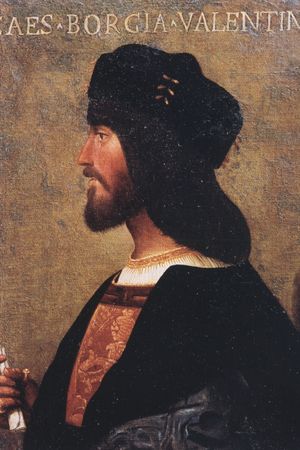
Dedication
Niccolò Machiavelli to the Magnificent Lorenzo de' Medici
People who want to get into a prince's good graces usually turn up with whatever they own that they value most, or whatever they can see he enjoys. That's why princes are so often given horses, weapons, cloth of gold, precious stones and other finery fit for their greatness.
I wanted to offer myself to Your Magnificence too, with some token of my devotion. But looking through everything I have, I found nothing I hold dearer, or value as highly, as what I know about the actions of great men. I learned it from long experience of modern affairs and nonstop reading about ancient ones. I've thought it over long and hard, examined it carefully, and now boiled it all down into one small volume, which I'm sending to Your Magnificence.
I don't think this work is worthy to come before you. Still, I'm confident your kindness will make you accept it, since I couldn't give you a better present than this: the chance to understand, in a very short time, everything it took me so many years, and so much hardship and danger, to learn.
I haven't dressed this book up. You won't find any long, rolling periods in it, or pompous, high-sounding words, or any of the other come-ons and outside decorations that so many writers use to doll up their material. I wanted it to earn no praise at all, or else to win favor only by the variety of its matter and the weight of its subject.
And nobody should think it presumptuous for a man of low and humble station to discuss how princes govern and to lay down rules for them. Mapmakers go down onto the plain to study the shape of the mountains and the high ground, and they climb up onto the mountains to study the low ground. It's the same here. To know the nature of peoples well, you have to be a prince; to know the nature of princes well, you have to be one of the people.
Please take, then, this little gift, Your Magnificence, in the spirit in which I send it. If you read it and think it over carefully, you'll find in it my deepest wish: that you reach the greatness that fortune and your other qualities promise you. And if Your Magnificence should ever look down from your lofty summit to these low places, you'll see how undeservedly I put up with fortune's great and endless spite.1
Chapter 1: How Many Kinds of Principality There Are, and How They Are Acquired
Every state, every dominion that has ever held power over men or holds it now, has been and still is one of two things: a republic or a principality. Principalities are either hereditary, where the prince's family has ruled for generations, or they're new. The new ones are either brand new, as Milan was to Francesco Sforza, or they're limbs grafted onto the hereditary state of the prince who takes them, as the Kingdom of Naples is to the King of Spain. Lands won this way are either used to living under a prince or used to being free. And they're acquired either with someone else's arms or with your own, and either by fortune or by ability.2,3
Chapter 2: Hereditary Principalities
I'll leave republics out of it, since I've discussed them at length elsewhere. Here I'll take up principalities alone, weaving my cloth on the warp I've just laid out, and I'll ask how these principalities can be governed and kept.
I say, then, that hereditary states, already used to their prince's family, are far less trouble to hold than new ones. All the prince has to do is not break with the ways of his ancestors, and after that ride out events as they come. As a result, a prince of ordinary diligence will always hold on to his state, unless some extraordinary, overwhelming force takes it from him. And even if he does lose it, the moment the usurper stumbles, he'll get it back.
Italy has an example in the Duke of Ferrara, who stood up to the Venetians' attacks in 1484 and Pope Julius's in 1510 for one reason only: his family had ruled there for so long. A prince born to his position has fewer reasons and less need to give offense, so he's bound to be better loved. Unless some extraordinary vices make him hated, it's only natural that his people should wish him well. And when a rule has run on long and unbroken, the memory of change dies out, and so do the reasons for it. For every change leaves a toothed edge for building the next one.4,5
Chapter 3: Mixed Principalities
It's the new principality that gives the trouble. Take first the kind that isn't entirely new but is grafted like a limb onto an old state, so that the whole thing together can be called mixed. Its upheavals spring, to begin with, from a natural difficulty you'll find in every new principality. Men are glad to change their ruler because they think they'll be better off, and that belief makes them take up arms against the one they've got. They're fooling themselves, and experience soon shows them they've made things worse. That follows from another natural, everyday necessity: a new prince always has to hurt his new subjects, with his soldiers and with all the countless other injuries a conquest drags along behind it. The result is that everyone you've hurt in seizing the principality is now your enemy. And you can't keep the friendship of the people who put you there, because you can't satisfy them the way they'd imagined, and you can't take strong medicine to them either, since you owe them. However strong your armies are, you always need the goodwill of the locals to get into a province. That's why Louis XII, King of France, took Milan in a flash and lost it just as fast. The first time, Lodovico's own forces were enough to take it back from him, because the very people who'd opened their gates to the King found their hopes of good times ahead had fooled them, and they couldn't stand the burdens of a new prince.6
It's true that when rebel lands are conquered a second time, they're harder to lose. The ruler now has the rebellion as his excuse, and he has fewer qualms about making himself safe: he punishes the guilty, flushes out the suspects and shores up his weak spots. That is why, the first time, all it took to make France lose Milan was a Duke Lodovico making noise on the borders. The second time, she had to have the whole world against her, and her armies had to be wiped out or chased out of Italy. The reasons are the ones I've given. All the same, she lost it both times.
We've covered the general reasons for the first loss. What's left is to look at the second, and to see what remedies the King had, and what remedies anyone in his shoes might have, for holding on to a conquest better than France did.
I say, then, that the states a conqueror adds to his old one are either in the same province and speak the same language as his own, or they don't. When they do, they're very easy to hold, especially if they're not used to living free. To own them securely, all you need is to have wiped out the line of the prince who ruled them. In everything else, so long as their old ways are kept and the customs don't clash, people just get on quietly with their lives. You can see it in Burgundy, Brittany, Gascony and Normandy, which have been part of France for so long. There's some difference of language, but their customs are alike, and the peoples can easily rub along together. Whoever takes such states and wants to keep them has two things to see to. First, the line of their old prince must be wiped out. Second, he mustn't change their laws or their taxes. Do that, and in no time at all they'll grow into one body with his old principality.
But when you acquire states in a province with a different language, different customs and different institutions, that's where the real difficulties lie, and holding them takes great good fortune and great diligence. One of the best and most effective remedies would be for the conqueror to go and live there himself. That would make his hold safer and longer-lasting. The Turk did it in Greece: for all the other measures he took to hold that state, he could never have kept it if he hadn't moved there. When you're on the spot, you see trouble as it starts and can deal with it fast. When you're not, you only hear about it once it's grown big and there's nothing left to be done. Besides, your officials don't strip the province bare, and your subjects are pleased to have their prince close at hand. Hence the ones who mean to behave have more reason to love him, and the ones who don't have more reason to fear him. And any outsider thinking of attacking that state will think harder about it. As long as the prince lives there, it takes enormous effort to take it from him.7
The other good remedy is to plant colonies in one or two places, to serve as shackles on that state. You must either do that or keep plenty of cavalry and infantry there. Colonies don't cost much. The prince can send them out and keep them there for little or nothing, and the only people he hurts are the ones whose fields and houses he takes to hand to the new settlers, a tiny fraction of that state. And the people he hurts, left poor and scattered, can never do him any harm. Everyone else is left untouched, which ought to keep them quiet, and at the same time they're afraid to put a foot wrong, in case what happened to the dispossessed happens to them. I conclude that colonies cost nothing, are more loyal and give less offense, and the ones they do offend are poor and scattered and can't do any damage, as I said.
Note this, then: men must be either caressed or crushed. They'll take revenge for small injuries, but they can't for serious ones. Any injury you do a man, then, should be the kind that leaves you no reason to fear his revenge.
If the prince keeps soldiers there instead of colonies, though, he spends far more, because the garrison eats up every penny of that state's revenue, and his gain turns into a loss. He also gives far more offense, since he harms the whole state by shifting his army from billet to billet. Everybody feels the strain, and everybody becomes his enemy, and these are enemies who can hurt him, because, beaten as they are, they're still in their own homes. From every angle, then, a garrison is as useless as colonies are useful.
A prince in a foreign province like this should also make himself the leader and protector of his weaker neighbors, work to weaken the strong ones, and make sure that no foreigner as powerful as he is gets in by some accident. Someone like that will always be invited in by the discontented in the province, whether out of too much ambition or out of fear. That's how the Aetolians brought the Romans into Greece; and every other province the Romans entered, it was the locals who let them in. This is the way things go: the moment a powerful foreigner enters a province, all the weaker powers there flock to him, driven by envy of whoever's been lording it over them. He has no work at all, then, to win these lesser powers over, since they all promptly roll themselves into one ball with the state he's acquired there. He only has to make sure they don't gain too much strength and authority. Then, with his own forces and their support, he can easily cut the powerful down to size and remain the sole arbiter of that province. Whoever doesn't manage this side of things well will soon lose what he's won, and while he holds it, he'll have endless trouble and aggravation there.8
The Romans kept to these rules well in the provinces they took. They sent colonies; they courted the weaker powers without making them stronger; they cut down the strong; and they never let a powerful foreigner win a name there. Greece alone will do for an example. The Romans kept the Achaeans and the Aetolians friendly; they brought the kingdom of Macedon low; they drove Antiochus out. Yet however well the Achaeans and Aetolians served them, they were never allowed to grow their states by an inch. Philip's persuasions never talked the Romans into being his friends without first humbling him. And all of Antiochus' power couldn't get them to let him keep any state in that province.
In these cases the Romans did what every wise prince ought to do. You have to watch for future trouble as well as present trouble, and work as hard as you can to head it off. Trouble spotted from far away is easy to fix; wait until it's on top of you, and the medicine comes too late, because the disease has become incurable. It's like what doctors say about consumption: at the start it's easy to cure and hard to diagnose, but as time goes on, if nobody caught it or treated it early, it becomes easy to diagnose and hard to cure. Affairs of state work the same way. When you see the evils growing in a state from far off, and only a prudent man can, they're quickly healed. But when nobody notices them and they're left to grow until everyone can see them, there's no remedy left.
That is why the Romans, seeing trouble far off, always found a remedy for it, and they never let it run its course just to dodge a war, because they knew that war is not avoided, only put off to the advantage of others. That's why they chose to fight Philip and Antiochus in Greece, so they wouldn't have to fight them in Italy. They could have dodged both wars for the moment, and they chose not to. Nor did they ever like the saying that's forever on the lips of our wise men today, "enjoy the benefit of time." They preferred to enjoy the benefit of their own ability and prudence. Time sweeps everything along in front of it, and it can bring good as easily as evil, and evil as easily as good.
But let's go back to France and see whether she did any of the things I've described. I'll talk about Louis, not Charles, since Louis held on in Italy longer, so his moves are easier to follow. And you'll see that he did the exact opposite of what you have to do to hold a state in a foreign province.
King Louis was brought into Italy by the ambition of the Venetians, who hoped his coming would win them half of Lombardy. I don't want to blame the King for taking that course. He wanted a foothold in Italy and had no friends there; in fact, thanks to King Charles's behavior, every door was shut in his face. He was therefore forced to take whatever friends he could get, and that sensible decision would have worked out if he hadn't made any mistakes in his other dealings. Once he'd taken Lombardy, the King at once won back the reputation Charles had lost him. Genoa gave in. The Florentines became his friends. The Marquis of Mantua, the Duke of Ferrara, the Bentivoglio, the Lady of Forlì, the lords of Faenza, Pesaro, Rimini, Camerino and Piombino, and the people of Lucca, Pisa and Siena all came running to be his friends. That's when the Venetians could see how reckless they'd been: to gain two towns in Lombardy, they'd made the King master of two-thirds of Italy.
Now think how little effort it would have taken the King to keep his standing in Italy, if he'd followed the rules I've laid down and kept all those friends of his safe and protected. There were lots of them, weak and frightened, some afraid of the Church and some of the Venetians, so they'd always have had to stick by him, and with their help he could easily have made himself safe from whoever was still strong there. But he'd barely arrived in Milan before he did the opposite and helped Pope Alexander seize the Romagna. He didn't see that with this one decision he was making himself weak, throwing away his friends and the people who'd thrown themselves into his lap, and making the Church great by piling all that worldly power on top of the spiritual power that already gives it so much authority. And once he'd made the first mistake, he had to keep making more. In the end, to put a stop to Alexander's ambition and keep him from becoming lord of Tuscany, he was forced to come into Italy in person. Making the Church great and losing his friends wasn't enough for him. Because he wanted the Kingdom of Naples, he split it with the King of Spain. Where before he'd been the arbiter of Italy, now he brought in a partner, so that the country's ambitious men, and anyone unhappy with him, had someone to run to. And where he could have left a king in Naples who'd be his pensioner, he threw him out and put in one who could throw out Louis himself.9
Wanting to acquire more is really a very natural and ordinary thing, and when men who can do it go ahead, they'll always be praised, or at least not blamed. But when they can't, and want to do it anyway, that's where the mistake and the blame come in. If France, then, could attack Naples with her own forces, she should have done it; if she couldn't, she shouldn't have split it. And if her division of Lombardy with the Venetians deserves to be excused, because it got her a foothold in Italy, this one deserves blame, because no such necessity excuses it.10
Louis, then, had made these five mistakes. He wiped out the lesser powers. He made someone already powerful in Italy more powerful. He brought a very powerful foreigner into Italy. He didn't come to live there. And he sent no colonies. Even so, those mistakes needn't have hurt him in his lifetime if he hadn't made a sixth: taking their state away from the Venetians. If he hadn't made the Church great or brought Spain into Italy, it would have been quite reasonable, even necessary, to cut the Venetians down. But once he'd taken those first steps, he should never have agreed to their ruin. As long as they were strong, they'd have kept everyone else away from any move on Lombardy. The Venetians wouldn't have allowed one unless they ended up masters of it themselves, the others wouldn't have wanted to take Lombardy from France just to hand it to Venice, and they'd never have had the nerve to take on both.
And if someone says King Louis gave the Romagna to Alexander and the Kingdom of Naples to Spain to avoid a war, I answer, for the reasons above, that you should never let a disorder run on to avoid a war, because you don't avoid the war, you only put it off to your own disadvantage. And if others point to the promise the King had made the Pope, to carry out that campaign for him in return for annulling his marriage and the cardinal's hat for Rouen, I answer with what I'll say later about the word of princes and how it ought to be kept.
Thus King Louis lost Lombardy because he followed none of the rules that others have followed who've taken provinces and meant to keep them. There's nothing miraculous about it. It's entirely ordinary and to be expected. I talked about this at Nantes with the Cardinal of Rouen, at the time when Valentino, as people called Cesare Borgia, Pope Alexander's son, was occupying the Romagna. The Cardinal told me the Italians didn't understand war. I told him the French didn't understand statecraft, or they'd never have let the Church grow so great. And experience has shown that France made the Church and Spain great in Italy, and they in turn ruined France. From this we can draw a general rule that never, or hardly ever, fails: whoever makes someone else powerful ruins himself. He created that power either by cleverness or by force, and the man who's become powerful distrusts them both.11
Chapter 4: Why the Kingdom of Darius, Conquered by Alexander, Did Not Rebel Against His Successors After His Death
Considering how hard it is to hold a newly acquired state, you might wonder how it was that Alexander the Great made himself lord of Asia in a few short years and then died when he'd barely taken possession of it. You'd have expected the whole state to rebel. And yet his successors held on to it, and the only trouble they had in keeping it came from among themselves, out of their own ambition.
My answer is that every principality we have any record of has been governed in one of two ways. Either there's one prince and everyone else is his servant, helping to run the kingdom as a minister by his grace and favor. Or there's a prince together with barons, who hold their rank because of their ancient blood, not by their lord's favor. Barons like these have states and subjects of their own, who recognize them as lords and feel a natural affection for them. In states run by a prince and his servants, the prince has more authority, because in the whole country nobody recognizes any superior but him. If people obey anyone else, they do it because he's a minister and an official, and they feel no particular love for him.
In our own day the examples of these two kinds of government are the Turk and the King of France. The whole Turkish monarchy is ruled by one lord; everyone else is his servant. He carves his kingdom up into sanjaks, sends out administrators to run them, and shuffles and swaps them around as he likes. The King of France, on the other hand, sits in the middle of a crowd of old-established lords, each one recognized and loved by his own subjects. They have their privileges, and the King can't take those away without putting himself in danger.
Compare the two states and you'll find the Turk's is hard to conquer, but once it's conquered, very easy to hold. The reason his kingdom is hard to take is that an invader can't be called in by its great men, and he can't hope to smooth his way through a rebellion of the men around the ruler, for the reasons I've given. They're all slaves, bound to their master, so they're harder to bribe; and even if you did bribe them, it wouldn't get you much, because they can't bring the people along with them, as I've explained. Hence whoever attacks the Turk has to expect to find him united, and had better count on his own strength rather than on the other side's disorders. But once the Turk is beaten and routed in the field so badly that he can't raise new armies, there's nothing left to worry about except the prince's family. Wipe that out, and there's no one left to fear, because none of the others has any following among the people. The winner couldn't count on them before his victory, and he needn't fear them after it.
It's the opposite in kingdoms run like France. You can get in easily by winning over some baron, because there are always malcontents and men who want change. For the reasons I've given, these people can open the way into the state for you and make your victory easy. But afterward, if you mean to hold on, that victory drags endless difficulties behind it, both with the people who helped you and with the people you've crushed. It isn't enough to wipe out the prince's family, either, because the lords are still there to put themselves at the head of fresh revolts. And since you can neither satisfy them nor wipe them out, you lose the state the first time the chance comes along.
Now, if you look at what kind of government Darius had, you'll find it was like the Turk's kingdom. Alexander therefore first had to hit him with everything he had and drive him from the field. After that victory, with Darius dead, the state was left safely in Alexander's hands, for the reasons I've discussed. If his successors had stuck together, they could have enjoyed it at their leisure; the only disturbances that ever broke out in that kingdom were the ones they stirred up themselves.
But states organized like France can't possibly be held so quietly. That's the reason for the constant rebellions of Spain, France and Greece against the Romans: those lands were full of principalities. As long as people remembered them, the Romans were never sure of their hold. Once the memory had faded, thanks to the power and long life of their empire, they became secure owners. Later still, when the Romans fought among themselves, each of them was able to pull part of those provinces over to his side, according to the authority he'd built up there; and since the line of their old lords was extinct, the provinces recognized no one but the Romans.
Put all this together, and no one will be surprised at how easily Alexander held on to Asia, or at the trouble others, like Pyrrhus and many more, have had in keeping what they won. That came not from the conqueror's greater or lesser ability, but from the difference in what was conquered.12
Chapter 5: How to Govern Cities or Principalities That Lived Under Their Own Laws Before They Were Taken
Say the states you've acquired are used to living free, under their own laws. If you want to keep them, you have three ways to do it. One: ruin them. Two: go and live there yourself. Three: let them keep their laws, collect a tribute, and set up a government of a few men inside who will keep the place friendly to you. That little government knows it was created by the prince and can't last a day without his friendship and power, so it will do everything it can to keep him in place. And if you mean to preserve a city that's used to freedom, its own citizens are the easiest tool you have for holding it.
The Spartans and the Romans show how this works. The Spartans held Athens and Thebes by installing governments of a few, and they lost them anyway. The Romans destroyed Capua, Carthage and Numantia to hold them, and they never lost them. In Greece the Romans tried the Spartan way, setting the country free and leaving it its own laws, and it didn't work; in the end they had to destroy many cities in that province to keep it.13
The truth is that there's no safe way to own such places except to ruin them. Whoever becomes master of a city used to freedom and doesn't destroy it should expect it to destroy him. Whenever it rebels, it can always rally behind the name of liberty and its old institutions, and neither the passing of years nor any favors you do it will ever make it forget them. Whatever you do, whatever precautions you take, unless the inhabitants are split up and scattered, they won't forget that name or those institutions, and they'll run back to them at the first chance they get. Pisa did exactly that after a hundred years under the Florentines.14
It's a different story when cities or provinces are used to living under a prince, and his family has been wiped out. On one side, they're used to obeying. On the other, their old prince is gone, they can't agree on making a new one from among themselves, and they don't know how to live free; as a result, they're slow to take up arms, and a new prince can win them over and make himself safe from them much more easily. Republics have more life in them, more hatred, more hunger for revenge. The memory of their ancient liberty won't let them rest, and can't. The surest way, therefore, is to wipe them out, or to go and live there.
Chapter 6: New Principalities Acquired by One's Own Arms and Ability
Nobody should be surprised if, in talking about principalities that are completely new, new prince and new state alike, I bring in the very greatest examples. Men nearly always walk down roads that others have already beaten, and they act by imitation. But you can never stick exactly to another man's road, or match the ability of the men you copy. A prudent man should always take the roads great men have traveled and imitate the ones who were the very best, so that even if his own ability falls short, at least some whiff of theirs will cling to him.
He should do what skilled archers do. When the target looks too far off, and they know how far their bow can carry, they aim a good deal higher than the mark. They don't expect the arrow to fly that high; aiming high is simply how they land it where they want it.
I say, then, that in completely new principalities, with a new prince, holding on is harder or easier depending on how much ability the man who took them has. Now, going from private citizen to prince takes either ability or fortune, and either one, it seems, will smooth over a good many of the difficulties. Even so, the man who leaned least on fortune has lasted longest. It also helps when the prince has no other states and so has to come and live there himself.
But let's come to the men who became princes through their own ability and not through fortune. The greatest of them, I say, are Moses, Cyrus, Romulus, Theseus and others like them. Moses shouldn't really be discussed, since he simply carried out what God told him to do; still, he deserves admiration, if only for the grace that made him worthy to talk with God. But look at Cyrus and the others who won or founded kingdoms. You'll find every one of them admirable, and if you study their particular deeds and institutions, they won't look any different from those of Moses, who had so great a teacher.
Examine their lives and deeds and you'll see that fortune gave them nothing except the opportunity. That opportunity handed them the raw material, and they shaped it into whatever form they thought best. Without the opportunity, the strength of their spirit would have gone to waste; without that strength, the opportunity would have come for nothing. Moses had to find the people of Israel in Egypt, enslaved and oppressed by the Egyptians, so that they'd be ready to follow him out of bondage. Romulus had to find no room for himself in Alba, and had to be left out to die at birth, if he was going to become King of Rome and found that nation. Cyrus had to find the Persians fed up with the rule of the Medes, and the Medes gone soft and effeminate after a long peace. Theseus couldn't have shown what he could do if he hadn't found the Athenians scattered. These opportunities made these men lucky, and their extraordinary ability let them see the opportunity for what it was. That's how their countries came to be ennobled and to flourish.15
Men who become princes by ability, the way these did, win their principality the hard way and keep it easily. The hard part of winning it comes partly from the new institutions and methods they're forced to bring in to found their state and secure themselves. And bear this in mind: there is nothing harder to handle, more doubtful of success, or more dangerous to carry through than taking the lead in introducing new institutions.
The innovator has for enemies everyone who does well under the old order, and only lukewarm defenders in everyone who would do well under the new. The lukewarmness comes partly from fear of the other side, who have the laws on their side, and partly from men's natural disbelief: they never really trust anything new until they've seen it solidly proved. As a result, whenever his enemies get a chance to attack, they go at it like partisans, while his friends defend him half-heartedly, and he is in danger right along with them.
To get to the bottom of this, then, we have to ask whether these innovators stand on their own feet or depend on others: whether, to get their work done, they have to beg or can use force. In the first case they always come to a bad end and get nothing done. When they rely on their own resources and can use force, they're seldom in danger. That is why all armed prophets have won and the unarmed ones have come to ruin.
For on top of everything I've said, peoples are fickle by nature. It's easy to persuade them of something and hard to keep them persuaded. That is why you need to be set up in such a way that when they stop believing, you can make them believe by force. Moses, Cyrus, Theseus and Romulus couldn't have made their peoples keep their laws for long if they'd been unarmed. That's what happened in our own day to Brother Girolamo Savonarola. He went down with his new institutions as soon as the crowd stopped believing in him, because he had no way of keeping the believers firm or making the unbelievers believe.16
Men like these have a hard road, then. All their dangers lie along the way, and they have to overcome them by their ability. But once they've overcome them and people begin to revere them, and they've wiped out those who envied them for what they were, they stay powerful, secure, honored and happy.
To such lofty examples I want to add a smaller one, though it bears some comparison with them, and let it stand for all the rest of its kind: Hiero of Syracuse. He went from private citizen to Prince of Syracuse, and he, too, got nothing from fortune but the opportunity. The Syracusans were being oppressed, so they chose him as their captain, and from there he earned his way to being their prince. Even as a private citizen he had such ability that one writer said of him that he lacked nothing to be a king except a kingdom. He scrapped the old army and raised a new one; he dropped his old alliances and made new ones; and once he had allies and soldiers of his own, he could put up any building he liked on that foundation. Winning his state cost him a great deal of effort. Keeping it cost him very little.17
Chapter 7: New Principalities Acquired by Other People's Arms and by Fortune
Men who go from private citizen to prince by fortune alone get there with very little effort and stay there only with a great deal. Nothing gets in their way on the road up, because they fly. Their troubles all start once they've landed.
These are men who are handed a state, either for money or as a favor from whoever hands it over. It happened to many in Greece, in the cities of Ionia and the Hellespont, where Darius made men princes so they would hold those cities for his security and his glory. It happened, too, to those emperors who rose from private life to the throne by bribing the soldiers. Princes like these rest entirely on the goodwill and the fortune of whoever raised them, and those are two of the most fickle, shifting things there are. They don't know how to hold their position, and they can't. They don't know how, because unless a man has great intelligence and ability, there's no reason to expect someone who has always lived as a private citizen to know how to command. They can't, because they have no forces of their own that they can count on to be friendly and loyal.
Then again, states that spring up overnight are like everything else in nature that's born and grows fast: they can't sink their roots and branches deep enough, and the first bad storm knocks them flat. The exception is the man who, though he's become a prince so suddenly, has such ability that he knows at once how to get ready to keep what fortune has dropped in his lap, and lays afterward the foundations that others lay before they ever become princes.
For each of these two ways of becoming a prince, by ability or by fortune, I want to give you an example from within living memory: Francesco Sforza and Cesare Borgia. Francesco went from private citizen to Duke of Milan by the proper means and with great ability, and what had cost him a thousand struggles to win, he kept with little trouble. Cesare Borgia, on the other hand, whom ordinary people called Duke Valentino, won his state through his father's fortune and lost it along with that fortune. And this was in spite of the fact that he tried everything and did all that a prudent and able man ought to do to put down roots in the states that other people's arms and fortune had given him. For, as I said above, a man who doesn't lay his foundations first may, if he has great ability, lay them afterward, though it's hard on the architect and risky for the building.
If, then, we look at the Duke's whole career, we'll see that he laid solid foundations for future power, and I don't think it's a waste of time to go over them. I know of no better lessons to give a new prince than the example of what this man did. And if his arrangements did him no good in the end, it wasn't his fault. It came from an extraordinary and extreme spite of fortune.18
Alexander VI ran into plenty of difficulties, present and future, when he set out to make his son the Duke a great man. First, he couldn't see any way to make him lord of a state that wasn't a state of the Church. And if he turned to taking one from the Church, he knew the Duke of Milan and the Venetians wouldn't stand for it, because Faenza and Rimini were already under Venetian protection. Besides that, he could see that the armed forces of Italy, especially the ones he might have used, were in the hands of men who had every reason to fear a powerful Pope. He couldn't trust them, since they were all controlled by the Orsini and the Colonna and their friends.
It was necessary, therefore, to stir things up and throw those men's states into disorder, so that he could safely make himself master of part of them. That turned out to be easy. He found the Venetians, for reasons of their own, working to bring the French back into Italy. Far from opposing it, he made it easier by granting King Louis the annulment of his first marriage. The King duly came into Italy with the help of the Venetians and Alexander's blessing, and no sooner was he in Milan than the Pope got troops from him for the campaign in the Romagna, which was allowed to go ahead on the strength of the King's reputation.
The Duke had taken the Romagna and beaten down the Colonna. But when he wanted to keep it and push further, two things stood in his way. One was his own troops, whose loyalty he doubted. The other was the will of France. He was afraid the Orsini troops he'd been using would fail him at the crucial moment, and not only stop him from winning more but take away what he'd already won, and that the King might do the same. He got a taste of the Orsini when, after taking Faenza, he attacked Bologna and watched them go into the attack with no heart for it. As for the King, he found out what was on his mind when, after seizing the Duchy of Urbino, he invaded Tuscany and the King made him call it off.
The Duke therefore decided to stop depending on other people's arms and other people's fortune. The first thing he did was to weaken the Orsini and Colonna factions in Rome. He won over all their followers who were gentlemen by making them his own gentlemen, paying them handsome allowances and honoring them, each according to his rank, with commands and governorships. Within a few months their old loyalty to the factions had died out, and all of it had turned to the Duke.
After that, having already scattered the house of Colonna, he waited for his chance to wipe out the Orsini. The chance came at a good moment, and he made even better use of it. When the Orsini realized, too late, that the greatness of the Duke and the Church meant their own ruin, they held a meeting at Magione, near Perugia. Out of that meeting came the rebellion of Urbino, the uprisings in the Romagna and endless dangers for the Duke, and he got through every one of them with the help of the French.
Once his reputation was back, since he trusted neither France nor any other outside force and didn't want to have to put them to the test, he turned to trickery instead. He was so good at hiding what he really intended that the Orsini made peace with him, through Signor Paolo. The Duke spared no courtesy to put Paolo at his ease, giving him money, fine clothes and horses, and their own simple trust walked them straight into his hands at Senigallia. With those leaders wiped out and their followers turned into his friends, the Duke had laid very good foundations for his power. He held the whole Romagna and the Duchy of Urbino. Above all, he believed he had made a friend of the Romagna and won over all its people, now that they'd begun to taste what it was like to live well.19
This part deserves to be known and copied by others, so I don't want to leave it out. When the Duke took the Romagna, he found it had been ruled by weak lords who had robbed their subjects instead of governing them, and had given them reasons to split apart instead of pulling together. The whole province was full of robbery, feuding and every other kind of lawlessness. He decided that if he wanted it peaceful and obedient to his rule, he had to give it good government. That is why he put Messer Remirro de Orco in charge, a cruel and efficient man, and gave him the fullest powers. In no time Remirro had the province peaceful and united, and made himself a great name doing it.
Later the Duke decided that such sweeping authority was no longer needed, since he was afraid it would become odious. He set up a civil court in the middle of the province, with an excellent presiding judge, where every city had its own advocate. He also knew that the harshness of the past had stirred up some hatred against him. To clear the people's minds of it and win them over completely, he wanted to show that whatever cruelty had been done hadn't come from him but from the harsh nature of his minister. Seizing on this as his pretext, he had Remirro laid out one morning in the square at Cesena, in two pieces, with a block of wood and a bloody knife beside him. The ferocity of that spectacle left the people satisfied and stunned at the same time.20
But let's go back to where we left off. The Duke now found himself fairly powerful and partly safe from present dangers, since he had armed himself in his own way and had largely destroyed the forces close enough to hurt him. If he wanted to keep conquering, the one thing left to reckon with was the King of France. He knew the King, who had seen his own mistake too late, wouldn't put up with it. For this reason he started looking for new friends and wavering in his loyalty to France, at the time the French were marching on the Kingdom of Naples against the Spaniards who were besieging Gaeta. His plan was to make himself safe from the French, and he'd soon have managed it if Alexander had lived.
That was how he handled the present. For the future, his first worry was that a new Pope might not be his friend and might try to take back what Alexander had given him. He planned to guard against this in four ways. First, he'd wipe out the families of all the lords he had dispossessed, so the new Pope couldn't use them. Second, as I've said, he'd win over all the gentlemen of Rome, so he could keep the Pope in check through them. Third, he'd make the College of Cardinals as much his own as he could. Fourth, he'd win so much territory before the Pope died that he could stand up to a first attack on his own.
By the time Alexander died, he had pulled off three of the four, and the fourth was nearly done. He killed as many of the dispossessed lords as he could lay hands on, and very few got away. He had won over the Roman gentlemen. He had a very large party in the College. As for new conquests, he'd planned to become lord of Tuscany; he already held Perugia and Piombino and had taken Pisa under his protection. And as soon as he no longer had to defer to France (which he no longer did, since the Spaniards had already thrown the French out of the Kingdom of Naples, so that both sides had to buy his friendship), he'd have pounced on Pisa. After that, Lucca and Siena would have given in at once, partly out of jealousy of the Florentines and partly out of fear, and the Florentines would have had no way out. If it had come off (and it was coming off in the very year Alexander died), he'd have won so much strength and reputation that he could have stood on his own, depending no longer on the fortune and forces of others but on his own power and ability.
But Alexander died five years after the Duke first drew his sword. He left him with only the Romagna made secure and everything else up in the air, caught between two very powerful enemy armies, and himself sick almost to death. Yet the Duke had so much ferocity and so much ability, he understood so well how men are won and lost, and the foundations he'd laid in so short a time were so strong, that if those armies hadn't been on his back, or if he'd been healthy, he'd have come through every difficulty.
You could see his foundations were good. The Romagna waited for him for more than a month. In Rome, though half dead, he was safe; and although the Baglioni, the Vitelli and the Orsini came to Rome, nobody would follow them against him. He couldn't make the man he wanted Pope, but he could at least block the man he didn't want. If he'd been healthy when Alexander died, everything would have been easy for him. He told me himself, in the days when Julius II was elected, that he'd thought through everything that could happen when his father died and had found a remedy for all of it. The one thing that never crossed his mind was that when his father was dying, he would be close to death himself.
Putting together everything the Duke did, I can't find fault with him. On the contrary, I think it's right to hold him up, as I have, as a model for everyone who has risen to power through fortune and other people's arms. With his great spirit and his high ambitions, he couldn't have acted any other way. The only things that stood in the way of his plans were the shortness of Alexander's life and his own illness.
Anyone, then, who thinks it necessary in his new principality to secure himself against his enemies, to win friends, to conquer by force or by fraud, to make the people love and fear him and the soldiers follow and revere him, to wipe out those who can or will harm you, to replace old institutions with new ways, to be severe and gracious, magnanimous and generous, to get rid of a disloyal army and raise a new one, and to keep the friendship of kings and princes so that they must either help you gladly or think twice before harming you, will find no fresher examples than this man's actions.
The one thing he can be blamed for is the election of Julius as Pope, where he chose badly. As I've said, even though he couldn't make a Pope of his own choosing, he could stop anyone he chose from becoming Pope. And he should never have agreed to make Pope any cardinal he had injured, or any who, once Pope, would have reason to fear him. Men do harm either out of fear or out of hatred. The ones he had injured included San Pietro in Vincoli, Colonna, San Giorgio and Ascanio; all the rest, once Pope, would have had reason to fear him, except Rouen and the Spaniards. The Spaniards were tied to him by kinship and obligation, and Rouen was safe because of his power, with the Kingdom of France behind him. Therefore the Duke ought above all to have made a Spaniard Pope, and failing that, he should have agreed to Rouen and not to San Pietro in Vincoli. Anyone who believes that new favors make great men forget old injuries is fooling himself. The Duke, then, made a mistake in this election, and it was the cause of his final ruin.21
Chapter 8: Those Who Have Come to Power Through Crimes
There are still two more ways a private citizen can become a prince, and since neither can be put down entirely to fortune or to ability, I don't think I should skip them, even though one of them could be discussed more fully in a study of republics. The first is when a man climbs to power by some wicked, criminal road. The second is when a private citizen becomes prince of his own country with the backing of his fellow citizens. I'll show the first way with two examples, one ancient and one modern, and I won't go any further into the rights and wrongs of it, because I think these two are enough for anyone who finds himself forced to copy them.
Agathocles the Sicilian became King of Syracuse, and he started out not just as a private citizen but at the very bottom of the heap. He was the son of a potter, and he led a life of crime at every stage of his career. Yet he joined to his crimes such strength of mind and body that, once he took up soldiering, he rose through the ranks to become praetor of Syracuse.
Once in that post, he made up his mind to become prince and to hold by force, owing nothing to anyone, what had been granted him by consent. He let Hamilcar the Carthaginian, who was campaigning in Sicily with his armies, in on the plan. Then one morning he called together the people and the senate of Syracuse, as if there were public business to settle, and at a prearranged signal his soldiers killed all the senators and the richest of the people. With them dead, he seized the city and ruled it without any civil strife at all.
The Carthaginians beat him twice and finally laid siege to him. Even so, he not only defended his city: he left part of his men to hold out against the siege, took the rest and invaded Africa. In a short time he had lifted the siege of Syracuse and brought Carthage to its knees. The Carthaginians had to come to terms, settle for keeping Africa and leave Sicily to Agathocles.
Look at this man's deeds and ability, then, and you'll find little or nothing you can put down to fortune. As I said, he came to power through nobody's favor. He climbed through the ranks of the army, earning every step with a thousand hardships and dangers, and then he held on to his power through one bold, risky decision after another. And yet you can't call it virtue to murder your fellow citizens, betray your friends, and live without faith, without mercy, without religion. Methods like that can win you power, but not glory. For if you weigh the ability of Agathocles in walking into danger and out again, and the greatness of his spirit in bearing and beating adversity, there's no reason to rank him below any of the finest generals. Even so, his monstrous cruelty and inhumanity, and his countless crimes, won't let him be honored among the finest men. So you can't credit to fortune or to ability what he won without either.22,23
In our own day, under Pope Alexander VI, there was Oliverotto of Fermo. He was orphaned as a small child and brought up by his mother's brother, Giovanni Fogliani. While still very young he was sent to soldier under Paolo Vitelli, so that, schooled in that discipline, he might rise to some high rank in the army. When Paolo died, he served under Paolo's brother Vitellozzo, and because he was clever, tough in body and bold in spirit, he very soon became the leading man in the company.
But taking orders from others seemed beneath him. He planned instead to seize Fermo, with the help of some citizens there who loved their country's slavery more than its freedom, and with the backing of the Vitelli. He wrote to Giovanni Fogliani that, after so many years away from home, he'd like to come and see him and his city, and look over his inheritance a little. He added that since everything he had worked for was honor, he wanted to arrive in honorable style, with an escort of a hundred horsemen from among his friends and servants, so that his fellow citizens could see he hadn't wasted his time. He asked Giovanni to arrange for the people of Fermo to give him an honorable welcome, which would do credit not only to Oliverotto but to Giovanni himself, who had raised him.
Giovanni did everything an uncle owes a nephew. He had the people of Fermo welcome him with honor, and put him up in his own houses. Oliverotto spent a few days getting ready what his coming crime required. Then he gave a magnificent banquet and invited Giovanni Fogliani and all the leading men of Fermo.
When the food had been eaten and all the usual entertainments were over, Oliverotto, quite deliberately, steered the talk toward serious matters: the greatness of Pope Alexander and his son Cesare, and their ventures. Giovanni and the others started to reply, and he suddenly stood up, saying these were things to discuss somewhere more private. He went into another room, and Giovanni and all the other citizens followed him. They had hardly sat down when soldiers came out of hiding places in the room and killed Giovanni and everyone else.
After the murders, Oliverotto got on his horse, rode through the town and besieged the chief magistrates in their palace, until fear forced them to obey him and set up a government with him as its prince. He killed everyone discontented enough to be a danger to him and shored himself up with new civil and military institutions. Within the single year he held power, he was not only safe inside Fermo but had become a terror to all his neighbors. He would have been as hard to bring down as Agathocles, if he hadn't let Cesare Borgia trick him at Senigallia, when, as I described earlier, Borgia seized the Orsini and the Vitelli. Oliverotto was taken there too, a year after he had murdered his own kin, and was strangled alongside Vitellozzo, the man who had taught him both his ability and his crimes.24
Someone might wonder how Agathocles and men like him, after endless treachery and cruelty, could live safely in their own country for years and hold off foreign enemies, without their own citizens ever plotting against them, when plenty of others who relied on cruelty couldn't keep their states even in peacetime, let alone in the uncertain times of war. I believe it comes down to whether the cruelty is used badly or well.
Cruelty well used (if you're allowed to speak well of evil) is cruelty done all at once, out of the need to make yourself safe, and then dropped, and turned as far as possible to your subjects' benefit. Cruelty badly used is the kind that starts small and grows with time instead of dying away. Those who go the first way can, with God and with men, find some remedy for their position, as Agathocles did. The others can't possibly last.
Note this, then. A man who seizes a state should work out every injury he'll have to do, and do them all in one stroke, so that he doesn't have to keep renewing them every day. Then, by not repeating them, he can make people feel safe and win them over with favors. Whoever does otherwise, out of timidity or bad advice, has to keep a knife in his hand forever. He can never rely on his subjects, because with fresh injuries always coming, they can never feel safe with him. Injuries should be done all in one go, so that people get less of a taste of them and they sting less. Benefits should be handed out a little at a time, so that they're savored more.
Above all, a prince should live with his subjects in such a way that nothing that happens, good or bad, forces him to change course. Because when hard times bring their necessities, it's too late for harsh measures, and the good you do then won't help you: it's seen as forced, and nobody thanks you for it.
Chapter 9: The Civil Principality
Now for the other case: a private citizen who becomes prince of his own country with the backing of his fellow citizens, and without crime or any other intolerable violence. We can call this a civil principality. Getting there takes neither pure ability nor pure luck so much as a lucky kind of shrewdness. And I say that a man rises to it with the backing either of the people or of the nobles.
In every city you'll find these two different humors, and they spring from this: the people don't want to be ordered about or oppressed by the nobles, and the nobles want to order the people about and oppress them. Out of these two clashing appetites, a city ends up with one of three things: a principality, liberty, or license.
Which side makes the prince depends on which one gets the chance. When the nobles see they can't stand up to the people, they start building up the reputation of one of their own and make him prince, so that in his shadow they can feed their appetites. The people do the same thing from the other side: when they see they can't stand up to the nobles, they build up one man's reputation and make him prince, so that his authority will protect them.
The man who comes to power with the nobles' help has a harder time holding on than the one who gets there with the people's help. He finds himself a prince surrounded by plenty of men who think they're his equals, so he can't command them or handle them the way he'd like. The man who rises by popular favor stands up there alone, with nobody around him, or hardly anybody, who isn't ready to obey.
Besides, you can't satisfy the nobles honestly without wronging somebody else, but you can satisfy the people, because the people want something more honest than the nobles do. The nobles want to oppress; the people want not to be oppressed. Then again, a prince can never make himself safe from a hostile people, because there are too many of them; he can make himself safe from the nobles, because there are few. The worst a prince can expect from a hostile people is that they'll desert him. From hostile nobles he has to fear not just desertion but attack, because they see further and are craftier, so they always get out in time to save their skins and cozy up to whoever they expect to win. And the prince has to live with the same people all his life, whereas he can easily do without the same nobles, since he can make and unmake them every day, and hand out or take away their standing as he likes.
To make this clearer, I'd say there are two main ways to look at the nobles. Either they conduct themselves so as to tie their fate wholly to yours, or they don't. Those who tie themselves to you, and aren't grasping, you should honor and love. Those who don't, you need to look at in two ways. If they hang back out of timidity and a natural lack of spirit, then make use of them, especially the ones who give good advice, because in good times they'll do you credit and in bad times you've nothing to fear from them. But when they hang back on purpose, out of ambition, that's a sign they're thinking more about themselves than about you. A prince must watch out for men like that and fear them as if they were open enemies, because when things go wrong they'll always help to bring him down.
A man who becomes prince through the people's favor should therefore keep them friendly, and that's easy, since all they ask is not to be oppressed. But a man who becomes prince through the nobles' favor, against the people's will, must before anything else try to win the people over, and that's easy too, if he takes them under his protection. When men are treated well by someone they expected harm from, they feel all the more bound to their benefactor, and so the people at once grow fonder of him than if he'd come to power with their help. There are many ways a prince can win them over, but since they vary with the circumstances, no fixed rule can be given, and I'll leave them aside. I'll conclude only this: a prince needs the people on his side, or he has no remedy when trouble comes.
Nabis, Prince of the Spartans, held out against a siege by all of Greece and a Roman army fresh from victory, and defended his country and his state against them. When the danger came, all he had to do was make himself safe from a few. If the people had been against him, that wouldn't have been enough.
And don't let anyone throw that tired old proverb at me, that whoever builds on the people builds on mud. That's true when a private citizen builds on them and kids himself that the people will rescue him if his enemies or the magistrates come down on him. A man like that may often find himself let down, as the Gracchi were in Rome and Messer Giorgio Scali in Florence. But take a prince who builds on the people: a man who can command, who has courage, who doesn't panic when things go badly or skimp on his other preparations, and who keeps the whole people in good heart by his spirit and his institutions. He'll never be let down by them, and he'll find he has laid his foundations well.25
These principalities usually get into danger when they're about to move from a civil order to an absolute one. Such princes rule either in person or through magistrates. In the second case they're weaker and in more danger, because they depend entirely on the will of the citizens who hold the magistracies, and those men, especially in hard times, can very easily take the state away from them, either by turning against them or simply by not obeying. Once the danger has arrived, it's too late for the prince to grab absolute authority, because the citizens and subjects, used to taking orders from the magistrates, won't take his in a crisis. In uncertain times he'll always be short of men he can trust.
A prince like this can't rely on what he sees in quiet times, when the citizens need the state. Then everyone comes running, everyone makes promises, and every one of them is ready to die for him, as long as death is a long way off. But in hard times, when the state needs its citizens, you'll find very few of them. And the test is all the more dangerous because you only get to take it once. That is why a wise prince has to find a way to make his citizens need the state, and him, always and in every kind of weather. Then they'll always be loyal to him.
Chapter 10: How the Strength of Every Principality Should Be Measured
When you size up these principalities, there's one more thing to weigh: whether a prince has enough power to stand on his own feet if he has to, or will always need someone else to defend him. To put it more clearly, I'd say a prince can stand on his own if he has enough men or enough money to put a proper army together and fight a battle against anyone who comes to attack him. And a prince always needs others if he can't take the field against the enemy and has to retreat behind his walls and guard them.
I've already discussed the first case, and I'll add whatever else it calls for later on. About the second there's nothing to say, except to urge such princes to fortify and stock their own town and not to give the countryside a second thought. Whoever has fortified his town well, and has handled the rest of his dealings with his subjects the way I've described above and will describe below, will always be attacked with a good deal of hesitation. Men are always wary of a job that looks hard, and nobody can think it easy to attack a prince whose town is strong and whose people don't hate him.
The cities of Germany are as free as cities come. They have little land around them, they obey the Emperor when they feel like it, and they're afraid of neither him nor any other power nearby, because they're so well fortified that everyone reckons taking one of them would be slow, tedious work. They all have proper moats and walls and plenty of artillery, and their public storehouses always hold a year's worth of food, drink and firewood. On top of that, so that the common people can be kept fed at no loss to the public purse, they always keep a year's worth of work in hand for them in the trades that are the lifeblood of the city and that the common people live by. They also hold military training in high regard and have plenty of regulations to keep it going.
So a prince who has a strong city and doesn't make himself hated can't be attacked, and if anyone does attack him, the attacker will go home in disgrace. Things in this world change so fast that it's almost impossible for anyone to keep an army camped outside his walls for a year doing nothing.
Someone might object: if the people have their property outside the walls and watch it burn, they'll lose patience, and the long siege and their own interests will make them forget their prince. My answer is that a strong, spirited prince will always get past all that, now giving his subjects hope that the trouble won't last long, now making them fear the enemy's cruelty, now quietly making sure of anyone who seems too bold.
Besides, the enemy will naturally burn and ravage the countryside the moment he arrives, while men's spirits are still hot and eager for the defense. That gives the prince even less to worry about. A few days later, when tempers have cooled, the damage is done, the losses are taken, and there's nothing to be done about it. Then the people rally to their prince all the more, because he now seems to be in their debt, their houses having been burned and their property ruined for his sake. It's human nature to feel bound by the favors you do as much as by the favors you receive. All things considered, a prudent prince won't find it hard to keep his citizens steady from the first day of a siege to the last, as long as he doesn't run short of food or of the means to defend himself.
Chapter 11: Ecclesiastical Principalities
All that's left for me now is to discuss ecclesiastical principalities, where all the difficulties come before you get them. They're won either by ability or by fortune, and they're kept without either one, because they're held up by the ancient institutions of religion, which have proved so strong, and of such a kind, that they keep their princes in power no matter how they act or how they live. These are the only princes who have states and don't defend them, and subjects and don't govern them. Their states, undefended, are never taken from them; and their subjects, ungoverned, don't mind, and have neither the thought nor the power of breaking away. These principalities alone, then, are safe and happy.
But since they're ruled by higher causes that the human mind can't reach, I'll say no more about them. God raises them up and keeps them there, and only a presumptuous, reckless man would discuss them. Still, someone might ask me how the Church has come to be so great in worldly power. Before Alexander, the Italian powers thought little of its worldly strength, and not just the ones called powers but every baron and lord, however small. Now a King of France trembles before it, and it has managed to throw him out of Italy and to ruin the Venetians. Well known as all this is, I don't think it's a waste to call a good part of it back to mind.
Before King Charles of France came down into Italy, the country was in the hands of the Pope, the Venetians, the King of Naples, the Duke of Milan and the Florentines. These powers had two main worries. One was that no foreigner should march into Italy with an army; the other, that none of them should grab more territory. The ones they had to watch hardest were the Pope and the Venetians. Holding back the Venetians took all the others together, as in the defense of Ferrara. To keep the Pope down, they used the barons of Rome. These were split into two factions, the Orsini and the Colonna, who always had some reason to be at each other's throats, and as they stood there, weapons in hand, under the Pope's very nose, they kept the papacy weak and sickly.
Now and then a pope with some spirit came along, like Sixtus, but neither his luck nor his brains could ever get him out of this bind. The reason was that popes don't live long. In the ten years or so a pope lived on average, he could barely knock down one of the factions. If one pope, say, had nearly wiped out the Colonna, along would come another who was hostile to the Orsini. He'd bring the Colonna back to life and then run out of time to wipe out the Orsini. That's why the Pope's worldly power counted for so little in Italy.
Then came Alexander VI, who showed, better than any pope there has ever been, how far a pope could get with money and force. With Duke Valentino as his tool and the French invasion as his opportunity, he did all the things I went through earlier when I discussed the Duke's career. His aim was to make the Duke great, not the Church, yet everything he did still went to make the Church great, and after his death, once the Duke was ruined, the Church inherited the fruits of all that work.
Then came Pope Julius. He found the Church great: it held the whole Romagna, the barons of Rome had been wiped out, and Alexander's hammering had crushed their factions. He also found the road open to a way of piling up money that nobody before Alexander had ever used.
Julius didn't just keep these things up; he pushed them further. He set out to win Bologna, crush the Venetians and drive the French out of Italy, and he pulled off every one of these enterprises, all the more to his credit because he did it all to build up the Church and not some private person. He also kept the Orsini and Colonna parties where he'd found them. Some of their leaders were itching to stir up trouble, but two things have kept them still: first, the greatness of the Church, which overawes them; second, the fact that they have no cardinals of their own, since cardinals are where the trouble between them starts. These parties will never be quiet as long as they have cardinals, because the cardinals feed the factions in Rome and outside it, and the barons are forced to take their side. And so the quarrels and riots among the barons are born of the prelates' ambition.
His Holiness Pope Leo, then, has found the papacy immensely powerful. And it's to be hoped that, as those popes made it great by arms, he'll make it greater still, and revered, by his goodness and his countless other virtues.26
Chapter 12: How Many Kinds of Soldiery There Are, and Mercenary Soldiers
I've now gone through, one by one, every kind of principality I promised at the start to discuss. I've looked at some of the reasons they do well or badly, and shown the methods many men have used to win them and hold them. What's left is to talk in general terms about the ways of attacking and defending that can come up in any of them.
We said earlier that a prince needs good foundations, or he's bound to fall. The main foundations of every state, new, old or mixed, are good laws and good arms. And since you can't have good laws without good arms, and where the arms are good the laws are bound to be good too, I'll leave laws aside and talk about arms.
The forces a prince defends his state with, then, are either his own, or mercenary, or auxiliary, or mixed. Mercenaries and auxiliaries are useless and dangerous. If you build your state on mercenaries, you'll never be steady or safe. They're divided, ambitious, undisciplined and disloyal. They swagger among friends and turn cowards in front of the enemy. They don't fear God and they don't keep faith with men. Your ruin is put off exactly as long as the attack is put off. In peacetime they rob you; in wartime the enemy does.
The reason is that nothing keeps them in the field except a bit of pay, and they have no love for you, and a bit of pay isn't enough to make anyone want to die for you. They're happy to be your soldiers as long as you're not at war. When war comes, they run off or simply leave.
This shouldn't take much proving, because the ruin of Italy today comes from nothing else than its having leaned on mercenaries for many years. They did win a few successes for a few people, and they looked brave enough fighting one another. But the moment the foreigner arrived, they showed what they really were. That's how King Charles of France was able to take Italy with chalk. The man who said our sins were to blame was telling the truth. Only they weren't the sins he had in mind; they were the ones I've just described. And because they were the sins of princes, the princes have paid for them too.27
I want to show more clearly how miserable these forces are. A mercenary captain is either an excellent soldier or he isn't. If he is, you can't trust him, because he'll always be reaching for his own greatness, either by crushing you, his employer, or by crushing others you never meant him to. If he isn't any good, he ruins you in the ordinary way.
Someone may answer that anyone with weapons in his hands will do the same, mercenary or not. My reply is that armies have to be used either by a prince or by a republic. The prince must go in person and be his own captain. The republic has to send its own citizens; if it sends one who turns out not to be up to the job, it must replace him, and if he is up to it, it must hold him in check with its laws so that he doesn't overstep the mark. Experience shows that princes who lead their own troops, and republics that arm their own citizens, make the greatest advances, while mercenary armies never do anything but damage. And a republic armed with its own forces is much harder for one of its citizens to take over than a republic armed with foreign ones.
Rome and Sparta stood armed and free for centuries. The Swiss are the most heavily armed people there are, and the freest. For mercenaries in the ancient world, look at Carthage. After their first war with the Romans, the Carthaginians nearly got crushed by their own hired soldiers, even though they had their own citizens in command. After Epaminondas died, the Thebans made Philip of Macedon captain of their troops, and once he'd won the war for them, he took away their liberty. When Duke Filippo died, the Milanese hired Francesco Sforza to fight the Venetians. He beat the enemy at Caravaggio and then joined forces with them to crush the Milanese, the very people paying him. His father, Sforza, while in the pay of Queen Giovanna of Naples, suddenly left her with no army at all, so that to save her kingdom she had to throw herself into the arms of the King of Aragon.
Now, the Venetians and the Florentines have in the past enlarged their territory with these forces, and their captains didn't make themselves princes but defended them. If you point that out, I answer that the Florentines were simply lucky. Of the able captains they had reason to fear, some never won, some ran into opposition, and others turned their ambitions elsewhere. The one who never won was John Hawkwood, and since he never won, nobody could know how loyal he was. But everyone will admit that if he had won, the Florentines would have been at his mercy. Sforza always had the Bracceschi against him, so each side kept an eye on the other. Francesco turned his ambition toward Lombardy; Braccio turned his against the Church and the Kingdom of Naples.
But let's come to something that happened only a short while ago. The Florentines made Paolo Vitelli their captain, a very shrewd man who had risen from private life to a great reputation. If he had taken Pisa, nobody will deny that the Florentines would have had to keep him on. If he'd gone over to their enemies, they'd have been helpless; and if they kept him, they'd have had to obey him.
As for the Venetians, look at their record and you'll see they acted safely and gloriously as long as they fought their wars with their own men. That was before they turned their ventures toward the mainland. At sea, with their gentlemen and their common people under arms, they fought with the greatest courage. Once they began to fight on land, they left that courage behind and took up the habits of Italian warfare. When they first started expanding on land, they didn't have much to fear from their captains, because they didn't hold much territory there and their reputation was great. But as they grew, under Carmagnola, they got a taste of the mistake they'd made. They could see he was very able, since they'd beaten the Duke of Milan under his command. On the other hand, they could also see he'd lost his appetite for the war. They decided they couldn't win anything more with him, because he didn't want to win, and they couldn't let him go, for fear of losing what they'd gained. To make themselves safe, they had to kill him.
After that their captains were Bartolomeo of Bergamo, Roberto of San Severino, the Count of Pitigliano and men like them. With captains like these, what they had to worry about was losses, not gains. And that's exactly what happened later at Vailà, where in a single day they lost what eight hundred years of hard work had won them. Mercenaries bring you slow, late, feeble gains, and sudden, astonishing losses.
Since these examples have brought me to Italy, which has been run by mercenaries for many years, I want to go back further and look at them properly, so that once we see where they came from and how they grew, they'll be easier to put right.28
You have to understand, then, how things went in recent times. As soon as the Empire started being pushed out of Italy and the Pope gained more weight there in worldly affairs, Italy split up into a number of states. Many of the big cities took up arms against their nobles, who had kept them down with the Emperor's backing, and the Church supported the cities to build up its own worldly power. In many other cities, one of the citizens made himself prince. In this way Italy had fallen almost entirely into the hands of the Church and a few republics. Those priests and those citizens knew nothing about arms, so they started hiring foreigners.
The first to make this kind of soldiering respectable was Alberigo da Conio, from the Romagna. Out of his school came, among others, Braccio and Sforza, who in their day were the arbiters of Italy. After them came all the rest who have commanded these forces down to our own time. And the result of all their prowess is that Italy has been overrun by Charles, plundered by Louis, violated by Ferdinand and disgraced by the Swiss.
Their first move was to boost their own reputation by wrecking the reputation of the infantry. They did it because they had no states of their own and lived by their trade. A few foot soldiers brought them no reputation, and a lot of them they couldn't feed. So they switched to cavalry, where a manageable number of men brought them both a living and honor. It got to the point that in an army of twenty thousand soldiers you couldn't find two thousand infantry.
On top of that, they used every trick they could find to spare themselves and their men both hardship and fear. In their skirmishes they didn't kill each other; they took each other prisoner, and let the prisoners go without ransom. They didn't attack towns at night, and the people in the towns didn't sally out against their tents. They built no stockade or ditch around their camps. They didn't campaign in winter. All of this was allowed by their military code, and they'd invented it, as I said, to escape hardship and danger. And that is how they've led Italy into slavery and disgrace.29
Chapter 13: Auxiliary Soldiers, Mixed Soldiers, and One's Own
Auxiliaries, the other useless kind of arms, are what you get when you call in some powerful outsider to come with his army and help and defend you. Pope Julius did exactly this not long ago. After his mercenaries made a sorry showing in the campaign against Ferrara, he turned to auxiliaries and arranged for Ferdinand, King of Spain, to come to his aid with his men and armies. Troops like these can be good and useful in themselves. But for the man who calls them in, they're almost always a disaster: if they lose, you're finished, and if they win, you're their prisoner.
The ancient histories are full of examples, but I'd rather stay with this fresh one, Pope Julius II. Nothing could have been more thoughtless than his decision, just to get Ferrara, to throw himself entirely into a foreigner's hands. His good fortune, though, produced a third outcome that saved him from reaping what his bad choice had sown. His auxiliaries were routed at Ravenna, and then the Swiss rose up and drove out the victors, against everyone's expectations, his own included. As a result, he ended up the prisoner neither of his enemies, since they'd run away, nor of his auxiliaries, since he'd won with troops other than theirs.
The Florentines, who had no army of their own at all, brought ten thousand Frenchmen to Pisa to take the city, and that decision put them in more danger than at any other point in all their troubles. The Emperor of Constantinople, to hold off his neighbors, brought ten thousand Turks into Greece, and when the war was over, they wouldn't leave. That was the beginning of Greece's servitude to the infidels.30
If you want to make sure you can't win, then, use auxiliaries, because they're far more dangerous than mercenaries. With auxiliaries your ruin comes ready-made. They're all of one body, and all trained to obey someone else. Mercenaries, once they've won, need more time and a better opening to do you harm. They aren't a single body, it was you who found them and you who pays them, and an outsider you put in command of them can't build up enough authority overnight to turn them against you. In sum, with mercenaries the danger is their cowardice; with auxiliaries, their courage.
A wise prince, then, has always steered clear of these troops and relied on his own. He'd rather lose with his own men than win with other people's, since he doesn't count a victory won with borrowed arms as a real victory.
I'll never hesitate to hold up Cesare Borgia and what he did. The Duke marched into the Romagna with auxiliaries, an army made up entirely of Frenchmen, and with them he took Imola and Forlì. Then, since those troops no longer seemed safe to him, he turned to mercenaries, judging them less dangerous, and hired the Orsini and the Vitelli. When he actually came to use them, he found them unreliable, disloyal and dangerous, so he wiped them out and turned to troops of his own. You can easily see the difference between these kinds of arms if you track the Duke's reputation: first when he had only the French, then when he had the Orsini and Vitelli, and finally when he was left with his own soldiers and stood on his own feet. You'll find it grew at every step. Nobody thought much of him until they all saw that he was complete master of his own forces.
I meant to stick to recent Italian examples, but I can't leave out Hiero of Syracuse, since he's one of the men I named earlier. As I said, when the Syracusans made him commander of their armies, he saw at once that their mercenaries were useless, because their captains were the same sort of men as our Italian ones. He decided he could neither keep them nor let them go, so he had them all cut to pieces. From then on he made war with his own troops and not with anyone else's.
I also want to bring up a story from the Old Testament that fits the case. When David offered to go out and fight Goliath, the Philistine champion, Saul gave him his own armor to put some heart into him. David put it on, then refused it, saying that in that armor he couldn't make full use of himself. He'd rather face the enemy with his own sling and his own knife.31
In the end, another man's armor either slides off your back, weighs you down, or squeezes you tight.
Charles VII, the father of King Louis XI, freed France from the English by his fortune and his ability, and he understood this need to arm himself with his own forces. He set up standing companies of men-at-arms and infantry in his kingdom. Then his son, King Louis, abolished the infantry and started hiring Swiss. That mistake, which the kings after him repeated, is, as we can now see for ourselves, the source of the dangers that kingdom faces. By building up the reputation of the Swiss, he cheapened all his own forces. He got rid of his infantry entirely and made his men-at-arms dependent on other men's troops, because they're so used to fighting alongside the Swiss that they don't think they can win without them. The result is that the French are no match for the Swiss, and without the Swiss they won't risk themselves against anyone else.
The armies of France, then, have been mixed, partly mercenary and partly their own. Troops like that, taken together, are much better than pure auxiliaries or pure mercenaries, and much worse than troops of your own. That one example will do, because the Kingdom of France would be unbeatable if Charles's system had been expanded, or even just kept up. But men, short on prudence, start something that tastes good at the moment and don't notice the poison underneath, as I said earlier about consumptive fevers.32
Therefore a man ruling a principality who doesn't spot troubles as they arise isn't really wise, and few are given that gift. If you look at the first collapse of the Roman Empire, you'll find it began simply with hiring the Goths. From that moment the strength of the Roman Empire began to drain away, and all the vigor that went out of it went into them.
I conclude, then, that without arms of its own no principality is safe. It's entirely at the mercy of fortune, with no strength of its own to defend it when times turn bad. Wise men have always held that nothing is so weak or so shaky as a reputation for power that doesn't rest on its own strength.33
Your own arms are the ones made up of your subjects, your citizens or your own dependents; everything else is either mercenary or auxiliary. And the way to organize your own forces will be easy to find if you study the methods of the four men I named above, and look at how Philip, the father of Alexander the Great, and many republics and princes have armed and organized themselves. On their methods I rest my case entirely.
Chapter 14: What a Prince Ought to Do About Military Matters
A prince, then, should have no other goal and no other thought, and should take up no other trade, than war and how it's organized and disciplined. That's the one art expected of a man who gives orders. And it's so powerful that it not only keeps men who were born princes on their thrones, it often lifts men from private life up to that rank. On the other hand, we see that princes who've thought more about luxuries than about arms have lost their states. The first thing that makes you lose your state is neglecting this art; the thing that wins you one is being a master of it.
Francesco Sforza, because he was armed, went from private citizen to Duke of Milan. His sons, because they ducked the hardships of soldiering, went from dukes to private citizens. Of all the harm that being unarmed does you, one is that it makes you despised, and that's one of the disgraces a prince has to guard against, as I'll explain later. There's simply no comparison between an armed man and an unarmed one. It's unreasonable to expect the armed man to obey the unarmed one gladly, or the unarmed man to feel safe surrounded by armed servants. With contempt on one side and suspicion on the other, they can't possibly work well together. Hence a prince who doesn't understand soldiering, on top of his other troubles, can't win his soldiers' respect, and can't trust them either.
That's why he must never take his mind off the practice of war, and in peacetime he should work at it even harder than in wartime. There are two ways to do it: with his body and with his mind.
As for the body, besides keeping his men well organized and drilled, he should be out hunting all the time. That toughens his body against hardship, and it also teaches him the lay of the land: how the mountains rise, how the valleys open out, how the plains lie, what rivers and marshes are like. He should take the greatest care over this. The knowledge pays off in two ways. First, he gets to know his own country and understands better how to defend it. Second, once he knows that ground and has a feel for it, he can easily make sense of any new ground he has to study. The hills, valleys, plains, rivers and marshes of Tuscany, say, have a certain family likeness to those of other regions, so that knowing the land in one region makes it easy to learn the land in others. A prince who lacks this skill lacks the very first thing a commander needs. It's what teaches you to find the enemy, pick your camps, lead your armies, plan your battles and besiege towns on your own terms.
Among the things writers praise Philopoemen, Prince of the Achaeans, for is that in peacetime he thought about nothing but how to make war. When he was out in the countryside with his friends, he'd often stop and talk it through with them. "If the enemy were up on that hill, and we were down here with our army, which of us would have the advantage? How could we go and meet them without breaking ranks? If we wanted to retreat, how would we do it? If they retreated, how would we go after them?" As they walked along, he'd put to them every situation an army can run into. He listened to what they thought, said what he thought, and backed it up with reasons. Because he was always turning these things over, nothing could ever happen while he was leading his armies that he didn't have an answer for.34
As for exercising the mind, the prince should read history and study the actions of great men in it. He should see how they handled themselves in war and work out why they won and why they lost, so he can avoid the defeats and copy the victories. Above all, he should do what some great men have done before him: pick a model, someone earlier who was praised and celebrated, and keep that man's deeds and actions always in front of him. They say Alexander the Great copied Achilles, Caesar copied Alexander, and Scipio copied Cyrus. Read Xenophon's life of Cyrus, then read the life of Scipio, and you'll see how much glory that imitation brought him, and how closely Scipio's chastity, friendliness, humanity and generosity matched what Xenophon wrote about Cyrus.35
A wise prince should follow methods like these. He should never sit idle in peacetime. He should work hard to turn it into capital he can draw on when times get bad, so that when fortune turns, it finds him ready to stand up to it.
Chapter 15: The Things for Which Men, and Princes Above All, Are Praised or Blamed
That leaves the question of how a prince should behave and handle his dealings with his subjects and his friends. I know plenty of people have written about this already, and I'm afraid that if I write about it too, I'll be thought arrogant, especially since on this subject I part company with everyone else's rules. But my aim is to write something useful to whoever understands it, and so it seemed better to me to go after the truth of things as they actually are than after what people imagine about them.
Plenty of writers have dreamed up republics and principalities that nobody has ever seen or known to exist. The gap between how people live and how they ought to live is so wide that a man who drops what is actually done for what ought to be done will learn how to ruin himself sooner than how to survive. A man who wants to be good in every way, all the time, is bound to come to grief among so many who aren't good. So a prince who wants to hang on to his position has to learn how not to be good, and to use that knowledge or not, as necessity demands.
Let's leave aside, then, the things people have imagined about princes and talk about what's real. Whenever men are talked about, and princes most of all, since they stand higher up, they get tagged with some of the following qualities, which earn them either blame or praise. One man is thought generous, another stingy. (I'm using the Tuscan word here, because in our language an avaricious man is also one who wants to get things by plunder, whereas we call a man stingy when he's too reluctant to use what's his own.) One is thought open-handed, another grasping; one cruel, another merciful; one breaks his word, another keeps it; one is soft and cowardly, another fierce and bold; one humane, another arrogant; one lustful, another chaste; one straightforward, another sly; one harsh, another easygoing; one serious, another frivolous; one religious, another an unbeliever; and so on.
Now, I know everyone will agree it would be a most praiseworthy thing for a prince to have every quality on that list that's thought good. But he can't have them all, or practice them all fully, because the human condition won't allow it. He therefore needs to be prudent enough to steer clear of the bad name of those vices that would cost him his state. As for the vices that wouldn't cost him his state, he should guard against those too if he can; if he can't, he may let himself go with fewer qualms. And he shouldn't mind getting a bad name for the vices without which he could hardly save his state at all. Because if you think it all through, you'll find that some things that look like virtue would be his ruin if he followed them, while other things that look like vice end up giving him security and well-being.
Chapter 16: Generosity and Thrift
To start, then, with the first qualities on that list: it would be nice to be thought generous. And yet generosity practiced in such a way that you get a reputation for it does you harm. If you practice it virtuously, the way it ought to be practiced, nobody will notice, and you won't escape being called the opposite. So if a prince wants to keep a name for generosity, he can't leave out any kind of lavish display. A prince like that will always end up pouring all his resources into such things. And in the end, if he wants to keep the name, he'll be forced to load his people with extraordinary taxes, squeeze them for revenue, and do everything a man can do to raise money.
That starts to make his subjects hate him, and once he's poor, nobody thinks much of him. With this generosity of his he has hurt the many and rewarded the few. He feels the first pinch of hard times, and the first danger that comes along puts him at risk. When he sees this and tries to pull back, he's instantly branded a miser.
Since a prince, then, can't practice the virtue of generosity, in a way people notice, without hurting himself, he shouldn't mind being called stingy, if he's prudent. In time he'll be thought more and more generous, as people see that his thrift makes his income go far enough, that he can defend himself against anyone who attacks him, and that he can take on enterprises without burdening his people. That way he is generous to everyone he takes nothing from, who are countless, and stingy to everyone he gives nothing to, who are few.
In our own times we've seen great things done only by men who were thought stingy; the rest have been wiped out. Pope Julius II used a name for generosity to climb to the papacy, but once there he made no effort to keep it up, so that he could afford to make war. The present King of France has fought so many wars without laying a single extraordinary tax on his people, only because his long thrift has covered the extra expense. And if the present King of Spain were thought generous, he wouldn't have taken on, or won, so many enterprises.
Therefore a prince should care very little about being called stingy, if that's the price of not having to rob his subjects, of being able to defend himself, of not becoming poor and despised, and of not being forced to turn grasping. Stinginess is one of those vices that keep him on the throne.
Someone may say: Caesar came to power through generosity, and plenty of others have risen to the highest positions because they were generous and were thought so. I answer: either you're a prince already, or you're on your way to becoming one. In the first case this generosity is harmful; in the second, you certainly need to be thought generous. Caesar was one of those trying to win supreme power in Rome. But if he had lived on after he got there and hadn't reined in his spending, he would have wrecked that empire.36
Someone may come back with: plenty of princes who were thought extremely generous have done great things with their armies. I answer: a prince spends either what belongs to him and his subjects, or what belongs to other people. In the first case he should be sparing. In the second he should miss no chance to be generous. A prince who marches with his armies and lives off plunder, looting and ransom is handling other people's property, and he can't do without this generosity, or his soldiers won't follow him. With what belongs neither to you nor to your subjects, you can be a far more lavish giver, as Cyrus, Caesar and Alexander were, because spending other people's money doesn't take away from your reputation, it adds to it. Only spending your own does you harm.
Nothing eats itself up like generosity: the more you use it, the less you're able to. You end up either poor and despised or, to escape poverty, grasping and hated. And of all the things a prince must guard against, being despised and being hated come first, and generosity leads you to both. It's wiser, then, to put up with a name for stinginess, which brings disgrace without hatred, than to chase a name for generosity and be forced into a name for greed, which brings disgrace and hatred together.
Chapter 17: Cruelty and Mercy, and Whether It Is Better to Be Loved Than Feared, or the Reverse
Moving on to the other qualities on my list: every prince ought to want a name for mercy rather than cruelty. But he'd better be careful how he uses that mercy. Cesare Borgia was thought cruel. Yet his cruelty had pulled the Romagna back together, united it and brought it to peace and loyalty. Look at it honestly and you'll see he was far more merciful than the people of Florence, who let Pistoia tear itself to pieces so that nobody could call them cruel.
A prince, therefore, shouldn't mind being called cruel if that's what keeps his subjects united and loyal. Make an example of a very few, and you'll turn out to be kinder than the soft-hearted rulers who let disorder run on until it breeds murder and looting. Disorder hurts a whole community; the executions a prince orders hurt only the people executed. And the new prince, of all princes, can't possibly avoid a reputation for cruelty, because new states are full of danger. As Virgil has Queen Dido say:
	Harsh necessity and the newness of my kingdom force me to such measures,
	and to set guards over my borders far and wide.37
All the same, he should be slow to believe things and slow to act on them, and he shouldn't jump at his own shadow. He should go steadily, with prudence and humanity, so that too much trust doesn't make him careless and too much suspicion doesn't make him unbearable.
That raises the question of whether it's better to be loved than feared, or the other way round. The answer is that you'd like to be both. But since it's hard to fit the two together, if you have to give up one of them, it is much safer to be feared than loved.
For you can say this about men in general: they're ungrateful, fickle, liars and fakers, quick to dodge danger and hungry for profit. While you're doing them good, they're all yours. They'll offer you their blood, their property, their lives and their children, as I said before, as long as the need is far away. When it gets close, they turn on you. And the prince who has built everything on their promises, and made no other preparations, is finished. Friendship you buy with money, instead of winning it by greatness and nobility of spirit, is paid for but never really owned, and when the day comes you can't spend it.
Men also have fewer qualms about hurting someone who makes himself loved than someone who makes himself feared. Love is held in place by a chain of obligation, and because men are a sorry lot, they snap that chain the moment it pays them to. Fear is held in place by the dread of punishment, and that never lets you go.
Still, a prince should make himself feared in such a way that, even if he doesn't win love, he avoids hatred. Being feared and not hated can very well go together. He'll always manage it if he keeps his hands off his citizens' and subjects' property, and off their women. If he does have to take somebody's life, he should do it only with proper justification and an obvious cause. But above all he must keep his hands off other people's property, because men forget the death of their father sooner than the loss of their inheritance. Besides, excuses for seizing property never run short; once a man starts living by plunder, he can always find a reason to take what's someone else's. Reasons for taking a life are rarer, and they run out sooner.
But when the prince is out with his armies, commanding a great mass of soldiers, then he mustn't care at all about being called cruel. Without that reputation, no army was ever held together or kept ready for action.
Count this among Hannibal's astonishing feats: he led an enormous army, a mix of men from countless nations, to fight in foreign lands, and not once did any quarrel break out in it, either among the men or against their commander, in bad luck or good. That can only have come from his inhuman cruelty, which, together with his countless talents, made his soldiers always look at him with awe and terror. Without the cruelty, his other talents wouldn't have been enough to do it. Writers who haven't thought this through admire what he achieved and, in the same breath, condemn the main thing that made it possible.
You can see that his other talents alone wouldn't have been enough by looking at Scipio, a rare man not only in his own day but in all of recorded history. His armies mutinied against him in Spain, and the only cause was his excessive mercy, which had given his soldiers more freedom than military discipline allows. Fabius Maximus scolded him for it in the Senate and called him the man who had corrupted the Roman army. When one of Scipio's officers ravaged the Locrians, Scipio neither avenged them nor punished the officer for his outrage. It all came from his easygoing nature. It got to the point that someone in the Senate, trying to excuse him, said there were plenty of men who were better at not making mistakes themselves than at correcting other people's. If Scipio had kept that nature in supreme command, it would in time have stained his fame and glory. But since he lived under the Senate's government, this harmful trait of his was not only hidden, it even brought him glory.38
To come back, then, to being feared or loved: I conclude that men love as they please and fear as the prince pleases, and so a wise prince should build on what is his, not on what belongs to others. He need only take care not to be hated, as I've said.
Chapter 18: How Princes Should Keep Faith
Everybody knows how admirable it is for a prince to keep his word and live with integrity instead of trickery. Still, experience in our own day shows that the princes who've done great things are the ones who cared little about keeping their word, and who knew how to run rings around people's minds with cunning. In the end, they beat the ones who built on honesty.
You need to understand, then, that there are two ways of fighting: one with laws, the other with force. The first belongs to man, the second to beasts. But the first often isn't enough, so you have to fall back on the second. That means a prince has to know how to use both the beast and the man well. The ancient writers taught princes this lesson in code. They tell how Achilles and many other princes of old were handed over to Chiron the centaur to be raised and trained under his discipline. Having a teacher who's half beast and half man means only one thing: a prince has to know how to use both natures, and one without the other doesn't last.
Given that a prince has to know how to use the beast well, he should pick the fox and the lion. The lion can't protect himself from traps, and the fox can't protect himself from wolves. You need, then, to be a fox to recognize the snares and a lion to frighten the wolves. Those who just play the lion don't understand this.
A prudent ruler, therefore, can't keep his word, and shouldn't, when keeping it would work against him and the reasons that made him promise have disappeared. If men were all good, this rule would be a bad one. But since they're a sorry lot and wouldn't keep their word to you, you don't have to keep yours to them. And no prince has ever been short of respectable excuses to paint over a broken promise. I could give you endless modern examples, and show how many peace treaties and how many promises have been made worthless by the faithlessness of princes. The one who knew best how to play the fox came out best.
But you have to know how to dress this nature up nicely, and be a great pretender and a great hider of what you are. People are so simple, and so ruled by what they need right now, that a man who sets out to deceive will always find someone ready to be deceived.
There's one recent example I can't keep quiet about. Pope Alexander VI never did anything, and never thought about anything, except fooling people, and he always found someone to fool. No man ever made promises more convincingly, or swore to something with bigger oaths, and kept his word less. Yet his tricks always came off just as he wanted, because he understood this side of the world very well.
A prince, then, doesn't actually need all the good qualities I've listed, but he very much needs to seem to have them. I'll go further and say this: if you have them and always live by them, they hurt you, and if you seem to have them, they're useful. Seem merciful, faithful, humane, honest and religious, and be so, too; but keep your mind ready, so that when you need to be the opposite, you're able to switch and know how to do it.
And understand this: a prince, especially a new prince, can't practice all the things that make people call a man good. To hold on to his state he's often forced to act against good faith, against charity, against humanity, against religion. That is why he needs a mind ready to turn whichever way the winds and the shifts of fortune order him to, and, as I said before, not to stray from good if he can help it, but to know how to go into evil when he has to.
A prince, then, must take great care that nothing ever comes out of his mouth that isn't full of those five qualities. To see him and hear him, he should seem all mercy, all faith, all integrity, all religion. And there's no quality it matters more to seem to have than that last one. People in general judge more with their eyes than with their hands, because everyone gets to look, but few get close enough to feel. Everyone sees what you seem to be; few can feel what you really are. And those few don't dare stand up against the opinion of the many, who have the majesty of the state behind them to protect them.
In everything men do, and princes most of all, where there's no court to appeal to, people look at the outcome. Let a prince, then, win and hold his state, and his methods will always be judged honorable and praised by everyone. The crowd is always taken in by appearances and by how things turn out, and the world is nothing but crowd. The few have no room in it while the many have something to lean on.
A certain prince of our own day, whom it's better not to name, preaches nothing but peace and good faith, and he's the deadly enemy of both. If he'd ever practiced either one, it would have cost him his reputation or his state many times over.39
Chapter 19: On Avoiding Contempt and Hatred
I've now covered the most important of the qualities on my list, so I'll deal with the rest quickly, under one general rule. The prince should take care, as I've partly said already, to avoid anything that would make him hated or despised. As long as he avoids that, he's done his job, and his other faults can give him a bad name without putting him in any danger.
What makes him hated above all, as I said, is greed: grabbing his subjects' property and their women. He must keep his hands off both. As long as most men aren't robbed of their property or their honor, they live contentedly, and the prince has only the ambition of a few to deal with, which can be reined in easily and in plenty of ways. What makes him despised is being thought changeable, frivolous, effeminate, cowardly and indecisive. A prince should steer clear of that the way a sailor steers clear of a reef. He should make sure his actions show greatness, spirit, seriousness and strength. When his subjects bring him their private quarrels, his ruling should be final, and he should keep up such a reputation that nobody even thinks of tricking him or getting around him.
A prince who gives people that impression of himself is highly respected, and it's hard to plot against a man who's highly respected, and hard to attack him, as long as he's known to be excellent and revered by his own people. For a prince ought to have two fears: one inside his state, about his subjects, and one outside it, about foreign powers. Against the outside danger he defends himself with good arms and good friends, and if he has good arms he'll always have good friends. And things inside will always stay steady as long as things outside are steady, unless a conspiracy has already shaken them. Even if things outside do start to move, as long as he has organized himself and lived as I've described and doesn't lose his nerve, he'll always hold out against any attack, the way I said Nabis the Spartan did.
As for his subjects, when nothing is stirring outside, what he has to fear is that they'll conspire in secret. A prince makes himself pretty safe from that by avoiding hatred and contempt and keeping the people satisfied with him, which he must do, as I explained at length above. In fact, one of the strongest remedies a prince has against conspiracies is simply not to be hated by the people at large. A conspirator always believes that killing the prince will please the people. When he thinks it will make them angry instead, he can't bring himself to take such a step, because the difficulties a conspirator faces are endless.
Experience shows that there have been plenty of conspiracies and that few of them ended well. A conspirator can't act alone, and he can only take on partners he believes are unhappy. But the moment you've opened your heart to an unhappy man, you've handed him the means to be happy, because he can obviously expect to get everything he wants by turning you in. Seeing a sure profit on one side and on the other a gamble full of danger, he'd have to be a rare friend indeed, or a very stubborn enemy of the prince, to keep faith with you.
To put it briefly: on the conspirator's side there's nothing but fear, suspicion, and the dread of punishment that shakes his nerve. On the prince's side there's the majesty of his office, the laws, and the protection of his friends and of the state. Add the goodwill of the people to all that, and it's impossible that anyone would be reckless enough to conspire. Usually a conspirator has reason to be afraid before he commits his crime; in this case he has to be afraid afterward, too, since once the deed is done he'll have the people for his enemy and no hope of shelter anywhere.
I could give you countless examples of this, but I'll settle for one that happened within our fathers' memory. Messer Annibale Bentivoglio, grandfather of the present Messer Annibale, was prince in Bologna. The Canneschi conspired against him and murdered him, and the only member of his family left was Messer Giovanni, a baby in swaddling clothes. Right after the murder, the people rose up and killed every one of the Canneschi. That came from the goodwill the Bentivoglio family had among the people in those days. It was so strong that, with nobody of the house left in Bologna who could govern after Annibale's death, the Bolognese went to Florence for a man of Bentivoglio blood they'd heard was living there, who until then had been taken for a blacksmith's son. They brought him home and handed him the government of their city, and he governed it until Messer Giovanni was old enough to rule.40
My conclusion, then, is that a prince doesn't need to worry much about conspiracies when the people are on his side. When they're hostile and hate him, though, he has to fear everything and everyone. Well-run states and wise princes have worked hard not to drive the nobles to despair and to keep the people satisfied and content, because this is one of the most important things a prince has to attend to.
Among the well-ordered and well-governed kingdoms of our time is France, and it has countless good institutions that the King's freedom and security depend on. The first of these is the parlement and its authority. The man who set up that kingdom knew how ambitious and arrogant the powerful are, and decided they needed a bit in their mouths to hold them back. He also knew that the people at large hated the nobles because they were afraid of them, and he wanted to protect the people. But he didn't want this to be the King's own job. He wanted to spare the King the ill will he'd earn from the nobles by favoring the common people, and from the common people by favoring the nobles. He therefore set up a third party as judge, to knock the nobles down and stand up for the little people without the King taking any of the blame. No arrangement could be better or wiser than that, or do more for the safety of the King and the kingdom.
There's another useful point to draw from it: princes should hand the unpopular jobs to others and keep the popular ones for themselves. And I conclude once more that a prince should respect the nobles, but must not make himself hated by the people.41
Plenty of people, looking at the lives and deaths of some of the Roman emperors, might think they're examples that contradict this view of mine. After all, some of them lived admirable lives throughout and showed great strength of character, and still they lost the empire or were killed by their own men, who plotted against them. To answer these objections, I'll go through the qualities of some of the emperors and show that the causes of their downfall are no different from the ones I've laid out. Along the way I'll point out what anyone reading the history of those times would find worth noticing. It will be enough for me to take all the emperors who came to the throne between Marcus the philosopher and Maximinus: Marcus, his son Commodus, Pertinax, Julian, Severus, his son Antoninus Caracalla, Macrinus, Heliogabalus, Alexander and Maximinus.
The first thing to notice is this. In other principalities, a prince only has to contend with the ambition of the nobles and the insolence of the people. The Roman emperors had a third problem: they had to put up with the cruelty and greed of the soldiers. That was so hard it ruined many of them, because it was difficult to satisfy both the soldiers and the people. The people loved peace and quiet, and so they loved moderate princes. The soldiers loved a prince with a warlike spirit, one who was arrogant, cruel and grasping, and they wanted him to practice all that on the people, so they could pull double pay and let loose their own greed and cruelty. Hence the emperors who, by nature or by skill, didn't have a reputation big enough to keep both sides in check always came to ruin.
Most of them, especially those who came to power as new men, saw how hard it was to reconcile these two opposite humors, and turned to satisfying the soldiers, caring little if they wronged the people. They had no choice. Since a prince can't help being hated by somebody, his first effort must be not to be hated by the people as a whole. When he can't manage that, he has to do everything he can to escape the hatred of the most powerful groups. Accordingly, the emperors who were new, and therefore needed extraordinary backing, sided with the soldiers rather than the people. Whether that worked for them depended on whether the prince knew how to keep his standing with the soldiers.
For these reasons Marcus, Pertinax and Alexander, all men of modest life, lovers of justice, enemies of cruelty, humane and kindly, all came to a bad end, except Marcus. Marcus alone lived and died in the greatest honor, because he inherited the empire by hereditary right and owed it neither to the soldiers nor to the people. Besides, he had many virtues that made people revere him, so as long as he lived he kept both soldiers and people in their place, and was never hated or despised. Pertinax, on the other hand, was made emperor against the soldiers' will. They'd gotten used to living without discipline under Commodus and couldn't stand the honest life Pertinax wanted to bring them back to. He thus made himself hated, and since he was old, contempt got added to the hatred, and he was ruined at the very start of his reign.
And here you should notice that a prince can earn hatred by good deeds just as well as by bad ones. That's why, as I said above, a prince who wants to keep his state is often forced not to be good. When the group you think you need to stay in power is corrupt, whether it's the people or the soldiers or the nobles, you have to go along with its tastes to keep it happy, and then good deeds are your enemies.
But let's come to Alexander. He was such a good man that, among the other things said in his praise, in the fourteen years he held the empire nobody was ever put to death by him without a trial. All the same, because he was thought effeminate, a man who let his mother run his affairs, he came to be despised, and the army conspired against him and killed him.
Now look at the opposite type, the qualities of Commodus, Severus, Antoninus Caracalla and Maximinus, and you'll find them extremely cruel and extremely greedy. To satisfy the soldiers they spared the people no kind of injury that could be done to them, and all of them except Severus came to a bad end. Severus had so much ability that, by keeping the soldiers his friends, he could always reign successfully even though he oppressed the people. His abilities made him so admirable in the eyes of soldiers and people alike that the people were left somehow amazed and stunned, and the soldiers respectful and satisfied.
And because this man's actions were great ones for a new prince, I want to show briefly how well he knew how to play the fox and the lion, the two natures I said above a prince must imitate. Severus knew the Emperor Julian was lazy and idle. He convinced the army he commanded in Slavonia that they ought to march on Rome to avenge the death of Pertinax, whom the Praetorian Guard had killed. Under this pretext, without letting it show that he wanted the empire for himself, he moved his army toward Rome, and he was in Italy before anyone knew he'd set out. When he reached Rome, the Senate, out of fear, elected him emperor and had Julian put to death.
After that start, Severus still had two obstacles in the way of making himself master of the whole empire. One was in Asia, where Niger, commander of the Asian armies, had himself proclaimed emperor; the other was in the West, where Albinus also had his eye on the throne. Since he judged it dangerous to show himself an enemy to both at once, he decided to attack Niger and fool Albinus. He wrote to Albinus that, now the Senate had elected him emperor, he wanted to share that honor with him. He sent him the title of Caesar and, by a decree of the Senate, made him his colleague, and Albinus believed every bit of it. But once Severus had beaten and killed Niger and settled things in the East, he went back to Rome and complained to the Senate that Albinus, ungrateful for all the favors he'd received, had treacherously tried to kill him, so he was obliged to go and punish such ingratitude. Then he went after him in France and took away his state and his life.
Anyone who looks closely at this man's actions will find him a very fierce lion and a very cunning fox. He'll see that Severus was feared and revered by everyone and not hated by the armies, and he won't be surprised that a new man could hold so great an empire, because Severus's enormous reputation always shielded him from the hatred his plundering might have earned him among the people.
His son Antoninus was also a man of excellent qualities, which made the people marvel at him and the soldiers like him. He was a soldier through and through, able to put up with any hardship, with nothing but scorn for fancy food and every other luxury, and that made all the armies love him. Yet his ferocity and cruelty were so extreme and so unheard of that the whole world came to hate him: after countless killings of individuals, he put to death a large part of the people of Rome and the whole population of Alexandria. Even the men around him began to fear him, and in the end he was killed by a centurion in the middle of his own army.
Notice that deaths of this kind, which come from the cool decision of a determined man, are something princes can't avoid, because anyone who doesn't care whether he dies can strike at them. But a prince need fear them less, because they're very rare. He only has to be careful not to do serious harm to any of the men he employs and keeps around him in the service of his state. Antoninus had done exactly that. He'd put that centurion's brother to a shameful death and threatened the centurion himself every day, and yet he kept him on as one of his bodyguards. That was a reckless course and bound to destroy him, and it did.
Let's come now to Commodus. Holding the empire should have been very easy for him, since he had it by hereditary right as the son of Marcus. All he had to do was follow in his father's footsteps, and he'd have satisfied both the soldiers and the people. But he had a cruel and bestial nature, and so, to prey on the people, he set about pampering the armies and letting them run wild. On top of that, he didn't keep up his dignity. He often went down into the arena to fight gladiators and did other low things unworthy of the imperial majesty, until the soldiers came to despise him. Hated by one side and despised by the other, he was plotted against and killed.
That leaves the qualities of Maximinus. He was a very warlike man. The armies were fed up with the softness of Alexander, whom I discussed above, and when he was dead they made Maximinus emperor. He didn't keep the throne long, because two things made him hated and despised. One was his very low birth: he had once herded sheep in Thrace (everyone knew it, and everyone looked down on him for it). The other was that at the start of his reign he'd put off going to Rome to take possession of the imperial throne, and in the meantime had earned a name for great cruelty, since his prefects had committed many cruelties in Rome and all over the empire on his behalf. So the whole world turned against him, out of disdain for his low blood and out of hatred born of fear of his ferocity. First Africa rebelled, then the Senate with all the people of Rome, and all Italy conspired against him. His own army joined in. They were besieging Aquileia and having a hard time taking it, and, sick of his cruelty and less afraid of him now that they saw how many enemies he had, they killed him.
I won't discuss Heliogabalus, Macrinus or Julian, who were so thoroughly despised that they were quickly done away with. Instead I'll come to the conclusion of this discussion. I say that the princes of our times are less troubled by this need to go to extraordinary lengths to satisfy their soldiers. They do have to give the soldiers some consideration, of course, but that's soon settled, because none of these princes has armies that have grown old together with the government and administration of provinces, as the armies of the Roman Empire had. If in those days it was necessary to satisfy the soldiers more than the people, that was because the soldiers had more power than the people. Now it's more necessary for every prince, except the Turk and the Sultan, to satisfy the people than the soldiers, because the people have more power.
I except the Turk because he always keeps twelve thousand infantry and fifteen thousand cavalry around him, and the safety and strength of his kingdom depend on them. He has to put every other consideration aside and keep them friendly. In the same way, the Sultan's kingdom is entirely in the hands of the soldiers, so he too has to keep them friendly, without regard for the people. And you should note that the Sultan's state is unlike all other principalities. It's like the Christian papacy, which can't be called either a hereditary principality or a new one. The heirs who become lords there aren't the old prince's sons; they're the men elected to that rank by those who have the authority to elect them. And since this arrangement is ancient, it can't be called a new principality, because none of the difficulties of new principalities are found in it. Even though the prince is new, the institutions of that state are old, and set up to receive him as if he were their hereditary lord.42
But let's get back to our subject. I say that anyone who thinks over the discussion above will see that either hatred or contempt was what ruined the emperors I've named. He'll also understand why, though some of them went one way and some the opposite way, in each group one man ended happily and the rest unhappily. For Pertinax and Alexander, being new princes, it was useless and harmful to try to imitate Marcus, who held his principality by hereditary right. And for Caracalla, Commodus and Maximinus it was fatal to imitate Severus, since they didn't have the ability to follow in his footsteps. Therefore a new prince in a new principality can't imitate the actions of Marcus, and he doesn't need to follow those of Severus either. He should take from Severus whatever he needs to found his state, and from Marcus whatever is fitting and glorious for preserving a state that's already established and firm.43
Chapter 20: Whether Fortresses, and Many Other Things Princes Do Every Day, Are Useful or Useless
To hold their states securely, some princes have disarmed their subjects. Others have kept the towns under them split into factions. Some have fed hostility against themselves; others have worked to win over the men they distrusted when their rule began. Some have built fortresses, and some have knocked them down and wrecked them. You can't give a firm verdict on any of these without getting down to the particulars of the state where such a decision has to be made. Still, I'll talk about them in as broad a way as the subject itself allows.
Well, then: no new prince has ever disarmed his subjects. Quite the opposite. Whenever he's found them unarmed, he has armed them. Arm them, and those arms become yours. The men you distrusted turn loyal, the loyal ones stay loyal, and your subjects become your partisans. You can't arm all your subjects, of course, but if you do right by the ones you arm, you can deal more safely with the rest. The armed men notice they're being treated differently and feel bound to you. The others forgive you, reckoning that the men who run more risk and carry more duty deserve more reward.
Disarm them, though, and you've started to insult them. You show that you distrust them, either because you think they're cowards or because you doubt their loyalty, and either opinion makes them hate you. And since you can't stay unarmed, you'll have to turn to mercenaries, and I've already said what they're worth. Even if they were good, there could never be enough of them to defend you against powerful enemies and subjects you can't trust. Hence, as I said, a new prince in a new principality has always raised an army of his own there. History is full of examples.
It's different when a prince acquires a new state and attaches it, like a new limb, to his old one. Then you must disarm that state, except for the men who took your side when you acquired it. And even those, given time and the right moment, you have to make soft and unwarlike. Arrange things so that all the arms of your state are in the hands of your own soldiers, the ones who live near you in your old state.
Our ancestors, and the men who were considered wise, used to say that Pistoia had to be held by factions and Pisa by fortresses. For that reason they fed quarrels in some of their subject towns, to keep a firmer grip on them. Back when Italy was in a kind of balance, that may have been sound policy. But I don't believe it can be laid down as a rule today, because I don't believe divisions ever did anybody any good. Just the opposite: when an enemy comes near, divided cities are bound to be lost at once, because the weaker party will always side with the outsiders, and the other won't be able to hold out.
The Venetians, moved, I think, by these same reasons, kept the Guelf and Ghibelline factions alive in their subject cities. They never let things come to bloodshed, but they kept the feuding going, so that the citizens would be too busy with their own squabbles to unite against Venice. As things turned out, it didn't work. The moment the Venetians were routed at Vailà, one of the factions took heart and grabbed their whole dominion from them.44
Methods like these, then, are a sign of a weak prince, because a strong principality will never allow such divisions. They pay off only in peacetime, when they make the subjects easier to handle. When war comes, the policy shows itself for the fraud it is.
There's no doubt that princes become great by overcoming the difficulties and opposition thrown in their way. Fortune, therefore, especially when it wants to make a new prince great (since he needs a reputation more than a hereditary prince does), raises up enemies for him and sets them marching against him. That gives him the chance to beat them, and to climb higher on the very ladder his enemies have handed him. That's why many people think a wise prince should, when he gets the chance, slyly stir up some hostility against himself, so that by crushing it he grows greater still.
Princes, especially new ones, have found more loyalty and more use in the men they distrusted at the start of their rule than in the ones they trusted. Pandolfo Petrucci, Prince of Siena, ran his state more with the men he'd distrusted than with anyone else. But you can't make a general rule about this, because it varies from case to case. I'll say only this. Men who were enemies at the start of a principality, and who are the kind that need someone to lean on to keep their position, can always be won over by the prince with the greatest ease. And they're all the more bound to serve him faithfully because they know they have to wipe out, by what they do, the bad opinion people had of them. So the prince always gets more use out of them than out of men who feel so secure in his service that they neglect his affairs.45
And since the subject calls for it, I want to remind princes who have taken a new state with help from people inside it to think hard about what moved those people to help. If it wasn't natural affection for the prince, but only that they were unhappy with the old state, he'll have great trouble keeping them as friends, because he'll never be able to make them happy either. Look carefully into why, using the examples that ancient and modern affairs supply, and he'll find it much easier to make friends of the men who were content with the old state, and so were his enemies, than of the ones who were discontented, and so became his friends and helped him seize it.
Princes have long been in the habit of building fortresses to hold their states more securely: a bridle and bit for anyone plotting against them, and a safe refuge from a sudden attack. I approve of the practice, because it has been used since ancient times. And yet in our own day Messer Niccolò Vitelli pulled down two fortresses in Città di Castello in order to hold that state. Guidobaldo, Duke of Urbino, coming back to his dominion after Cesare Borgia had driven him out, razed every fortress in that province to the ground; he judged that without them he'd be less likely to lose the state again. The Bentivoglio did the same when they came back to Bologna.
Fortresses, then, are useful or not depending on the times, and if they help you one way, they hurt you another. You can put it like this. A prince who's more afraid of his own people than of foreigners should build fortresses. One who's more afraid of foreigners than of his people should do without them. The castle of Milan, which Francesco Sforza built, has done and will do the house of Sforza more harm than any other trouble in that state. That is why the best fortress there is, is not being hated by the people. Even if you have fortresses, they won't save you if the people hate you, because once a people has taken up arms, there are always foreigners ready to come to its aid.
In our times, fortresses don't seem to have done any prince any good, except the Countess of Forlì, when her husband, Count Girolamo, was killed. Thanks to her fortress she was able to escape the mob, wait for help from Milan, and get her state back; and conditions then were such that no foreigner could come to the people's aid. But later her fortresses were little use to her, when Cesare Borgia attacked her and her people, who hated her, joined forces with the foreigner. Both then and earlier, therefore, it would have been safer for her not to be hated by the people than to have fortresses.46
With all this in mind, then, I'll praise the prince who builds fortresses and the prince who doesn't, and I'll blame any prince who trusts in fortresses and thinks it matters little if his people hate him.
Chapter 21: What a Prince Should Do to Be Thought Outstanding
Nothing wins a prince so much respect as great undertakings and a rare example set in his own person. In our own day we have Ferdinand of Aragon, the present King of Spain. He can almost be called a new prince, because he started as a weak king and has risen, in fame and glory, to be the first king in Christendom. Look at what he has done and you'll find it all on a grand scale, and some of it extraordinary.
At the start of his reign he attacked Granada, and that enterprise was the foundation of his state. First, he waged it at his leisure, with no fear of being interfered with. He kept the barons of Castile absorbed in it, and while they were thinking about the war they weren't thinking about rebellion. Meanwhile, without their noticing, he was piling up reputation and power over them. With money from the Church and the people he kept armies in the field, and that long war gave him the foundation of his own army, which has since brought him honor. Then, so that he could take on even greater enterprises, and always using religion as his tool, he turned to a pious cruelty: he drove the Marranos out and cleared his kingdom of them. There could be no example more pitiful, or more rare.
Under the same cloak of religion he attacked Africa, he invaded Italy, and lately he has attacked France. In this way he has always been planning and pulling off great things, which have kept his subjects in suspense and wonder, waiting to see how each would turn out. And each action has grown out of the last so quickly that he has never given anyone a quiet moment in between to work against him.47
It also does a prince a lot of good to set rare examples in how he governs at home, like the ones they tell about Messer Bernabò of Milan. When somebody does something extraordinary in civil life, good or bad, the prince should find a way to reward or punish him that people will talk about for a long time. And above all, in everything he does, a prince should work to earn the reputation of a great man and an outstanding one.48
A prince is also respected when he's a true friend and a true enemy: that is, when he comes out openly, with no hedging, for one side against the other. That will always serve him better than staying neutral. Say two powerful neighbors of yours come to blows. Either they're the kind that, if one of them wins, you'll have to fear the winner, or they aren't. Either way, you'll always do better to declare yourself and fight in earnest.
In the first case, if you don't declare yourself, you'll end up the winner's prey anyway, to the delight and satisfaction of the loser, and you'll have no claim and nothing to protect you or take you in. The winner doesn't want doubtful friends who won't help him when things go badly. The loser won't take you in, because you wouldn't share his fortunes with a sword in your hand.
Antiochus had crossed into Greece, called in by the Aetolians to throw the Romans out. He sent ambassadors to the Achaeans, who were friends of Rome, to urge them to stay out of it, while the Romans were urging them to take up arms on Rome's side. The question came before the Achaean council, where Antiochus's envoy urged them to stay neutral. The Roman envoy answered: "As for what these men tell you, that you should keep out of the war, nothing could be more against your interests. Without thanks and without dignity, you will be the prize of the victor."49
It will always turn out that the side that isn't your friend asks you to stay neutral, while the side that is your friend calls on you to declare yourself in arms. Indecisive princes, trying to dodge the danger right in front of them, usually take the neutral road, and usually they're ruined.
But when a prince comes out boldly for one side, and the one you've joined wins, then even if he's powerful and you're left at his mercy, he owes you, and a bond of friendship has been formed. Men are never so shameless as to crush you and make themselves such a glaring example of ingratitude. Besides, victories are never so complete that the winner can ignore every consideration, and justice above all. And if your ally loses, he takes you in. He helps you while he can, and you become partners in a fortune that may rise again.
In the second case, when the two sides fighting are such that you have nothing to fear whichever one wins, it's all the more prudent to take sides. You're bringing about the ruin of one of them with the help of the other, who ought to be saving him, if he had any sense. And when your ally wins, he's at your mercy; and with your help he can't fail to win.
And note this: a prince should take care never to team up with someone more powerful than himself to attack others, unless necessity forces him, as I said above. Because if you win, you're his prisoner, and princes should avoid being at anyone else's mercy as far as they possibly can. The Venetians teamed up with France against the Duke of Milan when they could have stayed out of that alliance, and it ruined them. But when you can't avoid it, as happened to the Florentines when the Pope and Spain sent their armies to attack Lombardy, then the prince has to take sides, for the reasons given above.50
And no state should ever believe it can always pick safe courses. It should expect every course it takes to be doubtful instead. That's the order of things: you never try to escape one trouble without running into another. Prudence lies in knowing how to size up the troubles, and taking the least bad one as good.
A prince should also show that he loves talent, and honor people who excel in any art. Next, he should encourage his citizens to go about their work in peace, whether in trade, in farming or in any other line of work, so that one man isn't afraid to improve his property in case it gets taken from him, and another isn't afraid to start a business for fear of taxes. He should offer rewards to anyone who wants to do these things, and to anyone with ideas for enlarging his city or his state in any way. He should also keep the people busy with festivals and shows at the proper times of year. And since every city is divided into guilds or clans, he should pay attention to these bodies, meet with them now and then, and show them his humanity and generosity, while always keeping the majesty of his rank intact, for that must never be lacking in anything.
Chapter 22: The Men Princes Keep as Their Confidential Ministers
For a prince, choosing his ministers is no small thing, and whether they turn out good or bad depends on his own good sense. The first guess anyone makes about a ruler's brains comes from looking at the men he keeps around him. If they're capable and loyal, you can always count him wise, because he knew how to recognize their ability and how to keep their loyalty. If they're not, you can always think less of him, because the first mistake he made, he made in picking them.
Nobody who knew Messer Antonio da Venafro as minister to Pandolfo Petrucci, Prince of Siena, failed to judge Pandolfo a very able man for having him. There are three kinds of brains. The first understands things on its own; the second sees what others understand; the third understands nothing, either on its own or through anyone else. The first is excellent beyond words, the second excellent, the third useless. It follows that if Pandolfo wasn't in the first rank, he had to be in the second. A man who can judge the good and the bad in what someone else does and says, even if he has no ideas of his own, can tell his minister's bad work from his good, praising the one and correcting the other. The minister can't hope to fool him, and so he stays honest.51
As for how a prince can size up his minister, here's a method that never fails. When you see your minister thinking more about himself than about you, and hunting for his own advantage in everything he does, that man will never be a good minister, and you'll never be able to trust him. Whoever holds another man's state in his hands must never think of himself, only of the prince, and must never bring him anything that isn't the prince's business.
The prince, for his part, has to think about the minister if he wants to keep him good. He should honor him, make him rich, put him in his debt, and share honors and responsibilities with him, so the man sees he can't stand without the prince. Then his many honors leave him wanting no more honors, his great wealth leaves him wanting no more wealth, and his many responsibilities make him dread any change. When ministers are like this, and princes treat their ministers like this, each can trust the other. When it's otherwise, it always ends badly for one of them.
Chapter 23: How Flatterers Are to Be Avoided
There's one important point I don't want to leave out: a mistake princes find hard to guard against unless they're very prudent or pick their men well. I mean flatterers, and courts are full of them. Men are so pleased with their own doings, and fool themselves about them so easily, that they can hardly defend themselves against this plague. And if they do try, they risk being despised. The only way to protect yourself from flattery is to let people know that telling you the truth won't offend you. But when everyone can tell you the truth, they stop respecting you.
A prudent prince, therefore, has to take a third road. He should pick out wise men in his state and give them, and them alone, the freedom to tell him the truth, and only about what he asks them, nothing else. But he should ask them about everything, hear what they think, and then make up his mind himself, in his own way. With these councils, and with each person in them, he should behave so that every one of them knows that the more freely he speaks, the better he'll be received. Beyond these men he should listen to nobody, should go through with what's been decided, and should hold firm to his decisions. A prince who does otherwise either gets carried away by flatterers or keeps changing course as opinions shift, and so people think little of him.
I want to give a modern example. Father Luca, a man in the service of Maximilian, the present Emperor, said of His Majesty that he took advice from nobody and yet never did anything his own way. That came from doing the opposite of what I've just described. The Emperor is a secretive man. He tells no one his plans and asks no one's opinion of them. But as soon as he starts to carry them out and they begin to come to light, the people around him start arguing against them, and he, being easily swayed, drops them. Hence what he does one day he undoes the next; no one ever knows what he wants or means to do; and nobody can build anything on his decisions.52
A prince, then, should always take advice, but when he wants it, not when others want to give it. In fact, he should discourage everyone from advising him on anything he hasn't asked about. But he himself should ask freely and often, and then listen patiently to the truth about what he asked. And if he finds that someone is holding the truth back out of some scruple, he should let his anger show.
Many people think that a prince with a reputation for prudence owes it to the good advisers around him and not to his own nature. They're wrong, no doubt about it. Here is a general rule that never fails: a prince who isn't wise himself can't be well advised, unless by chance he has handed himself over entirely to one very prudent man who runs everything for him. That might work for a while, but it wouldn't last long, because the man running things would soon take his state away from him. And if he takes advice from more than one, a prince who isn't wise will never get advice that agrees, and won't know how to make it agree. Each adviser will look after his own interests, and the prince won't know how to correct them or even see what they're up to. Nor will you find advisers who are any different, because men will always turn out bad for you unless some necessity makes them good. The conclusion is that good advice, wherever it comes from, has to be born of the prince's prudence, and not the prince's prudence of good advice.
Chapter 24: Why the Princes of Italy Have Lost Their States
Follow the advice I've given above with prudence, and a new prince will look as though he's been there forever. In fact he'll quickly be safer and more firmly settled in his state than if he'd grown old in it. A new prince's actions are watched far more closely than a hereditary one's, and when people see that they're able, they win men over and bind them to him much more than ancient blood ever could. Men care far more about the present than the past. When they find things going well right now, they enjoy it and look no further; they'll even fight to defend him, as long as he doesn't let himself down in other ways. Thus he wins a double glory: he has founded a new principality, and he has adorned it and strengthened it with good laws, good arms, good friends and good examples. And the man who was born a prince and lost his principality through his own lack of prudence earns a double shame.
Look at the rulers in Italy who have lost their states in our own time, like the King of Naples, the Duke of Milan and others. You'll find, first, that they all shared a weakness in arms, for the reasons I've gone through at length above. Next, you'll see that some of them had the people against them, or, if they had the people on their side, didn't know how to make themselves safe from the nobles. Without failings like these, states with enough muscle to keep an army in the field don't get lost.
Philip of Macedon (not Alexander's father, but the one Titus Quinctius beat) had only a small state next to the might of the Romans and of Greece, who attacked him. Yet because he was a soldier, and knew how to keep the people happy and protect himself against the nobles, he held out against them for years. And if in the end he lost a few cities, he still kept his kingdom.53
Therefore these princes of ours, who ruled for many years and then lost their principalities, shouldn't blame fortune. They should blame their own laziness. In quiet times they never imagined things could change (a common failing of men, not to think of the storm while the sea is calm). Then, when bad times came, they thought about running away instead of defending themselves, and they hoped their people, fed up with the insolence of the conquerors, would call them back. That's a fine plan when there's no other, but it's a very bad one if you've neglected every other remedy for its sake. You should never let yourself fall in the belief that someone will come along and pick you up. Either it doesn't happen, or, if it does, it doesn't make you safe, because that kind of defense is cowardly and doesn't depend on you. The only defenses that are good, sure and lasting are the ones that depend on you yourself and your own ability.
Chapter 25: How Much Fortune Can Do in Human Affairs, and How She Is to Be Met
I'm well aware that many people have believed, and still believe, that the world is so governed by fortune and by God that men, for all their prudence, can't straighten things out and in fact have no remedy at all. From this they might conclude there's no point sweating over anything, and that we should just let chance run our lives. This view has won more believers in our own day because of the enormous upheavals we've seen, and still see every day, beyond anything anyone could have guessed. Thinking it over now and then, I've half leaned toward it myself.
All the same, so that our free will isn't snuffed out, I believe it may be true that fortune is the arbiter of half our actions, but that she still leaves the other half, or close to it, for us to govern. I compare her to one of those violent rivers that, when they rage, flood the plains, tear down trees and buildings, and wash the earth from one bank and dump it on the other. Everyone runs from them; everyone gives way before their rush, with no way of stopping them anywhere. But the fact that rivers are like this doesn't mean men can't prepare in calm weather, with dikes and embankments, so that when the water rises again it either runs off down a channel or its force is neither so wild nor so destructive.
It's the same with fortune. She shows her power where no ability has been organized to stand up to her, and she aims her rush at the places where she knows no dikes or embankments have been built to hold her. And if you look at Italy, which is both the scene of these upheavals and the source that set them going, you'll see open country with no dikes and no embankments at all. If she'd been protected by the right kind of ability, as Germany, Spain and France are, this flood either wouldn't have caused the great changes it has, or it wouldn't have come at all. And let that be enough on opposing fortune in general.
But to come down to particulars: we see a prince flourishing today and ruined tomorrow, without having seen any change in his nature or in any of his qualities. I believe this comes, first, from the causes I went through at length earlier: a prince who leans entirely on fortune falls when she changes. I also believe that the man who fits his way of doing things to the character of the times will prosper, and the man whose way of doing things is out of tune with the times will come to grief.
You see, men go after the goal each of them has in mind, which is glory and riches, by different roads. One goes carefully, another charges in; one uses force, another skill; one patience, another the opposite; and each of them can get there his own way. You also see two careful men, one of whom gets what he planned while the other doesn't; and two men who do equally well by two different methods, one careful and the other impetuous. That comes from nothing but the character of the times, which either suit the way they work or don't. Hence what I said: two men acting differently can get the same result, while of two acting alike, one reaches his goal and the other doesn't.
This also explains why men's fortunes rise and fall. If a man conducts himself with caution and patience, and the times and circumstances turn so that his conduct suits them, he keeps prospering. But if the times and circumstances change, he's ruined, because he doesn't change the way he works. And you won't find any man prudent enough to adjust to this. For one thing, he can't swerve from where his nature leans; for another, having always done well by walking one road, he can't be talked into leaving it. That is why, when the time comes for boldness, the cautious man doesn't know how, and he goes under. For if he changed his nature with the times and circumstances, his fortune wouldn't change.
Pope Julius II did everything impetuously, and he found the times and circumstances so well suited to his way of working that he always came out well. Take his first campaign against Bologna, while Messer Giovanni Bentivoglio was still alive. The Venetians didn't like it. Neither did the King of Spain. Julius was still in talks with France about the venture. Even so, in his fierce, headlong way, he set off on the expedition in person.
That move stopped Spain and the Venetians in their tracks, the Venetians out of fear and Spain because it wanted to win back the whole Kingdom of Naples. At the same time it dragged the King of France along behind him. Seeing the Pope already on the march, and wanting his friendship so as to cut the Venetians down to size, the King decided he couldn't refuse him troops without openly insulting him. With one impetuous move, then, Julius pulled off what no other pope, with all the prudence in the world, could ever have managed. If he'd waited to leave Rome until the terms were settled and everything arranged, as any other pope would have, he'd never have succeeded. The King of France would have come up with a thousand excuses, and the others would have raised a thousand fears.
I'll leave aside his other actions, which were all of a piece and all turned out well. The shortness of his life spared him the opposite. Had times come that called for caution, his ruin would have followed, because he'd never have turned from the ways his nature inclined him to.54
I conclude, then, that since fortune changes and men stay stubbornly set in their ways, men prosper while the two agree and fail when they clash. This much I do believe: it is better to be impetuous than cautious, because fortune is a woman, and if you want to keep her down, you have to beat her and knock her about. You can see that she lets herself be mastered by men like that more than by those who go about things coldly. And so, like a woman, she's always the friend of the young, because they're less cautious, fiercer, and order her about with more daring.
Chapter 26: An Exhortation to Take Hold of Italy and Free Her from the Barbarians
Having weighed everything discussed above, I've been asking myself whether the times in Italy now favor a new prince's rise, and whether there's material here that would give a prudent and able man the chance to shape it into something that would bring honor to him and good to everyone who lives here. And it seems to me that so many things are lining up in a new prince's favor that I can't think of a time that was ever better suited to it.
As I said before, the people of Israel had to be slaves in Egypt before the ability of Moses could be seen; the Persians had to be crushed by the Medes before the greatness of Cyrus's spirit could be known; the Athenians had to be scattered before the excellence of Theseus could show. In the same way, for the ability of an Italian spirit to be known in our day, Italy had to be brought as low as she is now: more enslaved than the Hebrews, more oppressed than the Persians, more scattered than the Athenians, with no leader and no order, beaten, stripped, torn, overrun, having suffered every kind of ruin.
Up to now a glimmer has shown in one man, enough to make us think he'd been sent by God to redeem her. But we saw afterward how fortune threw him over at the very peak of his career. So Italy, left lifeless, waits for someone to heal her wounds, to put an end to the looting of Lombardy and the extortion in the Kingdom of Naples and Tuscany, and to cure the sores that have been festering for so long. You can see her praying God to send someone to rescue her from these barbarian cruelties and outrages. You can see her ready and willing to follow a banner, if only someone will pick it up.
And right now there's no one she can put more hope in than your illustrious house, which, with its fortune and ability, favored by God and by the Church (of which it is now prince), can put itself at the head of this rescue. It won't be very hard if you keep before your eyes the lives and deeds of the men I've named. Rare and marvelous as they were, they were still men, and each of them had less of an opportunity than this one. Their cause was no more just than this, nor easier, nor was God more their friend than yours.
Here is great justice: "for war is just for those to whom it is necessary, and arms are holy when there is no hope except in arms." Here the willingness is enormous, and where the willingness is enormous, the difficulty can't be great, as long as your house follows the methods of the men I've held up as models. On top of that, we're seeing extraordinary, unheard-of signs from God here: the sea has opened, a cloud has shown the way, the rock has poured out water, manna has rained down. Everything has come together for your greatness. The rest is up to you. God doesn't want to do everything, so as not to take away our free will and the share of glory that belongs to us.55
It's no wonder that none of the Italians I've mentioned could do what we can hope your illustrious house will do, or that in all of Italy's upheavals and all her wars it always looks as if her military valor were dead. The reason is that her old institutions weren't any good, and nobody has known how to come up with new ones. And nothing brings a newly risen man so much honor as the new laws and new institutions he creates. When they're well founded and have greatness in them, they make him revered and admired. And in Italy there's no shortage of material to shape into any form you like.
There's great valor here in the limbs, if only it weren't missing in the heads. Look at duels and small skirmishes and see how much better the Italians are in strength, skill and brains. But when it comes to armies, they don't measure up. It all comes from weak leaders. The ones who know aren't obeyed, and everybody thinks he knows, since so far no one has managed to rise so high, by ability and fortune, that the rest give way to him. That's why, in all this time, in all the wars of the last twenty years, whenever there's been an all-Italian army, it has always done badly. Witness first the Taro, then Alessandria, Capua, Genoa, Vailà, Bologna and Mestre.56
If, then, your illustrious house wants to follow those excellent men who rescued their countries, it has to do one thing before anything else, as the true foundation of every undertaking: get troops of its own. You can't have soldiers who are more faithful, more true or better. And though each of them is good on his own, all together they'll be better still when they see themselves commanded by their own prince, and honored and looked after by him. Therefore you need to raise such troops, to be able to defend ourselves against foreigners with Italian valor.
Swiss and Spanish infantry are thought to be terrifying, but each has a weakness, which means a third kind of formation could not only stand up to them but count on beating them. The Spaniards can't hold out against cavalry, and the Swiss have reason to fear infantry when they meet some as stubborn in a fight as they are. Hence experience has shown, and will show again, that the Spaniards can't hold out against French cavalry, and the Swiss get wrecked by Spanish infantry.
That last hasn't been fully tested yet, but we got a taste of it at the battle of Ravenna, when the Spanish infantry ran into the German battalions, which fight in the same formation as the Swiss. The Spaniards, agile as they were and helped by their small round shields, had slipped in under the German pikes and were cutting into them in safety, and the Germans had no answer. If the cavalry hadn't charged them, the Spaniards would have wiped them all out.
Once you know the weakness of each kind of infantry, then, you can organize a new one that stands up to cavalry and isn't afraid of infantry. The kind of weapons and a change of formation will do it. And these are just the sort of things that, newly introduced, give a new prince his reputation and greatness.
This opportunity must not, therefore, be allowed to slip by. After so long, let Italy see her redeemer. I can't put into words the love with which he'd be welcomed in all the provinces that have suffered these floods from abroad, the thirst for revenge, the stubborn loyalty, the devotion, the tears. What gates would be shut against him? What peoples would refuse to obey him? What envy would stand in his way? What Italian would refuse him homage? This barbarian rule stinks in everyone's nostrils. Let your illustrious house, then, take up this cause with the spirit and the hope with which just causes are taken up, so that under its banner our country may be ennobled, and under its auspices these words of Petrarch may come true:
	Valor against fury
	will take up arms, and the fight be short;
	for the ancient courage
	in Italian hearts is not yet dead.57