
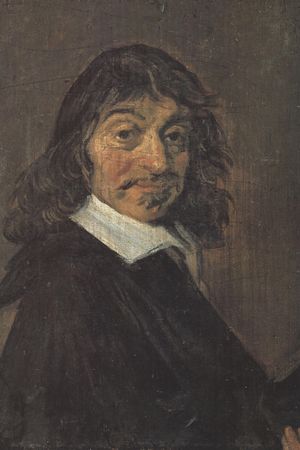
Discourse on the Method
Prefatory Note by the Author
If this Discourse seems too long to read in one sitting, it can be divided into six parts. In the first, you'll find various thoughts on the sciences. In the second, the main rules of the Method the author has sought. In the third, some of the rules of the morality he has drawn from this Method. In the fourth, the arguments by which he proves the existence of God and of the human soul, which are the foundations of his metaphysics. In the fifth, the questions in physics he has investigated, in the order he took them up, and in particular an explanation of the movement of the heart and of some other difficulties that belong to medicine, and then the difference between our soul and that of animals. And in the last, what he believes is needed to get further in the investigation of nature than he has gone so far, and the reasons that led him to write.
Part One
Good sense is the most evenly distributed thing in the world. Everyone thinks he has plenty of it, and even people who are impossible to satisfy in every other way don't usually wish they had more of it than they do. It's unlikely that everyone is wrong about this. What it really shows is that the power of judging well and telling true from false, which is what we properly call good sense, or reason, is naturally equal in all men. The reason we disagree with each other isn't that some of us are more reasonable than others. It's simply that we steer our thoughts along different roads and don't look at the same things. Having a good mind isn't enough; what really matters is using it well. The greatest souls are capable of the greatest vices as well as the greatest virtues. And people who move very slowly but always keep to the straight road can get much further than those who run and stray from it.
As for me, I've never thought my own mind was in any way better than average. In fact, I've often wished I could think as quickly as some people, or imagine things as clearly and distinctly, or remember things as fully or as readily. Beyond those abilities, I don't know of any other qualities that make a mind better. As for reason, or sense, since it's the only thing that makes us men and separates us from animals, I'm inclined to believe it's whole and complete in every person. On this point I'll go along with the standard view among philosophers, who say that more and less are found only among the accidents, a thing's incidental qualities, and never among the forms, or natures, of individuals of the same species.
That said, I'll freely admit that I think I've been very lucky. Very early in life, I found myself on certain paths that led me to reflections and maxims from which I've built a Method. This Method gives me a way, or so it seems to me, to increase my knowledge by degrees and raise it, little by little, to the highest level that my modest abilities and short life will allow. I've already gathered such fruit from it that I feel deeply satisfied with the progress I think I've made in the search for truth. And this is although, in judging myself, I always try to lean toward distrust rather than presumption, and although, when I look with a philosopher's eye at all the doings and undertakings of mankind, I can hardly find one that doesn't seem vain and useless. I have such hopes for the future that, if among the occupations of men purely as men there is one that is solidly good and important, I dare to believe it's the one I've chosen.
Of course, I could be wrong. Maybe what I'm taking for gold and diamonds is really just a bit of copper and glass. I know how easily we fool ourselves about things that concern us, and I also know how suspicious we should be of our friends' judgments when they come out in our favor. But I'll be glad to show in this Discourse the paths I've followed, and to lay out my life in it like a painting, so that everyone can judge it for himself. That way, when I hear what people think about it, I'll have a new source of learning to add to the ones I already use.
My aim here, then, isn't to teach the method everyone should follow to reason well. I'm only showing the way I've tried to guide my own reason. People who set themselves up to give rules to others must think themselves cleverer than the people they give them to, and if they get even the smallest thing wrong, they deserve the blame. But I offer this only as a story, a history, or if you prefer, a fable, in which, among some examples worth following, you'll perhaps find plenty of others you'd be wise not to follow. I hope it will be useful to some people without doing harm to anyone, and that everyone will give me some credit for my frankness.
I was brought up on books from childhood. I was told that through them a person could gain clear, certain knowledge of everything useful in life, and I wanted that desperately. But the moment I finished my entire course of studies, the point where you're normally admitted into the ranks of the learned, I completely changed my mind. I found myself tangled up in so many doubts and errors that the only thing I seemed to have gained by studying was to discover, more and more, how ignorant I was. And I wasn't studying at some mediocre school. I was at one of the most famous schools in all of Europe, where I figured that if there were learned men anywhere in the world, they'd be there. I had been taught everything the other students learned. On top of that, not content with just the official curriculum, I had read every book I could get my hands on about subjects considered the most fascinating and unusual. I knew what others thought of me, and I wasn't considered inferior to my classmates, though some of them were already being groomed to take our teachers' places. And our own century seemed to me as flourishing, and as rich in good minds, as any before it. All this made me feel free to judge everyone else by myself, and to conclude that there was no body of learning in the world as good as I'd been led to hope.
Even so, I still valued the exercises the schools keep you busy with. I knew that the languages taught there are necessary for understanding ancient books; that the charm of fables wakes up the mind; that the great deeds recorded in history lift it up and, if read with good judgment, help to form the judgment; that reading all the good books is like having a conversation with the finest people of earlier centuries, who wrote them, and a carefully prepared conversation at that, in which they share only their best thoughts; that eloquence has incomparable power and beauty; that poetry has a delicacy and sweetness that are quite enchanting; that mathematics has very subtle inventions, which can do a great deal to satisfy the curious, make all the crafts easier and reduce the labor of men; that writings on morals are full of useful teaching and calls to virtue; that theology shows us the way to heaven; that philosophy lets us talk plausibly about anything and be admired by people who know less; that law, medicine and the other sciences bring honor and wealth to those who practice them; and finally, that it's worth having looked into all of them, even the most superstitious and false, so as to know what they're really worth and avoid being taken in.
But I felt I had already spent enough time on languages, and on reading the ancients too, with their histories and their fables. Conversing with people from other centuries is much like traveling. It's useful to know something about the customs of different peoples, so that we judge our own more soundly and don't assume that everything contrary to our ways is ridiculous and against reason, the way people tend to think when they've never seen anything. On the other hand, when you spend too much time traveling, you become a stranger in your own country. And people who are too curious about the past usually stay very ignorant of the present. What's more, fables make us imagine many things as possible that aren't. And even the most faithful histories, if they don't alter events or inflate their importance to make better reading, nearly always leave out the meanest and least glorious circumstances, so that the rest doesn't appear as it really was. People who model their conduct on the examples they draw from such books risk falling into the extravagances of the knights-errant in our romances, dreaming up schemes beyond their strength.
I had great admiration for eloquence and was in love with poetry, but I thought both were gifts of the mind rather than fruits of study. The people who reason most powerfully, and who work over their thoughts until they are clear and easy to follow, can always persuade others best, even if they speak nothing but Low Breton and have never learned any rhetoric. And the people with the most pleasing inventions, who know how to express them with the most grace and sweetness, would still be the best poets even if they had never heard of the art of poetry.
I was especially delighted by mathematics, because of the certainty and self-evidence of its reasoning. But I didn't yet see its real use. I assumed mathematics served only the mechanical arts, and I was surprised that such firm, solid foundations had never been used to build anything more ambitious on top of them. By contrast, I compared the moral writings of the ancient pagans to proud and magnificent palaces built on nothing but sand and mud. They praise the virtues to the skies and make them seem worth more than anything else in the world, but they don't do enough to teach us how to recognize them. And often what they dignify with so fine a name turns out to be nothing but a lack of feeling, or pride, or despair, or parricide.
I revered our theology and hoped as much as anyone to reach heaven. But I had been taught, as a very certain thing, that the way there is no less open to the most ignorant than to the most learned, and that the revealed truths that lead us there are beyond our understanding. I wouldn't have dared to subject them to the weakness of my own reasoning, and I thought that to undertake to examine them, and succeed, a person would need some extraordinary help from heaven, and would have to be more than man.
As for philosophy, I'll just say this. I saw that it had been cultivated for many centuries by the most excellent minds who ever lived, and yet there wasn't a single thing in it that wasn't still disputed, and so nothing that wasn't doubtful. I wasn't presumptuous enough to hope I'd do better there than everyone else. And when I considered how many different opinions learned people can defend on one and the same question, when there can never be more than one that is true, I decided to count as all but false whatever was merely probable.
As for the other sciences, since they all borrow their principles from philosophy, I judged that nothing solid could have been built on such shaky foundations. And neither the honor nor the money they promise was enough to tempt me to learn them. I wasn't, thank God, in a position where I needed to make a trade of learning to better my fortunes. And although I didn't make a show of scorning glory like a Cynic, I thought very little of the kind I could only hope to win under false pretenses. As for the bad doctrines, I thought I already knew well enough what they were worth not to be fooled any longer by the promises of an alchemist, the predictions of an astrologer, the impostures of a magician, or the tricks and boasting of anyone who claims to know more than he does.
For all these reasons, as soon as I was old enough to be out from under my teachers, I gave up the study of letters entirely. I resolved to seek no other knowledge than what I could find in myself, or in the great book of the world. I spent the rest of my youth traveling, visiting royal courts and armies, meeting people of all different temperaments and social positions, gathering all kinds of experiences, testing myself in whatever encounters fortune put in my way, and everywhere reflecting on what came before me so as to get some profit from it. It seemed to me that I'd find much more truth in the reasoning everyone does about matters that concern him, where a bad judgment will soon come back to punish him, than in the reasoning of a scholar in his study about speculations that produce no effect. Those have no consequence for him, except perhaps that the further they are from common sense, the vainer he'll be of them, since he'll have had to spend all the more wit and ingenuity to make them seem plausible. And all along, I had one burning desire: to learn how to tell true from false, so I could see clearly in my actions and walk through this life with confidence.
It's true that as long as I was only observing the customs of other men, I found hardly anything there to be sure of. I noticed almost as much variety among them as I had among the opinions of the philosophers. But the greatest benefit I got from this experience was seeing that many things which seem to us wildly extravagant and ridiculous are commonly accepted and approved by other great peoples. This taught me not to believe too firmly in anything I'd been persuaded of only by example and custom. And in this way, I gradually freed myself from many errors that can darken our natural light and make us less able to listen to reason. But after I had spent some years studying the book of the world in this way, trying to gain some experience, I resolved one day to make myself an object of study too, and to use all the powers of my mind in choosing the paths I ought to follow. This went much better for me, I think, than if I had never left either my country or my books.
Part Two
I was in Germany at the time, drawn there by the wars that still aren't over. As I was making my way back to the army after the emperor's coronation, the onset of winter stranded me in winter quarters where I had no company to distract me and was, luckily, free of any cares or passions to trouble me. I spent entire days shut up alone in a stove-heated room, with all the leisure in the world to keep company with my own thoughts.
One of the very first thoughts that came to me was this: works put together from several pieces, by the hands of different masters, often have less perfection in them than those one person has worked on alone. A building planned and finished by one architect, for example, is usually more beautiful and better ordered than one that several people have tried to patch up, making use of old walls built for other purposes. Or think about cities. The ancient towns that started as villages and slowly grew into large cities are usually badly laid out compared with the regular towns an engineer draws as he pleases on an open plain. Taken one by one, their buildings often show as much art as those in the planned towns, or more. But when you look at how they're arranged, a big one here and a small one there, making the streets crooked and uneven, you'd think chance had placed them so, rather than the will of men using their reason. And if you consider that there have always been officials whose job was to see that private buildings served as an ornament to the city, you'll realize how hard it is to make anything really accomplished when you're working only on other people's work.
Similarly, I figured that peoples who were once half-savage and became civilized only gradually, making their laws only as crimes and quarrels forced them to, could never be as well governed as those who, from the moment they first came together, followed the constitution of some wise lawgiver. In the same way, it's quite certain that the true religion, whose ordinances God alone has made, must be incomparably better ordered than any other. And to stick with human examples: I believe that if Sparta flourished so greatly in its day, it wasn't because each of its laws was good in itself, since many of them were very strange and even contrary to good morals, but because they were all devised by one man and so all pointed toward a single end.
In the same way, I thought that the learning found in books, at least the kind that offers only probable reasons and no demonstrations, has been put together and swollen little by little out of the opinions of many different people, and so doesn't come as near the truth as the simple reasoning a man of good sense can do, naturally, about the things in front of him. And because every one of us was a child before becoming a man, and for a long time had to be governed by our appetites and our teachers, who often contradicted each other and perhaps neither of whom always gave us the best advice, I concluded that it's nearly impossible for our judgments to be as pure or as solid as they would have been if we'd had full use of our reason from the moment we were born and had always been guided by it alone.
Now, it's true that nobody tears down all the houses in a town just to rebuild them differently and make the streets prettier. But individual homeowners do sometimes pull down their own houses to rebuild them, and sometimes they're forced to, when the houses are in danger of falling down by themselves and the foundations aren't sound. Using that as my model, I became convinced that it would be absurd for a private individual to plan to reform a state by changing everything from the foundations up, overturning it in order to set it right again. The same goes for trying to overhaul the whole body of the sciences, or the order established in the schools for teaching them.
But when it came to the opinions I myself had accepted up to that point, I decided I couldn't do better than to sweep them all away, once and for all, so that I could later put back either better ones or the same ones, once I'd checked them against the level of reason. I was firmly convinced that this approach would let me lead my life far better than if I just kept building on old foundations, relying on principles I'd let myself be persuaded of when I was young without ever examining whether they were true.
I did see various difficulties in this plan, but they weren't without remedy, and they were nothing compared to the difficulties of reforming even the smallest things that concern the public. Those great bodies are terribly hard to set back up once they've been knocked down, or even to keep standing once they've been shaken, and their falls can't help being very hard. Besides, as for their imperfections, if they have any (and the sheer variety among them is enough to assure us that many do), custom has no doubt smoothed them over a great deal, and has even quietly avoided or corrected a number of them that no amount of foresight could have dealt with as well. And finally, the imperfections are almost always more bearable than changing them would be, just as the great roads that wind among the mountains become, little by little, so smooth and easy from heavy use that it's much better to follow them than to try to take a straighter path by scrambling over rocks and down to the bottom of the cliffs.
That's why I have no patience for those restless, meddling temperaments who, though called neither by their birth nor by their fortune to the management of public affairs, are forever dreaming up some new reform. And if I thought there was the slightest thing in this book that could make anyone suspect me of that folly, I'd be very sorry to let it be published. My plan has never gone further than trying to reform my own thoughts and to build on ground that is entirely my own. If I'm pleased enough with my work to show you its model here, that doesn't mean I want to advise anyone to copy it. Those whom God has given a larger share of his graces may have loftier designs. But I'm afraid this one of mine is already far too bold for many people.
The mere resolution to rid yourself of every opinion you've ever accepted is not an example everyone should follow. The world is made up almost entirely of two kinds of minds, and it suits neither of them at all. First, there are people who think they're cleverer than they are: they can't keep from rushing to judgment, and they haven't the patience to take their thoughts in order. If people like this once gave themselves permission to doubt the principles they'd accepted and leave the well-worn road, they could never keep to the path that leads more directly. They'd just get lost and wander for the rest of their lives. Second, there are people who have enough reason, or modesty, to judge that they're less able to tell true from false than certain others who could teach them. These people would do better to follow the opinions of those others than to look for better ones on their own.
As for me, I would certainly have been one of this second kind if I'd only ever had one teacher, or if I'd never learned how much the opinions of the most learned have always differed. But even back in school, I'd learned that you can't imagine anything so strange or so unbelievable that some philosopher hasn't said it. And later, during my travels, I noticed that people whose views are very different from ours aren't barbarians or savages because of it; in fact, many of them use their reason just as well as we do, if not better. I also considered how the same man, with the same mind, brought up from childhood among the French or the Germans, turns out different from what he'd be if he had always lived among the Chinese or among cannibals. Even in something as trivial as the fashions in our clothes, the style we loved ten years ago, and might love again ten years from now, strikes us right now as extravagant and ridiculous. It's custom and example, then, far more than any certain knowledge, that persuade us.
And yet a majority of votes proves nothing worth having about truths that are at all hard to discover, since it's far more likely that one man alone has hit on them than a whole people. But since I couldn't pick out anyone whose opinions seemed worth preferring to everyone else's, I found myself, as it were, forced to take on the job of guiding myself.
Like a man walking alone in the dark, I resolved to go so slowly, and to be so careful in everything, that even if I didn't make much progress, I would at least avoid falling. I didn't even want to begin rejecting outright any of the opinions that might have slipped into my beliefs without being put there by reason until I had first spent enough time drafting the plan of the work I was taking on, and looking for the true method of arriving at knowledge of everything within my mind's reach.
When I was younger, I had studied a little logic, among the parts of philosophy, and, among the parts of mathematics, the analysis of the geometers and algebra: three arts or sciences that seemed as if they ought to contribute something to my plan. But when I examined them closely, I found problems with all three.
Logic, with its syllogisms and most of its other rules, is actually more useful for explaining to others what you already know, or even, like the art of Lull, for talking without judgment about things you don't know, than for learning them. And while logic does contain many rules that are perfectly true and good, they're so mixed in with harmful or useless ones that separating the good ones out is almost as hard as carving a Diana or a Minerva out of a block of marble that hasn't even been roughed out.
As for the analysis of the ancients and the algebra of the moderns, both deal only with very abstract matters that seem to have no use. Besides, the first is so tied to the study of figures that it can't exercise the understanding without wearing out the imagination. And people have bound the second so tightly to certain rules and symbols that they've turned it into a confused, obscure art that muddles the mind instead of a science that cultivates it.
That's why I thought I needed to look for some other method, one that would combine the advantages of these three while being free of their defects. A great number of laws often supplies excuses for vice, so that a state with very few laws, very strictly kept, is much better governed. In the same way, instead of the great number of rules that make up logic, I believed the following four would be enough for me, provided I made a firm and constant resolution never, not even once, to fail to observe them.
I settled on these four:
RULE ONE: Never accept anything as true that I didn't evidently know to be so. That is, carefully avoid haste and prejudice, and include nothing more in my judgments than what presented itself to my mind so clearly and so distinctly that I had no occasion to call it into doubt.
RULE TWO: Divide each of the difficulties I examined into as many parts as possible, and as many as would be needed to solve it better.
RULE THREE: Conduct my thoughts in order, beginning with the simplest objects and the easiest to know, and climbing little by little, as if by steps, to knowledge of the most complex; and even assuming an order among those that don't naturally come one before another.
RULE FOUR: Everywhere, make my enumerations so complete and my reviews so general that I could be sure of leaving nothing out.
Those long chains of reasoning, every link simple and easy, that geometers use to reach their most difficult demonstrations had led me to imagine that everything men are capable of knowing follows from one thing to the next in the same way. Provided only that we refrain from accepting as true anything that isn't, and always keep the order needed to deduce one thing from another, there can be nothing so remote that we can't reach it in the end, and nothing so hidden that we can't uncover it.
I had no trouble figuring out where to start, since I already knew it had to be with the simplest things and the easiest to know. And considering that of all the people who have ever searched for truth in the sciences, only the mathematicians have managed to find any demonstrations, that is, any certain and evident reasons, I didn't doubt that I should start with the very things they had examined. I wasn't hoping to get anything from this beyond getting my mind used to feeding on truths and refusing to put up with false reasons.
But I had no intention of trying to master every one of those particular sciences commonly called mathematics. I noticed that despite their different objects, they all agree in considering nothing in them but the various relations or proportions found there. I thought it would be best, then, to study only these proportions in general, assuming them only in subjects that would make them easier for me to know, and even then without tying them down to those subjects at all, so that I could apply them all the better afterward to everything else they fit.
Then I realized that in order to know these proportions, I'd sometimes need to consider them one by one, and other times only to keep several in mind, or take them in together. For examining them one by one, I decided to suppose them to be in lines, since I couldn't find anything simpler, or anything I could picture more distinctly to my imagination and my senses. But for keeping several in mind, or taking them in together, I'd have to express them in certain symbols, the shortest possible. In this way, I would borrow all the best of geometrical analysis and of algebra, and use each one to correct all the defects of the other.
And in fact, I dare say that carefully following the few rules I had chosen gave me such ease in untangling every question these two sciences cover that in the two or three months I spent examining them, starting with the simplest and most general, with each truth I found becoming a rule that helped me find others, I not only solved many problems I'd once thought very difficult, but it also seemed to me, toward the end, that even for the ones I couldn't yet solve, I could determine by what means, and how far, they could be solved.
You may not think this very vain of me if you consider that, since there is only one truth about each thing, whoever finds it knows as much about it as can be known. A child who has been taught arithmetic, for example, and has done an addition by its rules, can be sure he has found, about the sum he was working out, everything the human mind could find. In the end, the method that teaches you to follow the true order and to enumerate exactly all the circumstances of what you're looking for contains everything that gives the rules of arithmetic their certainty.
But what satisfied me most about this Method was the confidence it gave me that I was using my reason in everything, if not perfectly, at least as well as I possibly could. Beyond that, I could feel, as I practiced it, my mind gradually getting used to conceiving its objects more sharply and distinctly. And since I hadn't tied the Method to any particular subject, I promised myself I'd apply it as usefully to the difficulties of the other sciences as I had to those of algebra.
That said, I didn't dare set out at once to examine every difficulty that came up; that very thing would have gone against the order the Method prescribes. Instead, I noticed that the principles of the sciences all had to be borrowed from philosophy, and in philosophy I hadn't yet found any that were certain. I decided I needed to establish some there before anything else.
But this was the most important thing in the world, and the one where haste and prejudice were most to be feared. I decided I shouldn't try to see it through until I'd reached a much more mature age than twenty-three, which is what I was then. First, I needed to spend a good deal of time preparing: rooting out of my mind all the bad opinions I'd accepted up to that point, gathering a store of experiences to give my reasoning something to work with later, and continually practicing the Method I had prescribed myself, so I could become more and more secure in it.
Part Three
Finally, before you start rebuilding the house you live in, it's not enough just to tear it down, lay in materials and builders (or train yourself in architecture), and draw up a careful plan. You also need somewhere else to stay comfortably while the work is going on. In the same way, I didn't want to stay irresolute in my actions while reason obliged me to be irresolute in my judgments, and I certainly didn't want to stop living as happily as I could in the meantime. I therefore put together a provisional morality, a code for the time being, consisting of only three or four maxims, which I'd like to share with you.
The first maxim was to obey the laws and customs of my country, to hold steadily to the religion in which, by God's grace, I had been raised since childhood, and to guide myself in all other matters by the most moderate opinions, the ones farthest from any excess, that were commonly accepted in practice by the most sensible of the people I would have to live with.
Here was my reasoning: since I was beginning from then on to count my own opinions as nothing, because I wanted to put every one of them to the test, I was sure I couldn't do better than follow those of the most sensible people. And there may well be people among the Persians or the Chinese who are just as sensible as any of us. But it seemed most useful to follow the opinions of the people I actually had to live with.
To find out what those people really believed, I decided I should pay attention to what they did rather than what they said. There were two reasons for this. First, in our corrupt times, few people are willing to say everything they believe. Second, many people don't even know what they believe. The act of thought by which we believe something is different from the one by which we know that we believe it, and you often get one without the other.
Also, among several opinions equally accepted, I always chose the most moderate. One reason was that moderate views are always the most practical, and probably the best, since every excess is usually bad. The other was that if I happened to go wrong, I'd stray less far from the true road than if I'd picked one extreme when it was the other I should have followed.
In particular, I counted as excesses all promises by which we give up some part of our freedom. Not that I disapproved of laws which, to remedy the inconstancy of weak minds, allow people to make vows or contracts that bind them to persevere in some good plan, or even, for the security of trade, in a plan that's merely neutral. But I couldn't see anything in the world that always stayed the same. And since for my own part I was counting on making my judgments better and better, not worse, I would have thought it a serious offense against good sense to bind myself to go on taking something for good later just because I approved of it at that moment, when perhaps it had stopped being good, or I had stopped thinking it so.
My second maxim was to be as firm and resolute in my actions as I could, and once I had settled on a course, to follow even the most doubtful opinions just as steadily as if they had been entirely certain.
In this I imitated travelers who get lost in a forest. They shouldn't wander around in circles, now this way, now that, and they certainly shouldn't stop in one spot. What they should do is keep walking as straight as they can in one direction, without changing course for weak reasons, even if it was pure chance that made them choose that direction in the first place. Because even if they don't end up exactly where they wanted to go, they'll at least get somewhere in the end, which is very likely better than staying stuck in the middle of a forest.
In the same way, since the actions of life often won't allow any delay, it's a very certain truth that when it isn't in our power to make out which opinions are truest, we must follow the most probable. And even when no option seems more likely than another, we still have to settle on some, and afterward treat them, as far as practice goes, not as doubtful but as entirely true and certain, because the reason that made us settle on them is itself true and certain.
This was enough, from then on, to free me from all the regret and remorse that usually trouble the consciences of those weak and wavering minds who let themselves drift into doing, as if they were good, things they later judge to be bad.
My third maxim was always to try to master myself rather than fortune, and to change my desires rather than the order of the world. More broadly, I wanted to train myself to believe that nothing is entirely in our power except our own thoughts. That way, once we've done our best about things outside us, whatever we still fail to achieve is, as far as we're concerned, absolutely impossible.
This alone seemed enough to keep me from wanting anything in future that I couldn't get, and so to keep me content. For our will naturally desires only the things that our understanding represents to it as somehow possible. If, then, we regard all the goods outside us as equally beyond our power, we won't feel any more regret about lacking things that seem owed to us by birth (when we've been deprived of them through no fault of our own) than we feel about not owning the kingdoms of China or Mexico. Making a virtue of necessity, as the saying goes, we'll no more wish to be healthy when we're sick, or free when we're in prison, than we now wish for bodies as incorruptible as diamonds, or for wings to fly like the birds.
I'll admit, though, that it takes long practice and often repeated meditation to train yourself to see everything this way. And I believe this was chiefly the secret of those philosophers who were once able to put themselves beyond the reach of fortune and, in spite of pain and poverty, to rival their gods in happiness. By constantly reflecting on the limits nature had set them, they became so thoroughly convinced that nothing was in their power but their thoughts that this alone was enough to keep them from any attachment to other things. And they had their thoughts so absolutely at their disposal that they had some reason to think themselves richer, more powerful, freer and happier than any other men. For other people, lacking this philosophy, never have everything they want so at their disposal, however many gifts nature and fortune may have showered on them.
Finally, to round out this moral code, I decided to review the various occupations men pursue in this life, hoping to pick the best one. Without wanting to say anything about what anyone else does, I thought I couldn't do better than to keep doing exactly what I was already doing: devoting my whole life to cultivating my reason and advancing as far as I could in the knowledge of truth, following the Method I'd set for myself.
Since I'd started using this Method, I had felt such extreme contentment that I didn't believe anyone could have a sweeter or more innocent kind in this life. Every day, it helped me discover truths that seemed to me fairly important and that most other men didn't know, and the satisfaction this gave me filled my mind so completely that nothing else touched me.
Besides, the three maxims before this one were founded only on my plan to go on teaching myself. Since God has given each of us some light for telling true from false, I wouldn't have thought I ought to be content with other people's opinions for a single moment if I hadn't intended to use my own judgment to examine them when the time came. I couldn't have followed them without scruple if I hadn't hoped that doing so would cost me no chance of finding better ones, if there were any. And finally, I couldn't have limited my desires, or been content, if I hadn't been on a road that I thought made me sure of acquiring all the knowledge I was capable of, and so, by the same means, all the true goods that would ever be in my power.
For since our will pursues or avoids anything only as our understanding represents it as good or bad, it's enough to judge well in order to do well, and to judge as well as we can in order to do our best too: that is, to acquire all the virtues, and with them all the other goods within our reach. And when you're certain of that, you can't help being content.
Having made sure of these maxims, and set them aside with the truths of faith, which have always held first place in my beliefs, I judged that I was free to begin getting rid of all the rest of my opinions.
Since I hoped to manage this better by talking with men than by staying shut up any longer in the stove-heated room where I'd had all these thoughts, I set out traveling again before winter was even over. For the next nine years, I did nothing but roam here and there in the world, trying to be a spectator rather than an actor in all the comedies played out in it. In every matter I reflected in particular on what might make it suspect and give us occasion to go wrong, and meanwhile I rooted out of my mind all the errors that might have crept in before.
I wasn't imitating the skeptics in this, those people who doubt just for the sake of doubting and make a show of never making up their minds. On the contrary, my whole purpose was to find solid ground, to clear away the shifting soil and sand until I hit rock or clay. And I think I managed this fairly well. Whenever I tried to expose the falseness or uncertainty of the propositions I examined, not with weak guesswork but with clear and certain reasoning, I never met one so doubtful that I couldn't draw from it some conclusion certain enough, even if it was only that it contained nothing certain.
And just as when tearing down an old house you normally save the usable materials for the new building, in the process of demolishing my poorly founded opinions I made all kinds of observations and gained a wealth of experience that I later put to use in establishing more certain beliefs.
I also kept practicing the Method. Beyond conducting all my thoughts in general by its rules, I set aside a few hours from time to time to apply it specifically to mathematical problems, and sometimes to questions from other fields too, which I could make almost like mathematical ones by detaching them from all the principles of the other sciences, since I didn't find those firm enough. You'll see that I've done this with several of the questions explained in the essays published with this Discourse.
And so, without appearing to live any differently from people who have no occupation but to lead a pleasant and innocent life, who make a point of keeping their pleasures free of vice, and who fill their leisure with every respectable amusement to keep boredom at bay, I kept quietly on with my plan, and made progress in the knowledge of truth, perhaps more than if I'd done nothing but read books or talk with scholars.
Still, those nine years went by before I had taken any side on the questions scholars argue over, or begun looking for the foundations of a philosophy more certain than the common one. And the example of many excellent minds who had attempted it before me, and who seemed to me to have failed, made me imagine it so difficult that I might not have dared to undertake it so soon if I hadn't heard that some people were already spreading the rumor that I had finished it.
I can't say what they based this opinion on. If my conversations played any part in it, that must have been because I confessed what I didn't know more candidly than people who've studied a bit usually do, and perhaps also because I showed the reasons I had for doubting many things that others consider certain, not because I'd ever boasted of having any doctrine.
But since I'm the kind of person who hates being taken for something I'm not, I felt I had to do everything I could to make myself worthy of the reputation I was being given. Exactly eight years ago, this desire made me resolve to get away from every place where I might have acquaintances, and to settle here, in Holland, a country where the long war has created such good order that the armies maintained there seem to serve no purpose but to let the inhabitants enjoy the fruits of peace in greater security. Here, in the crowd of a great and very active people, more careful of their own affairs than curious about other people's, I've been able to live as solitary and withdrawn as in the remotest desert, without lacking any of the conveniences of the busiest cities.
Part Four
I'm not sure I ought to tell you about the first meditations I made there, because they're so metaphysical and so unusual that they may not be to everyone's taste. But since you can only judge whether the foundations I've laid are firm enough if you see them, I feel more or less obliged to discuss them.
I had noticed long before, as I mentioned earlier, that in matters of conduct it's sometimes necessary to follow opinions we know to be very uncertain, treating them as if they were beyond doubt. But now I wanted to give myself entirely to the search for truth. And for that purpose, I thought I had to do the exact opposite: reject as absolutely false anything in which I could imagine the slightest doubt. My goal was to see whether, after all that rejection, anything would remain among my beliefs that was completely beyond question.
Since our senses sometimes deceive us, then, I decided to suppose that nothing is the way they make us imagine it. Since some men make mistakes in reasoning, even about the simplest matters of geometry, and commit fallacies, I judged that I was as liable to err as anyone else, and I rejected as false all the reasoning I had previously accepted as demonstration. And finally, since the very same thoughts we have while awake can also come to us while we sleep, when none of them is true, I resolved to pretend that nothing that had ever entered my mind was any truer than the illusions of my dreams.
But then, immediately, I noticed that while I was trying in this way to think that everything was false, it had to be the case that I, who was thinking it, was something. And observing that this truth, "I think, therefore I am," was so firm and so certain that all the most extravagant suppositions of the skeptics were incapable of shaking it, I concluded that I could accept it without hesitation as the first principle of the philosophy I was looking for.
Next, I carefully examined what I was. I realized that I could pretend I had no body, and that there was no world and no place where I existed. But I could not, for all that, pretend that I did not exist. On the contrary, from the very fact that I was thinking of doubting the truth of other things, it followed very evidently and very certainly that I existed. On the other hand, if I had simply stopped thinking, then even if everything else I had ever imagined had been true, I would have had no reason to believe that I existed. From this I knew that I was a substance whose whole essence or nature is simply to think, and which, in order to exist, needs no place and depends on no material thing. Accordingly, this "I," that is, the soul by which I am what I am, is entirely distinct from the body. It's even easier to know than the body. And even if the body didn't exist at all, the soul would still be everything that it is.
After this, I investigated what makes a proposition true and certain in general. Since I had found one truth that I knew with certainty, I figured I should also know what that certainty consists in. When I looked at the statement "I think, therefore I am," I noticed that the only thing that assured me of its truth was this: I could see very clearly that in order to think, one has to exist. I judged, then, that I could take it as a general rule that the things we conceive very clearly and very distinctly are all true. The only difficulty lies in making out properly which ones we conceive distinctly.
After that, I reflected on the fact that I had doubts, and that therefore my being was not wholly perfect, for I saw clearly that it is a greater perfection to know than to doubt. This led me to look for where I had learned to think of something more perfect than myself. And I recognized plainly that it must have come from some nature that really was more perfect than mine.
As for the thoughts I had of many other things outside me, such as the sky, the earth, light, heat and a thousand others, I wasn't as puzzled about where they came from. Since I didn't see anything in them that made them seem superior to me, I could believe that if they were true, they depended on my own nature, insofar as it had some perfection; and if they weren't, that I had them from nothing, which is to say they were in me because I was lacking in something.
But that couldn't be the case with the idea of a being more perfect than mine. Getting that idea from nothing was obviously impossible. And since it's just as contradictory for the more perfect to follow from and depend on the less perfect as it is for something to come from nothing, I couldn't have gotten it from myself either. The only remaining option was that it had been put in me by a nature truly more perfect than mine, one that even had in itself all the perfections I could have any idea of. In a word: God.
I added this further thought: since I knew of some perfections I didn't have, I was not the only being that existed (allow me to use the language of the Schools freely here). There had to be some other, more perfect being on whom I depended and from whom I had received everything I had. For if I had existed alone, independent of everything else, so that I had from myself all the small share of perfect being that I had, then by the same reasoning I could have given myself all the rest that I knew I lacked. I could have made myself infinite, eternal, unchanging, all-knowing, all-powerful; in short, I could have had all the perfections I could observe to be in God.
For by the reasoning I have just given, to know the nature of God as far as my own nature allowed, I only had to consider, for each thing I found some idea of in myself, whether it was a perfection to possess it or not. I was sure that none of those that marked some imperfection was in him, and that all the others were. Thus I saw that doubt, inconstancy, sadness and things like that could not be in him, since I myself would have been very glad to be free of them. Beyond this, I had ideas of many things that can be sensed, of bodily things. Even supposing I was dreaming, and that everything I saw or imagined was false, I still couldn't deny that the ideas of them were truly in my thought.
But I had already recognized very clearly in myself that intelligent nature is distinct from bodily nature. And since all composition is a sign of dependence, and dependence is plainly a defect, I concluded that being composed of these two natures could not be a perfection in God, and that, consequently, he was not so composed. Instead, if there were any bodies in the world, or any intelligences or other natures that were not wholly perfect, their being had to depend on his power in such a way that they could not continue to exist without him for a single moment.
After that, I wanted to look for other truths. I turned my attention to the object the geometers study, which I conceived as a continuous body, or a space extended indefinitely in length, breadth, and height or depth, divisible into various parts, which could have various shapes and sizes and be moved or shifted about in every way (for the geometers assume all this in their object). And I went through some of their simplest demonstrations.
I noticed that the great certainty everyone attributes to these demonstrations rests only on the fact that they are conceived evidently, following the rule I stated a moment ago. And I noticed too that there was nothing at all in them that guaranteed the existence of their object. For example, I could clearly see that, given a triangle, its three angles had to equal two right angles. But that didn't assure me there was any triangle in the world. On the other hand, when I turned back to examine my idea of a perfect Being, I found that existence was contained in it in the same way that the equality of its three angles to two right angles is contained in the idea of a triangle, or the equal distance of all its points from its center in the idea of a sphere, or even more evidently still. Therefore, it is at least as certain that God, who is this perfect Being, is or exists, as any demonstration in geometry could be.
Now, the reason many people convince themselves that it's hard to know this, and hard even to know what their own soul is, is that they never lift their minds above things that can be sensed. They're so used to considering nothing except by imagining it, which is a way of thinking peculiar to material things, that anything they can't picture seems unintelligible to them. This is clear enough from the maxim that even the philosophers hold in the Schools: that there is nothing in the understanding that was not first in the senses, where the ideas of God and of the soul have certainly never been. It seems to me that people who try to use their imagination to grasp these ideas are doing just what they would be doing if they tried to use their eyes to hear sounds or smell odors. Except that there is this further difference: the sense of sight assures us of the truth of its objects no less than smell and hearing do of theirs, whereas neither our imagination nor our senses could ever assure us of anything unless our understanding stepped in.
Finally, if there are still men who aren't persuaded of the existence of God and of their soul by the arguments I've given, I want them to know this: all the other things they perhaps think they're more certain of, such as having a body, and there being stars and an earth, and so on, are actually less certain. We do have a practical certainty about these things, strong enough that it seems you'd have to be out of your mind to doubt them. And yet, unless you're being unreasonable, you can't deny, when it's a question of metaphysical certainty, that there's reason enough not to be entirely sure of them, once you've noticed that while asleep we can imagine in just the same way that we have a different body, and see different stars and a different earth, when none of it exists. For how do we know that the thoughts that come in dreams are any more false than the others, when they're often just as vivid and sharp?
Let the best minds study this question for as long as they like. I don't believe they can give any reason sufficient to remove this doubt unless they presuppose that God exists. For, first of all, even the principle I adopted a moment ago as a rule, that the things we conceive very clearly and very distinctly are all true, is certain only because God is or exists, because he is a perfect being, and because everything in us comes from him. It follows that our ideas or notions, being real things that come from God, cannot, insofar as they are clear and distinct, be anything but true. If we fairly often have ideas that contain some falsehood, they can only be ones that have something confused and obscure about them, because to that extent they participate in nothingness; that is, they are confused in us only because we are not wholly perfect. And it's evident that it would be just as contradictory for falsehood or imperfection, as such, to come from God as for truth or perfection to come from nothing. But if we didn't know that everything real and true in us comes from a perfect and infinite being, then no matter how clear and distinct our ideas might be, we would have no grounds for being sure they had the perfection of being true.
But once the knowledge of God and the soul has made us certain of this rule, it's easy to see that the fancies we imagine while asleep shouldn't in any way make us doubt the truth of the thoughts we have while awake. If someone had a very distinct idea even in sleep, if a geometer, say, came up with a new demonstration in a dream, his being asleep wouldn't stop it from being true. As for the most common error of our dreams, which is that they present various objects to us in the same way our external senses do, it doesn't matter that it gives us reason to distrust such ideas, because the senses can quite often deceive us when we aren't asleep: people with jaundice see everything yellow, and the stars and other very distant bodies look much smaller than they really are.
In the end, whether awake or asleep, we should never let ourselves be persuaded of anything except by the evidence of our reason. Notice that I say our reason, not our imagination or our senses. For example, although we see the sun very clearly, we shouldn't conclude that it's only as big as it looks. And we can distinctly imagine a lion's head grafted onto a goat's body, but that doesn't mean a chimera actually exists. Reason doesn't tell us that what we see or imagine in this way is real. But it does tell us that all our ideas or notions must have some foundation of truth, since God, who is all perfect and all truthful, could not have put them in us without one. And because our reasoning is never as evident or as complete during sleep as when we're awake, even though our imaginings are sometimes just as vivid and sharp then, or more so, reason also tells us this: since our thoughts can't all be true, because we aren't wholly perfect, whatever truth they have must infallibly be found in the ones we have while awake rather than in our dreams.
Part Five
I'd gladly go on and show you the whole chain of other truths I deduced from these first ones. But to do that I would now have to discuss many questions that are in dispute among the learned, and I have no wish to quarrel with them. I think it better to hold back, then, and say only in general what those truths are, leaving the wisest to judge whether it would be useful for the public to be told about them in more detail.
I have always held firm to the resolution I had made: to assume no principle other than the one I have just used to demonstrate the existence of God and the soul, and to accept nothing as true that did not seem to me clearer and more certain than the demonstrations of the geometers had seemed before. And yet I venture to say that not only did I find a way to satisfy myself in a short time about all the main difficulties that philosophy usually deals with, but I also noticed certain laws that God has so firmly established in nature, and of which he has imprinted such notions in our souls, that once we have reflected on them enough, we cannot doubt that they are exactly observed in everything that is or happens in the world. Then, by following out what these laws lead to, I think I have discovered many truths more useful and more important than anything I had learned before, or even hoped to learn.
I tried to explain the chief of these truths in a treatise that certain considerations prevent me from publishing, and I can't make them better known than by summarizing here what it contains. My plan was to put into it everything I thought I knew, before I wrote it, about the nature of material things. But painters, unable to show all the different faces of a solid body equally well on a flat canvas, choose one of the main ones to turn alone toward the light, and shade the others, letting them appear only as they can be seen while looking at that one. In the same way, afraid I couldn't get everything I had in mind into my account, I undertook only to set out very fully what I understood about light. Then, as the occasion arose, I would add something about the sun and the fixed stars, because nearly all light comes from them; about the heavens, because they transmit it; about the planets, comets and earth, because they reflect it; in particular about all the bodies on the earth, because they are either colored, transparent or luminous; and finally about man, because he is its spectator.
And to shade all these things a little, and be able to say more freely what I thought of them without having to follow or refute the opinions accepted among the learned, I resolved to leave this whole world to their disputes and to speak only of what would happen in a new one. Suppose God were now to create, somewhere in the imaginary spaces, enough matter to compose one; suppose he stirred its various parts about in every direction and without any order, so as to make of it a chaos as confused as any the poets could invent; and suppose that afterward he did nothing but lend nature his ordinary concurrence and let it act according to the laws he has established. On that basis, I first described this matter, and tried to present it in such a way that there is nothing in the world, it seems to me, clearer or more intelligible, except what was said a moment ago about God and the soul. I even expressly assumed that it had none of those "forms" or "qualities" they argue about in the Schools, nor in general anything whose knowledge is not so natural to our souls that no one could even pretend not to know it. Beyond that, I showed what the laws of nature were. Using no principle other than God's infinite perfection, I worked to demonstrate every law that could be in any way doubtful, and to show that these laws are so fundamental that even if God had created many worlds, there could not be a single one where these laws did not hold.
After that, I showed how the greater part of this chaotic matter would, in accordance with these laws, sort itself out and arrange itself into something resembling our heavens. Meanwhile, some parts of it would form an earth, some would become planets and comets, and others would become a sun and fixed stars. Here I made a digression on the subject of light, explaining at length what the nature of light must be as found in the sun and stars, how it travels across the vast distances of the heavens in an instant, and how it bounces off the planets and comets back toward the earth. I also added a good deal about the substance, position, movements and all the various qualities of these heavens and stars, enough, I thought, to show that nothing can be observed in the heavens and stars of our world that would not, or at least could not, look exactly the same in those of the world I was describing.
From there I moved on to the earth in particular. I showed how, even though I had expressly assumed that God put no weight into the matter it was made of, all its parts would still tend exactly toward its center. I showed how, with water and air on its surface, the arrangement of the heavens and the heavenly bodies, chiefly the moon, would cause an ebb and flow of the tides matching in every particular the one we observe in our seas, and also a certain current of both water and air flowing from east to west, just like the one we observe between the tropics. I explained how mountains, seas, springs, and rivers could form naturally, how metals could be produced in mines, and how plants could grow in the fields. In general, I showed how all the substances we call "mixed" or "composite" could be generated.
Among these topics, since I knew of nothing besides the stars that produces light except fire, I took pains to explain very clearly everything that belongs to its nature: how it is made and how it is fed; how it sometimes has only heat without light, and sometimes only light without heat; how it can bring various colors and various other qualities into various bodies; how it melts some and hardens others; how it can consume nearly all of them or turn them into ashes and smoke; and finally how, from those ashes, by the sheer violence of its action, it forms glass. This transmutation of ashes into glass seemed to me as wonderful as any that takes place in nature, and I took particular pleasure in describing it.
I did not mean to infer from all this, however, that our world was created in the way I proposed. It's much more likely that God made it from the very beginning just as it was to be. But it is certain, and it's an opinion commonly held among theologians, that the act by which he now preserves it is exactly the same as the act by which he created it. Even if he had given it no other form at the beginning than that of chaos, provided that he established the laws of nature and lent it his concurrence so that it acts as it usually does, we can believe, without slighting the miracle of creation, that by this alone all purely material things could in time have become just what we now see. And their nature is much easier to conceive when you see them come into being little by little in this way than when you consider them only as finished.
From the description of inanimate bodies and plants, I passed to that of animals, and particularly of men. But since I didn't yet know enough to speak of them in the same style as the rest, that is, by demonstrating effects from causes and showing from what seeds and in what way nature must produce them, I contented myself with supposing that God formed the body of a man exactly like one of ours, both in the outward shape of its limbs and in the inner structure of its organs, composing it of no matter other than the kind I had described. At first I put no rational soul in it, nor anything else to serve as a "vegetative" or "sensitive" soul. The only thing I added was one of those fires without light that I had already explained, kindled in its heart; and I conceived it as no different in nature from the fire that heats hay stored away before it is dry, or that makes new wine seethe when it is left to ferment on the crushed grapes.
For when I examined the functions that this body could have as a result, I found in it exactly all those that can be in us without our thinking of them, and so without any contribution from our soul, that is, from the part of us, distinct from the body, whose nature, as I said earlier, is only to think. These are the very functions in which animals without reason can be said to resemble us. But I could not find among them any of the functions that depend on thought and are the only ones that belong to us as men. I did discover all of those, however, as soon as I supposed that God had created a rational soul and joined it to this body in the particular way I went on to describe.
But to show how I handled this topic, I want to explain here the motion of the heart and arteries. This is the first and most basic motion we observe in animals, and understanding it makes it easy to figure out what to think about all the rest. To help readers who aren't familiar with anatomy follow what I'm about to say, I'd suggest that before reading further, they go watch someone dissect the heart of a large animal that has lungs (since any such heart is similar enough to a man's), and have someone show them its two chambers, or ventricles.
First, the chamber on the right side. Two large tubes connect to it. One is the hollow vein (the vena cava), which is the main reservoir of the blood and the trunk, so to speak, of a tree whose branches are all the other veins in the body. The other is the arterial vein (which is really an artery, despite its misleading name). This vessel originates in the heart and, after leaving it, splits into many branches that spread throughout the lungs.
Second, the chamber on the left side. It also has two tubes of equal or even greater size. One is the venous artery (also misleadingly named, since it's really a vein). It comes from the lungs, where it divides into many branches interwoven with those of the arterial vein and with the windpipe, which is the tube through which we breathe. The other is the great artery (the aorta), which exits the heart and sends its branches all over the body.
I would also want these observers to be carefully shown the eleven small flaps that act as valves, opening and closing the four openings of these two chambers. Three are at the entrance from the hollow vein: they are positioned so that they freely allow blood to flow into the right ventricle but completely prevent it from flowing back out. Three more are at the entrance to the arterial vein, arranged the opposite way: they let blood pass easily from the right ventricle into the lungs but block it from returning. Similarly, two are at the opening of the venous artery, allowing blood to flow from the lungs into the left ventricle but not back again. And three are at the mouth of the great artery, letting blood flow out from the heart but preventing any backflow. There's no need to look for any other reason for their number than this: the opening of the venous artery, being oval because of where it lies, can conveniently be closed with two flaps, while the others, being round, are better closed with three.
Also notice that the great artery and the arterial vein have much harder, thicker walls than the venous artery and the hollow vein. And notice that the hollow vein and the venous artery widen out before they enter the heart, forming two pouches called the auricles of the heart, made of the same kind of tissue as the heart itself. One more thing: there is always more heat in the heart than in any other part of the body. This heat is strong enough to make any drop of blood that flows into the heart's chambers quickly expand and puff up, just the way any liquid does when you let it fall drop by drop into a very hot vessel.
Once you understand all of this, explaining how the heart moves becomes straightforward. When the heart's chambers are not full of blood, blood necessarily flows in, from the hollow vein into the right chamber and from the venous artery into the left, because these two vessels are always full of it and their openings toward the heart cannot be closed at that moment. But as soon as two drops of blood have entered, one into each chamber (and these drops are fairly large, since the openings are wide and the vessels are full), those drops are immediately heated and expanded by the warmth they encounter. This causes the whole heart to swell. At the same time, the expanding blood pushes shut the five small valves at the entrances of the two vessels it came from, cutting off any further inflow. Then, growing still more expanded, the blood forces open the six small valves at the exits of the other two vessels, causing all the branches of the arterial vein and the great artery to inflate almost simultaneously with the heart.
Immediately afterward the heart subsides, and so do the arteries, because the blood that entered them cools. Their six valves close again, and the five of the hollow vein and the venous artery reopen, letting in two more drops of blood, which make the heart and arteries swell again, just as the previous ones did. And because the blood entering the heart passes through those two pouches called the auricles, their motion is the opposite of the heart's: they go down when it swells.
And in case people who don't know the force of mathematical demonstrations, and aren't used to telling true reasons from merely plausible ones, should venture to deny all this without examining it, I want to point out to them that the motion I have just explained follows just as necessarily from the mere arrangement of the organs, which you can see in the heart with your own eyes, from the heat you can feel there with your fingers, and from the nature of the blood, which you can learn by experience, as the motion of a clock follows from the force, position and shape of its weights and wheels.
But if someone asks how the blood in the veins doesn't run out, flowing as it does continually into the heart, and how the arteries don't become overfull, since all the blood that passes through the heart goes into them, I need give no other answer than what has already been written by an English physician (Harvey, in his book On the Motion of the Heart). He deserves the credit for having broken the ice here, and he was the first to teach that there are many little passages at the ends of the arteries, through which the blood they receive from the heart enters the small branches of the veins, and from there goes back again to the heart; so that its course is nothing but a perpetual circulation.
He proves this very well from the ordinary experience of surgeons. When they tie a band moderately tight around the arm above the place where they open a vein, the blood comes out more abundantly than if they had not tied it. And the very opposite would happen if they tied it below, between the hand and the opening, or tied it very tight above. The reason is that a moderately tight band is enough to prevent the blood already in the arm from flowing back to the heart through the veins, but it can't stop fresh blood from arriving through the arteries, because the arteries lie deeper than the veins and have tougher walls that are harder to compress. Also, blood coming from the heart through the arteries pushes toward the hand with greater force than it pushes back toward the heart through the veins. And since this blood leaves the arm through the opening in one of the veins, there must be some passages below the band, that is, toward the extremities of the arm, through which it can come into them from the arteries.
He also proves what he says about the course of the blood very well from certain little membranes, set at various places along the veins in such a way that they don't let it pass from the middle of the body toward the extremities, but only back from the extremities toward the heart. And he proves it further from the experiment showing that all the blood in the body can drain out in a very short time through a single artery when it is cut, even if it has been tightly tied very close to the heart and cut between the heart and the tie, so that there's no reason to imagine the blood coming out of it came from anywhere else.
But there are many other things that show the true cause of this motion of the blood to be the one I have given. First, the difference we notice between blood from the veins and blood from the arteries can only come from this: having been rarefied, and as it were distilled, in passing through the heart, the blood is finer, livelier and warmer just after leaving it, in the arteries, than it was a little before entering it, in the veins. And if you look carefully, you'll find that this difference shows up clearly only near the heart, and much less in the places farthest from it.
Next, the hardness of the walls of the arterial vein and the great artery shows well enough that the blood beats against them with more force than against the veins.
And why would the left chamber of the heart and the great artery be wider and larger than the right chamber and the arterial vein, unless the blood of the venous artery, which has been only in the lungs since it passed through the heart, is finer, and rarefies more strongly and more easily, than the blood that comes straight from the hollow vein?
And what could physicians divine by feeling the pulse, unless they knew that, as the blood changes its nature, the heat of the heart can rarefy it more or less strongly, and more or less quickly, than before?
And if you examine how this heat is passed on to the other parts of the body, don't you have to admit that it's by means of the blood, which is warmed again as it passes through the heart and spreads from there all over the body? That is why, if you take the blood away from any part, you take away its heat by the same token; and even if the heart were as hot as red-hot iron, it couldn't warm the feet and hands as it does unless it kept sending them fresh blood.
From this we can also see that the true use of breathing is to bring enough fresh air into the lungs to make the blood that comes there from the right chamber of the heart, where it has been rarefied and as it were turned into vapor, thicken and turn back into blood before it falls into the left chamber. Without this it could not be fit to serve as food for the fire that is there. This is confirmed by the observation that animals without lungs have only one chamber in their hearts, and that in unborn babies, who can't yet use their lungs, there's a hole that lets blood flow straight from the hollow vein into the left chamber, and a duct through which it goes from the arterial vein into the great artery without passing through the lungs.
Next, how could digestion take place in the stomach if the heart didn't send heat there through the arteries, and with it some of the most fluid parts of the blood, which help dissolve the food put there? And isn't the process that turns the juice of this food into blood easy to understand, if you consider that it is distilled by passing and repassing through the heart, perhaps more than a hundred or two hundred times every day?
And what more do we need to explain nutrition, and the production of the various humors in the body, than to say this: the force with which the blood, as it rarefies, passes from the heart toward the ends of the arteries makes some of its parts stop among the parts of the limbs where they find themselves, and take the place there of others, which they drive out; and according to the position, shape or smallness of the pores they meet, some go to certain places rather than others, just as anyone may have seen sieves pierced with different holes separate different grains from one another.
Finally, the most remarkable thing in all this is the generation of the animal spirits. These are like a very fine wind, or rather like a very pure and lively flame, which rises continually and in great abundance from the heart into the brain, goes from there through the nerves into the muscles, and gives movement to all the limbs. There's no need to imagine any other cause to make the parts of the blood that are most agitated and most penetrating, and so best suited to make up these spirits, go to the brain rather than anywhere else, than this: the arteries that carry them there are the ones that come from the heart in the straightest line of all. And by the rules of mechanics, which are the same as those of nature, when many things tend to move together toward the same place and there isn't room for all of them, as the parts of the blood leaving the left chamber of the heart tend toward the brain, the weaker and less agitated must be turned aside by the stronger, which in this way arrive there alone.
I had explained all these things in some detail in the treatise I had once intended to publish. And next I had shown there what the structure of the nerves and muscles of the human body must be for the animal spirits inside them to have the power to move its limbs, just as we see heads, a little after being cut off, still move and bite the earth, though they are no longer alive. I explained what changes must happen in the brain to produce waking, sleep, and dreams. I described how light, sounds, smells, tastes, heat, and all the other qualities of external objects imprint different ideas on the brain through the senses, and how hunger, thirst, and other internal drives do the same. I explained what should be taken for the "common sense," where these ideas are received; for the memory, which keeps them; and for the imagination, which can change them in various ways and compose new ones out of them, and which by the same means, distributing the animal spirits through the muscles, can make the limbs of this body move in as many different ways, and as aptly for the objects that present themselves to its senses and the inner passions in it, as our own limbs can move without the will directing them.
None of this will seem at all strange to those who know how many different automata, or moving machines, the ingenuity of men can make with only a very few pieces, compared with the great multitude of bones, muscles, nerves, arteries, veins and all the other parts in the body of every animal. They will regard this body as a machine which, having been made by the hands of God, is incomparably better ordered, and has more admirable movements in it, than any machine men can invent.
And here I had stopped in particular to show that, if there were machines with the organs and shape of an ape or some other animal without reason, we would have no means at all of recognizing that they were not of exactly the same nature as those animals. Whereas if there were machines that resembled our bodies and imitated our actions as closely as is practically possible, we would always have two very certain means of recognizing that they were not, for all that, real men.
The first is that they could never use words, or other signs put together, as we do to declare our thoughts to others. You can certainly conceive of a machine so made that it utters words, and even utters some in response to bodily actions that cause a change in its organs: touch it in one place and it asks what you want to say to it, touch it in another and it cries out that you're hurting it, and so on. But you can't conceive of one that arranges words in different ways to answer the sense of whatever is said in its presence, as even the dullest of men can do.
The second is that, even though such machines might do many things as well as any of us, or perhaps better, they would infallibly fail at others, which would reveal that they were acting not from knowledge but only from the arrangement of their organs. For whereas reason is a universal instrument that can serve in every kind of circumstance, these organs need some particular arrangement for each particular action. It follows that it is practically impossible for a machine to have enough different ones to make it act in all the occurrences of life the way our reason makes us act.
By these same two means we can also know the difference between men and beasts. For it's a very remarkable thing that there are no men so dull and stupid, not even excepting madmen, that they can't put different words together and compose a speech from them by which they make their thoughts understood; and that, on the other hand, there is no other animal, however perfect and however well endowed from birth, that can do the same. This doesn't come from their lacking the organs, for we see that magpies and parrots can utter words as we do, and yet cannot speak as we do, that is, showing that they think what they say. Whereas men born deaf and dumb, who lack the organs others use for speaking as much as the beasts do, or more, usually invent some signs of their own by which they make themselves understood to those who are regularly with them and have the time to learn their language.
And this shows not merely that the beasts have less reason than men, but that they have none at all. For we see that very little is needed to be able to speak. And since we notice inequality among animals of the same species, just as among men, and some are easier to train than others, it isn't credible that an ape or a parrot that was among the most perfect of its species could not equal in this the most stupid child, or at least a child with a disordered brain, unless their soul were of a nature entirely different from ours.
We mustn't confuse words with the natural movements that express the passions, which can be imitated by machines as well as by animals; nor think, as some of the ancients did, that the beasts talk, though we don't understand their language. For if that were true, since they have many organs corresponding to ours, they could make themselves understood to us as well as to their fellows.
It's also very remarkable that, although many animals show more skill than we do in some of their actions, we see that the same animals show none at all in many others. What they do better than we do, then, doesn't prove that they have a mind, for by that reckoning they would have more of it than any of us and would do better at everything. It proves rather that they have none, and that it is nature that acts in them according to the arrangement of their organs: just as we see that a clock, made only of wheels and springs, can count the hours and measure time more accurately than we can with all our wisdom.
After that I had described the rational soul and shown that it cannot in any way be drawn from the power of matter, like the other things I had spoken of, but must be expressly created. And I showed that it is not enough for it to be lodged in the human body like a pilot in his ship, except perhaps to move its limbs; it has to be joined and united with the body more closely in order to have, besides, feelings and appetites like ours, and so make up a real man.
I have gone on a little about the soul here because it is one of the most important subjects. After the error of those who deny God, which I think I have refuted well enough above, there is none that leads weak minds further from the straight road of virtue than imagining that the souls of beasts are of the same nature as ours, and that, consequently, we have nothing to fear or to hope for after this life, any more than flies and ants. Whereas once we know how much they differ, we understand much better the reasons that prove that our soul is of a nature entirely independent of the body, and consequently is not subject to dying with it. Then, since we see no other causes that might destroy it, we are naturally led to judge from this that it is immortal.
Part Six
It is now three years since I finished the treatise containing all these topics, and I was starting to revise it for the printer when I learned that certain people whom I defer to, and whose authority over my actions is hardly less than my own reason's over my thoughts, had condemned a doctrine in physics that someone else had recently published. I won't say I agreed with that doctrine, but I will say that before the censure, I had noticed nothing in it that seemed harmful to religion or the state, and nothing that would have stopped me from writing it myself if reason had convinced me it was true. This made me afraid that among my own opinions there might likewise be one in which I had gone wrong, in spite of the great care I have always taken never to adopt a new belief without very certain demonstrations, and never to write anything that could work to anyone's disadvantage. This was enough to make me change my plans about publishing. Although I'd had strong reasons for wanting to publish, my inclination, which has always made me hate the trade of writing books, quickly found me plenty of reasons not to. And these reasons, on both sides, are worth laying out here, partly for my own sake, and partly because the public may want to know them.
I had never thought much of what came from my own mind. As long as the only benefit I got from my Method was solving some theoretical puzzles, or guiding my behavior according to the principles it taught me, I never felt obligated to publish anything about it. When it comes to how people should live, everyone is so sure of his own judgment that there would be as many reformers as there are heads, if anyone were allowed to take on that job besides the rulers God has set over his peoples, or those to whom he has given the grace and zeal to be prophets. And although my own speculations pleased me greatly, I figured other people had theirs too, which perhaps pleased them even more.
But as soon as I'd arrived at some general principles about physics and started testing them against specific problems, I saw how far they could take us and how different they were from every principle used up to that point. At that point I realized I couldn't keep them hidden without sinning gravely against the law that obliges us to promote, as far as we can, the general good of all mankind.
For these notions showed me that it is possible to arrive at knowledge enormously useful in life. Instead of the speculative philosophy taught in the schools, we could find a practical one. If we knew the force and the actions of fire, water, air, the stars, the heavens, and all the other bodies around us as distinctly as we know the various trades of our craftsmen, we could put them to work in the same way for every use they are fit for, and so make ourselves, as it were, masters and possessors of nature.
This is to be wished for not only for the sake of countless inventions that would let us enjoy the fruits of the earth and all its comforts without any toil, but above all for the preservation of health, which is without doubt the first good and the foundation of all the other goods of this life. Even the mind depends so heavily on the temperament and condition of the body's organs that if there's any way to make men in general wiser and more capable than they've been so far, I believe it is in medicine that we must look for it. Now, it's true that medicine as it currently stands doesn't contain much of real use. But without meaning to insult it, I'm confident that no one, not even its practitioners, would deny that everything we currently know about medicine is almost nothing compared to what's left to discover. And we could free ourselves from countless diseases of both body and mind, and perhaps even from the infirmity of old age, if we knew enough about their causes and about all the remedies nature has provided.
I meant to spend my whole life searching for so necessary a science, and I had found a path that seemed bound to lead anyone who followed it there, unless he was stopped by the shortness of life or by a lack of experiments. I decided the best remedy against both of those obstacles was this: to share faithfully with the public the little I had found, and to invite good minds to push further, each contributing to the experiments that were needed according to his inclination and ability, and sharing all his discoveries with the public in turn. That way, each newcomer could begin where those before him had left off, and by joining together the lives and labors of many, we could all go much further together than any one person could alone.
I also noticed something about experiments: they become more and more necessary the further you advance in knowledge. At the beginning, it's better to use only those that present themselves to our senses of their own accord, which we can't fail to know if we reflect on them even a little, rather than chasing rarer and more elaborate ones. The reason is that the rare ones often mislead us as long as we don't yet know the causes of the ordinary ones, and the circumstances they depend on are almost always so particular and so minute that they're extremely hard to notice.
In this I followed a definite order. First, I tried to find in general the principles, or first causes, of everything that exists or could exist in the world, considering for this purpose nothing but God alone, who created it, and drawing these principles from nowhere but certain seeds of truth that are naturally in our souls. Second, I examined the first and most ordinary effects that could be deduced from these causes. In this way, it seems to me, I found heavens, stars, an earth, and even, on the earth, water, air, fire, minerals, and a few other such things: the most common and simplest things of all, and therefore the easiest to know.
But when I tried to move on to more specific things, so many different objects presented themselves that I didn't believe the human mind could possibly distinguish the forms or species of bodies that are on the earth from the infinite number of others that might have been there, had God willed to put them there. Nor, then, could we put them to our use, except by working back from effects to causes and carrying out many particular experiments.
When I reviewed everything my senses had ever presented to me, I can honestly say I never encountered anything I couldn't satisfactorily explain using the principles I'd discovered. But I also have to admit that nature's power is so vast, and these principles are so simple and general, that I hardly notice any particular effect without seeing at once that it can be deduced from them in several different ways. My biggest difficulty is usually figuring out which of those ways it actually depends on. The only way past this difficulty is to find experiments whose results would differ depending on which explanation is correct.
Moreover, I now see well enough, I think, how to go about most of the experiments that can serve this purpose. But I also see that they're of such a kind, and so numerous, that neither my own hands nor my income, even if it were a thousand times what it is, would be enough for all of them. From now on, the more or fewer of them I have the means to make, the more or less I will advance in the knowledge of nature. This is exactly what I'd hoped to make known in that treatise. I meant to show so clearly the benefit the public could gain from it that I'd oblige everyone who wishes for the good of mankind in general (that is, everyone who is truly virtuous, and not merely in pretense or in reputation) both to share whatever experiments they'd already done and to help me with the ones still needed.
But since then, other reasons have led me to change my mind. I came to think that I should indeed write down all the results I considered important, as soon as I'd verified their truth, and take just as much care with them as if I were planning to publish. This approach had several advantages. It gave me more incentive to examine everything thoroughly, because we always scrutinize things more carefully when we expect others to read them than when we write only for ourselves. (Often enough, what seemed true when I first thought of it turned out to be false when I tried to put it in writing.) It also meant I wouldn't miss any opportunity to serve the public interest. And if my writings turned out to have any value, people who found them after my death could use them however they saw fit.
But I was firmly resolved not to let them be published during my lifetime. I didn't want the controversies and objections they might provoke, or even whatever reputation they might bring me, to cost me the time I'd set aside for my own education. It's true that every man should promote the good of others as far as he can, and that being useful to no one means being truly worthless. But it's also true that our concerns should extend beyond the present moment. It is good to leave aside things that might bring some profit to the living when we do so in order to accomplish others that will bring more to our descendants.
Indeed, I'm happy for people to know that the little I've learned so far is almost nothing compared to what I don't yet know, and do not despair of learning. People who gradually discover truths in the sciences are a lot like people who are becoming rich: the richer they get, the easier it is to make large gains, while back when they were poor, even small gains were a struggle. Or think of army commanders, whose forces usually grow in proportion to their victories, and who need more skill to hold their ground after losing a battle than they need to capture towns and provinces after winning one. For trying to overcome all the difficulties and errors that stand between us and the knowledge of truth really is fighting battles, and accepting a false belief on a fairly general and important matter is losing one. It then takes much more skill to get back to where you were than it takes to make great advances once you have principles that are secure.
As for myself, if I've managed to discover any truths in the sciences (and I hope the essays published with this Discourse will show I've found some), I can say they're just the consequences and offshoots of five or six major difficulties I've overcome, which I count as so many battles where fortune was on my side. I'll even go so far as to say I believe all I need to carry out my plans entirely is to win two or three more such victories, and that I'm not so old that, in the ordinary course of nature, I can't expect enough time for this. But the greater my hope of using my remaining time well, the more I feel bound to husband it. And I would have plenty of occasions to lose it if I published the foundations of my physics. They are nearly all so evident that you need only understand them to believe them, and I think I can demonstrate every one of them; even so, they can't possibly agree with all the diverse opinions of other men, and I foresee that I'd often be pulled away from my work by the opposition they would stir up.1
Now, someone might say this opposition would actually be useful: it would alert me to my mistakes, and if my ideas have any merit, it would help others understand them better. Besides, since many people can see more than one man alone, others who started using my principles now might help me with their own discoveries. But even though I know I'm extremely prone to error and almost never trust my first ideas, my experience with objections hasn't given me much reason to expect profit from them. I've often put to the test the judgments of people I considered friends, of some I thought were indifferent to me, and even of some whose malice and envy, I knew, would work hard to uncover whatever affection might hide from my friends. And yet it has rarely happened that anyone raised an objection I hadn't foreseen, unless it was something far removed from my subject. I've almost never met a critic of my views who didn't seem to me either less rigorous or less fair than I am with myself.
Nor have I ever seen any unknown truth come to light through the disputations practiced in the schools. While each side fights for victory, people work far harder at making their position look plausible than at weighing the reasons on both sides. And people who have long been good advocates don't become better judges because of it.
As for the benefit others might get from hearing my ideas: it couldn't be very great right now either, because I haven't yet taken them so far that much doesn't still need adding before they can be put to use. And I think I can say without boasting that if anyone is going to take them that far, it would have to be me rather than someone else. Not that there aren't plenty of minds in the world incomparably superior to mine. But you can never grasp something and make it your own as well when you've learned it from someone else as when you've discovered it yourself.
This is so true of the present subject that even though I've often explained some of my ideas to very sharp people who seemed to understand them perfectly while I was talking, when they repeated those ideas back, they'd almost always changed them so much that I could no longer recognize them as mine. And while I'm on this topic, let me take the opportunity to ask posterity never to believe that something comes from me unless I published it myself. I'm not at all surprised by the wild ideas attributed to the ancient philosophers whose own writings we no longer have. I don't conclude that their thoughts were absurd, since they were among the best minds of their time, but only that their thoughts have been badly reported to us.
You can see, in fact, that hardly any of their followers ever surpassed them. And I'm quite sure that the most devoted present-day followers of Aristotle would consider themselves lucky to have as much knowledge of nature as he had, even if it meant they could never go beyond it. They're like ivy, which never tries to climb higher than the trees that hold it up, and often grows back down once it has reached the top. These people come back down too: in a way they make themselves less learned than they'd be if they stopped studying altogether. They're not satisfied with knowing everything their author explains intelligibly, but want to find in him the answers to many questions he never says a word about and perhaps never even considered.
Their way of doing philosophy, though, is very convenient for people of quite mediocre minds. The obscurity of the distinctions and principles they use lets them talk about anything with total confidence, as if they really knew what they were saying, and defend their positions against even the most clever opponents without anyone being able to prove them wrong. In this respect, they're like a blind man who, in order to fight on equal terms with someone who can see, has lured him down to the bottom of a pitch-dark cellar. And I'd say these people have an interest in my not publishing the principles of philosophy I use, because those principles are so simple and evident that publishing them would be like opening a few windows and letting daylight into the cellar where they've gone down to fight.
But even the best minds have no great reason to wish to know these principles. If what they want is to be able to talk about everything and build a reputation for learning, they'll achieve that more easily by settling for the appearance of truth, which can be found without much difficulty on any topic, than by seeking truth itself, which reveals itself only slowly, only in certain areas, and forces us to honestly admit our ignorance when we speak of everything else.
If, however, they prefer knowing a few truths to the vanity of appearing to know everything (and such knowledge is undoubtedly far preferable), and if they choose to follow a plan like mine, they don't need me to say anything more than what I've already said in this Discourse. If they're capable of going further than I have, they'll all the more be able to discover for themselves everything I think I've found. Since I've always examined things in order, whatever's left for me to discover is in itself more difficult and more hidden than what I've already managed to find, and there'd be much less satisfaction in learning it from me than in discovering it themselves.
Besides, the habit they'll develop by starting with what's easy and moving step by step to harder things will do them more good than all my instruction could. I'm convinced that if someone had taught me from childhood all the truths whose demonstrations I've since worked out, and I'd learned them without any effort, I might never have known anything beyond them. At the very least I would never have acquired the habit and facility I think I now have of always finding new truths as I set myself to look for them. In short, if there's any work in the world that cannot be finished as well by someone else as by the person who started it, it's the work I'm doing.
It's true that when it comes to experiments, one man can't possibly do them all. But he can't usefully employ any hands besides his own except those of craftsmen, or people he can pay, whose hope of gain (a highly effective motive) will make them do exactly as they're told. As for volunteers who offer their services out of curiosity or a love of learning, their promises generally exceed their follow-through. They sketch out grand plans, none of which ever get completed, and they'll inevitably expect to be repaid for their trouble with explanations of various problems, or at the very least with compliments and idle conversation, all of which costs the researcher some of his time.
And as for experiments others have already done: even if people were willing to share them (which those who consider them trade secrets will never do), most experiments come buried in so many unnecessary details and irrelevant conditions that it's incredibly hard to separate the actual truth from everything around it. Worse, you'll find that almost all of them are either poorly described or outright false, because the people who did them tried to make them look consistent with their own principles. Even if a few of those experiments happened to be useful, it still wouldn't be worth the time needed to sift through and select them.
Imagine, then, that there existed someone we knew for certain could make the most important and useful discoveries possible, and that all other men were eager to help him succeed. I don't see what anyone could do for him beyond covering the cost of his experiments and, for the rest, making sure no one's importunity took his leisure away. But I'm neither so full of myself as to promise anything extraordinary, nor so lost in fantasy as to imagine the public should care much about what I'm doing. Nor is my soul so base that I'd accept from anyone a favor people might think I didn't deserve.
All these considerations together are why, three years ago, I was unwilling to publish that treatise, and why I even decided not to publish anything else during my lifetime that was so general or that might reveal the principles of my physics. But since then, two additional reasons have motivated me to include some specific examples here, and to give the public some account of what I've been doing and what I plan to do.
The first reason is this: if I said nothing, the many people who knew I'd originally intended to publish might imagine that my reasons for holding back were less honorable than they actually are. I'm not excessively fond of glory; in fact, if I may say so, I hate it, insofar as I consider it contrary to the peace and quiet I value above all else. Yet I've never tried to hide my actions as though they were crimes, and I've never gone to much trouble to remain unknown. That was partly because it would have felt like doing myself an injustice, and partly because it would have caused me a kind of anxiety that itself would have disturbed the perfect peace of mind I seek. And since, despite being genuinely indifferent to both fame and obscurity, I haven't been able to prevent myself from gaining a certain reputation, I've decided I ought to do my best at least to avoid a bad one.
The second reason is that I see more clearly every day how much my plan of instructing myself is being delayed by the enormous number of experiments I need but can't do by myself. Without flattering myself into thinking the public will take much interest in my work, I also don't want to fall so short of the duty I owe to myself that people in the future could rightly blame me. They might say that I could have left them many things in a much better state than I did, if only I hadn't neglected to let them know how they could have helped me accomplish my goals.
I thought it would be easy to choose some topics that wouldn't stir up too much controversy and wouldn't force me to reveal more of my principles than I wanted, but that would still clearly demonstrate what I can and can't accomplish in the sciences. Whether I've succeeded in this, it's not for me to say. I don't want to bias anyone's judgment by reviewing my own work. But I'd be pleased if people examined it, and to encourage this, I invite anyone who has objections to send them to my publisher, who'll pass them on to me so I can include my responses alongside them. That way, readers can see both the objection and my reply at once, and more easily judge where the truth lies. I don't promise ever to give lengthy replies, only to acknowledge my mistakes frankly if I'm convinced of them, or if I don't see the error, to simply state what I think is needed to defend what I've written, without adding any new topics and getting dragged into an endless back-and-forth.
If some of the things I discuss at the beginning of the Dioptrics and the Meteors seem off-putting at first because I call them "suppositions" and don't seem to want to prove them, I ask for patient and careful reading of the whole work. I hope that will satisfy any doubts. The arguments in these treatises are so interconnected that the later conclusions are demonstrated by the earlier principles (which are their causes), and the earlier principles are in turn demonstrated by the later conclusions (which are their effects). Don't think I'm committing the logical error of circular reasoning here. Since experience makes most of these effects very certain, the causes I deduce them from serve not so much to prove them as to explain them. On the contrary, it is the causes that are proved by the effects.
I called them "suppositions" only so that people would know that while I believe I can derive them from the first truths I've already laid out, I've deliberately chosen not to do so here. I wanted to prevent a certain kind of person from seizing on what they take to be my principles, building some wild philosophy on top of them, and having me blamed for it. I'm talking about people who think they know in a single day everything another person has spent twenty years thinking through, as soon as he has said two or three words to them about it, and who are the more error-prone, and the less capable of truth, the sharper and quicker they are.
As for the ideas that are truly and entirely my own, I make no apology for their novelty. I'm convinced that if their reasons are carefully considered, they'll be found so simple and so aligned with common sense that they'll seem less strange and less paradoxical than any other positions that could be held on the same subjects. And I don't even claim to be the first person to come up with any of them. I claim only that I've adopted them neither because other people held them nor because they didn't, but solely because reason convinced me they were true.
Even if craftsmen can't immediately build the invention described in the Dioptrics, I don't think that's grounds for calling it bad. Building and adjusting the machines I describe, without missing the smallest detail, takes skill and practice. I'd be no less amazed if they succeeded on the first try than if someone learned to play the lute beautifully in a single day just because he had been given good tablature.
And if I write in French, the language of my country, rather than Latin, the language of my teachers, it's because I expect that people who use nothing but their pure natural reason will judge my ideas better than people who believe only in ancient books. As for those who combine good sense with study, whom alone I want for my judges, I'm confident they won't be so attached to Latin that they'll refuse to consider my arguments just because I've written them in everyday language.
In conclusion, I don't want to make any specific promises here about the progress I expect to make in the future, or to commit publicly to anything I'm not certain I can deliver. I'll say only this: I've resolved to spend whatever time I have left on nothing but trying to gain the kind of knowledge of nature from which we can draw rules for medicine more certain than those we've had up to now. My inclination turns me so strongly away from every other kind of plan, above all from those that can't help some people without hurting others, that if circumstances forced me into such work, I don't think I could succeed.
I make this declaration knowing full well that it won't make me a person of consequence in the world. But I have no wish whatever to be one. And I will always feel more obliged to those by whose favor I may enjoy my leisure undisturbed than to anyone who might offer me the most honorable posts on earth.
Meditations on the First Philosophy
Dedication
To the Distinguished Faculty of Theology at the Sorbonne,
Gentlemen,
I have so good a reason for presenting this work to you, and I am confident that, once you understand what I am trying to do, you will find so good a reason for taking it under your protection, that the best way to recommend it to you is simply to explain, in a few words, what I set out to accomplish.
I have always believed that two questions, the question of God and the question of the soul, are the chief of those that ought to be settled by philosophy rather than by theology. For those of us who already have faith, it is enough to believe by faith that the human soul does not die with the body and that God exists. But it seems impossible to persuade nonbelievers of any religion, or even of almost any moral virtue, unless these two things are first proved to them by natural reason. After all, since this life so often holds out greater rewards to vice than to virtue, very few people would choose the right thing over the profitable thing if they neither feared God nor expected another life.
Now, it is perfectly true that we should believe God exists because it is taught in Scripture, and we should believe Scripture because it comes from God. (Since faith is a gift from God, the same God who gives us the grace to believe other things can also give us the grace to believe in His own existence.) But this argument cannot be put to nonbelievers, because they would judge it to be circular reasoning.
And I have noticed that you, along with all the other theologians, affirm not only that God's existence can be proved by natural reason, but also that Scripture itself implies that our knowledge of God is easier than much of our knowledge of created things, and indeed so easy that those who lack it are to blame. This is clear from the Book of Wisdom, chapter 13, where it says, "Neither are they to be pardoned; for if they were able to know so much that they could judge the world, how did they not more easily find the Lord of it?" And in Romans, chapter 1, it says they are "without excuse." In the same passage, the words "That which may be known of God is manifest in them" seem to tell us that everything we can know about God can be shown by reasons drawn from nowhere else but our own minds. I therefore thought it would be entirely appropriate for me to investigate how this is done, and by what path, without going outside ourselves, God may be known more easily and more certainly than the things of the world.
As for the soul, although many have claimed that its nature is hard to discover, and some have even argued that human reason leads to the conclusion that the soul dies with the body (with only faith telling us otherwise), the Lateran Council held under Pope Leo X, in its eighth session, condemned these views. It expressly commanded Christian philosophers to refute such arguments and to establish the truth to the best of their ability. I have not hesitated to take this on as well.
Moreover, I know that most irreligious people refuse to believe that God exists and that the human mind is distinct from the body for no other reason than that, as they claim, no one has ever been able to demonstrate these things. I by no means agree with them. On the contrary, I think that nearly all the proofs offered on these questions by great thinkers, when properly understood, carry the force of genuine demonstrations, and I can hardly persuade myself that any could be given which someone else had not found before. Still, I believe there is no more valuable service that could be performed in philosophy than for someone to carefully seek out the best of these arguments, once and for all, and present them so precisely and clearly that everyone would recognize them as true demonstrations from now on.
Finally, some people who knew I had developed a certain method for solving all kinds of problems in the sciences pressed me hard to apply it here. The method is not new in itself (since nothing is older than the truth), but they had often seen me use it with some success in other matters, and so I felt it was my duty to give it a try on this subject as well.
Everything I have been able to accomplish is contained in this work. I did not try to gather every possible argument that could serve as proof on these topics; that hardly seems worth the trouble, except where no single proof of adequate certainty can be found. Instead, I took only the first and most important arguments and developed them so thoroughly that I now venture to put them forward as demonstrations of the highest certainty and clarity. I will even say that I believe no path is open to the human mind by which better proofs could ever be discovered. The needs of the cause, and the glory of God, to which all of this relates, compel me to speak a little more freely about my own work here than I usually do.
However certain and clear I may find these demonstrations, I cannot convince myself that they are within everyone's grasp. It is the same as in geometry. There are many demonstrations by Archimedes, Apollonius, Pappus, and others that are accepted by everyone as certain and evident, because they contain nothing that, taken on its own, is not very easy to understand, and no step that does not follow exactly from the one before it. Yet very few people actually grasp them, because they are somewhat long and require a very attentive reader. In the same way, although I consider the demonstrations in this work to be equal to or even superior to geometrical proofs in certainty and clarity, I am afraid many readers will not fully grasp them. They too are somewhat long, each depending on the others, and, above all, they require a mind completely free from preconceptions and able to detach itself easily from the influence of the senses.
Certainly no more people are suited to metaphysics than to geometry. Beyond that, there is another difference. In geometry, everyone is convinced that nothing is ever put forward without a certain proof, so the inexpert more often go wrong by accepting something false (wanting to seem to understand it) than by rejecting something true. In philosophy, it is the opposite. Since people believe there is nothing in philosophy that cannot be argued either way, very few look for the truth, and far more hunt for a reputation for cleverness by daring to attack whatever is best.
This is why, however strong my arguments may be, I do not expect them to accomplish much, since they belong to philosophy, unless you lend them your patronage. The opinion of your Faculty is so firmly fixed in everyone's mind, and the name of the Sorbonne carries such authority, that in matters of faith no body after the sacred Councils has ever been trusted as much as yours; and in human philosophy too, it is believed that nowhere is there greater insight and soundness, or more integrity and wisdom in passing judgment.
I have no doubt, then, that if you would be willing, first, to correct this work (since I am mindful of my human limitations and above all of my ignorance, I do not claim it is free of errors); second, to fill in what is missing, to complete what is unfinished, and to provide fuller explanations where they are needed, either yourselves or at least by pointing out these shortcomings so I can fix them; and third, once the arguments proving that God exists and that the human mind is distinct from the body have been brought to the clarity I am confident they can reach, so that they deserve to be held as exact demonstrations, to declare this and testify to it publicly: if you would do this, I have no doubt, I say, that all the errors ever held on these questions would soon be erased from men's minds.
The truth itself would readily lead other able and learned people to accept your judgment. Your authority would cause the atheists, who are generally dabblers rather than truly able or learned, to lay aside their spirit of contradiction. It might even lead them to defend in person the arguments that they see accepted as demonstrations by everyone of ability, rather than seem unable to understand them. And finally, everyone else would readily trust so many testimonies, and there would no longer be anyone in the world who dared to doubt either God's existence or the real distinction between the human soul and the body.
You, with your exceptional wisdom, are best placed to judge how useful it would be to establish these beliefs firmly, you who are well aware of the disorders that doubt about these truths creates. But it would not be appropriate for me to go on at greater length recommending the cause of God and religion to you, who have always been the strongest pillars of the Catholic Church.
Preface to the Reader
I already touched briefly on the questions of God and the human mind in my Discourse on the Method, published in French in 1637. But I did not intend to treat those topics fully there, only to raise them in passing, so I could learn from my readers' reactions how best to handle them later. These questions seemed so important to me that they deserved more than a single treatment. And the path I follow in discussing them is so unfamiliar, so far from the usual approach, that I thought it would not be wise to lay it all out at length in French, in a work that anyone might pick up. I was worried that weaker minds might think it was a path they ought to take as well.
In the Discourse, I had asked anyone who found something worth criticizing in my work to please let me know. No objections worth mentioning were raised against what I said on these topics, except two. I will reply to them briefly here, before taking the questions up in more detail.
The first objection goes like this: even though the human mind, when it reflects on itself, does not perceive itself to be anything other than a thinking thing, it does not follow that its nature or essence consists only in being a thinking thing. The word "only" is the problem, since it would rule out everything else that might also belong to the soul's nature. My reply is that I was not trying, in that passage, to rule things out according to how things actually are (which I was not dealing with at that point), but only as far as my own perception went. What I meant was simply this: I knew of nothing at all that I could tell belonged to my essence except that I was a thinking thing, that is, a thing with the faculty of thinking. But I will show later how, from the fact that I know of nothing else belonging to my essence, it follows that nothing else really does belong to it.
The second objection is this: just because I have an idea of something more perfect than myself, it does not follow that the idea itself is more perfect than me, and even less that the thing the idea represents actually exists. My reply is that there is an ambiguity in the word "idea." It can be taken in two ways. Taken materially, an idea is an operation of the intellect, and in that sense it cannot be said to be more perfect than I am. Taken objectively, "idea" means the thing represented by that operation. And that thing, even if it is not supposed to exist outside my intellect, can still be more perfect than me because of what it essentially is. I will show at length, later in this work, how it follows from the mere fact that I have an idea of something more perfect than myself that this thing really exists.
Beyond these two objections, I have also seen two rather lengthy essays attacking my work. But these attacked my conclusions far more than my reasoning, using arguments borrowed from the standard atheist playbook. Arguments like these cannot make any impression on anyone who properly understands my reasoning. And since many people's judgment is so irrational and weak that they are more easily swayed by the first opinions they encounter on a subject, no matter how false or unreasonable, than by a true and solid refutation that comes afterward, I do not want to repeat those arguments here just to respond to them. I would only be giving them their first hearing with some readers. I will just say this in general: everything the atheists typically argue against God's existence always comes down to one of two mistakes. Either they project human qualities onto God, or they give our own minds too much credit, assuming we have enough power and wisdom to determine and understand what God can and should do. None of it, then, will cause us any trouble, as long as we remember that our minds must be regarded as finite and God as incomprehensible and infinite.
Now that I have tested the waters and gotten some sense of how men respond to my work, I am taking up the questions of God and the human mind once again. At the same time, I will be laying out the foundations of all of First Philosophy. I do not expect praise from the general public for this effort, and I am not looking for a wide readership. In fact, I advise no one to read this work unless they are both able and willing to think seriously alongside me, to pull their minds away from the senses, and to free themselves from all preconceptions. People like that, I know very well, are remarkably rare. As for those who do not bother to follow the order and connection of my arguments, and instead, as many people do, just pick out isolated passages to nitpick, they will not get much out of reading this. They may find opportunities to quibble here and there, but they are unlikely to raise any objections that are serious or worth responding to.
Since I do not promise to satisfy even these other readers on every point at first glance, and I am not so arrogant as to think I have anticipated every possible difficulty, here is my plan. First, in the Meditations themselves, I will present the reasoning that has led me, I believe, to certain and evident knowledge of the truth, to see whether the arguments that convinced me can also convince others. Then I will respond to the objections raised by several brilliant and learned people, to whom I sent these Meditations for criticism before publication. Their objections are so numerous and wide-ranging that I dare to hope nothing of any importance will easily occur to anyone else that they have not already touched on. I therefore urge my readers, again and again, not to pass judgment on the Meditations until they have taken the trouble to read all these objections and my replies to them.
Synopsis of the Six Following Meditations
In the First Meditation, I lay out the reasons why we can doubt all things, and especially material things, at least as long as we have no other foundations for the sciences than the ones we have relied on so far. The usefulness of such sweeping doubt might not be obvious at first. But it is enormously valuable, because it frees us from every prejudice, gives the mind the easiest possible path for pulling itself away from the senses, and ultimately makes it impossible for us to doubt any longer whatever we later find to be true.
In the Second Meditation, the mind, exercising its own freedom, supposes that nothing whose existence it can doubt in the slightest actually exists. But in doing so, it notices that it cannot fail to exist itself. This point is of the greatest use, because it allows the mind to easily tell the difference between what belongs to it (that is, to its intellectual nature) and what belongs to the body.
Some readers might expect me to argue for the immortality of the soul at this stage, and I should warn them here that I have tried to write nothing I could not demonstrate with precision. That meant I had to follow the same order geometers use: set out everything a proposition depends on before drawing any conclusion about the proposition itself.
The first and most important thing we need, in order to know that the soul is immortal, is to form the clearest possible conception of the soul itself, one completely distinct from every conception of the body. That is what the Second Meditation accomplishes.
Beyond that, we also need the assurance that everything we understand clearly and distinctly is true, in exactly the way we understand it. This cannot be proved before the Fourth Meditation.
We also need a distinct conception of corporeal nature, which is developed partly in the Second Meditation and partly in the Fifth and Sixth.
From all of this, we are finally able to conclude that whatever we clearly and distinctly conceive as different substances, as we conceive mind and body, really are substances distinct from each other. That conclusion is drawn in the Sixth Meditation.
The same Meditation also confirms this distinction by showing that we cannot understand any body except as divisible, while we cannot understand any mind except as indivisible. We can conceive of half of any body, no matter how small. But we cannot conceive of half a mind. This tells us that these two natures are not just different, but in a sense opposites.
I have not pursued this argument any further in this work, for two reasons. First, what I have said is enough to show that the destruction of the mind does not follow from the decay of the body, and so to give mortals hope of another life. Second, the premises from which the mind's immortality can be concluded depend on an explanation of the entire system of physics.
To prove it, we would need to establish, first, that all substances, meaning all things that must be created by God in order to exist, are by their very nature indestructible, and can never cease to exist unless God himself withdraws his sustaining power and reduces them to nothing. Second, we would need to see that body, taken in general, is a substance and therefore can never perish either. But the human body, insofar as it differs from other bodies, is made up only of a certain arrangement of its limbs and other accidents of that kind. The human mind, by contrast, is not made up of any accidents. It is a pure substance.
To see the difference, consider this: even if all the mind's accidents change, so that it understands different things, wills different things, senses different things, the mind itself does not become a different mind. But a human body becomes a different body merely because the shape of some of its parts changes. From this it follows that the body can easily perish, but the mind is by its very nature immortal.
In the Third Meditation, I have laid out my main argument for God's existence at what I think is sufficient length. However, because I was trying to pull my readers' minds as far from the senses as possible, I chose not to use any comparisons drawn from bodily things, and so some parts may still seem unclear. These obscurities, I trust, will be fully cleared up in the Replies to the Objections.
For example, it might be hard to understand how the idea of a supremely perfect being, which we find in our minds, contains so much "objective reality" (that is, represents so high a degree of being and perfection) that it must come from a supremely perfect cause. This is illustrated in the Replies by the comparison of a highly ingenious machine. The idea of this machine exists in some engineer's mind, and the ingenuity that the idea represents (its objective ingenuity) must have a cause: either the engineer's own knowledge, or the knowledge of someone from whom the engineer received it. In the same way, the idea of God that we find in ourselves requires God himself as its cause.
In the Fourth Meditation, I show that everything we perceive clearly and distinctly is true. At the same time, I explain what falsity consists in. Both points need to be understood, to confirm what came earlier and to make sense of what comes later.
One important clarification: in this Meditation, I am not talking about sin, or the error committed in pursuing good and evil. I am talking only about the kind of error that occurs when we judge what is true and what is false. And I am not addressing matters of faith or how to conduct our lives. I am concerned only with speculative truths, known by the natural light alone.
In the Fifth Meditation, besides explaining corporeal nature in general, I offer a new proof of God's existence. This proof too may have some difficulties, but these will be addressed in the Replies to the Objections. I also show in what sense the certainty of geometric proofs themselves depends on our knowledge of God.
Finally, in the Sixth Meditation, I distinguish the act of understanding from the act of imagining and describe the differences between them. I show that the human mind is truly distinct from the body, and yet is so closely joined to it that the two together form something like a single unit. I review all the errors that come from the senses and show how to avoid them. And I present all the reasons from which we can infer that bodily things exist.
I include these arguments not because I think they are especially useful for proving what they prove, namely that there really is a world, that men have bodies, and things like that. No one in their right mind has ever seriously doubted those things. I include them because, when we examine them, we realize they are not nearly as firm or clear as the reasoning that leads us to knowledge of our own minds and of God. This means that this reasoning is the most certain and evident of all that the human mind can know. Establishing this single conclusion was my entire aim in these Meditations, which is why I am leaving aside the various other questions I touched on along the way.
Meditation I: Of the Things We Can Doubt
It has been some years now since I first realized how many false things I had accepted as true in my youth, and how doubtful everything was that I had built on them since. I knew that once in my life I would have to tear everything down and start over from the foundations, if I ever wanted to establish anything firm and lasting in the sciences. But this seemed like such an enormous project that I kept putting it off, waiting until I reached an age so mature that no later one would be better suited to the job. I have delayed so long that I would now be to blame if I used up in deliberation the time I have left for action.
Today, then, the moment is right. I have freed my mind from every care, and I am happily troubled by no passions. I have secured myself a stretch of undisturbed leisure, and I am alone. At last I will devote myself, seriously and freely, to the wholesale demolition of my opinions.
To do this, I do not need to prove that all my beliefs are false, which I might never manage anyway. But my reason already tells me I should withhold belief from things that are not completely certain and beyond doubt, just as carefully as I would from things that are obviously false. If I can find some reason to doubt each one, then, that will be enough to reject them all. And I do not need to go through my beliefs one by one, which would take forever. Instead, I will go straight to the principles on which everything I once believed rested. Once the foundations are undermined, everything built on top of them will collapse on its own.
Everything I have accepted up to now as most true came to me either from the senses or through the senses. But I have caught the senses deceiving me now and then, and it is only prudent never to trust completely anything that has tricked us even once.
But perhaps, although the senses sometimes fool us about small things, or objects that are very far away, there are plenty of other things they tell us that simply cannot be doubted. For instance, that I am here, sitting by the fire, wearing my winter robe, holding this paper in my hands. How could I possibly deny that these hands, this whole body, are mine?
I could deny it only by comparing myself to madmen, whose brains are so clouded by the stubborn vapors of black bile that they keep insisting they are kings when they are beggars, or that they are dressed in gold and purple when they are naked, or that their heads are made of clay, or their bodies of glass, or that they are literally gourds. But those people are insane. And I would seem just as mad myself if I took their example as a model for my own case.
A fine argument, as if I were not a man who sleeps at night, and who in his dreams goes through all the same things those madmen go through awake, and sometimes things even less likely!
How many times have I dreamed that I was right here, sitting by this fire, wearing these clothes, when in reality I was lying undressed in my bed the whole time?
Right now, surely, I am wide awake. I am looking at this paper with open eyes. This head that I am moving is not asleep. I reach out my hand deliberately, consciously, and I feel it. Nothing so distinct would happen to someone asleep.
As if I did not remember being fooled by exactly these thoughts in dreams before! When I think about it more carefully, I see so plainly that there is no reliable test, no sure sign, that can tell waking from sleeping, that I am stunned. And this very bewilderment almost convinces me that I am asleep.
Very well, then: let us suppose I am dreaming. Let us say that none of these particulars is real, that opening my eyes, moving my head, reaching out my hands, all of it is just illusion. Let us even suppose that I may not have hands like these at all, or a body like this.
Still, it must be admitted that what we see in sleep is like a set of painted images, which could only have been made in the likeness of real things. At least these general things, then, eyes, a head, hands, a whole body, must be real and not imaginary. Even when painters try to create the most unusual sirens and satyrs, they cannot give them natures that are new in every respect. They just recombine parts of real animals in strange ways. And even if a painter somehow conjured up something so utterly original that nothing like it had ever existed before, at the very least the colors in the painting would have to be real.
By the same logic, even if these general things too, eyes, a head, hands and the like, could be imaginary, there must be some still simpler and more universal ingredients that are real. These would be like the real colors that even the most fantastical painting is made from. The images in our minds, whether accurate or totally fabricated, have to be built out of something.
These basic ingredients seem to include corporeal nature in general and its extension (the fact that things take up space); the shape of extended things; their quantity, that is, their size and number; the place where they exist, the time through which they last, and so on.
From this, perhaps, it would not be wrong to conclude that physics, astronomy, medicine, and all the other sciences that depend on studying composite things are doubtful. But arithmetic, geometry, and similar fields, which deal only with the simplest and most general things and do not care much whether those things actually exist in nature or not, contain something certain and beyond doubt. Whether I am awake or dreaming, two plus three still equals five. A square still has no more than four sides. It seems impossible that truths this obvious could ever fall under suspicion of being false.
And yet there is something I have believed for a long time, fixed deep in my mind: that there is a God who can do anything, and that he made me the way I am. How do I know he has not arranged things so that there is no earth, no sky, no extended thing, no shape, no size, no place at all, while still making all of it seem to me to exist just as it does now? And just as I sometimes judge that other people go wrong about things they think they know perfectly, how do I know he has not set things up so that I am wrong every time I add two and three, or count the sides of a square, or do anything simpler still, if anything simpler can be imagined?
But maybe God would not do that. After all, he is supposed to be supremely good. Then again, if it goes against his goodness to create me so that I am always deceived, it should also go against his goodness to let me be deceived even occasionally. And yet I do sometimes get things wrong, so he plainly does allow it.
Some people, confronted with this line of thinking, might prefer to deny that such a powerful being exists at all, rather than accept that nothing is certain. Let us not argue with them, and grant, for the sake of argument, that everything I have said about God is just a story. It does not help. However I ended up existing, whether by fate, by accident, by an unbroken chain of events, or by any other means, being deceived and making mistakes is a kind of imperfection; and so the less powerful the author they assign to my origin, the more likely it is that I am so imperfect as to be always fooled. I have no answer to these arguments.
In the end I am forced to admit that there is nothing in all my former beliefs that is beyond doubt. And this is not some careless or flippant conclusion. It is the result of strong and carefully considered reasons. Going forward, if I want to find something genuinely certain, I need to withhold my assent from these old beliefs just as firmly as I would from something obviously false.
But recognizing this is not enough. I also need to keep reminding myself of it, because those old opinions do not just vanish. They keep coming back. Years and years of habit have given them squatter's rights in my mind. They occupy my thoughts almost against my will, and I cannot stop trusting them, not as long as I see them for what they actually are: opinions that are somewhat doubtful, yes, as I have just shown, but still highly probable, and far more reasonable to believe than to deny.
That is exactly why I think I would do well to turn my will completely around and deliberately deceive myself for a while. I will pretend, on purpose, that all these old beliefs are completely false and imaginary. I will keep this up until the weight of prejudice on each side is balanced, and no bad habit pulls my judgment away from a correct perception of things any longer. I know this cannot do any harm, because what I am after right now is not action but knowledge. I cannot be too skeptical for my present purposes.
I will suppose, then, not that God, who is perfectly good and the source of all truth, is deceiving me. Instead, I will imagine that there is an evil genius, a being of supreme power and cunning, who has devoted all of his energy to tricking me. I will suppose that the sky, the air, the earth, colors, shapes, sounds, and every external thing are nothing but the tricks of dreams, traps this evil genius has laid for my credulity. I will consider myself as having no hands, no eyes, no flesh, no blood, no senses at all, and as merely believing, falsely, that I have all of these. I will stay fixed in this meditation with grim determination. And even if I cannot manage to reach the truth this way, I will at least do this much: refuse to accept anything false. I will guard myself, with everything I have, against this deceiver, however powerful and clever he may be.
But this is harder than it sounds. A kind of laziness keeps pulling me back toward my ordinary life. I am like a prisoner who was dreaming of freedom. When he starts to suspect that the freedom was only a dream, he does not want to wake up. He clings to the pleasant illusion, afraid of what waking will bring. In the same way, I keep sliding back into my old comfortable beliefs, afraid to shake myself fully awake, afraid that the hard waking that follows this peaceful rest will have to be spent not in any light, but in the impenetrable darkness of the difficulties I have just stirred up.
Meditation II: Of the Nature of the Human Mind; and That It Is More Easily Known Than the Body
Yesterday's meditation has thrown me into so many doubts that I can no longer put them out of my mind, and yet I do not see any way to resolve them. It is as if I had suddenly slipped into a deep whirlpool: I am so tossed about that I can neither plant my feet on the bottom nor swim up to the surface. But I will make the effort, and set out again on the path I started on yesterday. I will throw out everything that admits even the slightest doubt, just as if I had found it to be entirely false, and I will keep going until I know something certain, or, if nothing else, until I know for certain that nothing is certain. Archimedes asked for nothing but one firm and immovable point in order to move the entire earth from its place. In the same way, I may hope for great things if I can discover even the smallest thing that is certain and unshakable.
I suppose, then, that everything I see is false. I believe that nothing my lying memory presents to me ever existed. I have no senses at all. Body, shape, extension, motion and place are chimeras. What, then, will be true? Perhaps only this one thing: that nothing is certain.
But how do I know there is not something different from everything I have just listed, something about which there is not the slightest occasion for doubt? Is there not some God, or whatever I should call him, who puts these very thoughts into my mind? Yet why should I think so, when I might perhaps be their author myself? Am I not, then, at least something? But I have already denied that I have any senses or any body. Here I hesitate, for what follows from that? Am I so bound to my body and senses that I cannot exist without them?
But I have talked myself into believing that there is nothing whatever in the world: no sky, no earth, no minds, no bodies. Have I not, then, talked myself into believing that I do not exist either? Not at all: if I talked myself into anything, I was certainly there to do the talking. But there is a deceiver, whoever he may be, of the greatest power and the greatest cunning, who sets out to fool me at every turn. Then beyond all doubt I exist too, if he is fooling me. Let him fool me all he can; he will never make me nothing, for as long as I think that I am something. Having turned all this over more than enough, then, I must at last lay it down that the statement I am, I exist is necessarily true every time I say it or frame it in my mind.
But I still do not understand well enough who I am, this "I" who now necessarily exists. From here on I must take care not to put something else in my own place without noticing, and so go astray even in the knowledge I hold to be the most certain and evident of all. To avoid that, I will consider afresh what I used to believe I was, before I fell into these thoughts. Then I will subtract whatever could be weakened, even slightly, by the reasons I have given, until exactly what is certain and unshakable is all that remains.
What, then, did I used to think I was? A man, naturally. But what is a man? Should I say "a rational animal"? No, because then I would have to ask what an animal is, and what rational means, and so slide from one question into several harder ones. I do not have so much time to spare that I want to waste it on subtleties of that kind. Instead, let me attend to what came into my mind of its own accord, with nature as my guide, whenever I used to consider what I was.
First, I thought I had a face, hands, arms, and this whole machine of limbs, the kind you can see even in a corpse, which I called "the body." Beyond that, I thought I was nourished, that I walked, that I sensed, and that I thought, and I attributed all of these activities to the soul. As for what the soul actually was, I either did not think about it or, if I did, I imagined it as some tiny thing, I knew not what, like a wind, or a fire, or ether, spread through my coarser parts. About my body, though, I had no doubts at all. I was sure I knew its nature distinctly. If you had asked me to describe it at the time, I would have said something like this: a body is anything that has a definite shape; that can be located in a specific place, filling that space so no other body can be there at the same time; that can be perceived by touch, sight, hearing, taste, or smell; and that can be moved in various ways, not by itself, but by something else that touches it. I judged that the power to move itself, or to sense, or to think, in no way belonged to the nature of a body. In fact, I rather marveled to find such faculties in certain bodies.
But what now, when I suppose some supremely powerful and, if I may say so, malicious deceiver, who has deliberately done all he could to fool me in everything? Can I claim to have even the least of the features I just described as belonging to the nature of a body? I attend, I think, I turn it over, and nothing comes. I grow tired of repeating the same thing in vain.
What about the attributes I gave the soul, then? Nutrition, or walking? Since I now have no body, these too are nothing but fictions. Sensing? That too cannot happen without a body, and besides, I have seemed to sense a great many things in my sleep that I later realized I had not sensed at all.
Thinking? Here I find it: it is thought. This alone cannot be torn away from me. I am, I exist; that is certain. But for how long? For as long as I am thinking. For it might perhaps happen that if I ceased from all thinking, I would at that moment cease altogether to exist. Right now I am admitting nothing except what is necessarily true. Strictly speaking, then, I am only a thinking thing: that is, a mind, or spirit, or understanding, or reason, words whose meaning I did not know before. But I am a real thing, and really existing. What kind of thing? I have said it: a thinking thing.
What else am I? Let me use my imagination. I am not that assembly of limbs called a human body. I am not some thin air spread through those limbs, not wind, not fire, not vapor, not breath, nor anything else I can make up, because I have supposed that none of these things exist. The supposition stands, and nonetheless I am still something.
But perhaps it turns out that these very things I suppose to be nothing, because they are unknown to me, are in truth no different from the "I" that I do know? I do not know, and I am not going to argue about it now. I can only make judgments about things that are known to me. I know I exist, and I am asking what this "I" is that I know. It is quite certain that my knowledge of it, taken in this precise sense, does not depend on anything whose existence I do not yet know. Nor, therefore, does it depend on anything I make up in my imagination.
And that very phrase, "make up," reminds me of my error. I really would be making it up if I imagined myself to be anything, because imagining is nothing other than contemplating the shape, or image, of a bodily thing. But I already know I exist, and I know it is possible that all these mental images, and everything related to the nature of body, are nothing more than dreams. Given that, it would be absurd to say, "Let me use my imagination to figure out more clearly what I am." That would be like saying, "I am awake right now and I can perceive something real, but I do not yet see it clearly enough, and therefore I will deliberately fall asleep, so that my dreams can show it to me more truly and more clearly." I recognize, then, that nothing I can grasp with the help of the imagination belongs to the knowledge I have of myself, and that I must very carefully call my mind away from such things, so that it can perceive its own nature as distinctly as possible.
But what, then, am I? A thinking thing. And what is that? It is a thing that doubts, understands, affirms, denies, is willing, is unwilling, and also imagines and perceives through the senses.
That is actually quite a lot, if all of these belong to my nature. But why would they not? Am I not the very being who right now doubts almost everything, yet still understands certain things? Who affirms this one truth and denies all the rest? Who wants to know more and does not want to be deceived? Who imagines many things, sometimes even against my will, and who notices many things as if they came from the senses?
Even if I am always asleep, even if the one who created me is doing everything in his power to trick me, is any of this less true than the fact that I exist? Which of these activities can be distinguished from my thinking? Which can be said to be separate from myself? It is so obvious that it is I who doubt, I who understand, and I who will, that there is nothing I could say to make it any clearer. And I am just as certainly the being who imagines. Even if none of the things I imagine are real (as I supposed before), the power of imagination itself is real and is part of my thinking. And I am, finally, the same being who senses, who notices bodily things as if through the senses: I now see light, hear noise, feel heat. But these things are false, for I am asleep. Yet I certainly seem to see, to hear, to grow warm. That cannot be false. This is what is properly called sensing in me, and sensing, taken in this precise sense, is nothing other than thinking.
From all this, I am starting to understand a little better what I am. And yet it still seems to me, and I cannot help thinking, that bodily things, whose images are formed by thought and which the senses themselves explore, are known far more distinctly than this something of mine, I know not what, that does not come under the imagination. It is certainly strange that things I notice to be doubtful, unknown and foreign to me should be grasped more distinctly than what is true and known, than, in short, myself. But I can see what is happening. My mind loves to wander and will not yet let itself be held within the limits of truth. Very well, then: let me give it the loosest possible rein once more, and let it turn to the objects of the external world, so that a little later, when I draw the reins in at the right moment and direct it toward its own nature, it will let itself be governed more easily.
Let me consider, then, the things that people ordinarily think are the easiest and most distinctly understood of all: namely, the bodies we touch and see. Not bodies in general, for general perceptions of that kind tend to be rather more confused, but one body in particular.
Take this piece of wax, for example. It has only just come out of the honeycomb; it has not yet lost all the taste of its honey; it still keeps a little of the scent of the flowers it was gathered from. Its color, its shape, its size are there for anyone to see. It is hard; it is cold; it is easy to handle; strike it with a knuckle and it gives out a sound. Everything, in short, is present in it that seems needed for a body to be known as distinctly as a body can be.
But look: even as I speak, it is brought near the fire.
The last traces of flavor disappear. The scent evaporates. The color changes. The shape is lost. It gets bigger. It turns to liquid. It grows hot. I can barely hold it anymore. And if I tap it, it makes no sound.
Is it still the same wax? I have to admit that it is. No one denies it; no one thinks otherwise.
Then what was it in the wax that I grasped so distinctly? Certainly nothing I reached through the senses, because everything that came under taste, smell, sight, touch or hearing has now changed. And yet the wax remains.
Perhaps it was what I am thinking now: that the wax itself was never the sweetness of the honey, the fragrance of the flowers, the whiteness, the shape, or the sound. It was simply a body that appeared to me a moment ago in those forms and now appears in others. But what exactly am I thinking when I conceive of it this way? Let me strip away everything that does not truly belong to the wax and see what is left.
What is left is just this: something extended, flexible, and changeable. But what do I mean by "flexible and changeable"? Am I just picturing in my mind that the wax, which is now round, could become square, or change from a square into a triangle? Not at all. I grasp that the wax is capable of countless changes of that kind, and my imagination cannot run through countless anything. This grasp of the wax is not the work of the faculty of imagination.
And what is "extended"? Is its very extension not unknown too? It gets larger when the wax melts, larger still when it boils, and larger again as the heat increases. I would not be judging correctly what the wax is if I did not think it could take on more variations in extension than I have ever pictured in my imagination. It remains, then, for me to admit that I do not even imagine what this wax is, but perceive it by the mind alone.
I mean this particular piece of wax, for the point is clearer still about wax in general. What, then, is this wax that is perceived only by the mind? It is the very same wax I see, touch, and imagine; the same wax, in short, that I believed it to be from the beginning. But (and this is the point to notice) my perception of it is not, and never was, an act of seeing, touching, or imagining, even though it used to seem that way. It is an inspection by the mind alone. That inspection can be imperfect and confused, as it was before, or clear and distinct, as it is now, depending on how much or how little I attend to the things the wax consists of.
And yet I am astonished when I notice how weak my mind is, and how prone to error. Even though I am thinking all this through silently, without speaking, I get stuck on the words themselves and am nearly deceived by ordinary ways of talking. We say we see the wax itself, if it is in front of us, not that we judge from its color or shape that it is there. From that I might at once conclude that the wax is known by the eye's vision, not by an inspection of the mind alone.
But then I happen to glance out the window at men walking by on the street below. And I naturally say, "I see men." But what do I actually see? Hats and coats. Underneath those hats and coats, there could be automatons worked by springs, for all I know. But I judge that they are real men. And so what I thought I was seeing with my eyes, I was actually grasping with the faculty of judgment that exists only in my mind.
Someone who wants to be wiser than the crowd should be ashamed to have looked for grounds for doubt in the ways of speaking the crowd invented. Let me move on, then, and ask: did I perceive what the wax was more perfectly and evidently when I first laid eyes on it and believed I knew it by the external senses themselves, or at least by the "common sense," as they call it, that is, the power of imagination? Or do I perceive it better now, after I have examined more carefully both what it is and how it is known? It would be silly to hesitate over this. What was there in my first perception that was distinct? What was there that any animal could not have had just as well? But when I distinguish the wax from its outward forms and consider it naked, as if I had taken its clothes off, then, even though there may still be some error in my judgment, I certainly cannot perceive it this way without a human mind.
But what am I to say about this mind itself, that is, about myself? For so far I admit nothing in me except a mind. What, I ask, of this "I" that seems to perceive this wax so distinctly? Do I not know myself not only far more truly and more certainly, but also far more distinctly and evidently?
For if I judge that the wax exists because I see it, then it follows far more evidently that I myself exist, from the very fact that I see it. It is possible that what I see is not really wax. It is even possible that I do not have eyes to see anything with. But it is quite impossible that, when I see, or (which I no longer distinguish from it) when I think I see, I, who am thinking, should not be something.
Similarly, if I judge that the wax exists because I touch it, the same conclusion follows: I exist. If I judge it because I imagine it, or for any other reason at all, exactly the same follows. And what I have noticed about the wax can be applied to everything else that lies outside me.
What is more, if my perception of the wax seemed more distinct once it became known to me not by sight or touch alone but from many causes, how much more distinctly must I admit that I now know myself? For no reasons can help me perceive the wax, or any other body, without every one of them proving the nature of my own mind even better. And there are so many other things in the mind itself that can make our knowledge of it more distinct that the ones that reach it from the body hardly seem worth counting.
And so I find I have come back, of my own accord, exactly where I wanted to be. It is now clear to me that bodies themselves are not properly perceived by the senses or by the faculty of imagination, but by the intellect alone. They are not perceived because they are touched or seen, but only because they are understood, or rightly grasped by thought. From this I plainly recognize that nothing can be perceived more easily or more evidently than my own mind.
But because it is hard to let go of a belief you have held for a long time, I want to pause here. Let me sit with this new understanding a while, so that through extended reflection, I can impress this truth more deeply on my memory.
Meditation III: Of God: That He Exists
I am now going to close my eyes, stop my ears, and call away all my senses. I will even erase from my thought every image of bodily things, or at least, since that can hardly be done, I will count those images as empty and false, worth nothing. Talking only with myself and looking more deeply into myself, I will try, little by little, to make myself better known and more familiar to myself.
I am a thinking thing: a being that doubts, affirms, denies, understands a few things and is ignorant of many, that loves, hates, wills, refuses, and that also imagines and senses. As I noted before, even if the things I sense or imagine may be nothing outside me, I can still be sure that those modes of thinking which I call sensations and imaginations, insofar as they are only modes of thinking, are in me.
In these few words I think I have reviewed everything I truly know, or at least everything I have so far noticed that I know. Now I will look around more carefully, to see whether there is anything else in me that I have not yet noticed. I am certain that I am a thinking thing. Do I not, then, also know what is required for me to be certain of anything? In this first piece of knowledge there is nothing but a certain clear and distinct perception of what I affirm. That would not be enough to make me certain of its truth if it could ever happen that something I perceived so clearly and distinctly was false. And so it seems I can now lay down as a general rule that everything I perceive very clearly and distinctly is true.
And yet I have previously accepted many things as entirely certain and evident that I later found to be doubtful. What were those things? The earth, the sky, the stars, and everything else I used to take in through the senses. But what did I actually perceive clearly about them? Nothing more than that the ideas, or thoughts, of those things were present to my mind. Even now I do not deny that those ideas are in me. But there was something else I used to affirm, which out of the habit of believing it I thought I perceived clearly, though in truth I did not perceive it at all: that there were things outside me from which those ideas came, and which they resembled in every respect. That is where I went wrong. Or if I happened to judge truly, it was not thanks to the force of my perception.
But what about when I considered something very simple and easy in arithmetic or geometry, like the fact that two and three added together make five? Did I not at least see such things clearly enough to affirm that they were true? The only reason I later judged that they should be doubted was this: it occurred to me that perhaps some God could have given me a nature that would deceive me even about the things that seem most evident. But whenever this preconceived opinion of God's supreme power comes to mind, I have to admit that it would be easy for him, if he wished, to make me go wrong even about things I think I see most evidently with the eyes of the mind. Whenever, on the other hand, I turn to the things themselves that I think I perceive very clearly, I am so completely persuaded by them that I spontaneously burst out with these words: Let anyone deceive me who can, he will never bring it about that I am nothing, so long as I think that I am something; or that it will ever be true that I have never existed, when it is true now that I exist; or perhaps that two and three added together make more or less than five, or anything of the kind, in which I recognize an evident contradiction.
And certainly, since I have no reason to think that any God is a deceiver, and I do not yet even know well enough whether there is a God at all, a reason for doubt that depends only on that opinion is very slight. It is metaphysical, so to speak. But to remove even that, I must examine, as soon as the opportunity arises, whether there is a God, and, if there is, whether he can be a deceiver. Without knowing this, I do not see how I can ever be fully certain of anything else.
Now, to pursue this inquiry without breaking the order I have set for myself, which is to move step by step from the notions I find first in my mind to those I discover there later, I need first to sort all my thoughts into definite kinds, and ask in which of them truth or falsity, properly speaking, is to be found.
Some of my thoughts are like images of things, and it is only these that properly deserve the name "idea": for instance, when I think of a man, a chimera, the sky, an angel, or God. Other thoughts have certain further forms as well. When I will, when I fear, when I affirm, when I deny, I always grasp some thing as the subject of my thought, but my thought also takes in something more than the likeness of that thing. Of thoughts of this second kind, some are called volitions or emotions, and others judgments.
Now, ideas considered only in themselves, and not referred to anything else, cannot, properly speaking, be false. Whether I imagine a goat or a chimera, it is no less true that I am imagining the one than the other. Nor need I fear any falsity in the will itself or in the emotions. I might desire things that are wicked, or even things that exist nowhere, but it is still true that I desire them. That leaves only judgments as the place where I must take care not to be deceived. And the chief and most common error that can be found in them consists in judging that the ideas in me resemble, or conform to, things outside me. If I considered my ideas only as certain modes of my thinking, and did not refer them to anything else, they could hardly give me any material for error.
Among my ideas, some seem to be innate, others adventitious (coming from outside), and still others made up by me. That I understand what a thing is, what truth is, what thought is, I seem to have from nowhere but my own nature. But that I now hear a noise, or see the sun, or feel the fire, I have so far judged to come from things outside me. And finally, sirens, hippogriffs, and the like are made up by me. Or perhaps I could think that all my ideas are adventitious, or all innate, or all made up, for I have not yet clearly seen their true origin.
What I mainly need to ask here, about the ideas I regard as taken from things existing outside me, is this: what reason leads me to think they resemble those things? There seem to be two reasons. First, nature seems to teach me so. Second, I find that these ideas do not depend on my will, and therefore do not depend on me, since they often present themselves against my will. Right now, for example, whether I want to or not, I feel heat, and so I think this sensation, or idea, of heat comes to me from something other than myself: namely, from the heat of the fire I am sitting by. And nothing seems more obvious than to judge that this thing sends its own likeness into me rather than anything else.
But I need to ask whether these reasons are really strong enough.
When I say here that nature teaches me so, I mean only that a kind of spontaneous impulse carries me toward believing it, not that some natural light shows me it is true. These two things are very different. Whatever the natural light shows me (for example, that from the fact that I doubt it follows that I exist, and the like) cannot be doubtful in any way, because there can be no other faculty that I trust as much as this light, and that could teach me that what it shows is not true. But as for natural impulses, I have often judged in the past that they pushed me toward the worse side when it was a matter of choosing the good, and I do not see why I should trust them more in anything else.
Next, even though these ideas do not depend on my will, it does not follow that they must come from things outside me. Just as those impulses I was speaking of a moment ago are in me, and yet seem different from my will, so perhaps there is also some other faculty in me, not yet well enough known to me, that produces these ideas. That, after all, is how it has always seemed to happen when I dream: they are formed in me without the help of any external things.
And finally, even if they did come from things other than me, it would not follow that they must resemble those things. In fact, I seem to have found a great difference in many cases. Take the sun, for example. I find two different ideas of the sun in me. One, drawn as it were from the senses, and belonging above all to the ideas I count adventitious, makes the sun look very small. The other, taken from the reasonings of astronomy, that is, drawn out of certain notions innate in me or made by me in some other way, shows it to be several times larger than the earth. Both cannot resemble the same sun existing outside me, and reason convinces me that the one most unlike it is the very one that seems to have come from it most directly.
All of this shows clearly enough that until now it has not been certain judgment, but only a kind of blind impulse, that made me believe there were things different from me which sent their ideas or images into me through the sense organs, or in some other way.
But another way occurs to me of asking whether any of the things I have ideas of exist outside me.
Insofar as my ideas are only certain modes of thinking, I see no inequality among them; they all seem to come from me in the same way. But insofar as one represents one thing and another represents something else, they are obviously very different from one another. Those that show me substances are undoubtedly something more, and contain in themselves more objective reality, so to speak (that is, they share by representation in higher degrees of being or perfection), than those that represent only modes, or accidents. And again, the idea by which I understand a supreme God, eternal, infinite, immutable, all-knowing, all-powerful, the creator of all things that exist apart from himself, certainly has more objective reality in it than the ideas by which finite substances are shown to me.2
Now, it is evident by the natural light that there must be at least as much reality in the efficient and total cause as in its effect. Where, I ask, could the effect get its reality, if not from its cause? And how could the cause give it that reality without having it? From this it follows that something cannot come from nothing, and also that what is more perfect, that is, what contains more reality in itself, cannot come from what is less perfect.
And this is plainly true not only of effects whose reality is actual, or formal, but also of ideas, in which only objective reality is considered. A stone, for example, that did not exist before cannot begin to exist now unless it is produced by something that contains, either formally or eminently, everything that is in the stone. Heat cannot be brought into a subject that was not hot before except by a thing of an order at least as perfect as heat, and so on for the rest. But beyond this, the idea of heat, or of a stone, cannot be in me unless it was put there by some cause that contains at least as much reality as I conceive to be in the heat or the stone.
For although that cause transfers none of its actual, or formal, reality into my idea, I should not conclude that it must be any less real. The nature of an idea is such that of itself it requires no formal reality except what it borrows from my thought, of which it is a mode. But for this idea to contain this objective reality rather than some other, it must surely get it from some cause in which there is at least as much formal reality as the idea contains objective reality. If we suppose that something is found in an idea that was not in its cause, then the idea has that something from nothing. And however imperfect this mode of being may be, by which a thing exists objectively in the intellect through an idea, it is certainly not nothing, and therefore it cannot come from nothing.
Nor should I suspect that, since the reality I consider in my ideas is only objective, the same reality need not be formally in the causes of those ideas, and that it is enough for it to be in them objectively too. For just as the objective mode of being belongs to ideas by their very nature, so the formal mode of being belongs by their nature to the causes of ideas, at least to the first and principal ones. And although one idea may perhaps arise from another, there can be no infinite regress here. Eventually we must arrive at a first idea whose cause is like an archetype, in which all the reality is contained formally that is in the idea only objectively.
The natural light makes it plain to me, then, that ideas are in me like pictures or images, which can easily fall short of the perfection of the things they are taken from, but cannot contain anything greater or more perfect than those things.
The longer and more carefully I examine all this, the more clearly and distinctly I recognize that it is true. But what, in the end, am I to conclude from it? This: if the objective reality of any one of my ideas is so great that I am sure the same reality is in me neither formally nor eminently, and that I therefore cannot myself be the cause of that idea, then it necessarily follows that I am not alone in the world, but that some other thing, which is the cause of that idea, also exists. If, on the other hand, no such idea is found in me, I will have no argument at all to make me certain that anything other than myself exists. For I have looked around most carefully, and so far I have been able to find no other.
Among my ideas, apart from the one that shows me myself (which can present no difficulty here), there is one that represents God, others that represent bodily and inanimate things, others angels, others animals, and finally others that represent other men like myself.
As for the ideas that represent other men, or animals, or angels, I can easily see that they could be put together from the ideas I have of myself, of bodily things, and of God, even if there were no men besides me in the world, no animals and no angels.
As for the ideas of bodily things, I cannot find anything in them so great that it seems unable to have come from me. If I look at them closely and examine them one by one, the way I examined the idea of wax yesterday, I find there is very little in them that I perceive clearly and distinctly. What I do perceive clearly in them is size, that is, extension in length, breadth and depth; shape, which arises from the limits of that extension; position, which differently shaped things hold in relation to one another; and motion, or the change of that position. To these I can add substance, duration and number.
But the rest, such as light and colors, sounds, smells, tastes, heat and cold, and the other qualities perceived by touch, I think of only so confusedly and obscurely that I do not even know whether they are true or false: that is, whether the ideas I have of them are ideas of things or of non-things. I noted a little earlier that falsity properly so called, or formal falsity, can be found only in judgments. But there is certainly another, material falsity in ideas, when they represent what is not a thing as if it were a thing. For example, my ideas of heat and cold are so far from clear and distinct that I cannot learn from them whether cold is only the absence of heat, or heat the absence of cold, or whether both are real qualities, or neither. And since there can be no ideas that are not, as it were, of things, if it is true that cold is nothing but the absence of heat, then the idea that represents it to me as something real and positive will rightly be called false, and the same goes for the others.
For ideas like these, I certainly do not need to assign any author other than myself. If they are false, that is, if they represent no things, the natural light tells me that they come from nothing: that is, they are in me only because something is lacking in my nature, which is not wholly perfect. And if they are true, they still show me so little reality that I cannot even distinguish it from a non-thing, and so I see no reason why I could not be their author.
As for the clear and distinct elements in my ideas of bodily things, there are some that I seem able to have borrowed from the idea I have of myself: substance, duration, number, and anything else of that kind. When I think that a stone is a substance, that is, a thing capable of existing by itself, and that I too am a substance, I conceive of myself as a thinking and not extended thing, and of the stone as an extended and not thinking thing, so that the two concepts are as different as can be. Yet they seem to agree in the respect of substance. Similarly, when I perceive that I exist now, and remember that I also existed for some time before, and when I have various thoughts whose number I understand, I acquire the ideas of duration and number, which I can then transfer to any other things. All the rest of which the ideas of bodily things are made up, namely extension, shape, position, and motion, are not formally contained in me, since I am nothing but a thinking thing. But because they are only certain modes of a substance, and I am a substance, it seems that they can be contained in me eminently.
There remains, then, only the idea of God, and I need to consider whether there is anything in it that could not have come from me.
By "God" I mean a substance that is infinite, eternal, immutable, independent, supremely intelligent and supremely powerful, by whom I myself and everything else that exists (if anything else does exist) was created. All these attributes are such that the more carefully I attend to them, the less it seems possible that they could have come from me alone. And so, from everything said above, I must conclude that God necessarily exists.
True, I have the idea of substance because I myself am a substance. But since I am finite, it would not be the idea of an infinite substance unless it came from some substance that really is infinite.
Nor should I think that I perceive the infinite not by a true idea but only by negating the finite, the way I perceive rest and darkness by negating motion and light. On the contrary, I clearly understand that there is more reality in an infinite substance than in a finite one, and therefore that in a certain way my perception of the infinite comes before my perception of the finite: my perception of God, that is, before my perception of myself. How could I understand that I doubt, that I desire, that is, that something is lacking in me and I am not wholly perfect, unless there were in me some idea of a more perfect being, by comparison with which I could recognize my own defects?
Nor can it be said that this idea of God is perhaps materially false, and so might come from nothing (that is, might be in me because of my imperfection), as I noted just now about the ideas of heat and cold and the like. On the contrary, since it is supremely clear and distinct, and contains more objective reality than any other idea, no idea is more true in itself, or less open to the suspicion of falsity.
This idea of a supremely perfect and infinite being is, I say, true in the highest degree. One might perhaps pretend that such a being does not exist, but one cannot pretend that the idea of it shows me nothing real, as I said before of the idea of cold. It is also clear and distinct in the highest degree, because whatever I perceive clearly and distinctly that is real and true and involves some perfection is entirely contained in it.
It does not matter that I cannot comprehend the infinite, or that there are countless other things in God that I can neither comprehend nor perhaps even reach in thought in any way. It belongs to the very nature of the infinite that I, who am finite, cannot comprehend it. It is enough that I understand this, and judge that everything I clearly perceive and know to involve some perfection, and perhaps countless other things I am unaware of, are in God either formally or eminently. That is enough to make the idea I have of him the truest, the clearest and the most distinct of all the ideas in me.
But maybe I am something more than I understand myself to be. Maybe all the perfections I attribute to God are somehow in me potentially, even though they have not yet shown themselves or been brought into act. I am already aware that my knowledge is growing and improving little by little, and I do not see anything to prevent it from increasing indefinitely. And if my knowledge can keep growing, why could I not eventually acquire all the other perfections of the divine nature? And if the potential for these perfections already exists in me, why would that not be enough to produce the idea of God?
But none of this can be so. First, even if it is true that my knowledge is gradually increasing, and that there is much in me potentially that is not yet actual, none of this belongs to the idea of God, in which there is nothing at all potential, but everything actual. Indeed, the very fact that my knowledge grows by degrees is the surest sign of imperfection. Second, even if my knowledge keeps growing more and more, I understand that it will never for that reason be actually infinite, because it can never reach a point where it is incapable of further growth. But I judge God to be actually infinite, in such a way that nothing can be added to his perfection. Finally, I perceive that the objective being of an idea cannot be produced by merely potential being, which, strictly speaking, is nothing, but only by actual, or formal, being.
Certainly there is nothing in all of this that is not evident by the natural light to anyone who attends carefully. But when I attend less, and the images of sensible things blind the eye of my mind, I do not so easily remember why the idea of a being more perfect than myself must necessarily come from a being that really is more perfect. I want, then, to inquire further whether I myself, who have this idea, could exist if no such being existed.
Where, in that case, would I get my existence? Perhaps from myself. Or from my parents. Or from some other cause less perfect than God. (Anything more perfect than God, or even equal to God, is inconceivable.)
But suppose I were the source of my own existence. If that were true, I would have no doubts, no unfulfilled desires, no missing perfections. I would have given myself every perfection of which I have any idea, and so I would be God. Nor should I think that the things I lack might be harder to acquire than the things already in me. On the contrary, it was clearly far more difficult for me, that is, for a thinking thing or substance, to emerge from nothing than it would be to acquire knowledge of the many things I am ignorant of, which are only accidents of that substance. If I had the greater thing from myself, I certainly would not have denied myself the things that are easier to have. Nor would I have denied myself any of the other things I perceive to be contained in the idea of God, because none of them seem harder to do. And if any of them were harder, they would certainly seem so to me (assuming I had everything else I have from myself), because I would find my power ending there.
Nor do I escape the force of these arguments by supposing that I have perhaps always existed as I am now, as if it followed that no author of my existence need be sought. The whole span of my life can be divided into countless parts, each completely independent of the others. The fact that I existed a little while ago does not mean I must exist now, unless some cause, as it were, creates me afresh at this moment, that is, preserves me. When you think carefully about the nature of time, it becomes perfectly clear that a thing requires exactly the same power and action to be sustained in existence at each moment as would be needed to create it from scratch if it did not already exist. That preservation differs from creation only in the way we think of it, not in reality, is therefore another of the things the natural light makes evident.
I must ask myself, then, whether I have some power by which I can bring it about that I, who exist now, will still exist a moment from now. Since I am a thinking thing (or at least, since the question right now concerns only the thinking part of me), if such a power were in me, I would surely be aware of it. But I am aware of no such power. This tells me clearly that I depend on some being other than myself.
But maybe that being is not God. Maybe I was produced by my parents, or by some cause less perfect than God. No: as I said before, it is evident that there must be at least as much in the cause as in the effect. Since I am a thinking thing that has a certain idea of God in me, whatever cause is finally assigned to me must, I have to admit, also be a thinking thing, and have the idea of all the perfections I attribute to God.
Then the same question can be asked about that cause. Does it get its existence from itself, or from something else? If from itself, then by the reasoning I have already laid out, it must be God. For if it has the power to exist by itself, it undoubtedly also has the power to possess actually all the perfections of which it has the idea in itself, that is, all those I conceive to be in God. But if it gets its existence from some other cause, we ask the same question again about that cause, and so on, until we finally arrive at an ultimate cause, which will be God.
And it is clear enough that there can be no infinite regress here, especially since I am dealing not only with the cause that once produced me, but above all with the cause that preserves me at the present time.
Nor can we suppose that several partial causes worked together to produce me, and that I received the idea of one of the perfections I attribute to God from one cause and the idea of another from another, so that all those perfections exist somewhere in the universe but not joined together in some one being who would be God. On the contrary, the unity, simplicity, and inseparability of all God's attributes is itself one of the chief perfections I conceive God to possess. The idea of this unity could not have been placed in my mind by any cause that did not also give me the ideas of all those other perfections. No power could enable me to understand them as bound together in an inseparable unity without simultaneously giving me knowledge of what they are.
Finally, as for my parents: even granting everything I have ever believed about them, it still does not follow that they preserve me, or that they produced me insofar as I am a thinking being. At most, they placed certain dispositions in the matter in which I have judged that I, that is, my mind (which is all I now take myself to be), reside. My parents, then, create no difficulty here. We must conclude, without qualification, that from the mere fact that I exist, and that there is in me an idea of a supremely perfect being, that is, of God, it is most evidently demonstrated that God also exists.
One question remains: in what way did I receive this idea from God? I did not take it in through the senses, and it never came to me unexpectedly, the way ideas of sensible things usually do when those things strike, or seem to strike, the outer organs of sense. Nor did I make it up, because I cannot take anything away from it or add anything to it. The only remaining possibility is that it is innate in me, just as the idea of myself is innate in me.
And certainly it is not surprising that God, in creating me, put this idea in me, to be as it were the mark of the craftsman stamped on his work. Nor does that mark need to be something distinct from the work itself. Simply from the fact that God created me, it is highly credible that I was made in some way in his image and likeness, and that I perceive this likeness, in which the idea of God is contained, by the same faculty by which I perceive myself. That is, when I turn my mind's eye on myself, I not only understand that I am an incomplete thing, imperfect and dependent on another, a thing that aspires without limit to greater and greater, or better, things. I also understand that the one on whom I depend has all those greater things in himself, not indefinitely and potentially only, but actually and infinitely, and so is God.
The whole force of the argument lies in this: I recognize that I could not possibly exist with the nature I have, that is, having in me the idea of God, unless God really existed. I mean the very God whose idea is in me: the one who has all those perfections which I cannot comprehend but can in some way reach in thought, and who is subject to no defects at all. From this it is clear enough that he cannot be a deceiver, since the natural light makes it plain that all fraud and deception depend on some defect.
But before I examine this more carefully, and look into the other truths that can be gathered from it, I want to pause here for a while in the contemplation of God himself: to weigh his attributes within myself, and to gaze upon, admire and adore the beauty of this immense light, as far as the eye of my darkened mind can bear it. For just as we believe by faith that the supreme happiness of the next life consists in this contemplation of the divine majesty alone, so we find even now by experience that the same contemplation, though far less perfect, gives us the greatest pleasure we are capable of in this life.
Meditation IV: Of Truth and Error
Over the past few days, I have gotten used to pulling my mind away from the senses. I have carefully observed that we know very little with certainty about bodily things, that we know much more about the human mind, and still more about God himself. Now I can easily turn my attention away from things I can sense or imagine, and focus instead on things that are purely intelligible, set apart from all matter.
And the idea I have of the human mind, as a thinking thing, not extended in length, width, or depth, and having nothing else that belongs to a body, is far more distinct than my idea of any bodily thing. When I consider that I doubt (that is, that I am an incomplete and dependent being), the idea of a complete and independent being, that is, of God, comes to mind with such clarity and distinctness that, simply from the fact that this idea exists in me, or that I who possess it exist, I conclude that God exists, and that my whole existence depends on him at every moment. And I conclude it so plainly that I am confident the human mind can know nothing more evident or more certain.
And now I think I can see a path leading from the contemplation of the true God, in whom all the treasures of knowledge and wisdom are hidden, to the knowledge of everything else.
For, first, I realize that it is impossible for God ever to deceive me. All fraud and deception involve a certain kind of imperfection. And while the ability to deceive might seem like a sign of cleverness or power, the desire to deceive is clearly evidence of malice or weakness. Neither of those could belong to God.
Second, I am aware that I have a certain faculty of judgment, the ability to distinguish truth from error, which I undoubtedly received from God, along with everything else I have. Since God cannot possibly want to deceive me, I can be sure he has not given me a faculty that will lead me into error, as long as I use it correctly.
There would be nothing left to doubt here, except that it seems to follow that I can never make a mistake at all. If everything I have comes from God, and God has not given me any faculty for erring, it seems I could never go wrong.
And it is true that as long as I think only about God (seeing myself as coming from God) and turn my attention entirely to him, I find no source of error or falsehood in myself. But the moment I turn back to myself and my own experience, I know perfectly well that I am subject to countless errors.
When I look for their cause, I notice that my mind contains not only a real, positive idea of God, a supremely perfect being, but also, so to speak, a kind of negative idea of nothingness, of that which is infinitely far from every kind of perfection. I am something like a middle point between God and nothingness, set between supreme being and non-being. To the extent that a supremely perfect being created me, there is nothing in me that could lead me to error. But to the extent that I also participate in some way in nothingness, that is, to the extent that I am not the supreme being myself and lack a great many things, it is not surprising that I make mistakes.
In this way I understand that error, considered as error, is not some real thing that depends on God. It is simply a deficiency, a lack. To fall into error, God does not need to have given me some special faculty for making mistakes. Rather, my errors arise because the power God gave me to tell truth from falsehood is not infinite.
But this answer is not entirely satisfying yet. Error is not a pure negation, the simple absence of some knowledge that is not due to me. It is a privation: the lack of some knowledge that in a way ought to be in me. And when I attend to the nature of God, it does not seem possible that he should have put in me any faculty that is not perfect of its kind, or that lacks some perfection it ought to have. If the more skilled a maker is, the more perfect his products will be, how could anything made by the supreme Creator of all things fail to be perfect in every respect? God certainly could have made me so that I never made mistakes. And God always does what is best. Is it better, then, that I should be deceived than not?
When I think about this more carefully, several things come to mind.
First, I should not be surprised that I cannot always understand why God does what he does. I should not doubt God's existence just because I might encounter things whose reasons I cannot grasp. I already know that my nature is extremely weak and limited, while God's nature is immense, incomprehensible, and infinite. From this alone I know well enough that God can do countless things whose causes are beyond me. And for this one reason I hold that the whole class of causes usually drawn from purposes (final causes, the question "what was this made for?") is useless in physics. It would be reckless of me to think I could figure out God's purposes.
Second, whenever I am considering whether God's works are perfect, I should not look at any single creature in isolation. I should consider all of God's creatures together, as a whole. Something that might, perhaps with reason, seem highly imperfect if it existed alone is most perfect when taken as a part of the world. Since I resolved to doubt everything, I have established with certainty the existence of nothing but myself and God. But now that I have seen how immense God's power is, I cannot deny that he has made many other things, or at least could make them, so that I hold the place of one part in the whole of things.
Now, looking more closely at myself, I want to understand what my errors actually are (since errors are the only evidence of imperfection in me). I notice that they depend on two causes working together: my faculty of knowing and my faculty of choosing, or freedom of choice; that is, on the intellect and the will together.
Through the understanding alone, I neither affirm nor deny anything. I only perceive ideas about which I might form a judgment. And properly speaking, no error is ever found in the understanding by itself. There may be countless things in the world that I have no idea of, but strictly speaking I cannot say I have been deprived of those ideas, as though I was owed them; I merely lack them, which is a negation, not a privation. There is simply no reason to think God was obligated to give me a bigger intellect than the one I have. However skilled I imagine God to be as a craftsman, I have no grounds for thinking he had to give every one of his creations all the perfections he could give to some of them.
Nor can I complain that God did not give me a will, or freedom of choice, ample and perfect enough. In fact, I find that it is confined by no limits at all. What strikes me as truly remarkable here is that, of all the faculties I possess, the will is the only one I cannot imagine being greater or more perfect. If I consider my understanding, I see immediately that in me it is very small and very limited, and at once I form the idea of another understanding, much greater, indeed the greatest possible and infinite. The mere fact that I can conceive of such a thing tells me that an infinite understanding belongs to God's nature. The same goes for my memory, my imagination, and every other faculty I have: I can see that each one is small and limited in me, but immense and infinite in God.
The will, and the will alone, is so great in me that I cannot conceive of anything greater. It is mainly this that makes me recognize I bear a certain image and likeness of God. God's will is, beyond comparison, greater than mine, both because of the knowledge and power that accompany it and make it firmer and more effective, and because it extends to far more things. But considered in itself, formally and precisely, God's will does not seem greater than mine. For the power of the will consists simply in the fact that we can either do or not do something (affirm or deny, pursue or avoid). Or, more precisely, it consists in the fact that when the understanding presents something to us for judgment, we are moved in such a way that we feel no external force determining us to it.
Being free does not require being equally indifferent between two options. On the contrary, the more I am drawn toward one option, whether because I clearly see the truth and goodness in it or because God so disposes my inmost thoughts, the more freely I choose it. Divine grace and natural knowledge, far from reducing freedom, actually increase and strengthen it.
The indifference I feel when no reason pushes me one way rather than another is the lowest grade of freedom. It reveals no perfection of will, only a defect in knowledge, a kind of negation. If I always clearly saw what was true and good, I would never need to deliberate over what to judge or what to choose. I would be perfectly free without ever being indifferent.
From all this, I can see that the power of willing I have from God, taken by itself, is not the cause of my errors, for it is enormously wide-ranging and perfect of its kind. Nor is the power of understanding: since I have it from God, whatever I understand, I understand correctly. Deception in that is impossible.
Where, then, do my errors come from? From this alone: my will extends further than my understanding. Instead of confining my will to things I clearly understand, I let it range over things I do not understand. Toward those things the will is indifferent, with no clear perception to guide it, and so it easily turns away from the true and the good. That is how I both err and sin.
For example, when I was considering these past days whether anything in the world actually exists, the very act of raising that question made it obvious that I myself must exist. I could not help but judge that what I understood so clearly was true: not because any external force compelled me, but because a great light in my understanding was followed by a great inclination in my will. The less indifferent I was, the more freely and spontaneously I believed it.
But now I know not only that I exist as a thinking being, but I also have some idea of corporeal nature. And I find myself in doubt about whether the thinking nature that is in me, or rather that I am, is different from corporeal nature, or whether the two are really the same thing. Suppose no reason has yet occurred to my intellect that persuades me of one rather than the other. By that very fact I am indifferent between affirming and denying either, or even making no judgment at all.
And this indifference extends beyond things the intellect knows nothing about. It applies generally to everything the intellect does not know clearly enough at the very moment the will is deliberating. No matter how probable my reasons for leaning one way might be, the simple awareness that they are only probable and not certain is enough to push me toward the opposite conclusion. I have had ample experience of this these past days, when I set aside as false everything I had previously believed to be true, simply on the grounds that I could find some reason to doubt it.
If I hold back from making a judgment when I do not have a clear and distinct perception, I am acting correctly, and I avoid error. But if I go ahead and affirm or deny anyway, I am not using my free will properly. If I affirm something false, I am obviously deceived. And even if I happen to affirm something true, I have only stumbled onto it by luck, and I am not free of blame, because the natural light makes it plain that the perception of the understanding must always come before the decision of the will. It is in this misuse of free choice that we find the privation which makes error what it is. The privation, I say, is in the act itself, insofar as it comes from me. But it does not exist in the faculty God gave me, nor in the act insofar as it depends on him.
I certainly have no reason to complain that God did not give me a more powerful intellect or a brighter natural light. It is in the nature of a finite mind not to understand everything, and it is in the nature of a created mind to be finite. On the contrary, I have every reason to be grateful to God, who owed me nothing, for all the gifts he did give me. I should not think that he deprived me of what he did not give me, or took it away.
I also have no reason to complain that God gave me a will that is broader than my understanding. The will is a single thing and, as it were, indivisible: by its nature nothing can be taken away from it without destroying it. And really, the more expansive it is, the more grateful I should be to the one who gave it to me.
Finally, I should not complain that God cooperates in producing the acts of my will, including the judgments where I go wrong. Those acts, insofar as they depend on God, are entirely true and good, and in a way it is a greater perfection in me to be able to perform them than not. The privation, in which alone the essence of falsehood and of fault consists, needs no help from God, because it is not a real thing at all. When we trace it back to God as its cause, we should call it a "negation" rather than a "privation" (to use the technical language of the philosophers). It is no imperfection in God that he gave me the freedom to assent to or withhold judgment on things he did not give me clear and distinct knowledge of. But it is clearly an imperfection in me that I do not use this freedom well, and rush to judge matters I only dimly and confusedly understand.
Still, I can see that God could easily have made me so that I never went wrong, even while leaving me free and limited in knowledge. He could have done this in two ways: either by implanting in my understanding a clear and distinct grasp of everything I would ever need to make a judgment about, or simply by engraving so deeply on my memory the resolution never to judge anything without first understanding it clearly and distinctly that I would never forget it. And I understand that, considered as a single being in isolation, I would have been more perfect if God had made me immune to error. But I cannot deny that there is in a way greater perfection in the universe as a whole because some of its parts are not immune to error while others are, than there would be if all its parts were exactly alike. And I have no right to complain that the role God assigned me in the world is not the most distinguished and most perfect of all possible roles.
What is more, even if I cannot avoid error in the first way, which depends on a clear perception of everything I have to deliberate about, I can in the second, which depends only on my remembering, whenever the truth of a matter is not clear, to hold back from judging. And although I am aware of the weakness of not being able to keep my mind focused on one thought indefinitely, I can, by attentive and often repeated meditation, impress this resolution so deeply in my memory that I never fail to recall it when I need it. In this way, I can develop the habit of avoiding error.
And since the highest and most important perfection of man consists in being free from error, I believe I have gained no small thing from today's meditation: I have discovered the cause of error and falsehood. The source can only be what I have now explained. Whenever I restrain my will so that it makes judgments only about what my understanding clearly and distinctly presents to it, I simply cannot be mistaken. Every clear and distinct perception is something real, and as such it cannot come from nothing. It must have God as its author: God, I say, who is supremely perfect, and whom it would be a contradiction to call a deceiver. Every clear and distinct perception, therefore, is beyond doubt true.
Today I have not merely learned what I need to avoid in order to escape error. I have also learned what I need to do to arrive at truth: fix my attention on everything I understand perfectly, and carefully separate those things from what I understand only dimly and confusedly. That is what I intend to do from now on.
Meditation V: Of the Essence of Material Things; and, Again, of God, That He Exists
Many questions are still left for me to examine about the attributes of God, and many about the nature of myself, that is, of my mind. I may return to those on another occasion. Now that I have seen what I need to avoid and what I need to do in order to arrive at the truth, nothing seems more urgent than to try to work my way out of the doubts I fell into over these past days, and to see whether anything certain can be known about material things.
But before I ask whether such objects actually exist outside my mind, I need to examine my ideas of them, as they exist in my thought, and sort out which ideas are clear and distinct and which are confused.
First, I distinctly imagine what philosophers commonly call "continuous quantity": the extension in length, width, and depth of that quantity, or rather of the thing that has it. I can count many different parts in it, and I can assign to each part all sorts of sizes, shapes, positions, and motions. And I can assign to each of these motions any duration I like.
I do not only know these things in a general way. When I pay closer attention, I discover countless specific truths about shapes, numbers, motion, and similar topics. These truths are so self-evidently correct, and so natural to my mind, that when I encounter them, it does not feel like I am learning something new at all. It feels more like I am remembering something I already knew, or noticing for the first time something that was already present in my mind but that I had never focused on before.
What I think most deserves attention here is this: I find in my mind countless ideas of things which, even if they perhaps exist nowhere outside me, still cannot be called nothing. And although in a sense I think of them at will, I do not make them up. They have their own true and immutable natures.
Take the triangle as an example. Perhaps there is not, and never has been, a triangle anywhere in the world outside my thought. Nevertheless, the triangle has a definite nature, or essence, or form, that is unchanging and eternal, that was not created by me, and that does not depend on my thinking in any way. I know this because various properties of the triangle can be demonstrated: its three angles are equal to two right angles, its longest side is opposite its largest angle, and so on. Whether I want them to or not, I now clearly recognize that these properties belong to the triangle. And yet I never thought about any of these properties when I first imagined a triangle. They cannot, then, be something I invented.
It is beside the point to say that perhaps the idea of a triangle came to me from outside through the senses, since I have sometimes seen bodies of triangular shape. For I can form in my mind an endless variety of shapes that I have certainly never encountered through the senses, and I can still demonstrate various properties of those shapes, just as I can with the triangle. All of these properties are certainly true, because I conceive them clearly. And since they are true, they must be something, not mere nothing. (It is plain that everything true is something.) I have already shown at length that whatever I perceive clearly and distinctly is true.
And even if I had not proved that principle, my mind is simply built in such a way that I cannot help assenting to what I clearly perceive, at least while I am perceiving it clearly. I can recall that even back when I was still fully attached to the world of the senses, I counted the truths I plainly recognized about shapes and numbers, the truths of arithmetic, geometry, and pure and abstract mathematics in general, among the most certain things I knew.
Now, if the mere fact that I can draw the idea of something out of my thought means that everything I clearly and distinctly perceive as belonging to it really does belong to it, can I not draw from this an argument that proves God exists?
Certainly I find the idea of God in my mind, that is, the idea of a supremely perfect being, just as surely as I find the idea of any shape or number. And I understand, with no less clarity and distinctness, that it belongs to God's nature always to exist, than I know that the properties I can demonstrate of a shape or number really belong to that shape or number. Even if not everything I have meditated on over these past days were true, God's existence ought to have for me at least the same degree of certainty that the truths of mathematics have had until now.
I admit this is not entirely clear at first glance; it has a certain look of sophistry. In every other case I am used to distinguishing a thing's existence from its essence, that it is from what it is, and so I easily persuade myself that existence can be separated from God's essence too, and that God can therefore be thought of as not existing.
But when I think more carefully, I see that existence can no more be separated from God's essence than the concept of a valley can be separated from the concept of a mountain, or the fact that its three angles equal two right angles can be separated from the essence of a triangle. To think of God (a supremely perfect being) lacking existence (that is, lacking a perfection) is no less a contradiction than to think of a mountain lacking a valley.
And yet: grant that I cannot think of God except as existing, any more than I can think of a mountain without a valley. Still, from the fact that I think of a mountain with a valley, it does not follow that any mountain exists in the world; and in the same way, from the fact that I think of God as existing, it does not seem to follow that God exists. After all, my thinking does not impose any necessity on reality. Just as I can imagine a winged horse even though no such thing exists, maybe I am just attaching existence to God, even though no God exists.
No: this is where the sophism lies hidden. From the fact that I cannot think of a mountain without a valley, it does not follow that a mountain and a valley exist anywhere, only that a mountain and a valley, whether they exist or not, cannot be separated from each other. But when I say I cannot conceive of God without existence, something stronger follows: existence is inseparable from God, and therefore God truly exists. This is not something my thought brings about, or a necessity it imposes on anything. It is the other way around: the necessity in the thing itself, the necessity of God's existence, determines me to think this way. I am not free to think of God without existence (that is, of a supremely perfect being without the supreme perfection), as I am free to imagine a horse with wings or without them.
Nor can it be objected here that I must indeed suppose God exists once I have supposed he has all perfections, since existence is one of them, but that the first supposition was not necessary. It is like saying: once I assume that all four-sided figures can be inscribed in a circle, I would have to admit that a rhombus can be inscribed in a circle, since a rhombus has four sides. But that conclusion is obviously false, because the original assumption was.
For although I never have to come upon any thought of God at all, whenever I choose to think of a first and supreme being, and draw his idea out of the treasury of my mind, so to speak, I must attribute all perfections to him, even if I do not list them all at that moment or attend to each one. This necessity is enough: as soon as I recognize that existence is a perfection, I am forced to conclude that this first and supreme being exists.
It is exactly like the triangle. I do not have to think about triangles at any given moment. But whenever I do consider a three-sided, straight-lined figure, I must attribute to it the properties from which it follows that its three angles are no greater than two right angles, even if I am not thinking about that specific property at the time.
The case of the quadrilateral is completely different. When I consider which shapes can be inscribed in a circle, there is no necessity at all to believe that all four-sided figures can be. In fact, I cannot even suppose it, as long as I am committed to accepting only what I clearly and distinctly understand. There is a vast difference, then, between false assumptions like that one and the true ideas that are innate in me, the first and most important of which is the idea of God.
I can tell on many grounds that this idea is not a fiction that depends on my thought, but the image of a true and immutable nature. First, I cannot conceive of any other being whose essence necessarily includes existence. Second, it is impossible to conceive of two or more Gods of this kind. Third, if one such God exists, I can clearly see that he must have existed from all eternity and will continue to exist for all eternity. And finally, I perceive many other properties in God, none of which I can diminish or alter.
But whatever line of proof I ultimately follow, it always comes back to this: the only things that fully persuade me are the ones I conceive clearly and distinctly. And while some of the things I conceive in this way are obvious to everyone, others are discovered only by those who look more closely and investigate with care. Yet once discovered, the latter are just as certain as the former. For example: in a right-angled triangle, it is not as immediately obvious that the square of the hypotenuse equals the sum of the squares of the other two sides as it is that the hypotenuse is opposite the largest angle. But once you have grasped both truths, you are just as certain of one as of the other.
As for God: if my mind were not buried in prejudices, and besieged on every side by the images of sensible things, there is nothing I would know sooner or more easily than the fact of his existence. For what is more self-evident than that the supreme being exists: that God, to whose essence alone necessary and eternal existence belongs, exists?
Although it took me quite a bit of careful thought to reach a firm understanding of this truth, I now feel not only as certain of it as of anything else I hold to be most certain, but I also notice something further: the certainty of every other truth depends entirely on this one. Without the knowledge that God exists, it would be impossible ever to know anything with perfect certainty.
For my nature is such that, while I am in the process of clearly and distinctly perceiving something, I cannot help but believe it is true. But my nature is also such that I cannot keep my mind focused on the same thing forever. Often the memory of a past judgment comes back when I am no longer attending to the reasons that led me to it. Other reasons can then be brought against it, and if I did not know God, they could easily shake me out of my opinion. In that case I would never have true and certain knowledge of anything, only shifting, unreliable opinions.
For example, when I contemplate the nature of a triangle, it seems entirely evident to me, steeped as I am in the principles of geometry, that its three angles equal two right angles. I find it impossible to believe otherwise while I am focused on the proof. But as soon as I stop attending to the proof, even though I remember that I understood it clearly, I could easily begin to doubt whether it is true, if I did not know God. I could persuade myself that nature made me the kind of being who is sometimes deceived even about what I think I perceive most evidently, especially since I remember having often held things to be true and certain which other reasons later led me to judge false.
But once I have discovered that God exists, and have also recognized that everything depends on him and that he is no deceiver, then I can draw this conclusion: everything I perceive clearly and distinctly must necessarily be true. Even when I am no longer paying attention to the reasons that led me to a judgment, no opposing argument can make me doubt it, as long as I remember that I once perceived it clearly and distinctly. At that point, my knowledge becomes true and certain.
And this certainty extends to everything else I remember having demonstrated, including the truths of geometry and similar fields. What objection could anyone raise against them? That my nature might be such that I am frequently deceived? But I now know that I cannot be deceived about things whose grounds I clearly understand. That I once believed things to be true that I later found to be false? But none of those things were clearly and distinctly known to me. Back then I did not know this rule of truth, and I believed them, perhaps, for other reasons that I later found less firm. What else could be said? That I may be dreaming (as I recently objected to myself), and that everything I am now thinking is no truer than what comes to someone asleep? Even that changes nothing: even if I were dreaming, whatever is evident to my intellect is wholly true.
And so I see, with perfect clarity, that the certainty and truth of all knowledge depends entirely on the knowledge of the true God. Before I knew him, I could not have perfect knowledge of anything. Now that I do know him, countless things can be fully known and certain to me, about God himself and other intellectual things, and also about the whole of corporeal nature that is the subject matter of pure mathematics.
Meditation VI: Of the Existence of Material Things, and of the Real Distinction Between the Mind and Body of Man
The only question left to investigate is whether bodily things exist. On this question, I at least know for certain that they can exist, insofar as they are the subject matter of pure mathematics, since I can conceive of them clearly and distinctly in that respect. There is no doubt that God has the power to produce everything I am able to perceive in this way, and I have never judged anything impossible for him except when it would be a contradiction for me to perceive it distinctly. Furthermore, the faculty of imagination, which I find I use whenever I turn my attention to bodily things, seems to imply that they exist. For when I carefully consider what imagination actually is, I find that it is simply a particular application of my knowing faculty to a body that is intimately present to it, and which therefore exists.
To make this clearer, I will first examine the difference between imagination and pure understanding. Take this example: when I imagine a triangle, I do not merely understand that it is a figure with three sides. At the same time, I also see those three lines as present, with the eye of my mind. That is what I call imagining. But if I want to think about a chiliogon, a thousand-sided figure, I can certainly understand that it is a figure with a thousand sides, just as easily as I understand that a triangle has three. But I cannot imagine those thousand sides the way I can the three sides of a triangle. I cannot picture them as present before my mind's eye. And although, from the habit of always imagining something whenever I think about a bodily thing, I may vaguely picture some sort of figure when I think of a chiliogon, this picture is clearly not a chiliogon. It is no different from the image I would form if I were thinking of a myriogon, a ten-thousand-sided figure, or any other figure with a great many sides. This vague picture would be useless for discovering the properties that distinguish a chiliogon from other polygons. But if the question is about a pentagon, it is true that I can understand its shape without the help of imagination, just as I can with a chiliogon. But I can also imagine it, by focusing my mind's attention on its five sides and the area they enclose. And here I plainly notice that imagining takes a special effort of mind that understanding does not. This new effort clearly reveals the difference between imagination and pure intellection.
I would also note that this power of imagination, insofar as it differs from the power of pure understanding, is not required for my essence, that is, for the essence of my mind. Even if I did not have it, I would no doubt still be the same one I am now. From this it seems to follow that imagination depends on something distinct from me. And I can easily see how it would work: if some body exists, and my mind is so joined to it that it can turn to look at it, as it were, whenever it likes, then this would explain how the mind imagines bodily things. The difference between imagining and pure understanding would then come down to this: when the mind purely understands, it turns inward and considers one of the ideas it already contains within itself. But when it imagines, it turns outward toward the body and perceives in it something that corresponds to an idea it has formed on its own or received through the senses. I can easily see, I say, that imagination could work this way, if bodies exist. And because no other explanation that fits as well occurs to me, I conjecture with probability that body exists. But only with probability. Even after careful examination, I do not yet see that from the distinct idea of corporeal nature that I find in my imagination I can draw any argument that necessarily concludes that some body exists.
Now, I am used to imagining many things beyond the corporeal nature that pure mathematics studies, things like colors, sounds, tastes, pain, and so on, though none so distinctly. And since I perceive these things much better through the senses, which seem to have delivered them to my imagination via memory, I should, to deal with them more conveniently, examine the senses at the same time, and see whether I can get a certain argument for the existence of bodily things from those ideas that come to me through this mode of awareness.
First, I will recall what I previously accepted as true on the basis of sense perception, and what my grounds were for believing it. Second, I will review the reasons that later forced me to doubt it. And finally, I will consider what I should believe now.
To begin, then: I sensed that I had a head, hands, feet, and the other limbs making up the body that I regarded as part of myself, or perhaps even as the whole of myself. I also perceived that this body was situated among many others that could affect it in various ways, both good and bad. I measured what was good for it by a certain sensation of pleasure, and what was bad by a sensation of pain. Besides pleasure and pain, I also experienced hunger, thirst, and other appetites, along with certain bodily inclinations toward joy, sadness, anger, and similar emotions. And looking beyond myself, I perceived in bodies not only their extension, shape, and movement, but also hardness, heat, and other qualities of touch, as well as light, colors, smells, tastes, and sounds. By their variety I told the sky, the earth, the seas and all other bodies apart from one another.
Given the ideas of all these qualities that were presented to my mind, which were, strictly speaking, the only things I directly sensed, it was not unreasonable for me to think I was perceiving objects entirely different from my thoughts, namely, bodies that produced those ideas. I was aware that the ideas came to me without my choosing them: I could not perceive any object, no matter how much I wanted to, unless it was present to one of my sense organs, and I could not avoid perceiving it when it was present. Because the ideas I received through the senses were far more vivid and sharp, and in their own way more distinct, than anything I could produce by deliberate thought or find stored in memory, it seemed they could not have come from me, and so must have come from other things. And since the only knowledge I had of those objects came from the ideas themselves, the most natural conclusion was that the objects resembled the ideas they caused. I also remembered that I had relied on the senses before I relied on reason, and that the ideas I formed on my own were not as sharp as those I received through the senses, and were mostly assembled from pieces of them. I easily convinced myself, then, that there was no idea in my understanding that had not first passed through the senses.
And I was not entirely wrong to believe that the body I called my own, by a special right, belonged to me more closely than any other body. I could never be separated from it the way I could from other bodies. I felt all my appetites and emotions in it and because of it. And I felt pain and the tickle of pleasure in its parts, not in other bodies outside it. But when I asked why a certain mysterious sensation of pain should give rise to sadness, or why pleasure should produce joy, or why that indescribable twisting in the stomach I call hunger should make me think of eating, and dryness in the throat should make me think of drinking, and so on, I could not give any explanation, except that nature taught me so. There is certainly no affinity (at least none I can understand) between that irritation in the stomach and the desire to eat, any more than between perceiving something that causes pain and the feeling of sadness that follows. All my other judgments about the objects of sense seemed to be dictates of nature in the same way, because I had persuaded myself that things were so before I had weighed any reasons that might prove it.
But over time, experience gradually eroded the trust I had placed in my senses. Towers that looked round from a distance turned out to be square up close. Huge statues standing on their tops looked small from the ground. In countless cases like these, I found that judgments based on the external senses were wrong. And not just the external senses, but the internal ones too. What could be more internal than pain? Yet I learned from people who had had an arm or leg amputated that they still sometimes seemed to feel pain in the missing limb. This made me think I could not be entirely sure that any of my own limbs was actually affected when I felt pain in it.
To these grounds for doubt I recently added two very general ones. The first was that I have never sensed anything while awake that I could not also, at some time, think I was sensing while asleep. And since I did not think the ideas in my dreams came from objects outside me, I could not see any reason to believe this about what I seemed to perceive while awake either. The second was this: since I did not yet know who made me (or at least was supposing I did not), there was nothing to prevent me from having been made in such a way that I was deceived even about what seemed most obviously true. As for the reasons that had previously convinced me of the truth of sensible things, I had no great difficulty answering them. Since nature seemed to push me toward many things that reason warned me against, I did not think I should trust its teachings very much. And although my sense perceptions did not depend on my will, I did not think that proved they came from things outside me. Perhaps some faculty within me, one I did not yet know, was producing them.
But now that I am coming to know myself better and to see more clearly who made me, I do not think I should rashly accept everything the senses seem to teach. On the other hand, I do not think I should doubt all of it either.
First of all: since I know that everything I clearly and distinctly conceive can be made by God exactly as I conceive it, the mere fact that I can clearly and distinctly conceive one thing apart from another is enough to be certain they are different, since at least God can make them exist separately; and it does not matter by what power that is done for them to count as different. Therefore, simply because I know that I exist, and because meanwhile I notice that nothing else at all belongs to my nature or essence except that I am a thinking thing, I rightly conclude that my essence consists solely in being a thinking thing, a substance whose entire essence or nature is simply to think. And even though I may possess a body (indeed, as I will shortly explain, I certainly do possess a body) with which I am very closely joined, nevertheless, because on the one hand I have a clear and distinct idea of myself as simply a thinking, non-extended thing, and on the other hand a distinct idea of body as simply an extended, non-thinking thing, it is certain that I (that is, my mind, by which I am what I am) am entirely and truly distinct from my body, and can exist without it.
Furthermore, I find within myself faculties for certain special modes of thinking, such as the faculties of imagining and sensing. I can clearly and distinctly conceive of myself as a complete being without them, but I cannot conceive of them without me, that is, without an understanding substance in which they exist. In their very nature, they involve some form of understanding, which tells me they are distinct from me in the way that modes are distinct from the things they belong to. I also recognize certain other faculties, like the power to change place, to take on various shapes, and so on, that likewise cannot be conceived of or exist apart from some substance. But it is clear that these faculties, if they truly exist, must belong to some bodily or extended substance, since their very concept involves extension but involves no understanding at all.
Now, there is in me a certain passive faculty of sensing, a capacity for receiving and recognizing the ideas of sensible things. But this faculty would be useless unless there also existed, either in me or in something else, an active faculty capable of forming and producing those ideas. This active faculty cannot be in me, at least not insofar as I am merely a thinking thing, since it presupposes no understanding at all, and these ideas are produced without my cooperation, and often even against my will. This active faculty must therefore exist in some substance other than me. And since all the reality that is objectively in the ideas it produces must be in that substance either formally (in the same form) or eminently (in a higher form), as I noted earlier, this substance is either a body, a corporeal nature, which formally contains everything that is objectively in the ideas, or it is God himself, or some creature nobler than body, which contains it eminently.
But since God is no deceiver, it is clear that he does not send me these ideas directly from himself, nor through some intermediary creature that contains their objective reality only eminently rather than formally. He has given me no ability to discover that this is the case. On the contrary, he has given me a very strong inclination to believe that these ideas come from bodily things. I do not see how God could be understood not to be a deceiver if these ideas came from any source other than bodily things. Therefore bodily things exist.
That said, they may not be exactly the way we perceive them through the senses, since sense perception is often quite obscure and confused. But at least everything I clearly and distinctly understand is in them, that is, broadly speaking, everything that falls within the subject matter of pure mathematics.
As for other properties that are either merely particular (for example, that the sun is of such-and-such a size and shape) or are conceived with less clarity and distinctness (like light, sound, pain, and so on), these are very doubtful and uncertain. Nevertheless, the very fact that God is no deceiver, so that no falsehood can be found in my beliefs unless God has also given me some faculty for correcting it, gives me a sure hope of reaching the truth even about these. And certainly there can be no doubt that each of nature's teachings contains some truth. By "nature" in its most general sense, I now mean nothing other than God himself, or the order and arrangement God has established in created things. And by my nature in particular, I mean the whole sum of everything God has given me.
Now, there is nothing nature teaches me more vividly than that I have a body that feels bad when I am in pain and that needs food and drink when I feel hungry or thirsty. I should therefore have no doubt that there is some truth in this.
Nature also teaches me, through these sensations of pain, hunger, thirst, and so on, that I am not merely present in my body the way a pilot is present in a ship. Rather, I am very closely joined to it and, as it were, intermingled with it, so that I and it make up a single thing. If this were not the case, then when my body was hurt, I, who am nothing but a thinking thing, would not feel pain. Instead, I would perceive the injury purely through my understanding, the way a pilot sees by sight when something in the ship is damaged. And when my body needed food or drink, I would have clear intellectual knowledge of this fact, rather than being alerted to it by the confused sensations of hunger and thirst. For in truth, all these sensations of hunger, thirst, pain, and the rest are really nothing more than certain confused modes of thinking that arise from the union and, as it were, the intermingling of mind and body.
Beyond this, nature teaches me that my body is surrounded by many other bodies, some of which I should seek out and others I should avoid. And indeed, since I perceive various kinds of colors, sounds, smells, tastes, heat, hardness, and so on, I rightly conclude that the bodies from which these different sense perceptions come have certain differences that correspond to them, though perhaps they do not resemble them. And since some of these perceptions are pleasant and others unpleasant, it is quite certain that my body, or rather my whole self insofar as I am made up of body and mind, can be affected in various ways, both good and bad, by the bodies around it.
But there are many other things that seem to be teachings of nature but really are not. They are just beliefs that crept into my mind through a habit of forming careless judgments. It can easily happen that such judgments contain errors. For example, I have believed that all space in which there is nothing affecting my senses must be empty; that whatever is hot must contain something exactly like the idea of heat in my mind; that a white or green body must actually contain the same whiteness or greenness that I perceive; that whatever tastes bitter or sweet must have that very taste in it; that the stars, towers, and all distant bodies must be the same size and shape as they appear to my eyes; and so on.
But to avoid any confusion here, I need to define more precisely what I mean by "being taught by nature." I am using "nature" here in a narrower sense than when it means the totality of everything God has given me. In that broader sense, "nature" would include much that belongs only to the mind, things I am not speaking of here, such as my perception that what is done cannot be undone, and all other truths I perceive by the natural light of reason, without any help from the body. It would also include much that belongs only to the body and that I am not calling "nature" here either, such as its tendency to move downward and the like. I am using "nature" exclusively to refer to what God has given me as a being composed of both mind and body.
Nature, taken in this sense, does teach me to avoid what causes pain and to pursue what gives pleasure, and things of that sort. But I do not find that nature teaches me to draw conclusions about things in the external world based directly on these sense perceptions, without first examining them carefully with my mind. It seems to me that discerning the truth about external objects is the job of the mind alone, not of the composite whole of mind and body.
For example, although a star makes no bigger impression on my eye than a candle flame does, there is no real or positive inclination in me to believe the star is no bigger than the flame. I have simply judged it so since childhood, without any reason. And even though approaching fire makes me feel heat, and getting too close makes me feel pain, there is no reason to conclude that there is something in the fire that actually resembles my sensation of heat, any more than that there is something resembling my sensation of pain. All I have grounds for believing is that there is something in the fire, whatever it may be, that produces those sensations of heat or pain in me. Similarly, even though there are spaces where nothing excites my senses, I should not conclude that those spaces contain nothing at all. I can see that on this point, as on many others, I have been in the habit of turning nature's order upside down. The perceptions of the senses were given to me by nature merely as signals to tell my mind what is beneficial or harmful to the composite being of which it is a part, and they are clear and distinct enough for that purpose. But I have been using them as sure rules for discerning directly the essence of bodies outside us, about which they tell the mind nothing except very obscurely and confusedly.
I have already examined thoroughly enough how it is that, despite the supreme goodness of God, my judgments can still contain errors. But a difficulty arises here concerning the things nature teaches me to pursue or avoid, and concerning my internal sensations, in which I seem to have sometimes detected error, cases where nature itself seems to deceive me directly. Take, for example, the case of someone who is tricked by the pleasant taste of food that has been laced with poison. Nature leads this person to desire the food because of its pleasant taste, not the poison, which nature knows nothing about. All we can conclude from this is that our nature is not all-knowing, which is hardly surprising, since a man is a limited thing, and only a limited perfection belongs to him.
But we also quite frequently make errors about things to which nature directly inclines us. Sick people, for instance, crave food or drink that will soon harm them. You might say the reason they go wrong is that their nature has been corrupted. But this does not really solve the problem, because a sick man is just as much a creature of God as a healthy one. It seems no less a contradiction that God should have given him a deceptive nature.
Now, consider a clock made of wheels and counterweights. It follows the laws of nature no less precisely when it is poorly made and tells the wrong time than when it fulfills its maker's intentions perfectly. In the same way, if I think of the body of a man as a kind of machine, assembled from bones, nerves, muscles, veins, blood, and skin, and so arranged that even with no mind in it, it would still make all the motions it now makes that do not come from the command of the will, and so not from the mind, then I can easily see that it would be just as natural for such a body, if it were dropsical, to experience the dryness of the throat that normally triggers the sensation of thirst, and to have its nerves and other parts move in the way required for drinking (thereby making the illness worse and harming itself), as it would be natural for a healthy body to be prompted to drink for its own good by a similar dryness. Looking at the purpose a clock was designed for, I might say that a clock that tells the wrong time has strayed from its nature. In the same way, looking at the machine of the human body as fitted for the motions that usually go on in it, I might think that it too strays from its nature when its throat is dry and drinking does it no good. Still, I can plainly see that this second use of "nature" is very different from the first. The second is nothing more than a label that depends on my thinking, as I compare a sick man and a badly made clock with my ideas of a healthy man and a well-made clock; it is extrinsic to the things it is said of. But the first use of "nature" refers to something genuinely found in things, and so it has some truth in it.
Now, it is true that when we talk about a dropsical body whose nature is "corrupted" because its throat is dry even though it does not need a drink, we are applying an external label. But when we talk about the composite whole, the mind united to such a body, it is not just a label. It is a genuine error of nature for this composite being to feel thirst when drinking would be harmful. And so we still need to ask why God's goodness does not prevent this kind of error in human nature.
To begin this investigation, I will first note that there is an enormous difference between mind and body. By its very nature, body is always divisible, while mind is completely indivisible. When I consider the mind, that is, myself insofar as I am only a thinking thing, I cannot distinguish any parts within myself. I understand myself to be something entirely one and whole. And even though the entire mind seems to be united to the entire body, if a foot or an arm or any other part is cut off, I am aware that nothing has been taken away from my mind. The faculties of willing, sensing, understanding, and so on cannot be called its "parts," because it is one and the same mind that wills, that senses, and that understands.
The exact opposite is true of bodily or extended things. I cannot think of any bodily thing, no matter how small, that I cannot easily divide in thought, and by that very fact recognize as divisible. This alone would be enough to teach me that the mind is entirely different from the body, if I had not already established this on other grounds.
Next, I note that the mind does not receive impressions from every part of the body directly. It receives them only from the brain, or perhaps from just one small part of it, namely, what is called the "common sense." Whenever this part of the brain is affected in the same way, it produces the same perception in the mind, regardless of how the rest of the body might be arranged. This is proven by countless experiments that do not need to be listed here.
I also note that the nature of the body is such that whenever any one of its parts is moved by another part some distance away, it can just as easily be moved in the same way by any of the parts in between, even if the more distant part does nothing. For example, consider a taut cord A-B-C-D. If you pull the last part, D, the first part, A, will move in exactly the same way it would if you had pulled one of the middle parts, B or C, and left D alone. In the same way, when I feel pain in my foot, physics teaches me that this sensation is produced by means of nerves that stretch from the foot to the brain. When these nerves are pulled in the foot, they also pull on the innermost parts of the brain where they end, exciting there a specific motion that nature has established to cause the mind to feel a sensation of pain as if located in the foot. But since these nerves must pass through the shin, the thigh, the lower back, the upper back, and the neck to reach the brain, it can happen that even though their part in the foot is not touched, but only one of the parts in between, exactly the same motion is excited in the brain as would be caused by an actual injury to the foot. The mind will then necessarily feel pain in the foot, exactly as if it had actually been hurt. And the same applies to all our other sense perceptions.
Finally, I note that since each movement in the part of the brain that directly affects the mind produces only one particular sensation, the best arrangement one could imagine is for that movement to cause, out of all the sensations it could possibly produce, the one that is most useful for preserving the health of a man. And experience shows that this is exactly what all the perceptions nature has given us are like. There is nothing in them that does not demonstrate the power and goodness of God.
For example, when the nerves of the foot are shaken violently or unusually hard, the motion travels through the spinal cord to the innermost parts of the brain and gives the mind a signal to sense something: pain, felt as if it were in the foot. This alerts the mind and motivates it to do everything it can to remove the cause of the pain, since it is dangerous and harmful to the foot. Now, God could have made the nature of man so that the same motion in the brain showed the mind something else entirely. It might have shown the mind the motion itself, as it is in the brain, or as it is in the foot, or somewhere in between, or anything else at all. But none of those alternatives would have been as useful for preserving the body as what the mind actually feels. In the same way, when we need something to drink, a certain dryness arises in the throat that moves its nerves, and through them the internal parts of the brain. This movement gives the mind the sensation of thirst, because in that situation nothing is more useful for us than to know that we need drink for the preservation of our health. And so it goes in all the other cases.
From all of this, it is quite clear that despite the supreme goodness of God, the nature of man, as composed of mind and body, cannot help being sometimes deceptive. Suppose some cause, not in the foot but in one of the parts the nerves pass through between the foot and the brain, or even in the brain itself, produces the same motion that is normally produced when the foot is injured. Then pain will be felt as if it were in the foot, and the senses will be naturally deceived. Since the same motion in the brain can only produce the same sensation in the mind, and since this sensation is far more often caused by something actually hurting the foot than by something acting elsewhere, it is reasonable that this motion should lead the mind to feel pain in the foot rather than in any other part of the body. And if dryness of the throat sometimes arises not, as usual, because drinking would be good for the body, but from some contrary cause, as happens in dropsy, it is still much better for it to mislead us in that case than for it to mislead us constantly when the body is healthy. The same reasoning applies to all the other cases.
This consideration is a great help, not only for recognizing the errors my nature is prone to, but also for making it easier to avoid or correct them. I know that in matters touching the body's well-being, all my senses indicate the truth far more often than not. I am almost always able to use more than one sense to examine the same object. I can use my memory to connect present experience with past knowledge. And I can use my understanding, which has by now uncovered all the sources of my errors. I should no longer fear, then, that the things my senses present to me every day are false. The hyperbolical doubts of these past days should be dismissed as laughable, especially the greatest of them, the one about sleep, which I could not distinguish from being awake.
For I now find a very clear difference between the two. Our memory can never connect our dreams with one another and with the rest of our lives the way it habitually connects the events that occur when we are awake. Truly, if someone appeared to me suddenly while I was awake and then vanished just as suddenly, the way people do in dreams, so that I could not tell where he came from or where he went, I would have every reason to consider him a ghost or a phantom produced by my brain rather than a real man. But when I perceive things and can clearly determine where they come from, where they are, and when they appeared to me, and when I can connect that perception without interruption to the rest of my life, then I am perfectly certain that I am perceiving them while awake and not in a dream.
And I should not have the slightest doubt about the truth of these perceptions if, after calling on all my senses, my memory, and my understanding to examine them, none of these faculties reports anything that contradicts any other. Since God is no deceiver, it necessarily follows that in such cases I am not being deceived.
But because the demands of practical life often force us to make decisions before we have had time for such careful examination, we must acknowledge that human life is frequently subject to error about particular things. And in the end, we must recognize the weakness of our nature.
Principles of Philosophy
Letter from the Author to the French Translator, Serving as a Preface
Sir, your translation of my Principles is so clear and so finished that I expect the work will be more widely read in French than in Latin, and better understood too. My only worry is that the title might scare off people who were not brought up on books and learning, or who have a low opinion of philosophy because the kind they were taught left them unsatisfied; and that makes me think it would be useful to add a preface explaining what the book is about, what I was trying to accomplish in writing it, and what readers can gain from it. Now, although I ought to be the one to write this preface, since I should know these things better than anyone else, I cannot bring myself to do more than sketch the main points I think it ought to cover; and I leave it to your judgment how much of them to share with the public.
First, I would have liked to explain what philosophy is, starting with the most commonplace points. The word "philosophy" means the study of wisdom, and by wisdom I do not just mean good sense in managing one's affairs but a perfect knowledge of everything man can know, as much for the conduct of his life as for preserving his health and inventing all the arts; and for knowledge to be of that kind it has to be deduced from first causes, so that to study how to acquire it, which is what "philosophizing" properly means, we have to begin by investigating those first causes, that is, the "principles."
These principles must meet two conditions. First, they must be so clear and self-evident that the human mind, when it focuses on them carefully, cannot doubt their truth. Second, all our other knowledge must depend on them in such a way that while the principles can be understood on their own, everything that follows from them cannot be understood without them. From there, we need to work out, step by step, all the knowledge that flows from these principles, making sure that every link in the chain of reasoning is perfectly clear. In the strictest sense, only God is perfectly wise, for only God has entire knowledge of the truth of all things; but we can say that men are more or less wise depending on how much they know of the most important truths. And I am confident that every educated person would agree with everything I have said so far.
Next, I would have wanted to discuss the usefulness of philosophy. Since philosophy encompasses everything the human mind can know, we should recognize that it alone is what sets us apart from the most savage and barbarous peoples, and that every nation is civilized and refined in proportion as its men philosophize well. Having true philosophers is therefore the greatest good a state can enjoy. Beyond that, for each man individually, it is not only useful to live among people who study philosophy; it is incomparably better to study it yourself, just as it is far better to use your own eyes to find your way, and enjoy the beauty of color and light while you are at it, than to keep them shut and follow someone else's lead, though even that is better than keeping them shut with only yourself to steer by. Living without philosophizing is really keeping your eyes shut without ever trying to open them; and the pleasure of seeing everything that sight reveals is nothing compared to the satisfaction of knowing what philosophy discovers. In short, this study is more necessary for governing our conduct and guiding us through this life than our eyes are for guiding our steps.
Animals, which have only their bodies to take care of, spend all their time looking for food, but men, whose most important part is the mind, ought to make the search for wisdom their primary concern, because wisdom is the true nourishment of the mind. I am also confident that many people would not fail in this search if only they had some hope of succeeding and knew what they were capable of. No soul with the least nobility in it is so firmly tied to the objects of the senses that it does not sometimes turn away from them to wish for some greater good, even if it often does not know what that good consists in. The people fortune favors most, who have health, honors, and riches in abundance, are no more free of this longing than anyone else. In fact, I am convinced that these are the people who sigh most deeply for a good that is greater and more perfect than anything they already have. Now this highest good, considered by natural reason without the light of faith, is nothing other than the knowledge of truth through its first causes, that is, wisdom, of which philosophy is the study. And because all of this is entirely true, it would not be hard to convince people of it if it were properly argued.
But since people are kept from believing it by experience, which shows that those who profess to be philosophers are often less wise and less reasonable than others who never took up the study at all, I would have explained briefly here what all the knowledge we now possess consists of, and what degrees of wisdom have been reached. The first degree contains only notions so clear in themselves that they can be acquired without meditation; the second includes everything the experience of the senses makes known; the third, what conversation with other men teaches us; and to these we can add, as a fourth, reading, not of all books, but especially of those written by people who actually have something worthwhile to teach, since reading is really a kind of conversation with the authors. And it seems to me that all the wisdom people ordinarily have is acquired by these four means alone, for I do not count divine revelation here: it does not lead us up by degrees but lifts us all at once to infallible belief.
Now in every age there have been great men who tried to find a fifth degree of wisdom, incomparably higher and more certain than the other four: the search for first causes and true principles, from which we could deduce the reasons for everything we are capable of knowing; and it is above all those who worked at this who have been called philosophers. Yet as far as I know, none of them has so far succeeded in the enterprise.
The first and most important among those whose writings survive are Plato and Aristotle. The only real difference between them was this: Plato, following in the footsteps of his teacher Socrates, honestly admitted that he had never been able to find anything certain, and was content to write about what seemed probable to him, inventing certain principles by which he tried to account for everything else; Aristotle, on the other hand, was less candid, and although he had been Plato's student for twenty years and had no principles beyond Plato's own, he completely changed the way he presented them and put them forward as true and certain, though there is no sign he ever thought them so.
Both men had great intelligence and much of the wisdom that is acquired through the four means I described, which gave their authority enormous weight, so that those who came after them were more willing to follow their opinions than to look for something better. And the main question their followers debated was whether we should doubt all things or whether some things are certain, a dispute that drove both sides into wild errors. Some of those who were for doubt extended it even to the actions of life, so that they neglected ordinary prudence in conducting themselves; and those who maintained certainty, supposing that it had to come from the senses, trusted the senses completely, so far that Epicurus is said to have dared to insist, against all the reasonings of the astronomers, that the sun is no bigger than it looks to the naked eye.
It is a failing you can observe in most debates: truth lies somewhere in the middle between the two extreme positions, and each side moves the farther from it the keener it is to contradict. The error of those who leaned too far toward doubt did not find followers for long, and that of the opposite camp has been somewhat corrected by the recognition that the senses deceive us in many things. Yet I do not know that anyone has ever removed it entirely by showing that certainty lies not in the senses but in the understanding alone, when it has evident perceptions; and that as long as we have only the knowledge acquired through the first four degrees of wisdom, we should not doubt what appears true where the conduct of life is concerned, but neither should we think it so certain that we cannot change our minds when the evidence of some reason obliges us to.
Because this truth was either unknown or, by those who knew it, left unused, most of those who aspired to be philosophers in these later centuries blindly followed Aristotle, so that they often distorted the meaning of his writings, attributing opinions to him that he would not recognize as his own if he came back to the world today; and those who did not follow him, among whom were many of the best minds, still could not escape being steeped in his opinions in their youth, since his are the only ones taught in the schools, and this so took hold of their minds that they could not rise to a knowledge of true principles.
And although I respect them all and do not want to make enemies by criticizing them, I can offer a proof of what I say that I do not think any of them would disown: they all took as a principle something they did not fully understand. For example, I know of none of them who did not assume there was "gravity" in earthly bodies; but although experience shows us very clearly that the bodies we call "heavy" fall toward the center of the earth, that does not tell us the nature of what we call gravity, that is, of the cause or principle that makes them fall, and we have to learn it from some other source. The same goes for the vacuum, atoms, heat and cold, dryness and moisture, salt, sulfur, mercury, and all the other things various philosophers adopted as their starting principles. Now no conclusion drawn from a principle that is not evident can be evident itself, even if it is drawn from that principle with perfect evidence; it follows that no arguments built on such principles could ever lead to certain knowledge of anything, and consequently could not advance anyone a single step in the search for wisdom. And if these philosophers did discover any truth along the way, it was thanks to one or another of the four means I mentioned earlier, not to their supposed principles.
I do not mean to take anything from the honor any of them can rightly claim; I am only bound to say, for the consolation of those who have not studied, that it is as with a traveler who walks with his back to the place he wants to reach: the longer and faster he walks, the farther he gets from it, so that even if someone afterwards puts him on the right road, he cannot arrive as soon as if he had never set out. It is the same in philosophy. When we start from bad principles, the more we cultivate them and the more carefully we work at drawing consequences from them, thinking we are philosophizing well, the farther we move from the knowledge of truth and wisdom; from which it follows that those who have learned the least of everything that has so far been called "philosophy" are the best prepared to learn the true one.
Having explained all that, my next goal would have been to present the reasons for believing that the true principles I have laid out in this work are the ones that can lead us to the highest degree of wisdom, in which the supreme good of human life consists; and two are enough to establish this: first, that these principles are very clear, and second, that everything else can be deduced from them, for those are the only two conditions true principles need to meet.
I can easily prove that they are clear, first by the way I found them, which was by rejecting everything in which I could find the slightest occasion for doubt; for it is certain that whatever could not be rejected that way, when carefully examined, is the most evident and clearest thing the human mind can know. Thus, considering that anyone who tries to doubt everything still cannot doubt that he exists while he is doubting, and that the thing doing this reasoning, which cannot doubt itself even while it doubts everything else, is not what we call our body but what we call our soul or our thought, I took the being, or existence, of this thought as my first principle, and from it I very clearly deduced the following truths: that there is a God who is the author of everything in the world, and who, being the source of all truth, has not made our understanding of such a nature that it could be mistaken in judging things it perceives very clearly and very distinctly. These are all the principles I use when it comes to immaterial or metaphysical subjects, and from them I deduce, with perfect clarity, the principles of physical things: namely, that there are bodies extended in length, width, and depth, which come in various shapes and move in various ways. Those, in brief, are the principles from which I derive all other truths.
The second thing that proves these principles are clear is that they have been known in every age, and accepted as true and beyond doubt by all men, with the single exception of God's existence, which some people have doubted because they relied too heavily on the senses, and God cannot be seen or touched.
But even though all the truths I have listed as my principles have been known at all times and by everyone, no one before me, as far as I know, has recognized them as the principles of philosophy, that is, as the foundation from which knowledge of everything else in the world can be deduced. What remains, then, is for me to prove that they really can serve as that foundation. And the best way to prove this, I think, is to let experience show it, that is, to invite readers to work through the book that follows. Even though I have not covered every topic in it (that would be impossible), I believe I have explained the things I do discuss thoroughly enough that attentive readers will have reason to be convinced that we do not need any principles beyond those I have provided to reach the most exalted knowledge the human mind is capable of. This should be especially clear if, after reading my work, they consider how many different questions it addresses, and then look through other philosophers' writings too, to see how few plausible reasons anyone has managed to give for the same questions on principles different from mine.
To make this easier for them, I could also have told them that people who have absorbed my ideas find it much easier to understand and evaluate other philosophers' writings than people who have not. This is exactly the opposite of what I said about those who started with ancient philosophy: that the more they studied it, the less fit they usually were to learn the true one.
I would also like to offer some advice about how to read this work. My suggestion is that readers first go through the whole thing the way they would read a novel, without straining too hard, without getting stuck on any difficulties, just to get a general sense of what I am discussing. Afterward, if the material seems worth a closer look and the reader wants to understand the reasons behind things, they should read it a second time, paying attention to how my arguments connect. But even then, they should not despair if they cannot always see the connections or follow every line of reasoning; they need only mark the difficult passages with a pen and keep reading to the end. Then, if they are willing to pick up the book a third time, I am confident a fresh reading will clear up most of the difficulties they had noted before. And if any still remain, the solutions will eventually turn up in yet another reading.
I have noticed, from observing many different kinds of minds, that hardly anyone is so slow or dull that they are incapable of understanding sound ideas, or even of mastering the highest sciences, as long as they are guided along the right path. This can also be proved by reasoning: since the principles are clear, and since nothing should be deduced from them except by the most obvious inferences, no one lacks the intelligence to follow the conclusions that flow from them. But besides the obstacle of prejudice, from which no one is entirely free, though it does most harm to those who have studied the bad sciences most, it almost always happens that people of moderate ability neglect to study because they do not think themselves capable of it, while the more eager rush ahead too fast, and so often accept principles that are not evident and draw uncertain conclusions from them. That is why I want to assure those who distrust their own powers too much that there is nothing in my writings they cannot fully understand if they take the trouble to examine it, and at the same time to warn the others that even the finest minds will need considerable time and attention to take in everything I meant to include.
After all that, to help people understand my real purpose in publishing these works, I would like to explain the order I think one should follow in educating oneself. First, a man who has only the ordinary, imperfect knowledge gained through the four means I described should, before anything else, work out a practical moral code, a set of rules sufficient for governing the actions of his life. This is the top priority, partly because it cannot wait, and partly because living well should always be our first concern. Next, he should study logic: not the logic of the schools, which, strictly speaking, is just a dialectic that teaches how to explain to others what you already know, or even how to talk at length and without judgment about things you do not know, and so corrupts good sense rather than increasing it; but the logic that teaches how to direct your reasoning properly in order to discover truths you do not yet know. Since this skill depends heavily on practice, it is a good idea to spend a long time applying its rules to easy, clear-cut problems, like those in mathematics. Once he has developed some skill at finding truth in those kinds of questions, he should turn seriously to real philosophy.
The first part of philosophy is Metaphysics, which contains the principles of knowledge. This includes an account of God's principal attributes, the immateriality of our souls, and all the clear and simple notions within us. The second part is Physics, where, after finding the true principles of material things, we examine in general how the entire universe is composed. Then we look more closely at the nature of this earth and of the bodies most commonly found around it: air, water, fire, the magnet, and other minerals. After that, we need to study the nature of plants, of animals, and above all of man, so that we can eventually discover the other sciences that are useful to us.
All of philosophy, then, is like a tree. Metaphysics is the roots, Physics is the trunk, and all the other sciences are the branches growing from that trunk. These branches reduce to three main ones: Medicine, Mechanics, and Ethics. By Ethics, I mean the highest and most perfect moral science, which presupposes a complete knowledge of the other sciences and is the last degree of wisdom.
But just as we do not gather fruit from the roots or trunk of a tree, but only from the tips of its branches, the main usefulness of philosophy depends on those of its parts that can only be learned last. Even though I am still ignorant of almost all of them, my constant desire to be useful to the public led me to publish, about ten or twelve years ago, some essays on things I thought I had learned. The first part was the "Discourse on the Method of Rightly Conducting Reason and Seeking Truth in the Sciences," which summarized the main rules of logic and also of an imperfect ethics, a provisional one to follow until a better is known. The remaining parts were three treatises: the Dioptrics, the Meteors and the Geometry. In the Dioptrics, I wanted to show that philosophy can take us far enough to arrive at knowledge of the arts that are useful to life, since the invention of the telescope, which I explained there, is one of the most difficult that has ever been attempted. In the Meteors, I wanted to highlight the difference between my philosophy and the kind taught in the universities, where the same topics are usually discussed. And in the Geometry, I aimed to demonstrate that I had discovered many things previously unknown, giving people reason to believe many more discoveries are still possible, and so spurring everyone on to the search for truth.
Since then, anticipating that many readers would struggle with the foundations of my Metaphysics, I tried to explain the key points in a book of Meditations. The book itself is not long, but it grew considerably in size, and its subject became much clearer, thanks to the Objections that several very learned people sent me and my Replies to them. Finally, once it seemed to me that all these earlier works had adequately prepared my readers' minds, I published the Principles of Philosophy. I divided it into four parts. The first contains the principles of human knowledge and could be called "First Philosophy," or Metaphysics. To understand this part properly, it is helpful to read the Meditations first. The other three parts cover the most general topics in Physics: the fundamental laws of nature; how the heavens, the fixed stars, planets, comets, and the entire universe are structured; and then, in more detail, the nature of the earth, air, water, fire, magnets, and other bodies we commonly find around us, along with all the qualities we observe in them, such as light, heat, and weight.
In this way, I believe I have begun an orderly explanation of the whole of philosophy, without skipping any of the groundwork that should come before the topics I have discussed. But to complete this project, I would still need to explain, in the same systematic way, the nature of each of the more particular bodies found on earth: minerals, plants, animals, and especially man. And after that, I would need to give a thorough treatment of Medicine, Ethics, and Mechanics. That is what it would take to give men a complete body of philosophy. I do not yet feel so old, or distrust my abilities so much, or consider myself so far from the knowledge that remains to be discovered, that I would not dare attempt to finish this project, if I had the means to carry out all the experiments needed to support and verify my reasoning. But seeing that this would require enormous expense, far beyond what a private individual like myself can afford without public support, and since I have no reason to expect such support, I believe I should be content from now on to study for my own instruction, and that posterity will forgive me if I stop working on its behalf.
In the meantime, so that people can see how I think I have already served posterity, let me mention the fruits that can be gathered from my Principles.
The first fruit is the satisfaction the mind will find in discovering many truths it did not know before. Although truth usually does not strike our imagination as powerfully as falsehoods and fictions do, because truth seems less marvelous and more plain, the contentment it gives is always more lasting and more solid.
The second fruit is that studying these principles will gradually train us to judge better about everything we encounter, making us wiser. This is exactly the opposite of what ordinary academic philosophy does, since we can easily see that the people we call "pedants" are actually worse at using their reason than they would have been if they had never studied philosophy at all.
The third fruit is that the truths these principles contain, being highly clear and certain, will remove all grounds for dispute and so dispose people's minds toward gentleness and harmony. This is the opposite of what the debates of the schools do: they gradually make those who learn them more quarrelsome and stubborn, and are perhaps the main cause of the heresies and dissensions that trouble the world today.
The fourth and greatest fruit is that by developing these principles, people will be able to discover many truths I have not set out myself, and so, advancing step by step from one discovery to the next, eventually acquire a complete knowledge of all philosophy and reach the highest degree of wisdom. Every art, though rough and imperfect at the beginning, is gradually perfected through practice, because it contains something true whose effect experience shows. The same goes for philosophy: when we have true principles, we cannot fail, by following them, to come upon other truths now and then. And there is no better proof that Aristotle's principles are false than that in all the centuries people have followed them, no one has managed to make any progress by them.
I am well aware that there are minds in such a hurry, and so careless in what they do, that even on the most solid foundations they could not build anything secure. And since these are usually the people quickest to write books, they could soon spoil everything I have done, bringing uncertainty and doubt into a way of philosophizing from which I have worked hard to banish them, if people took their writings for mine or for a statement of my views. I had an experience like this not long ago with someone widely believed to be one of my closest followers, a man about whom I had even written somewhere that I had such confidence in his mind that I thought he held no opinion I would not gladly own as mine. For last year he published a book called "Foundations of Physics," and although he seems to have put nothing in it about physics or medicine that he did not take from my writings, both the published ones and an unfinished manuscript on the nature of animals that fell into his hands, he copied it all badly, changed the order, and denied certain truths of metaphysics on which all physics must rest. I am therefore compelled to disavow his work completely, and to ask readers here never to attribute any opinion to me unless they find it explicitly stated in my own writings, and to accept no opinion as true, whether in my works or anywhere else, unless they can see very clearly that it is deduced from true principles.
I am also well aware that many centuries may pass before all the truths that can be deduced from these principles are actually worked out: both because most of the discoveries still to be made depend on particular experiments that never turn up by chance but must be sought with care and expense by highly intelligent men, and because the same people who have the skill to use experiments properly will rarely have the means to make them; and also because most of the best minds have formed such a low opinion of philosophy as a whole, because of the flaws they have noticed in the kind in use until now, that they will never bring themselves to look for a better one.
But if the difference they see between these principles and all the others, and the long chain of truths that can be deduced from them, makes them recognize how important it is to keep searching for those truths, and to what degree of wisdom, to what perfection of life and to what happiness they can lead us, then I am confident that no one will be unwilling to work hard at such a rewarding study, or at least to support and assist with all their strength those who devote themselves to it successfully.
I hope that those who come after us will see this work succeed.
Dedication to Princess Elizabeth
Most Serene Princess, the greatest reward I have had from the writings I have already published is that your Highness deigned to read them, and that through them I was admitted to your acquaintance and came to know gifts in you so rare that I believe it would serve all mankind to hold them up as an example to the ages.
It would ill become me to flatter, or to assert anything I had not thoroughly examined, especially here, where I am about to lay the foundations of truth. And I know that the plain, unaffected judgment of a philosopher will be more welcome to your generous modesty than the more ornate praises of practiced flatterers. For this reason, I will write nothing here that I do not know to be true by reason or by experience. Here at the outset I will philosophize just as I do in the rest of the book.
There is a vast difference between real and apparent virtues, and also a great gap between real virtues that come from an accurate understanding of truth and those that are accompanied by ignorance or error.
What I call "apparent" virtues are really just vices in disguise. Because they are less common than the vices they oppose, and because they sit further from those vices than the genuinely virtuous middle ground, people tend to hold them in higher esteem than true virtues. For example, since people who fear danger too much outnumber those who fear it too little, recklessness gets set against the vice of cowardice as if it were a virtue, and the crowd usually values it more highly than true courage. In the same way, spendthrifts are often prized above the genuinely generous, and no one builds a reputation for piety faster than the superstitious and the hypocritical.
As for true virtues, many of them spring not from knowledge of what is right alone, but also from some error: simplicity is often the source of goodness, fear the source of devotion, and despair the source of courage. Virtues that are mixed with such imperfections differ from one another and go by many different names.
But those pure, sincere virtues that flow solely from the knowledge of what is right all have one and the same nature, and can all be gathered under a single word: wisdom. Anyone who has a firm and effective will always to use their reason rightly, as far as they can, and to carry out everything they know to be best, is truly wise, as far as their nature allows. And by this alone, they are just, courageous, and self-controlled, and possess all the other virtues, but so joined together that none stands out above the rest. For this reason, although these virtues are far more excellent than the ones that stand out because some vice is mixed into them, the crowd notices them less, and they rarely get the same applause.
Now, the wisdom I have just described requires two things: the perception of the intellect and the inclination of the will. Everyone is capable of what depends on the will, but some people have far sharper intellects than others. Those who are a little slow by nature, then, though they are ignorant of many things, can still be wise in their own measure, and on that account most pleasing to God, provided they hold to a firm and constant will to leave nothing undone that might bring them to the knowledge of what is right, and to carry out everything they judge to be right.
Nevertheless, far more excellent are those in whom the firmest will to act rightly is joined to the keenest intellect and the greatest care to know the truth. And I see all three of these united, in great perfection, in your Highness.
That your Highness has the care to know the truth in the highest degree is obvious. Neither the distractions of the court nor the customary education of girls, which usually condemns them to ignorance, has been able to keep you from investigating all the liberal arts and sciences. Next, the extraordinary and incomparable sharpness of your intellect shows in the fact that you have looked deep into the secrets of these sciences and gained an exact knowledge of them in a very short time.
But I have an even stronger proof of this, and one that is personal to me. You are the only person I have yet found who understands perfectly all the treatises I have published so far. Most other people, even the most brilliant and learned, find them very obscure. And it happens to almost everyone that if they are at home in metaphysics they shrink from geometry, while if they have cultivated geometry they cannot grasp what I have written on first philosophy. Yours is the only mind I know to which all of it is equally clear, and I have good reason, therefore, to call it incomparable.
And when I consider that so varied and so perfect a knowledge of all things is found not in some aged Indian sage who has had many years for contemplation, but in a Princess still young, whose looks and age call to mind not grey-eyed Minerva, or one of the Muses, but rather one of the Graces, I cannot help being carried away into the highest admiration.
Finally, I see that nothing is required for perfect and sublime wisdom, on the side of the will as well as of knowledge, that does not shine out in your character. In you, a rare kindness and gentleness are joined with majesty, and although fortune has assailed them with constant injuries, it has never made them bitter or broken them. This has so bound me to you that I not only think this philosophy of mine ought to be dedicated and consecrated to the wisdom I look up to in you (since philosophy is nothing else than the study of wisdom), but I would as gladly be known as your Serene Highness's most devoted servant as be called a philosopher.
Part One: Of the Principles of Human Knowledge
I. To Seek the Truth, We Must Once in Our Lives Doubt Everything, as Far as Possible
Since we were born as infants, and formed all sorts of judgments about the things we perceived with our senses before we had the full use of our reason, a great many prejudices stand in the way of our arriving at the truth. The only way to free ourselves of these prejudices, it seems, is to undertake, at least once in our lives, to doubt everything in which we can find even the smallest ground for uncertainty.
II. What Is Doubtful Should Even Be Treated as False
It will also be useful to treat as false anything we are able to doubt. This way, we can more clearly discover what is truly most certain and easiest to know.
III. This Doubt Is Not to Be Applied to the Conduct of Life
This sweeping doubt, however, must meanwhile be confined to the contemplation of truth. In everyday life, we are very often forced to act on opinions that are merely probable. Sometimes we must choose between two courses of action even when neither one seems more likely than the other, since if we waited to resolve all our doubts, the opportunity to act would often pass us by.
IV. Why We Can Doubt Things Perceived by the Senses
With this in mind, since we are now focused solely on investigating the truth, we will begin by doubting whether any of the things we have ever perceived through our senses, or imagined, actually exist. We doubt it, first, because experience shows us that the senses sometimes deceive us, and it is only prudent never to trust too far what has deceived us even once; and second, because every night in our dreams we seem to perceive or imagine countless things that exist nowhere, and to someone doubting in this way there appear no marks by which to tell sleep from waking with certainty.
V. Why We Can Doubt Even Mathematical Demonstrations
We will also doubt the things we previously held as most certain, even mathematical proofs and the principles we considered self-evident. We doubt them, first, because we have sometimes seen people make mistakes in such matters, accepting as absolutely certain and self-evident what seemed to us false. But the main reason is this: we have been told that there is a God who can do everything, and who created us. We do not know whether he might have chosen to make us in such a way that we are always deceived, even in what seems to us most evident. This does not seem any less possible than the occasional deception we already know from experience. And if we imagine that we come not from an all-powerful God but from ourselves, or from some other source, then the less powerful we make the author of our origin, the more credible it becomes that we are imperfect enough to be deceived always.
VI. We Have Free Will, Which Lets Us Withhold Assent from What Is Doubtful and So Avoid Error
But no matter who may ultimately be the author of our existence, and no matter how powerful or deceptive that being might be, we are still conscious of a freedom within ourselves. We can always choose to withhold our belief from anything that is not manifestly certain and beyond doubt, and in this way guard ourselves against ever being deceived.
VII. We Cannot Doubt That We Exist While We Doubt, and This Is the First Thing We Know When We Philosophize in Order
When we reject everything we can entertain even the smallest doubt about, and even imagine it is all false, we can easily suppose that there is no God, no sky, no bodies, and that we ourselves have neither hands nor feet nor any body at all. But we cannot in the same way suppose that we, who are thinking these things, are nothing. There is a contradiction in thinking that what thinks does not exist at the very moment it is thinking. And so the knowledge "I think, therefore I am" is the first and most certain truth that anyone arrives at when he philosophizes in an orderly way.
VIII. From This We Recognize the Distinction Between the Soul and the Body, or Between a Thinking Thing and a Bodily One
This is also the best way to discover the nature of the mind and how it differs from the body. When we ask what we are, we who suppose that everything other than ourselves is false, we clearly see that neither extension, nor shape, nor motion in space, nor anything else that can be attributed to a body belongs to our nature. Nothing belongs to us except thought alone, and so thought is known before any bodily thing, and more certainly; for we already perceive it, while we are still doubting everything else.
IX. What Thought Is
By the word "thought," I mean everything that takes place in us in such a way that we are immediately aware of it. Accordingly, not only understanding, willing, and imagining, but even perceiving through the senses counts here as thinking. For if I say "I see, therefore I am" or "I walk, therefore I am," and by seeing or walking I mean the act my eyes or legs perform, which is a bodily function, then the conclusion is not absolutely certain. As often happens in dreams, I might think I see or walk even though I have not opened my eyes or moved from my spot, and perhaps even though I have no body at all. But if I mean the sensation itself, my consciousness of seeing or walking, then the conclusion is entirely certain, because it then refers to the mind, which alone senses, or thinks, that it sees or walks.
X. The Simplest, Self-Evident Notions Are Only Obscured by Logical Definitions, and They Are Not to Be Counted Among the Knowledge Acquired by Study
I am not going to define many other terms I have used or plan to use later, because their meaning seems sufficiently obvious. I have often noticed that philosophers make a mistake when they try to explain the simplest and most self-evident things through logical definitions; they only make them more obscure. And when I said that the proposition "I think, therefore I am" is the first and most certain truth that anyone reaches through orderly philosophizing, I did not mean to deny that you first need to know what thought, existence, and certainty are, or that it is impossible for what thinks not to exist, and so on. But these are the simplest notions of all, and by themselves they give us knowledge of nothing that exists, so I did not count them when I called that proposition the first.
XI. How Our Mind Is Better Known Than Our Body
To see how our knowledge of the mind is not only prior to and more certain than our knowledge of the body, but even clearer, we should note something that is plainly obvious by the natural light of reason: nothing has properties or qualities if it is nothing at all. Wherever we observe certain properties, there must necessarily be a thing or substance to which those properties belong. The same natural light shows us that we know a thing or substance more clearly the more properties we discover in it.
And we recognize more properties in our mind than in anything else, as is plain from this: nothing whatever leads us to know some other thing without leading us, far more certainly, to know our own mind as well. For example, if I judge that the earth exists because I touch or see it, then by that very same reasoning, and with even stronger grounds, I must conclude that my mind exists. It is possible that I am wrong about touching the earth, and that no earth actually exists. But it is not possible that I make that judgment and that my mind, which makes it, is nothing. The same holds for anything whatsoever that is presented to our mind.
XII. Why Not Everyone Knows This Equally Well
People who have not philosophized in an orderly way have seen this differently for one reason only: they never distinguished the mind from the body carefully enough. Although they thought themselves more certain that they existed than of anything else, they failed to notice that by "themselves" they should here have meant their minds alone. Instead, they meant only their bodies, which they saw with their eyes and touched with their hands, and to which they wrongly attributed the power of sensing. This is what kept them from perceiving the nature of the mind.
XIII. In What Sense Our Knowledge of Other Things Depends on Our Knowledge of God
But when the mind knows itself yet remains in doubt about everything else, it looks around on all sides to extend its knowledge further. First, it discovers within itself the ideas of many things. As long as it simply contemplates these ideas, and neither affirms nor denies that anything like them exists outside itself, it cannot be mistaken. The mind also discovers certain common notions, and from them it builds various demonstrations, of whose truth it is entirely persuaded as long as it attends to them. For example, the mind contains ideas of numbers and shapes, and among its common notions is the rule that "if equals are added to equals, the results are equal," and others like it. From these, it is easy to prove that the three angles of a triangle are equal to two right angles, and so on.
It is persuaded that these and similar conclusions are true as long as it attends to the premises from which it deduced them. But it cannot always attend to them. When it later recalls a conclusion without the steps of the proof, and remembers that it does not yet know whether it was created with a nature that is deceived even in what seems most evident to it, it sees that it is right to doubt such conclusions, and that it can have no certain knowledge until it has come to know the author of its origin.
XIV. Since Necessary Existence Is Contained in Our Concept of God, We Rightly Conclude That God Exists
When the mind then reviews the various ideas it contains, it discovers one that stands out above all the rest: the idea of a Being who is all-knowing, all-powerful, and absolutely perfect. In this idea it recognizes existence: not merely possible and contingent existence, as in the ideas of all the other things it perceives distinctly, but existence that is wholly necessary and eternal. The mind perceives that the idea of a triangle necessarily contains the equality of its three angles to two right angles, and is therefore fully convinced that a triangle's angles equal two right angles. In the same way, from this alone, that it perceives necessary and eternal existence contained in the idea of an all-perfect Being, it ought plainly to conclude that the all-perfect Being exists.
XV. Our Concepts of Other Things Contain Not Necessary but Only Contingent Existence
The mind will be even more certain of this if it considers that it has no idea of any other thing in which necessary existence is contained in the same way. From this it will understand that the idea of an all-perfect Being was not invented by the mind itself and does not represent something chimerical. Rather, it represents a true and unchangeable nature, which cannot fail to exist, since necessary existence is contained in it.
XVI. Prejudices Keep Many People from Clearly Recognizing That God Exists Necessarily
Our mind would have no trouble accepting this truth if it were completely free from prejudices. But since we are used to distinguishing essence from existence in everything else, and since we can freely invent ideas of things that neither exist nor have ever existed, it easily happens, when we are not wholly absorbed in contemplating the all-perfect Being, that we wonder whether the idea we have of God is one we made up at will, or at least one of those ideas whose essence does not include existence.
XVII. The Greater the Objective Perfection in Any of Our Ideas, the Greater Its Cause Must Be
When we reflect further on the various ideas within us, it is easy to see that, considered simply as modes of thinking, they do not differ much from one another. But insofar as one represents one thing and another another, they differ enormously; and the more objective perfection they contain, the more perfect their cause must be. Suppose someone has the idea of a machine of extraordinary ingenuity. We have every right to ask where this idea came from: whether, for example, he saw such a machine somewhere, built by someone else, or learned the mechanical sciences so thoroughly, or possesses such natural genius, that he could invent it on his own without ever having seen one. For all the ingenuity that the idea contains only objectively, as if in a picture, must be contained in its cause, whatever that cause may be; and contained there (at least in the first and principal cause) not merely objectively or representatively, but in reality, formally or eminently.
XVIII. From This, Again, We Conclude That God Exists
Since we find in our minds the idea of God, the supreme Being, we have the right to ask from what cause we got it. And we will find such immensity in it that we are entirely certain it could have been placed in us only by something that truly holds the fullness of all perfections: that is, by a God who really exists. For it is obvious by the natural light that nothing can come from nothing, and that the more perfect cannot be produced by the less perfect as its efficient and total cause. Moreover, we cannot have the idea or image of anything unless there exists somewhere, in us or outside us, an original that actually contains all its perfections. Since we find these supreme perfections, of which we have the idea, nowhere in ourselves, we rightly conclude that they exist in something different from us, namely in God, or at least that they once did; and from their infinity it follows most evidently that they are there still.
XIX. Although We Do Not Comprehend God's Nature, We Know His Perfections More Clearly Than Anything Else
This is certain and plain enough to anyone who is used to contemplating the idea of God and noticing his supreme perfections. Although we do not comprehend them, since it is in the nature of the infinite not to be comprehended by us, who are finite, we can nevertheless understand them more clearly and distinctly than any bodily things, because they fill our thought more completely, and are simpler, and are not darkened by any limitation.
XX. We Were Made Not by Ourselves but by God, and So God Exists
Not everyone notices this, however. And whereas someone with the idea of an ingenious machine usually knows where he got it, we cannot remember the idea of God ever coming to us from God, since we have always had it. We must therefore go on to ask where we ourselves come from, we who have in us the idea of God's supreme perfections. It is perfectly evident by the natural light that anything which knows something more perfect than itself cannot be the source of its own existence. If it were, it would have given itself all the perfections of which it has an idea. Nor, therefore, can it come from anyone who does not have all those perfections in himself: that is, from anyone who is not God.
XXI. The Duration of Our Existence Is Enough to Demonstrate That God Exists
Nothing can cloud the evidence of this demonstration, as long as we attend to the nature of time, or of the duration of things. The parts of time do not depend on one another and never exist simultaneously. From the fact that we exist right now, then, it does not follow that we will exist a moment from now, unless some cause, the same one that first produced us, continually reproduces us, so to speak: that is, preserves us. For we easily understand that we have no power in ourselves by which to preserve ourselves. And a being with power enough to preserve us, who are distinct from it, must all the more preserve itself, or rather need no preserving by anything at all; and that being, in short, is God.
XXII. Knowing God's Existence in This Way, We Know at the Same Time All His Attributes That Our Natural Powers Can Know
There is a great advantage in proving God's existence in this way, through his idea: it lets us know at the same time who God is, as far as the weakness of our nature permits. For when we reflect on the innate idea we have of him, we see that he is eternal, all-knowing, all-powerful, the source of all goodness and truth, the creator of all things, and that he possesses in himself everything in which we can clearly recognize some perfection that is infinite, that is, bounded by no imperfection.
XXIII. God Is Not Bodily, Does Not Sense as We Do, and Does Not Will the Evil of Sin
There are indeed many things in which, though we recognize some perfection, we also find some imperfection or limitation, and these therefore cannot belong to God. Thus, since divisibility comes with extension in bodily nature, and to be divisible is an imperfection, it is certain that God is not a body. And although it is a kind of perfection in us that we can perceive through the senses, every sense involves being acted upon, and to be acted upon is to depend on something else. We must conclude, then, that God does not perceive through senses in any way, but only understands and wills; and not even this as we do, by operations that are in some way distinct, but by a single action, always the same and utterly simple, by which he understands, wills, and brings about everything at once. Everything, I say, meaning all things that are real: for he does not will the evil of sin, since that is not a thing.
XXIV. We Pass from the Knowledge of God to the Knowledge of Creatures by Remembering That He Is Infinite and We Are Finite
Now that we know God alone is the true cause of everything that exists or can exist, the best way to philosophize will be to start from our knowledge of God himself and try to explain the things he has created. We should try to deduce this knowledge from the ideas naturally present in our minds, for this will give us the most perfect kind of science: knowledge of effects through their causes. But to do this without falling into error, we must be careful to keep in mind that God, the author of all things, is infinite, while we are entirely finite.
XXV. We Must Believe Everything God Has Revealed, Even If It Surpasses Our Understanding
Thus if God should reveal to us something about himself or about other things that surpasses the natural powers of our mind, as the mysteries of the Incarnation and the Trinity do, we will not refuse to believe it, even though we may not clearly understand it. Nor will we be surprised to find, in the immensity of his nature or even in what he has created, many things that exceed our comprehension.
XXVI. We Should Never Argue About the Infinite, but Only Treat as Indefinite the Things in Which We See No Limits, Such as the Extent of the World, the Divisibility of Matter and the Number of the Stars
We will therefore never get tangled up in debates about the infinite. It would be absurd for us, being finite, to try to determine anything about it, and thus to try to limit it by attempting to comprehend it. We will not bother, then, to answer those who ask whether, if there were an infinite line, half of it would also be infinite, or whether an infinite number is even or odd, and so on. Only those who imagine their minds to be infinite seem obligated to entertain questions like that.
For our part, when we find things that seem to have no limits in certain respects, we will not call them infinite but will simply regard them as indefinite. Thus, because we cannot imagine an extension so large that we cannot conceive of a larger one, we will say that the magnitude of possible things is indefinite. Because a body can always be divided into parts that are themselves divisible into yet smaller parts, we will regard quantity as divisible into an indefinite number of parts. Because we cannot imagine so many stars that God could not create still more, we will suppose their number is indefinite. And so on for other cases.
XXVII. The Difference Between the Indefinite and the Infinite
We will call these things "indefinite" rather than "infinite": first, in order to reserve the term "infinite" for God alone, because in him alone we not only discover no limits in any respect, but also positively understand that he has none; and second, because we do not in the same positive way understand that other things are unlimited in some respect. We merely admit, negatively, that if they have any limits, we cannot discover them.
XXVIII. We Must Examine the Efficient Causes of Created Things, Not Their Final Causes
Likewise, we will not seek to explain natural things by asking what purpose God or nature set itself in making them; we will not, that is, look for final causes. We should not presume to think we can read the mind of God. Instead, considering God as the efficient cause of all things, we will see what the natural light he has placed in us shows we must conclude about those of his effects that appear to our senses, starting from those of his attributes he has been willing to let us know something of. We should keep in mind, however, as already noted, that we can only trust this natural light as long as nothing contrary to its findings is revealed by God himself.
XXIX. God Is Not the Cause of Our Errors
The first of God's attributes we should consider here is that he is supremely truthful and the giver of all light. It is therefore plainly contradictory for him to deceive us, or to be properly and positively the cause of the errors we experience. For although the ability to deceive might seem like a sign of cleverness among us men, the will to deceive never comes from anything but malice, or fear and weakness, and so it cannot belong to God.
XXX. It Follows That Everything We Clearly Perceive Is True, and the Doubts Listed Above Are Removed
From this it follows that the natural light, the faculty of knowledge God gave us, can never reach any object that is not true, insofar as it does reach it: that is, insofar as the object is clearly and distinctly perceived. For God would deserve to be called a deceiver if he had given us a faculty that was defective in such a way that it led us to mistake falsehood for truth when we used it properly. This removes the most serious doubt we raised earlier: the worry that perhaps our nature itself was so flawed that we might be deceived even in what seems most obvious.
The same principle should also dispel all the other grounds for doubt previously mentioned. Mathematical truths should now be beyond suspicion, since they are among the clearest truths we have. And if we notice what is clear and distinct in what our senses show us, awake or asleep, and separate it from what is confused and obscure, we will easily see what to take as true in any matter. I will not say more about this here, since it has already been treated after a fashion in the Metaphysical Meditations, and a more exact account of it depends on what follows.
XXXI. Our Errors Are Mere Negations with Respect to God, but Privations with Respect to Us
Although God does not deceive us, we still frequently fall into error. If we want to understand where our errors come from, in order to guard against them, we need to recognize that they depend less on our understanding than on our will. Nor are they things whose production requires God's real concurrence. Considered in relation to God, our errors are merely negations, the bare absence of something; in relation to ourselves, they are privations, the lack of something we ought to have.
XXXII. There Are Only Two Modes of Thinking in Us: The Perception of the Intellect and the Operation of the Will
All the modes of thinking we are conscious of can be grouped into two general classes. The first is perception, which is the operation of the understanding. The second is volition, which is the operation of the will. Perceiving through the senses, imagining, and conceiving things that are purely intellectual are all different forms of perceiving. Desiring, being averse to something, affirming, denying, and doubting are all different forms of willing.
XXXIII. We Err Only When We Judge Something We Have Not Perceived Well Enough
When we perceive something, we are in no danger of error as long as we refrain from making any judgment about it. Even when we do form a judgment, we would never go wrong if we only gave our assent to what we clearly and distinctly perceived. We are deceived only when, as often happens, we judge something even though we do not perceive it correctly.
XXXIV. Judging Requires the Will as Well as the Intellect
I grant that the understanding is necessary for judging, since we obviously cannot judge what we do not perceive at all. But the will is also required, so that we may give our assent to what we have perceived in some way. It is not necessary, however, to have a complete and perfect perception of something in order to judge it in some way or other: we often assent to things of which we have only a very vague and confused grasp.
XXXV. The Will Reaches Further Than the Intellect, and This Is the Cause of Our Errors
Furthermore, the perception of the intellect extends only to the few things presented to it, and it is always very limited. The will, on the other hand, can in a sense be called infinite, because we never observe anything that could be the object of any other will, even the immense will that is in God, which our will cannot also reach toward. And so we easily extend our will beyond what we clearly perceive, and when we do, it is no wonder that we end up being deceived.
XXXVI. Our Errors Cannot Be Blamed on God
But although God has not given us an all-knowing intellect, this does not make him in any way the author of our errors. It is simply in the nature of a created intellect to be finite, and in the nature of a finite intellect not to grasp everything.
XXXVII. Man's Highest Perfection Is That He Acts Freely, or by Will, and This Is What Makes Him Deserve Praise or Blame
That the will reaches so far is also in keeping with its nature. It is a supreme perfection in man to act through the will, that is, freely, and so to be in a special way the author of his own actions and to deserve praise for them. We do not praise automata for performing exactly the movements they were designed for, since they perform them by necessity. Instead, we praise their maker for building them so exactly, because he built them not by necessity but freely. By the same reasoning, we deserve more credit for embracing the truth, when we do, because we do it voluntarily, than we would if we could not help embracing it.
XXXVIII. That We Err Is a Defect in Our Action, Not in Our Nature; and the Faults of Subjects May Often Be Laid to Other Masters, but Never to God
It is true that whenever we err, there is some defect in how we act or how we use our freedom, but not in our nature, which remains the same whether our judgments are true or false. And although God could have given us such a sharp intellect that we would never have made a mistake, we have no right to demand this of him. Among us men, when someone has the power to prevent some harm and does not prevent it, we say he is its cause; but it does not follow that God, because he could have made us never err, is to be thought the cause of our errors. For the power that men hold over one another was established precisely so that they would use it to keep others from wrongdoing, whereas the power God has over all things is absolute and free in the highest degree. We therefore owe him the deepest thanks for the good things he has given us, and we have no right to complain that he did not give us everything we know he could have given.
XXXIX. The Freedom of the Will Is Self-Evident
That we possess free will, the power in many matters to give or withhold our assent as we choose, is so obvious that it must be counted among the first and most common notions that are innate in us. This became very clear a little earlier: when we set out to doubt everything, and went so far as to imagine some all-powerful author of our being who was trying in every way to deceive us, we were still conscious of being free to withhold belief from anything that was not completely certain and beyond doubt. And nothing can be more self-evident or better known than what seemed beyond doubt even then.
XL. It Is Also Certain That God Has Foreordained Everything
But because what we have already discovered about God assures us that his power is so immense that it would be impious to think ourselves capable of ever doing anything he had not ordained in advance, we would quickly run into serious difficulties if we tried to reconcile God's preordination with the freedom of our will and grasp both truths at once.
XLI. How the Freedom of Our Will and God's Foreordination Can Be Reconciled
Instead of getting entangled in those difficulties, we should remember that our mind is finite, while the power of God, by which he not only foreknew from all eternity everything that is or can be, but also willed and preordained it, is infinite. We have enough intelligence to know clearly and distinctly that this power exists in God, but not enough to comprehend how he leaves the free actions of men undetermined. On the other hand, we are so conscious of the freedom and indifference that exist in ourselves (our being open to choose either way) that there is nothing we comprehend more evidently or completely. The omnipotence of God should not make us doubt this. It would be absurd to doubt what we understand from within and experience directly in ourselves just because we cannot grasp another matter that we know, by its very nature, must be beyond our comprehension.
XLII. How, Although We Never Want to Be Deceived, We Are Deceived Through Our Own Will
Now that we know all our errors depend on our will, and that no one wishes to be deceived, it may seem puzzling that we are ever deceived at all. But wanting to be deceived is one thing, and wanting to assent to opinions that happen to contain error is quite another. No one deliberately chooses to be wrong. Yet hardly anyone does not often choose to assent to things in which error lurks without his knowing it. In fact, it is very often the very desire to find the truth that leads people who do not properly know how to seek it to pass judgment on things they do not perceive, and thus to fall into error.
XLIII. We Are Never Deceived When We Assent Only to What We Clearly and Distinctly Perceive
But this much is certain: we will never mistake falsehood for truth as long as we give our assent only to what we clearly and distinctly perceive. It is certain, I say, because God is no deceiver, and so the faculty of perception he has given us cannot tend toward falsehood; nor can our faculty of assent, when it extends only to what is clearly perceived. Even if this could not be proved by any reasoning, nature has so impressed it on all our minds that whenever we clearly perceive something we spontaneously assent to it, and cannot in any way doubt that it is true.
XLIV. We Always Judge Badly When We Assent to What We Do Not Clearly Perceive, Even If We Happen on the Truth; and This Comes from Supposing We Had Examined It Well Enough Before
It is equally certain that when we assent to some reasoning we do not perceive, we are either mistaken or, if we happen to stumble on the truth, it is only by luck; and so we do not know that we are not mistaken. I admit it rarely happens that we assent to something we have noticed we do not perceive, because the natural light dictates that we should never judge anything we do not know. But our most frequent mistake is this: we believe we perceived many things in the past, and once they are committed to memory we assent to them as if we had fully perceived them, when in truth we never perceived them at all.
XLV. What Clear Perception Is, and What Distinct Perception Is
There are indeed a great many men who go through their entire lives without ever perceiving anything well enough to make a certain judgment about it. For a perception on which a certain and indubitable judgment can rest must be not only clear but also distinct. I call a perception "clear" when it is present and open to the attentive mind, just as we say we see objects clearly when they are present to the eye that is looking at them and strike it with enough force and openness. I call a perception "distinct" when, being clear, it is so precisely separated from every other perception that it contains within itself nothing but what is clear.
XLVI. The Example of Pain Shows That a Perception Can Be Clear Without Being Distinct, but Not Distinct Unless It Is Clear
For example, when someone feels intense pain, his perception of that pain is very clear. But it is not always distinct, because men usually confuse it with an obscure judgment they form about the nature of the pain: they suppose that something in the painful part resembles the sensation of pain, though the sensation is the only thing they perceive clearly. In this way, a perception can be clear without being distinct. But it can never be distinct without also being clear.
XLVII. To Correct the Prejudices of Our Early Years, We Must Consider Our Simple Notions and What Is Clear in Each
Indeed, in our early years the mind was so immersed in the body that, although it perceived many things clearly enough, it never perceived anything distinctly. And since we nevertheless passed judgment on many things at that age, we picked up numerous prejudices that most people never manage to shed. To free ourselves from these, I will briefly list all the simple notions of which our thoughts are composed, and distinguish in each what is clear from what is obscure, or likely to lead us into error.
XLVIII. Everything That Falls Under Our Perception Is Regarded Either as Things or Affections of Things, or as Eternal Truths; and a List of Things
Whatever objects fall under our perception, we consider them either as things (or affections of things), or as eternal truths that have no existence outside our thought. Among things, the most general are substance, duration, order, number, and perhaps a few others that extend to every kind of thing. However, I recognize only two highest kinds of things. The first is intellectual or thinking things, that is, those that belong to mind or thinking substance. The second is material things, those that belong to extended substance, that is, to body. Perception, volition, and all the modes of perceiving and of willing are referred to thinking substance. To extended substance belong magnitude (that is, extension itself in length, breadth, and depth), shape, motion, position, the divisibility of its parts, and the like.
There are also, however, certain things we experience in ourselves that should not be referred to the mind alone or to the body alone, but which arise, as will be shown in its proper place, from the close and intimate union of our mind with the body. These include the appetites of hunger and thirst, and also the emotions or passions of the mind that do not consist in thought alone, such as the stirrings of anger, joy, sadness, and love. Finally, there are all the sensations: pain, pleasure, light and colors, sounds, smells, tastes, heat, hardness, and the other qualities we perceive by touch.
XLIX. The Eternal Truths Cannot Be Listed in This Way, Nor Is There Any Need To
Everything I have just listed we regard as things, or as the qualities or modes of things. Now we come to eternal truths. When we recognize that something cannot come from nothing, the proposition "nothing comes from nothing" is regarded not as an existing thing or as the mode of a thing, but as an eternal truth that resides in our mind; it is called a common notion or axiom. Other examples include: the same thing cannot both be and not be at the same time; what is done cannot be undone; whoever thinks cannot fail to exist while he thinks; and countless others. It would not be easy to list them all, but this is not necessary, since we cannot fail to recognize them when the occasion for thinking about them arises, as long as we are not blinded by prejudices.
L. These Truths Are Clearly Perceived, but Not All of Them by Everyone, Because of Prejudices
As for these common notions, there is no doubt that they can be clearly and distinctly perceived; otherwise they would not deserve to be called common notions. Yet some of them do not equally deserve the name for everyone, because not everyone perceives them equally well. This is not, I think, because one man has a broader faculty of knowledge than another, but rather because these common notions may conflict with certain men's preconceived opinions. Those who hold such prejudices cannot easily grasp these truths, even though others who are free from those prejudices perceive them with perfect clarity.
LI. What Substance Is, and Why the Word Does Not Apply to God and to Creatures in the Same Sense
Now, regarding what we consider as things or the modes of things, it is worth examining each one separately. By "substance" we can only mean a thing that exists in such a way that it needs nothing else in order to exist. Strictly speaking, only one substance can be understood to need absolutely nothing else, and that is God. All other things, we perceive, can exist only with the help of God's concurrence. Accordingly, the term "substance" does not apply to God and to created things in the same sense; to use the term of the Schools, it is not applied to them "univocally." No single meaning of this word can be distinctly understood as common to both God and creatures.
LII. The Word Applies in the Same Sense to Mind and to Body, and How Substance Itself Is Known
Created substances, however, whether corporeal or thinking, can be understood under this common concept: they are things that need nothing but God's concurrence in order to exist. But we cannot first notice a substance merely from its being an existing thing, since that alone does not of itself affect us. We can, however, easily recognize substance from any of its attributes, by the common notion that nothingness has no attributes, properties or qualities. When we perceive that some attribute is present, we conclude that some existing thing or substance to which it can be attributed must also be present.
LIII. Each Substance Has One Principal Attribute: Thought for the Mind, Extension for the Body
Although any attribute is sufficient to lead us to the knowledge of a substance, there is one principal property of every substance that constitutes its nature or essence, and to which all the others are referred. Extension in length, breadth, and depth constitutes the nature of corporeal substance, and thought constitutes the nature of thinking substance. Everything else that can be attributed to body presupposes extension and is merely some mode of an extended thing. Likewise, everything we find in the mind is merely a different mode of thinking. For example, shape can be understood only in an extended thing, and motion only in extended space, and imagination, sensation, or will only in a thinking thing. But we can understand extension without shape or motion, and thought without imagination or sensation, and so on, as is clear to anyone who pays attention.
LIV. How We Can Have Clear and Distinct Notions of Thinking Substance, of Corporeal Substance, and of God
In this way, we can easily have two clear and distinct notions or ideas: one of created thinking substance, the other of corporeal substance, provided we carefully distinguish all the attributes of thought from those of extension. We can also have a clear and distinct idea of an uncreated and independent thinking substance, that is, of God, provided we do not suppose this idea adequately represents everything that is in God, and do not invent anything in it. Instead, we should attend only to what is really contained in it and what we evidently perceive to belong to the nature of a supremely perfect being. For no one can deny that we have such an idea of God, unless he thinks there is no knowledge of God at all in human minds.
LV. How Duration, Order and Number Can Also Be Distinctly Understood
We will also understand duration, order, and number very distinctly if, instead of attaching to them any concept of substance, we simply think of the duration of a thing as a mode under which we conceive that thing insofar as it continues to exist. In the same way, order and number are not anything distinct from the things arranged in order or counted, but only modes under which we consider those things.
LVI. What Modes, Qualities and Attributes Are
What we are calling "modes" here is the same as what we elsewhere call "attributes" or "qualities." But when we consider a substance as affected or varied by them, we use the term "modes." When the substance can be named as being of a certain kind on account of this variation, we use the term "qualities." And when we consider more generally only that they are in the substance, we call them "attributes." Accordingly, since no variation is to be understood in God, it is not proper to say there are modes or qualities in God, but only attributes. And even in created things, whatever is never found in them in different ways, such as existence and duration in a thing that exists and endures, should be called an attribute rather than a mode or quality.
LVII. Some Attributes Are in Things, Others Only in Thought; and What Duration and Time Are
Some of these attributes or modes exist in the very things of which they are said to be attributes or modes, while others exist only in our thought. Take time, for example, which we distinguish from duration taken in general and call "the number of motion." Time is only a mode of thinking. We do not actually understand the duration of things that move to be different from the duration of things that do not move. This is clear from the fact that if two bodies are in motion for an hour, one moving slowly and the other quickly, we do not count more time in one than in the other, even though there is much more motion in one. But to measure the duration of all things, we compare it with the duration of the greatest and most regular motions, those that produce years and days, and we call this duration "time." Time therefore adds nothing to duration taken in general except a mode of thinking.
LVIII. Number and All Universals Are Only Modes of Thinking
In the same way, number, when it is not considered in any created things but merely in the abstract or in general, is only a mode of thinking. The same is true of all the other things we call universals.
LIX. How Universals Are Formed, and What the Five Common Ones Are: Genus, Species, Difference, Property, Accident
Universals arise simply from our using one and the same idea to think about all the individual things that resemble one another. In the same way we give one and the same name to all the things represented by this idea, and that name is universal. For example, when we see two stones and pay no attention to their nature, but only to the fact that there are two of them, we form the idea of the number we call "two." When we later see two birds or two trees and again consider not their nature but only that there are two of them, we take up the same idea as before, which is therefore universal. And we likewise call this number by the same universal name "two."
In the same way, when we consider a figure bounded by three lines, we form an idea of it that we call the idea of a triangle, and then use it as a universal to represent to our mind all other figures bounded by three lines. But when we notice that some triangles have a right angle and others do not, we form the universal idea of a right-angled triangle. Related to the previous idea, which is more general, this one is called a species, and the right angle is the universal difference that distinguishes all right-angled triangles from the others. Further, the fact that in them the square on the base equals the sum of the squares on the sides is a property belonging to all of them and to them alone. Finally, if we suppose that some of these triangles are in motion and others are not, this will be a universal accident in them. Accordingly, five universals are commonly counted: genus, species, difference, property, and accident.
LX. On Distinctions, and First on the Real Distinction
But number in things themselves arises from the distinctions between them. Distinction comes in three kinds: real, modal, and of reason. A real distinction properly holds only between two or more substances. We perceive that two substances are really distinct from each other simply from the fact that we can clearly and distinctly understand one without the other. For our knowledge of God assures us that he can bring about anything we distinctly understand. For example, simply because we have the idea of an extended or corporeal substance, even though we do not yet know for certain whether any such thing actually exists, we are certain that it could exist. And if it does exist, every part of it that we mark off in thought must be really distinct from the other parts of the same substance.
In the same way, simply because each of us understands that he is a thinking thing, and can in thought exclude from himself every other substance, whether thinking or extended, it is certain that each of us, so considered, is really distinct from every other thinking substance and from every corporeal substance. And even if we suppose that God has joined some corporeal substance to such a thinking substance so closely that they could not be joined more closely, making them into a single whole, the two would remain really distinct despite this union. No matter how tightly God might have joined them, he could not divest himself of the power he had before to separate them or to preserve one apart from the other. And whatever God can separate or preserve separately is really distinct.
LXI. On the Modal Distinction
There are two kinds of modal distinction. The first is between a mode, properly so called, and the substance it is a mode of. The second is between two modes of the same substance.
We recognize the first kind when we can clearly perceive a substance apart from the mode we say differs from it, but cannot, conversely, understand the mode without the substance. For example, there is a modal distinction between shape or motion and the corporeal substance in which they exist, and a similar distinction between affirmation or memory and the mind.
We recognize the second kind when we can know one mode without the other, and the other without the first, though we cannot know either without the substance they both belong to. For example, if a stone is square and moving, I can understand its square shape without its motion, and its motion without its square shape. But I cannot understand either the motion or the shape apart from the substance of the stone.
As for the distinction by which a mode of one substance differs from another substance, or from a mode of another substance (as the motion of one body differs from another body, or from the mind, or as motion differs from doubt), it seems that this should be called real rather than modal, because these modes cannot be clearly understood apart from the really distinct substances whose modes they are.
LXII. On the Distinction of Reason
Finally, the distinction of reason is the distinction between a substance and some attribute of it without which the substance cannot be understood, or between two such attributes of the same substance. We recognize it from the fact that we cannot form a clear and distinct idea of the substance if we exclude that attribute from it, or cannot clearly perceive the idea of one such attribute if we separate it from the other. For example, because any substance that ceases to endure also ceases to exist, a substance is distinct from its duration only by reason. And all the modes of thinking that we consider as being in objects differ only by reason, both from the objects of which they are thought and from each other in one and the same object.
I remember, indeed, that elsewhere I classed this kind of distinction with the modal distinction, namely at the end of my Replies to the First Objections to the Meditations on First Philosophy. But that was not the place to discuss these distinctions precisely, and for my purpose there it was enough to distinguish both of them from the real distinction.
LXIII. How Thought and Extension Can Be Distinctly Known as Constituting the Nature of Mind and of Body
Thought and extension can be regarded as constituting the natures of intelligent and corporeal substance respectively. In that case, they should be conceived as nothing other than thinking substance and extended substance themselves, that is, as mind and body. Understood this way, they are understood with the greatest clarity and distinctness. Indeed, we understand extended substance or thinking substance more easily than substance by itself, with its thinking or its extension left out. For there is some difficulty in abstracting the notion of substance from the notions of thought and extension, since these differ from substance only by reason. A concept does not become more distinct because it contains fewer elements; it becomes more distinct only when we accurately distinguish what it contains from everything else.
LXIV. How They Can Also Be Known as Modes of Substance
Thought and extension can also be taken as modes of substance, insofar as one and the same mind can have many different thoughts, and one and the same body, keeping its quantity unchanged, can be extended in many different ways: at one moment more in length and less in breadth or depth, and a little later more in breadth and less in length. In this case, they are modally distinguished from substance and can be understood just as clearly and distinctly as the substance itself, provided they are regarded not as substances, or things separate from others, but simply as modes of things. By considering them in the substances they are modes of, we distinguish them from those substances and recognize them for what they truly are. If, on the other hand, we tried to consider them apart from the substances they belong to, we would by that very act be regarding them as self-subsisting things, and so would confuse the ideas of mode and substance.
LXV. How Their Modes Are to Be Known Too
In the same way, we will best perceive the various modes of thought, such as understanding, imagining, remembering, willing, and so on, and the various modes of extension or modes that belong to extension, such as all shapes, the position of parts, and their motions, provided we regard them simply as modes of the things they are in. As for motion in particular, we will understand it best if we think only of local motion, movement from place to place, without inquiring into the force that produces it, which I will try to explain in its proper place.
LXVI. How Sensations, Emotions and Appetites Can Be Clearly Known, Although We Often Judge Them Wrongly
There remain our sensations, emotions, and appetites, which can also be clearly perceived, as long as we are careful to include in our judgments only what is precisely contained in our perception and of which we are intimately aware. But this is very difficult to do, at least when it comes to the senses. The reason is that every one of us, from our earliest years, has judged that everything we sensed was some thing existing outside our minds and entirely similar to our sensations, that is, to our perceptions of them. When we saw a certain color, for instance, we thought we were seeing something placed outside us and entirely similar to the idea of color we were then experiencing. And from the habit of judging this way, we seemed to ourselves to see this so clearly and distinctly that we held it to be certain and indubitable.
LXVII. We Are Often Deceived Even in Our Judgments About Pain
The same is true of everything else we sense, including pleasure and pain. Even though we do not believe that these exist outside us, we still do not usually regard them as being in the mind alone, that is, in our perception. Instead, we locate them in the hand, or the foot, or some other part of the body. But when we feel pain as if in the foot, for example, it is no more certain that the pain is something outside the mind existing in the foot than it is, when we see light as if in the sun, that the light exists outside us in the sun. Both of these beliefs are prejudices from our childhood, as will become clear later.
LXVIII. How to Distinguish in These Matters What We Clearly Know from What We Can Be Deceived About
To separate what is clear here from what is obscure, we must carefully observe the following. We have a clear and distinct perception of pain, color, and similar things when we consider them simply as sensations or thoughts. But when they are judged to be things existing outside our minds, we are completely unable to understand what sort of things they are. Indeed, when someone says he sees a color in a body or feels pain in a limb, it is exactly as if he said he sees or feels something there whose nature he is entirely ignorant of, that is, that he does not know what he sees or feels.
Admittedly, a person who does not attend carefully may easily convince himself he has some knowledge of it, since he supposes there is something there resembling the sensation of color or pain he experiences in himself. But if he examines what it is that the sensation of color or pain represents as existing in the colored body or the painful part, he will find that he is entirely ignorant of it.
LXIX. Size, Shape and the Like Are Known Quite Differently from Colors, Pain and the Like
This will become even more obvious if we consider the following. Size, shape, motion (at least local motion: philosophers, by inventing other kinds of motion besides local motion, have only made its nature less intelligible to themselves), position, duration, number, and the other things that, as already said, we clearly perceive in bodies, are known in a completely different way from how we know what color, pain, smell, taste, or any of the other things I said must be referred to the senses is in the same body. For although, when we see a body, we are no more certain of its existence because it appears to have a shape than because it appears to have a color, we know far more evidently what it is for the body to have a shape than what it is for it to be colored.
LXX. We Can Judge Sensible Things in Two Ways, One of Which Guards Against Error While the Other Leads Into It
It is therefore clear that saying we perceive colors in objects is really the same as saying we perceive something in objects whose nature we do not know, but which produces in us a certain very vivid and clear sensation, which we call the sensation of color. But there is a very great difference in the way we judge. As long as we simply judge that there is something in objects (that is, in the things, whatever they may turn out to be, from which the sensation reaches us) whose nature we do not know, we are far from falling into error. In fact, we are guarding against it, because recognizing that we do not know something makes us less inclined to judge it rashly.
But when we think we perceive colors in objects, even though we do not really know what we are then calling "color" and cannot understand any resemblance between the color we suppose to be in objects and the color we experience in sensation, we fail to notice this. And because there are other things, such as size, shape, and number, that we clearly perceive are sensed or understood by us only as they are, or at least can be, in objects, we easily slide into the error of judging that what we call color in objects is something just like the color we sense. We end up supposing we clearly perceive something that we do not perceive at all.
LXXI. The Chief Cause of Our Errors Lies in the Prejudices of Childhood
Here we can identify the first and chief cause of all our errors. In early life, the mind was so closely bound to the body that it had room for no thoughts except those by which it sensed what affected the body. It did not yet refer these thoughts to anything existing outside itself. It simply felt pain when something harmful happened to the body, and pleasure when something beneficial happened; and when the body was affected in ways that neither greatly helped nor harmed it, the mind had various sensations, varying with the parts affected and the ways they were affected: what we call tastes, smells, sounds, heat, cold, light, colors, and the like. These sensations represent nothing that exists outside our thought.
At the same time, the mind also perceived magnitudes, shapes, motions, and the like. These were presented to it not as sensations, but as things or modes of things that exist, or at least could exist, outside thought. However, at that age the mind did not yet notice this difference between them.
Later, the machine of the body, which nature has built so that it can move by its own force in various ways, twisted this way and that at random, and by chance obtained something beneficial or escaped something harmful. The mind, closely attached to it, then began to notice that what was thus obtained or escaped existed outside itself. It attributed to these external objects not only magnitudes, shapes, and motions, which it perceived as things or modes of things, but also tastes, smells, and the rest, whose sensation it noticed the object produced in it. And since the mind referred everything only to the usefulness of the body in which it was immersed, it judged that there was more or less reality in each object according to how much or how little that object affected it. This is how people came to believe there was much more substance, or corporeality, in rocks and metals than in water or air, because they felt more hardness and weight in them. Air was thought to be nothing at all, as long as no wind, cold, or heat was felt in it. And because the stars gave off no more light than the little flames of lamps, the mind pictured no star as bigger than such a flame. Nor did it notice that the earth turns on its axis or that its surface is curved like a globe, and so it was inclined to judge the earth to be motionless and its surface flat. Our minds have been filled since infancy with a thousand other prejudices of this sort. Later, in childhood, the mind did not remember that it had accepted them without proper examination, and admitted them as perfectly true and evident, as if they were known through the senses or implanted in it by nature.
LXXII. The Second Cause of Our Errors Is That We Cannot Forget These Prejudices
Now, in our mature years, when the mind is no longer entirely the servant of the body and does not refer everything to it, but also seeks the truth about things considered in themselves, we do recognize that many of the judgments we formed in childhood were false. But we find it very difficult to erase them from our memory, and as long as they stick there, they can give rise to various errors. For example, since from our earliest years we imagined the stars to be very small, then even though astronomical reasoning now plainly shows us they are enormously large, preconceived opinion still has such power that we find it extremely hard to imagine them otherwise.
LXXIII. The Third Cause Is That We Tire of Attending to Things Not Present to the Senses, and So Grow Used to Judging Them from Preconceived Opinion Rather Than Present Perception
Beyond this, our mind cannot attend to anything without some difficulty and fatigue. And of all objects, it has the greatest difficulty attending to those that are present neither to the senses nor even to the imagination, whether because this is its nature, given its union with the body, or because in our early years, being occupied only with sensations and images, it acquired more practice and ease in thinking about them than about anything else. This is also why many people cannot understand any substance except one that can be imagined, is corporeal, and can even be sensed. They do not know that the only things that can be imagined are those that consist in extension, motion, and shape, while there are many other things that can be understood by the intellect. They think that nothing can subsist except body, and that no body exists that cannot be sensed. And since in truth we never perceive any thing as it is through the senses alone, but only through our reason applied to what the senses give us, as will be clearly shown later, the result is that most people throughout their lives perceive nothing except in a confused way.
LXXIV. The Fourth Cause Is That We Tie Our Concepts to Words That Do Not Accurately Match the Things
Finally, because of our use of speech, we attach all our concepts to the words we express them in, and commit them to memory only together with those words. And because we later find it easier to recall the words than the things, we can scarcely ever have a concept of anything so distinct that we separate it completely from every concept of words. As a result, the thoughts of almost all men are concerned more with words than with things. People very often assent to terms they do not understand, either because they think they once understood them, or because they believe they learned them from others who understood them correctly. This is not the place to discuss this matter in detail, since the nature of the human body has not yet been explained, nor has the existence of any body been proved. But enough can be understood to help us distinguish our clear and distinct concepts from our obscure and confused ones.
LXXV. A Summary of What Must Be Observed to Philosophize Rightly
If we want to philosophize seriously and search out the truth of all the things that can be known, we must, first of all, set aside all our prejudices. That is, we must take great care not to trust any of the opinions we have previously accepted until, upon fresh examination, we find them to be true. Next, we must attend in order to the notions we have within ourselves, and judge as true all and only those that, attending in this way, we clearly and distinctly know.
By doing this, we will first notice that we exist insofar as our nature is to think, and at the same time that there is a God, that we depend on him, and that by considering his attributes we can investigate the truth of all other things, since he is their cause. Besides our notions of God and of our own mind, we will also find in ourselves knowledge of many propositions that are eternally true, for example, that nothing comes from nothing. We will further find knowledge of a corporeal or extended nature that is divisible, movable, and so on, as well as of certain sensations that affect us, such as pain, colors, and tastes, even though we do not yet know why we are affected in these ways.
Comparing these with what we thought more confusedly before, we will acquire the habit of forming clear and distinct concepts of everything that can be known. In these few principles, I believe, the chief foundations of human knowledge are contained.
LXXVI. Divine Authority Must Be Preferred to Our Own Perception; but Apart from That, a Philosopher Should Assent Only to What He Has Perceived
Above all, we must impress this on our memory as the supreme rule: what God has revealed to us is to be believed as the most certain of all things. Even if the light of reason, however clear and evident, should seem to suggest something different, we must put our faith in divine authority alone rather than in our own judgment. But in matters on which divine faith teaches us nothing, it is entirely unfitting for a philosopher to accept as true what he has never seen to be true, or to trust the senses, that is, the thoughtless judgments of his childhood, more than mature reason.
Part Two: Of the Principles of Material Things
I. The Reasons That Prove the Existence of Material Things
Although we are all fairly convinced that material things exist, we previously called this into question and counted the belief in their existence among the prejudices of childhood. Now, then, we need to investigate the grounds on which we can know this truth with certainty.
First, there is no doubt that every perception we have comes to us from some object different from our mind. After all, it is not within our power to choose which perception we experience rather than another; our perceptions depend entirely on whatever object is affecting our senses. We might still ask whether that object is God or something different from God. But we sense, or rather, prompted by the senses, we clearly and distinctly perceive, a certain matter that is extended in length, breadth, and thickness, whose various parts have different shapes and motions, and which gives rise to our sensations of color, smell, pain, and so on. If God himself directly presented this idea of extended matter to our minds, or even merely caused it to be presented by some object that had no extension, shape, or motion, there would be no way to avoid thinking him a deceiver.
For we clearly conceive of this matter as entirely distinct from God and from ourselves (that is, from our minds). We even seem to clearly recognize that our idea of matter is formed on the occasion of objects existing outside our minds, objects which it entirely resembles.
But it is flatly contrary to God's nature to be a deceiver, as we have already noted. We must therefore conclude without hesitation that there really does exist a certain object extended in length, breadth, and thickness, possessing all the properties we clearly perceive as belonging to extended things. This extended substance is what we call body or matter.
II. How We Know That the Human Body Is Closely Connected to the Mind
We should also conclude that a certain body is more closely united to our mind than any other. We can see this because pain and other sensations affect us without any warning, and the mind recognizes that these sensations do not come from itself alone. They do not belong to the mind insofar as it is a thinking thing, but only insofar as it is joined to another thing, something extended and movable, which is called the human body. But this is not the place to discuss that matter in detail.
III. Our Senses Do Not Show Us Things As They Really Are
It will be enough to note that the perceptions of the senses should be understood as relating to this intimate union of the human body and mind. Our senses usually make us aware of what, in external objects, may be useful or harmful to this union, but they do not show us those objects as they really are in themselves, except now and then and by accident.
Once we have taken this observation on board, we can easily set aside the prejudices that come from relying on the senses. Instead, we can turn to our understanding alone by carefully reflecting on the ideas that nature has implanted in it.
IV. The Nature of Body Consists Not in Weight, Hardness, or Color, but in Extension Alone
In this way, we will discover that the nature of matter or body, considered in general, does not consist in its being hard, heavy, colored, or in any other quality that affects our senses. It consists simply in its being a substance extended in length, breadth, and depth.
Consider hardness: all we actually know about it from the senses is that the parts of hard bodies resist the motion of our hands when we touch them. But if every time we reached toward something, all the bodies in that spot moved away as quickly as our hands approached, we would never feel any hardness. And yet we would have no reason to think those bodies had lost what makes them bodies. The nature of body, then, does not consist in hardness.
The same can be shown for weight, color, and all other qualities of this kind that we perceive in corporeal matter. We can strip them all away, and the body still remains a body. It follows that the nature of body depends on none of these properties.
V. The Idea That Bodies Can Be Rarefied and Condensed, and the Common Notion of a Vacuum, Prevent a Clear Understanding of the Nature of Body
Two issues still stand in the way of fully accepting that the true nature of body consists in extension alone.
The first is the widespread belief that most bodies can be rarefied and condensed, so that when rarefied they have more extension than when condensed. Some thinkers are even subtle enough to distinguish between the substance of a body and its quantity, and between quantity itself and extension.
The second issue is this: where we conceive only of extension in length, breadth, and depth, we do not normally say that a body is there. We say only that there is space, or even empty space, and most people believe this "empty space" is a mere nothing.
VI. How Rarefaction Really Works
Regarding rarefaction and condensation: anyone who pays careful attention to his own thinking, and accepts only what he is clearly aware of, will realize that these processes involve nothing more than a change of shape in the body being rarefied or condensed.
Rare (low-density) bodies, then, are those that have many gaps between their parts, and these gaps are filled by other bodies. Dense bodies, on the other hand, are those whose parts have moved closer together, reducing or eliminating these gaps entirely. When the gaps are completely closed, the body becomes absolutely dense.
But a body, when condensed, does not actually have less extension than when its parts are spread apart over a larger space. We should not count the extension of the pores or gaps that its parts leave between them as belonging to that body. That extension belongs to the other bodies filling those gaps. It is just like a sponge full of water: we do not think that each part of the sponge has become larger because the sponge is swollen with water. We recognize that the sponge's pores are simply wider, and the body of the sponge is therefore spread over a larger space.
VII. Rarefaction Cannot Be Explained Any Other Way
And honestly, I cannot see the force of the arguments that have led some to say that rarefaction results from an increase in the body's own quantity. It is much better to explain it the way we explain a sponge.
True, when air or water is rarefied, we cannot see the pores that have enlarged, or the new body that has come in to fill them. But it is far less reasonable to invent something unintelligible, just to give a merely verbal account of rarefaction, than it is to conclude that there are pores or gaps between the parts that have grown larger and been filled with some new body. We should not hesitate to accept this explanation just because we cannot perceive this new body with our senses. There is no reason to believe that we must be able to perceive every body that exists with our senses.
We can see that rarefaction is very easy to explain in this way, and impossible to explain any other way. After all, there would be an obvious contradiction in supposing that a body could gain extension that it did not have before, without the addition of new extended substance, that is, without the addition of another body. It is impossible to conceive of added extension or quantity without the substance that has that extension or quantity, as will become even clearer from what follows.
VIII. Quantity, Number, and Extension Differ from the Substance They Belong to Only in Our Way of Thinking
Quantity differs from extended substance, and number from the thing numbered, not in reality but only in our thought. For example, we can think about the entire nature of a corporeal substance that fills a space of ten feet, without paying attention to that specific measure of ten feet. The reason is obvious: the thing we are thinking about has the same nature in any part of that space as it does in the whole. Conversely, we can think about the number ten, or about a continuous quantity of ten feet, without thinking about any specific substance. The concept of the number ten is clearly the same whether we are counting ten feet, ten apples, or ten of anything else. And we can think about a continuous quantity of ten feet without thinking about this or that particular substance, though we cannot think about it without some extended substance of which it is the quantity.
In reality, however, it is impossible to take away even the smallest part of such quantity or extension without also removing an equal amount of the substance. And conversely, we cannot reduce the substance without also reducing the quantity or extension by the same amount.
IX. Those Who Distinguish Substance from Extension or Quantity Are Confused
Some people may express themselves differently on this point, but I am nevertheless convinced they do not actually think differently from what I have just said. When they distinguish corporeal substance from extension or quantity, they either mean nothing at all by the word "substance," or they are forming a confused idea of incorporeal substance in their minds and mistakenly attributing it to corporeal substance, while leaving to extension the true idea of corporeal substance. They then call this extension an "accident," and so their words say something quite different from what their minds grasp.
X. What Space, or Internal Place, Is
Space, or internal place, and the corporeal substance contained in it are not different in reality. They differ only in how we typically think about them.
For in truth, the very same extension in length, breadth, and depth that constitutes space also constitutes body. The only difference lies in this: when it comes to body, we think of extension as particular to that body, and we think of it as changing whenever the body changes. When it comes to space, we give extension only a general unity. When the body that fills a space is replaced, we do not think the extension of the space has changed. It seems to remain one and the same, as long as the space keeps the same size and shape and maintains its position relative to the surrounding bodies by which we define it.
XI. How Space Is Really the Same as Body
It is actually easy to see that the same extension which makes up the nature of body also makes up the nature of space, and that these two things differ from each other only the way a genus or species differs from an individual. Consider this: take the idea we have of any body, a stone for instance, and strip away everything that is not essential to its being a body.
First, hardness can go: if the stone were melted or ground to powder, it would lose its hardness but would not stop being a body. Color can go too: we have seen stones so transparent they are essentially colorless. Weight can go: fire is extremely light, yet it is still a body. And finally, we can remove cold, heat, and every other quality of this kind, either because these are not considered part of the stone itself, or because changing them does not cause the stone to stop being a body.
After this process of elimination, we find that nothing remains in the idea of body except that it is something extended in length, breadth, and depth. And this is exactly what is contained in our idea of space: not just space that is filled with body, but even what is called empty space.
XII. How Space Differs from Body in Our Way of Thinking
There is, however, a difference in how we think about them. If we remove a stone from the space it occupied, we think of its extension as being removed along with it, since we regard the extension as particular to and inseparable from the stone. But at the same time, we suppose that the extension of the place where the stone was still remains, even though that place is now occupied by wood, water, air, or some other body, or even if it is supposed to be empty. We think this because we are now considering extension in general, and we believe the same extension can be common to stones, wood, water, air, and other bodies, and even to a vacuum, if there is such a thing, provided the space keeps the same size and shape and maintains the same position relative to the external bodies that define it.
XIII. What External Place Is
The reason for this is that the words "place" and "space" signify nothing really different from the body that is said to be in a place. They merely designate that body's size, shape, and position relative to other bodies. To determine a thing's position, we need to refer to certain other bodies that we treat as stationary. Depending on which bodies we choose as our reference points, we can say that the same thing both does and does not change its place at the same time.
For example, when a ship is sailing out to sea, a person sitting at the stern can be said to stay in one place if we are looking at the parts of the ship, since he maintains the same position relative to them. But if we look to the neighboring shores, the same person seems to be constantly changing place, since he is steadily moving away from one shore and toward another. And further, if we suppose that the earth moves, and goes exactly as far from west to east as the ship meanwhile advances from east to west, we will again say the person at the stern has not changed his place, because his place will be determined by certain points that we imagine to be fixed in the heavens.
But if we finally become convinced that there are no truly fixed points anywhere in the universe, as will be shown below to be probable, we will conclude from this that nothing has a permanent place except insofar as we fix it in our minds.
XIV. The Difference Between Place and Space
The terms "place" and "space" do differ in meaning, however. "Place" emphasizes position more than size or shape, while "space" makes us think primarily of size and shape. We often say that one thing has taken the place of another, even though it does not have exactly the same size or shape. But in that case we deny that it occupies the same space. When something's position changes, we say its place has changed, even if the size and shape remain the same. Thus when we say that a thing is in a particular place, we mean only that it is situated in a certain way relative to other objects. And when we add that it occupies a certain space, we mean in addition that it has a specific size and shape that exactly fill that space.
XV. How External Place Is Properly Understood as the Surface of the Surrounding Body
Space, then, we always take to be extension in length, breadth, and depth. Sometimes, however, we think of place as being in the thing placed, and other times as being outside it. Internal place is no different from space. But external place can be understood as the surface that immediately surrounds the thing placed.
It should be noted that by "surface" here we do not mean any part of the surrounding body. We mean only the boundary between the surrounding body and the surrounded body, which is nothing more than a mode, not a thing in itself. Or at least, we are speaking of surface in general, which is not part of one body more than another, and which is always considered the same so long as it retains the same size and shape.
Even if the entire surrounding body were replaced, along with its surface, we would not say that the body inside it had changed its place, as long as it maintained the same position relative to the other bodies we treat as stationary. For example, if a boat is being carried in one direction by the current of a river, and pushed in the opposite direction by the wind with equal force, so that its position relative to the banks does not change, we would readily say it remains in the same place, even though the water surrounding it is constantly being replaced.
XVI. A Vacuum, in the Philosophical Sense, Is Impossible
As for a vacuum in the philosophical sense of the word, that is, a space in which there is absolutely no substance, it is clear that no such thing can exist. The extension of space (or internal place) is not different from the extension of body. Since a body has extension in length, breadth, and depth, and that is our reason for concluding it is a substance (for it is flatly contradictory that nothingness should have extension), we must draw the same conclusion about supposedly empty space: since there is extension in it, there must also be substance in it.
XVII. The Word "Vacuum" in Everyday Use Does Not Exclude All Body
In everyday usage, when we use the word "vacuum," we do not actually mean a place or space in which there is absolutely nothing. We mean only a place where there is none of the things we expect to find there.
A pitcher made to hold water is called "empty" when it is merely full of air. A fishpond is said to have "nothing" in it when it has no fish, even though it is full of water. A cargo ship is said to be "empty" when, instead of the merchandise it was designed to carry, it is loaded only with sand as ballast. And in the same way, we call a space "empty" when it contains nothing we can detect with our senses, even though it may contain real, self-existing matter.
For we do not normally pay attention to the bodies around us unless they produce impressions on our sense organs that are strong enough for us to perceive them. If, forgetting what these words properly mean, we go on to suppose that a space we called "empty" contains not just no detectable object, but no object at all, we will be making the same mistake as if we decided that the air inside a pitcher is not a real substance just because, in everyday speech, the pitcher is said to be empty.
XVIII. How to Correct Our Preconceptions About the Vacuum
Nearly all of us have fallen into this error from our earliest years. Observing that there is no necessary connection between a container and the particular body it holds, we assumed that God could at least remove a body from a container without anything else having to take its place.
To correct this false belief, we need to recognize that while there is no necessary connection between a container and the particular body inside it, there is an absolutely necessary connection between the concave shape of the container and the extension that must fill that cavity. It is no more contradictory to conceive of a mountain without a valley than to conceive of such a cavity without the extension it contains, or that extension apart from an extended substance. For, as we have repeatedly said, nothing cannot have extension.
If someone asks, then, what would happen if God removed all the body from a container without allowing any other body to take its place, the answer must be this: the sides of the container would come together. For when two bodies have nothing between them, they must be touching each other. It is plainly contradictory for two bodies to be separated, with a distance between them, and yet for that distance to be nothing at all. Every distance is a mode of extension, and therefore cannot exist without an extended substance.
XIX. The Preceding Discussion Confirms What Was Said About Rarefaction
Now that we have established that the nature of corporeal substance consists only in its being an extended thing, and that this extension is no different from the extension we attribute to space (however empty it seems), several things follow easily.
First, it is impossible for any part of matter to occupy more space at one time than at another, and so rarefaction can only work in the way explained above (through the filling of pores by other bodies).
Second, there cannot be more matter in a container when it is filled with lead, gold, or any other body, however heavy or hard, than when it contains only air and is thought to be empty. The quantity of matter a body contains does not depend on its weight or hardness, but only on its extension, which is always the same for the same container.
XX. It Follows Also That There Can Be No Atoms
We also discover from this that there cannot exist any atoms, that is, parts of matter that are by their very nature indivisible. No matter how small we suppose these parts to be, since they must still be extended, we can always divide any one of them in thought into two or more smaller parts. And so we must acknowledge that they are divisible. For there is nothing we can divide in thought that we do not thereby recognize to be genuinely divisible. If we were to judge something indivisible, our judgment would contradict what we know about it.
Even if we were to suppose that God had willed some particle of matter to be incapable of division into smaller ones, we still could not properly call it indivisible. Although God may have made it so that no created being has the power to divide it, he could not have deprived himself of the ability to do so, since it is absolutely impossible for God to diminish his own omnipotence, as we noted before. Therefore, strictly speaking, even the smallest extended particle is always divisible, because that is its very nature.
XXI. The Extension of the World Is Indefinite
We further discover that this world, the whole universe of corporeal substance, has no limits to its extension. Wherever we try to set a boundary, we can still imagine spaces beyond it that are indefinitely extended, and we perceive that these spaces are truly as we imagine them, that is, real. They therefore contain corporeal substance that extends indefinitely, since, as we have already shown at length, the idea of extension that we conceive in any space is exactly the same as the idea of corporeal substance.
XXII. The Earth and the Heavens Are Made of the Same Matter, and There Cannot Be a Plurality of Worlds
It also follows easily from all this that the earth and the heavens are made of the same matter. Even if there were infinitely many worlds, they would all be made of this same matter. A plurality of worlds is therefore impossible, because we clearly understand that the matter whose nature consists solely in being an extended substance already completely fills all the imaginable spaces where these other worlds could be. We cannot find in ourselves the idea of any other kind of matter.
XXIII. All Variation in Matter Comes from Motion
There is therefore only one kind of matter in the entire universe, and we know it solely by its being extended. All the properties we can clearly identify as belonging to it come down to one thing: its capacity to be divided and moved in its parts. Accordingly, matter is capable of every change that can arise from the motion of its parts. Merely dividing matter in thought does not change it in any way. All real variation in matter, all diversity of its forms, depends on motion.
Philosophers too seem to have noticed this here and there, since they said that nature is the principle of motion and rest. By "nature" they meant that through which all bodily things come to be as we experience them.
XXIV. What Motion Is in the Common Sense of the Term
Motion (I mean local motion, because I cannot conceive of any other kind, and so I do not think we should suppose any other kind exists in nature), motion in the ordinary sense of the word is nothing more than the action by which a body passes from one place to another.
Just as we noted above that the same thing can be said to both change and not change its place at the same time, we can also say that the same thing is both moving and not moving simultaneously. A person sitting in a ship that is setting sail, for example, thinks he is moving if he looks at the shore he has left and considers it fixed. But he does not think he is moving if he looks at the ship itself, among whose parts he always maintains the same position.
Moreover, because we are used to thinking that motion requires action and that rest is the absence of action, the seated person is more properly said to be at rest than in motion, since he is not conscious of performing any action.
XXV. What Motion Is Properly Speaking
But if, instead of relying on ordinary usage, which has no real foundation, we want to understand what motion really is, we can define it more precisely as follows: motion is the transfer of one part of matter, or one body, from the vicinity of those bodies that are in immediate contact with it and that we regard as at rest, to the vicinity of other bodies.
By "one body" or "one part of matter," I mean everything that is transferred together as a unit, even if it may be made up of many parts that have their own separate motions. And I say it is the transfer itself, not the force or action that causes the transfer. I make this distinction to show that motion is always in the thing that moves, not in the thing that causes the movement, a distinction we are not usually careful enough to make.
Furthermore, I understand motion to be a mode of the moving thing, not a thing that subsists in its own right, just as shape is a mode of the thing that has a shape, and rest of the thing at rest.
Part Three: Of the Visible World
Now that we have found certain principles of material things, drawn not from the prejudices of the senses but from the light of reason, and so evident that we cannot doubt their truth, the question is whether we can use these principles alone to explain everything we observe in nature. We will start with the most general phenomena, the ones on which everything else depends: the overall structure of this entire visible universe.
But before we can properly investigate this, two things must be kept in mind.
The first is that we should always remember the infinite power and goodness of God. We should not worry about making the mistake of imagining his works to be too grand, too beautiful, or too perfect. Instead, we should be careful not to assume limits to his creation when we have no certain knowledge of such limits, for that would be to think less magnificently of the Creator's power than we should.
The second is that we should be careful not to think too highly of ourselves. We would be guilty of this if we claimed to know the boundaries of the universe without knowing them through either reason or divine revelation, as though the reach of our thought extended beyond what God has actually made. And we would be most guilty of all if we pretended that God created everything solely for our sake, or even if we merely imagined that our intellect could fully grasp the purposes God had in mind when creating the universe.
In ethics, it is true, it may be a pious thing to say that God made everything for us, since this belief can inspire greater gratitude and love toward him. And in a certain sense it is even true, since there is nothing in creation that we cannot put to some use, if only to exercise our minds in studying it and to admire God for his wonderful works. But it is by no means likely that everything was made for us in such a way that it has no other use. In fact, this assumption would be plainly absurd and foolish when it comes to understanding the physical world. For we have no doubt that many things exist, or once existed and have since ceased to be, that were never seen or understood by any man and were never of any use to anyone.
Part Four: Of the Earth
I would add nothing further to this Fourth Part of the Principles of Philosophy if I were carrying out my original plan of writing a Fifth and Sixth Part, one on living things (animals and plants) and the other on man. But I have not yet gained enough knowledge of everything I would want to cover in those two final parts, and I do not know whether I will ever have the time to finish them. I will therefore add a few things here about the objects of our senses, to avoid delaying the publication of the earlier parts for the sake of the later ones, or leaving out anything that those later parts might have explained.
Up to now, I have described the earth, and indeed the whole visible universe, as though it were nothing more than a machine, where the only things to consider were the shapes and motions of its parts. But the senses present us with many other things as well: colors, smells, sounds, and so on. If I said nothing about these at all, I would seem to have left out the chief part of the explanation of natural things.
We must understand, then, that although the human soul is united with the entire body, its principal seat is in the brain. It is in the brain alone that it understands, imagines, and perceives. And it does this through the medium of the nerves, which stretch like threads from the brain to all the other parts of the body. These nerves are connected to the body's parts in such a way that we can hardly touch any spot without moving the tips of some nerves spread over it. This motion travels to the other ends of those nerves, which are gathered together in the brain around the seat of the soul, as I have already explained in detail in the fourth chapter of the Dioptrics.
The movements that the nerves transmit to the brain affect the soul or mind, which is intimately joined to the brain, in different ways, depending on the variety of the motions themselves. These different effects on the mind, the thoughts that immediately arise from these motions, are what we call perceptions of the senses, or as we commonly say, sensations.
The varieties of these sensations depend, first, on differences between the nerves themselves, and second, on differences in the movements within each nerve. We do not, however, have as many distinct senses as we have nerves. We can distinguish only seven principal classes of nerves, two of which belong to the internal senses and the other five to the external senses.
The nerves that extend to the stomach, the esophagus, the throat, and the other internal organs that serve our natural needs make up one of our internal senses. This is called natural appetite.
The other internal sense covers all the emotions of the mind, the passions and feelings like joy, sadness, love, hate, and so on. This sense depends on the nerves that extend to the heart and the area around the heart, and these nerves are extremely small. To give an example: when the blood happens to be pure and well balanced, so that it expands in the heart more readily and forcefully than usual, this enlarges and stimulates the tiny nerves scattered around the heart's openings. That movement is transmitted to the brain, where it gives the mind a natural feeling of joy. And whenever these same nerves are stimulated in the same way, even if the cause is something completely different, they produce the same feeling of joy in our mind.
For instance, imagining the enjoyment of some good does not itself contain the feeling of joy. What happens instead is that it causes the animal spirits to flow from the brain to the muscles where these nerves are inserted. This dilates the openings of the heart, which in turn stimulates those tiny nerves to move in the way nature designed to produce the sensation of joy.
In the same way, when we receive news, the mind first judges it. If the news is good, the mind rejoices with what we might call intellectual joy, a joy that is independent of any bodily reaction, and which even the Stoics would have allowed their wise man to feel (despite their claim that he should be free from all passion). But as soon as this joy passes from the understanding to the imagination, the spirits flow from the brain to the muscles around the heart. There they stimulate the tiny nerves, which in turn causes another motion in the brain. This second motion gives the mind the sensation of what we might call animal joy, the joy that is felt in the body.
The same principle works in reverse. When the blood is so thick that it flows only sparingly into the heart's chambers and does not expand enough there, it stimulates those same nerves in a completely different way. This different motion, communicated to the brain, gives the mind the sensation of sadness, even though the mind itself may have no idea why it feels sad. And any other cause that stimulates these nerves in the same way will also produce the same feeling of sadness.
Other movements of these same nerves produce other effects: the feelings of love, hate, fear, anger, and so on, insofar as these are merely passions of the mind, that is, insofar as they are confused thoughts that the mind does not generate on its own, but receives because it is so closely joined to the body, from which it gets these impressions. There is the widest possible difference between these passions and the distinct, clear thoughts we have about what ought to be loved, chosen, or avoided, although the two are often found together.
Natural appetites like hunger, thirst, and the rest are also sensations produced in the mind through the nerves of the stomach, throat, and other parts. They are entirely different from the deliberate will to eat, drink, or do whatever we think is good for the preservation of our body. But because this will or desire almost always accompanies them, they are called appetites.
We commonly count the external senses as five, because there are five different kinds of objects that stimulate the nerves and their organs, producing five corresponding kinds of confused thoughts in the soul.
First, touch. The nerves terminating in the skin of the whole body can be stimulated through this medium by any bodies at all. These objects move the nerves in different ways: one way by their hardness, another by their weight, another by their heat, another by their moisture, and so on. To the extent that they are moved, or blocked from their normal motion, in different ways, different sensations are produced in the mind, and we give names to a corresponding number of tactile qualities.
Beyond this, when these nerves are stimulated a bit more powerfully than usual, but not so much as to actually hurt the body, we feel a sensation of tickling, which is naturally pleasant to the mind. It is pleasant because it signals that the body the mind is joined to is strong enough to withstand the stimulus without being harmed. But if the stimulus is strong enough to actually damage the body in some way, it gives the mind the sensation of pain. This is why physical pleasure and pain, though they feel completely opposite, actually arise from nearly the same kinds of causes.
Second, taste. Other nerves, scattered over the tongue and the nearby areas, are stimulated in different ways by particles of food that separate from each other and float in the saliva in the mouth. These produce sensations of different tastes depending on the different shapes of those particles.
Third, smell. Two nerves (or rather extensions of the brain, since they do not go beyond the skull) are stimulated by particles of earthly substances that separate and float in the air. But not just any particles: only those subtle and penetrating enough to enter the pores of the spongy bone when we breathe them in through our nostrils and reach these nerves. The different motions of these particles give rise to the sensations of different smells.
Fourth, hearing. There are two nerves within the ears, attached to three tiny bones that support each other. The first of these bones rests against the small membrane that covers the cavity we call the eardrum. All the various vibrations that the surrounding air transmits to this membrane are passed along by these nerves to the mind, and these vibrations give rise to the sensations of different sounds, depending on their character.
Fifth and finally, sight. The ends of the optic nerves form the coating in the eyes called the retina. These nerves are not stimulated by air or by any earthly object, but only by the globules of the second element, which give us the sense of light and colors. I have already explained this at length in the Dioptrics and the treatise on Meteors.
It is clearly established, however, that the soul does not perceive through whatever part of the body it happens to be in, but only through the brain, where the nerves convey to it, through their movements, the various actions of external objects that touch the parts of the body where those nerves are located.
Here are three proofs of this.
First, there are various diseases that affect the brain alone, yet they disrupt or completely destroy our ability to sense. Sleep, for example, affects only the brain, yet every day it takes away our power of perception for a large part of our time, and gives it back when we wake.
Second, even when there is no disease in the brain or in the organs of the external senses, it is enough to block the signal in one of the nerves at any point between the brain and the body part where it ends, and sensation in that body part will be lost.
Third, and most strikingly, we sometimes feel pain as though it is in a particular limb, when the actual cause is not in that limb at all, but somewhere closer to the brain along the path of the nerves. I could prove this with countless examples, but I will mention just one.
A girl with a serious disease of the hand had her eyes bandaged whenever the surgeon came to treat it, so that the sight of the dressing would not upset her. Some days later, because gangrene was spreading in it, her arm was amputated at the elbow without her knowledge. Bandages wrapped one above the other were placed where the amputated part had been, so that for some time she had no idea the operation had been performed. Yet she continued to complain of pains, sometimes in one finger of the hand that had been cut off, sometimes in another. The only explanation for this is that the nerves which had once stretched from the brain down to the hand, and which now ended in the arm near the elbow, were being stimulated there in the same way they would have needed to be stimulated in the hand to produce the sensation of pain in this or that finger. This clearly shows that the pain of the hand is not felt by the mind because it is in the hand, but because it is in the brain.
Next, it can be shown that the mind is of such a nature that the motions of the body alone are enough to produce every kind of thought in it, without those thoughts needing to resemble the motions that cause them. This is especially true of those confused thoughts we call sensations.
Consider this: we see that words, whether spoken aloud or merely written, can stir up all kinds of thoughts and emotions in our minds. With the same paper, the same pen and ink, by merely moving the pen across the paper in a particular way, we can write letters that will fill readers' minds with thoughts of battles, storms, or furies, along with the passions of outrage and sorrow. But if the pen is moved in a slightly different way, barely different from the first, this tiny change can produce entirely different thoughts: thoughts of peace, calm, and pleasantness, accompanied by the completely opposite passions of love and joy.
Now, someone might object that writing and speech do not directly produce passions or mental images of things that differ from the letters and sounds. They simply give us knowledge of letters and sounds, and then the mind, understanding what the words mean, generates the corresponding images and emotions on its own. But what about the sensations of pain and tickling? The mere motion of a sword cutting our skin causes pain, but it does not thereby make us aware of the motion or shape of the sword. And the sensation of pain is certainly no less different from the motion that causes it, or from the motion of the body part being cut, than our sensations of color, sound, smell, or taste are from their respective causes.
From all of this we can conclude that the mind is of such a nature that the motions of certain bodies can easily produce in it every kind of sensation, just as the motion of a sword produces the sensation of pain.
Furthermore, we observe no difference between the nerves that would make us think one set transmits something different to the brain than another, or that anything at all reaches the brain besides the local motion of the nerves themselves. And we can see that local motion alone produces in us not only tickling and pain, but also the sensations of light and sound.
If someone strikes our eye hard enough that the vibration reaches the retina, we see numerous sparks of fire, even though those sparks are not actually outside our eye. When we plug our ear with a finger, we hear a humming sound whose only cause is the agitation of the trapped air. And we frequently observe that heat, hardness, weight, and other sensible qualities in objects, as well as the forms of purely material bodies like fire, are produced by the motion of other bodies, which in turn produce motions in still other bodies.
We can easily understand how the motion of one body can be caused by the motion of another, and how it can vary based on the size, shape, and arrangement of parts. But we are completely unable to understand how these same properties, size, shape, and motion, could produce something entirely different from themselves, such as the "substantial forms" and "real qualities" that many philosophers claim exist in bodies. Nor can we understand how such forms or qualities could have the power to cause motions in other bodies.
We know, then, that our soul is of such a nature that the various motions of bodies are enough to produce every sensation in it; experience shows that they do in fact produce many of its sensations; and we find no evidence that anything besides these motions ever travels from the organs of the external senses to the brain. We have good reason, then, to conclude that what we perceive in external objects and call light, color, smell, taste, sound, heat, cold, and other tactile qualities, or even what some call their "substantial forms," is nothing other than the various arrangements of those objects (in terms of size, shape, and motion) that have the power to set our nerves in motion in various ways.
From all of this, a simple enumeration shows that there is no phenomenon of nature whose explanation has been left out of this treatise. Beyond what the senses perceive, there is nothing that counts as a natural phenomenon. And setting aside motion, size, shape, and the arrangement of the parts of each body (which I have already explained as they exist in bodies), the only things we perceive from outside ourselves through the senses are light, colors, smells, tastes, sounds, and tactile qualities. I have just shown that these are nothing more, at least as far as we can know, than certain arrangements of objects, consisting in their size, shape, and motion.
I also want to point out that, although I have tried here to explain the entire nature of material things, I have not used any principle that was not accepted and approved by Aristotle and by philosophers of every era. In this sense, my philosophy, far from being new, is actually the most ancient and the most common of all. I have truly done nothing more than consider the shape, motion, and size of bodies, and examine what must follow from their interactions according to the principles of mechanics, which are confirmed by certain, everyday experience.
No one has ever doubted that bodies move, that they come in various sizes and shapes, that their motions vary according to these differences, and that when they collide, the larger ones break into many smaller ones, changing shape in the process. We experience the truth of this not through just one sense but through several: touch, sight, and hearing. We also clearly imagine and understand it. The same cannot be said for the other things that the senses report to us: colors, sounds, and the like. Each of these affects only one of our senses and merely imprints a confused image on our imagination, giving our understanding no clear knowledge of what it actually is.
I do, however, assume that each body contains many particles too small for any of our senses to detect. This might not sit well with those who take the senses as the measure of what can be known. But we greatly shortchange human reason if we assume it cannot go beyond what the eye can see.
No one can seriously doubt that there are bodies too small to be perceived by any of our senses. You only need to think about what is being added, moment by moment, to bodies that are growing little by little, and what is being taken away from those that are shrinking the same way. A tree grows larger every day, and it is impossible to understand how it gets bigger unless we accept that some material is being added to it. But who has ever observed with the senses those tiny particles that are added to a tree in a single day of growth? Among philosophers, at least those who hold that quantity is indefinitely divisible ought to admit that through division, parts can become so small as to be completely undetectable.
And really, it should not surprise us that we cannot perceive very tiny bodies. The nerves that objects must stimulate in order to cause perception are not themselves very small; they are like little cords, made up of bundles of even smaller fibers. The smallest bodies simply are not capable of moving them.
Nor do I think anyone who uses his reason would disagree with this: we do better philosophy when we explain what happens in those imperceptibly small bodies by analogy with what we observe happening in the ones we can see, and in this way explain everything in nature, as I have tried to do in this treatise, than when we explain the same things by inventing some mysterious novelties that have no relation to what we actually observe. I am talking about things like "prime matter," "substantial forms," and that whole elaborate array of supposed qualities, each of which is harder to understand than everything it is meant to explain.
Now, someone might point out that Democritus also proposed tiny particles of various shapes, sizes, and motions, and said that all perceptible bodies arise from their accumulation and interaction, and yet his approach has been widely rejected. To this I reply: the philosophy of Democritus was never actually rejected because he proposed the existence of bodies smaller than those we can perceive and attributed to them various sizes, shapes, and motions. No one can doubt that such bodies really exist, as we have already shown.
His philosophy was rejected for four other reasons. First, because he assumed these particles were indivisible, and on this point I reject his view too. Second, because he imagined there was empty space (a vacuum) around them, which I have shown to be impossible. Third, because he attributed gravity to these particles as an intrinsic property, whereas I deny that gravity belongs to any body considered by itself, since it is a relational quality that depends on how bodies are situated and moving with respect to each other. And fourth, because he never explained in detail how everything arises from the mere interaction of particles. Or if he did explain a few cases, his reasoning was far from coherent or systematic enough to extend to all of nature. This, at least, is the verdict we must reach about his philosophy based on what has been passed down to us in writing. I leave it to others to judge whether my own philosophy holds together consistently and whether it can generate enough explanations. And since the consideration of shape, size, and motion was accepted not only by Democritus but also by Aristotle and everyone else, and since I reject everything Democritus assumed except for this one point, while also rejecting what the others assumed, it should be clear that my approach has no more kinship with Democritus than with any other particular school of thought.
But since I assign specific shapes, sizes, and motions to particles too small to see, as if I had observed them directly, while admitting that they are beyond the reach of the senses, someone will naturally ask how I came by this knowledge.
The answer is this: I first considered, in general, all the clear and distinct ideas about material things that our understanding contains. I found none besides ideas of shapes, sizes, and motions, along with the rules by which these three things can vary in relation to each other, rules that are the principles of geometry and mechanics. I concluded that all the knowledge we can have of nature must necessarily be drawn from this source, because all our other ideas about perceptible things are confused and obscure, and far from helping us understand the world, they actually get in the way.
From there, starting with the simplest and best-known principles that nature has implanted in our minds, I considered the main differences that could exist between the sizes, shapes, and positions of bodies that are imperceptible only because of their smallness, and what observable effects could be produced by their various modes of interacting. Then, whenever I found similar effects in the bodies we can perceive, I judged that those effects could have been produced in the same way, especially since no other way of producing them could be devised.
In this work, the example of machines made by human hands was enormously helpful. I see no difference between artificial machines and natural bodies except this: the workings of machines depend mostly on instruments large enough to be seen, since they must be proportioned to the hands of the men who make them, and so their shapes and motions are visible. But the workings of natural bodies almost always depend on parts so minute that they escape our senses entirely.
And it is certain that all the rules of mechanics also belong to physics, of which mechanics is a branch. Everything that is artificial is also natural: it is no less natural for a clock, made with the right number of wheels, to mark the hours than for a tree that has sprung from a particular seed to produce the fruit unique to it. Accordingly, just as those who are familiar with mechanical devices can figure out, when they are told what a machine does and shown some of its parts, how the unseen parts are likely made, so too, from examining the observable effects and parts of natural bodies, I have tried to determine the character of their hidden causes and imperceptible parts.
But someone may reply that even if I have proposed causes that could produce all natural phenomena, we should not conclude from this that nature actually works this way. After all, just as the same craftsman can build two clocks that tell time equally well and look identical on the outside but have completely different internal mechanisms, so too the Supreme Maker of all things has an infinity of different methods at his disposal. He could have made everything in the world appear exactly as it does by any one of them, and it may be impossible for the human mind to know which method he actually chose.
I freely grant this. And I believe I have accomplished everything that was required, so long as the causes I have proposed produce effects that accurately match all the phenomena of nature, without needing to determine whether these are the actual causes or whether nature uses different ones. This will be sufficient for practical purposes. Medicine, mechanics, and all the other arts that depend on knowledge of physics aim only at effects that are observable, and so count among the phenomena of nature.
And in case anyone thinks Aristotle achieved or claimed anything more than this, it should be remembered that he himself expressly says, at the beginning of the seventh chapter of the first book of his Meteorology, that when dealing with things that are not directly observable, he considers it sufficient to show that they could be as he describes them.
Nevertheless, so as not to sell the truth short by treating it as less certain than it really is, I want to distinguish between two kinds of certainty.
The first kind is called moral certainty, that is, certainty sufficient for the conduct of everyday life, even though it might turn out to be false if we consider the absolute power of God. For example, people who have never been to Rome do not doubt that it is a city in Italy, even though it is theoretically possible that everyone who told them so was wrong.
Or take another example. Suppose someone wants to decipher a letter written in Latin characters that have been scrambled, and he tries reading a B wherever he finds an A, a C wherever he finds a B, and so on, substituting each letter with the next one in the alphabet. If this method produces recognizable Latin words, he will not doubt that he has found the letter's true meaning, even though he discovered it only by guessing, and even though the writer might have used a different code and hidden a different message. That possibility is so improbable, especially when the decoded text contains many words, that it seems almost impossible.
Now, those who observe how many things about magnets, fire, and the entire structure of the world have been deduced in this treatise from just a handful of principles, even if they thought I had chosen those principles at random and without reason, may come to acknowledge that it would be extremely unlikely for so many results to fit together if those principles were false.
Beyond this, there are some things, even in the natural world, that we can judge to be absolutely certain. Absolute certainty arises when we judge that it is impossible for something to be different from how we think it is. This certainty rests on a metaphysical foundation: God is supremely good and in no way a deceiver, and so the faculty he gave us for distinguishing truth from error cannot deceive us, as long as we use it properly and perceive something clearly and distinctly through it.
Truths of this kind include mathematical proofs, the knowledge that material things exist, and all the clear reasoning we construct about them. The results I have presented in this treatise may perhaps be admitted to this class of absolute certainties, if one considers that they are deduced in an unbroken chain from the very first and most basic principles of human knowledge. This is especially true once we accept that we cannot perceive external objects unless some local motion occurs in our nerves, and that such motion cannot be caused by the distant fixed stars unless motion also takes place in them and in all the heavens between them and us. Once these points are granted, everything else, at least the more general claims I have made about the world and the earth, will appear to be virtually the only possible explanations for the phenomena they address.
Nevertheless, I do not want to presume too much. I assert nothing as final, but submit all these opinions of mine to the authority of the Catholic Church and the judgment of those wiser than myself. And I ask no one to believe anything I have said unless he is compelled to accept it by the force and evidence of reason.
Appendix
Definitions, Postulates, Axioms and Propositions
DEFINITIONS
I. By the term "thought," I mean everything that is in us in such a way that we are immediately aware of it. Thus all the operations of the will, the intellect, the imagination, and the senses are thoughts. But I use the word "immediately" on purpose, to exclude whatever merely follows from or depends on our thoughts. For example, voluntary motion has thought as its source, but the motion itself is not a thought. Walking is not a thought, but our awareness or perception of our walking is.
II. By the word "idea," I mean the form of any thought through whose immediate perception I am conscious of that thought. Thus I cannot say anything with understanding without thereby confirming that I have the idea of what my words signify. And so I apply the term "idea" not just to the images painted in the imagination. In fact, I do not apply it to those images insofar as they exist in the corporeal imagination, that is, insofar as they are depicted in certain parts of the brain, but only insofar as they inform the mind itself when it turns its attention to that part of the brain.
III. By the "objective reality" of an idea, I mean the being or existence of the thing represented by the idea, insofar as that being exists in the idea. In the same way, we can speak of an "objective perfection" or an "objective design," and so on. For whatever we conceive to be in the objects of our ideas exists objectively, that is, by representation, in the ideas themselves.
IV. The same things are said to exist "formally" in the objects of ideas when they are in those objects just as we conceive them. And they are said to exist "eminently" in objects when they are not exactly as we conceive them, but are so great that they can make up for this difference through their excellence.
V. Every thing in which there immediately resides, as in a subject, or through which there exists, something that we perceive (that is, some property, quality, or attribute of which we have a real idea) is called a "substance." Strictly speaking, the only idea we have of substance is that it is a thing in which some property or quality that we perceive (or that exists objectively in one of our ideas) exists formally or eminently. For the natural light teaches us that nothingness can have no real attribute.
VI. The substance in which thought immediately resides is here called "mind." I say "mind" rather than "soul," because "soul" is ambiguous: it is often used for something corporeal.
VII. The substance that is the immediate subject of spatial extension, and of the properties that presuppose extension (such as shape, position, local motion, and so on), is called "body." Whether the substance called mind and the substance called body are the same thing or two different things is a question to be examined later.
VIII. The substance that we understand to be supremely perfect, and in which we conceive nothing that involves any defect or limitation of perfection, is called "God."
IX. When we say that some attribute is contained in the nature or concept of a thing, this is the same as saying that the attribute is true of that thing, or that it can be genuinely affirmed of it.
X. Two substances are said to be "really distinct" when each of them can exist without the other.
POSTULATES
First, I ask my readers to consider how weak the reasons are that have led them up to now to trust their senses, and how uncertain all the judgments are that they have built on that trust. I ask them to turn this thought over in their minds long enough and often enough that they eventually develop the habit of no longer placing such confident faith in the senses. I believe this is necessary for anyone who wants to be capable of grasping metaphysical truths, which do not depend on the senses.
Second, I ask them to reflect on their own mind and on all those attributes of the mind that they will find they cannot doubt, even if they were to suppose that everything they have ever received from the senses is entirely false. They should keep reflecting on this until they have developed the habit of conceiving the mind clearly, and of believing that it is easier to know than any bodily thing.
Third, I ask them to carefully examine those propositions that need no proof to be known, whose notions everyone finds within himself, such as: the same thing cannot both be and not be at the same time; nothingness cannot be the efficient cause of anything; and others like these. In this way, they should exercise the natural clarity of understanding they have been given, a clarity that the perceptions of the senses tend to disturb and obscure. They should exercise it, I say, in its pure state, freed from the objects of sense. If they do, the truth of the following axioms will become very clear to them.
Fourth, I ask them to examine the ideas of those natures that contain an assemblage of several attributes, such as the nature of a triangle, the nature of a square or other geometric figure, the nature of mind, the nature of body, and above all the nature of God, that is, of a supremely perfect being. They should observe that we can truthfully affirm of these things everything that we clearly see to be contained in them. For example, the nature of a rectilinear triangle contains this property, that its three angles are equal to two right angles; and the nature of body, or of an extended thing, contains divisibility, for we cannot conceive of any extended thing so small that we could not divide it, at least in thought. It is therefore true that the three angles of every rectilinear triangle are equal to two right angles, and that all body is divisible.
Fifth, I ask them to dwell for a long time on contemplating the supremely perfect Being. Among other things, they should consider that the ideas of all other natures contain merely possible existence, but the idea of God contains not just possible but absolutely necessary existence. From this alone, without any further reasoning, they will discover that God exists. And this will be no less self-evident than the fact that two is an even number and three is an odd one, or any other truth of this kind. For there are certain truths that are immediately obvious to some people without proof, though others may need a chain of reasoning to grasp them.
Sixth, I ask them to carefully consider all the examples of clear and distinct perception, and all the examples of obscure and confused perception, that I discussed in my Meditations. In this way, they should train themselves to distinguish what is clearly known from what is obscure. This skill is better learned through examples than through rules, and I believe no example can be given that I have not at least touched on there.
Seventh, I ask my readers, noting that they have never discovered any falsehood in things they clearly perceived, and that they have never found truth (except by accident) in things they perceived only obscurely, to consider how utterly irrational it would be to doubt what the pure understanding perceives clearly and distinctly, merely because of certain prejudices of the senses or some supposition made at pleasure and resting on something obscure and unknown. If they do this, they will readily accept the following axioms as true and beyond doubt. I will admit that several of these axioms could have been explained more fully, and that they ought perhaps to have been presented as theorems rather than axioms, had I wanted to be more precise.
AXIOMS
I. Nothing exists of which we cannot ask: what is the cause of its existence? This question can even be asked about God, not because God needs any cause in order to exist, but because the very immensity of his nature is itself the cause (or reason) why he needs no cause for his existence.
II. The present moment does not depend on the one that immediately preceded it. For this reason, no less a cause is needed to preserve a thing in existence than was needed to produce it in the first place.
III. No actually existing thing, and no perfection of an actually existing thing, can have nothingness, or something nonexistent, as the cause of its existence.
IV. All the reality or perfection that is in a thing is found formally or eminently in its first and total cause.
V. From this it also follows that the objective reality of our ideas requires a cause in which that same reality is contained, not merely objectively, but formally or eminently. It should be noted that this axiom absolutely must be accepted, because all knowledge of things, whether perceivable by the senses or not, depends on it alone.
For example, how do we know that the sky exists? Because we see it? But this act of seeing does not affect the mind except insofar as it is an idea, an idea residing in the mind itself, not an image painted on the imagination. And based on this idea, we can only judge that the sky exists if we assume that every idea must have a cause of its objective reality that actually exists. We judge that cause to be the sky itself. And the same reasoning applies in every other case.
VI. There are different degrees of reality, that is, of being or perfection. Substance has more reality than an accident or mode; infinite substance has more reality than finite substance. For this same reason, there is more objective reality in the idea of a substance than in the idea of an accident, and more in the idea of an infinite substance than in the idea of a finite one.
VII. The will of a thinking being is carried voluntarily and freely (for that is of the very essence of will), but nonetheless infallibly, toward the good that is clearly known to it. Therefore, if such a being discovers any perfections it does not yet possess, it will immediately give itself those perfections, provided they are within its power, for it will recognize that possessing them is a greater good than lacking them.
VIII. Whatever can accomplish the greater or more difficult can also accomplish the lesser or easier.
IX. It is a greater and more difficult thing to create or preserve a substance than to create or preserve its properties or attributes. But the creation of a thing is not greater or more difficult than its preservation, as has already been stated.
X. In the idea or concept of every thing, existence is contained, because we cannot conceive of anything except in the form of something that exists. But there is this difference: in the concept of a limited thing, only possible or contingent existence is contained, whereas in the concept of a supremely perfect being, perfect and necessary existence is contained.
PROPOSITION I The existence of God is known from the consideration of his nature alone.
DEMONSTRATION:
To say that an attribute is contained in the nature or concept of a thing is the same as saying that this attribute is true of the thing and can be affirmed of it. (Definition IX)
But necessary existence is contained in the nature or concept of God. (Axiom X)
Therefore, it may truthfully be said that necessary existence is in God, that is, that God exists.
This syllogism is the same one I used earlier in my reply to the sixth point of these Objections (the Second Objections to the Meditations, to whose Replies this Appendix belongs). Its conclusion can be known without proof by those who are free from prejudice, as I noted in Postulate V. But since it is not easy for everyone to achieve such clarity of mind, we will try to establish the same conclusion by other means.
PROPOSITION II The existence of God is demonstrated from his effects, from the fact alone that his idea is in us.
DEMONSTRATION:
The objective reality of each of our ideas requires a cause in which that same reality is contained, not merely objectively, but formally or eminently. (Axiom V)
But we have in us the idea of God (Definitions II and VIII), and the objective reality of this idea is not contained in us either formally or eminently (Axiom VI), nor can it be contained in anything other than God himself. (Definition VIII)
Therefore, this idea of God that is in us requires God as its cause. Consequently, God exists. (Axiom III)
PROPOSITION III The existence of God is also demonstrated from the fact that we ourselves, who possess the idea of him, exist.
DEMONSTRATION:
If I possessed the power to keep myself in existence, I would all the more have the power to give myself all the perfections I lack (Axioms VIII and IX), since those perfections are merely attributes of substance, and I myself am a substance.
But I do not have the power to give myself these perfections; otherwise I would already have them. (Axiom VII)
Therefore, I do not have the power to keep myself in existence.
Furthermore, I cannot exist without being preserved in existence for as long as I exist, either by myself (if I had the power) or by some other being who does have this power. (Axioms I and II)
But I do exist, and yet I do not have the power to preserve myself, as I have just shown. Therefore, I am being preserved in existence by something else.
Furthermore, whatever preserves me in existence contains in itself, formally or eminently, everything that is in me. (Axiom IV)
But I have in me the awareness of many perfections that I lack, as well as the idea of God. (Definitions II and VIII) Therefore, the awareness of those same perfections is in the being that preserves me.
Finally, this same being that preserves me cannot have an awareness of any perfections that it lacks, that is, perfections that it does not have in itself, formally or eminently. (Axiom VII) For since it has the power to preserve me, as I just said, it would all the more have the power to give itself those perfections if it lacked them. (Axioms VIII and IX)
But it has the awareness of all the perfections that I recognize as lacking in myself, and that I conceive can exist only in God, as I have just proved.
Therefore, it has all these perfections in itself, formally or eminently. And so it is God.
COROLLARY God has created the heavens and the earth and everything in them. Moreover, he can make all the things that we clearly conceive, in exactly the manner in which we conceive them.
DEMONSTRATION:
All of this follows clearly from the preceding proposition. For in it we proved that God exists, from the fact that there must be some being in whom are contained, formally or eminently, all the perfections of which we have any idea.
But we have in us the idea of a power so great that the being who possesses it alone must have created the heavens and the earth, and must also be capable of producing everything else we can conceive as possible.
Therefore, in proving God's existence, we have also proved all of this along with it.
PROPOSITION IV The mind and the body are really distinct.
DEMONSTRATION:
Everything that we clearly conceive can be made by God in the manner in which we conceive it. (By the preceding Corollary)
But we clearly conceive mind, that is, a thinking substance, without body, meaning without any extended substance. (Postulate II) And on the other hand, we just as clearly conceive body without mind (as everyone admits).
Therefore, at least through the omnipotence of God, the mind can exist without the body, and the body without the mind.
Now, substances that can exist independently of each other are really distinct. (Definition X)
But the mind and the body are substances (Definitions V, VI, and VII) that can exist independently of each other, as I have just shown.
Therefore, the mind and the body are really distinct.
I should note that I have invoked the omnipotence of God here as the basis for my proof, not because some extraordinary power is needed to separate the mind from the body, but simply because, in the preceding propositions, I dealt only with God, and so I had no other foundation available. And it matters very little by what power two things are separated, when the question is whether they are really distinct.